REVIEW · ROME
Appian Way Aqueducts Bike Tour with Catacombs & Lunch
Book on Viator →Operated by Roma STARBIKE · Bookable on Viator
Few places in Rome feel this airy.
This Appian Way Aqueducts Bike Tour pairs electric biking with major out-of-the-city sights: the catacombs at San Callisto, the Caffarella green belt, and aqueduct ruins stretching through the Appia Antica Regional Park. You also get a proper break with lunch or an afternoon aperitif, plus all the bike gear.
What I really like is the pace. You’re not grinding up Roman hills on a regular bike, and the small group size (max 12) means the guide can keep an eye on everyone. I also love that the catacombs stop is guided with the official visit, not just a quick look around.
One thing to plan around: this is still a bike ride. You must know how to ride a bike well, you should have moderate fitness, and the route includes some cobblestones that can feel bumpy. On hot days, that can be rough even with an e-bike.
In This Review
- Key highlights worth planning for
- Why the Appian Way by e-bike feels like the smart move
- Starting at Porta San Sebastiano: where the city narrows into history
- Catacombe di San Callisto: the underground part you’ll remember
- Parco della Caffarella: the Rome you can feel breathing
- Ninfeo di Egeria: a love story you can still visit
- Mausoleo di Cecilia Metella and Castrum Caetani: power, then reuse
- Riding into aqueduct country: lunch or aperitif under ancient water lines
- Parco degli Acquedotti: where you see Roman water engineering in the open
- Villa dei Quintili and Santa Maria Nova: the fifth mile story
- Terme di Caracalla and the Circus of Maxentius: the day’s big contrasts
- Terme di Caracalla
- Circus of Maxentius
- What to expect on the ride: cobbles, heat, and bike skills
- Guides and group size: why the experience stays smooth
- Price and value: is $107.41 a fair deal?
- Who this tour fits best (and who should skip it)
- Should you book this Appian Way e-bike with catacombs and lunch?
- FAQ
- How long is the Appian Way Aqueducts Bike Tour?
- What’s included in the price?
- Is the Catacombs of San Callisto visit included, or do I need separate tickets?
- How big is the group?
- Do I need to know how to ride a bike?
- What’s the food like, lunch or aperitif?
Key highlights worth planning for
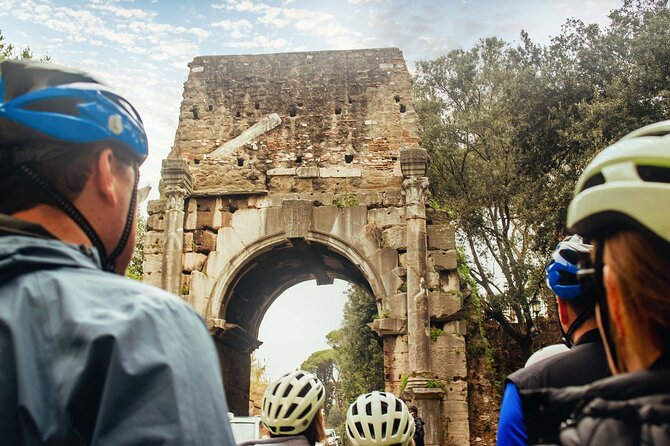
- Small group, close attention: max 12 riders, with guides focused on staying together.
- E-bike helps you cover more ground: you’ll move between big sights without burning yourself out.
- Catacombs visit is guided and official: tickets and a real guided experience are included.
- Food is built in: lunch with water in the morning or an afternoon aperitif with drinks.
- Aqueduct parks feel like a different Rome: green pathways plus visible Roman water engineering.
Why the Appian Way by e-bike feels like the smart move
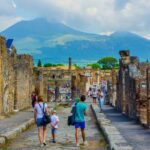
The Appian Way area is where Rome stops being all monuments and becomes space. Parks open up. Ruins sit in fields. Aqueducts march across the skyline like silent highways.
On a regular bike, you’d spend the day fighting your legs. On an e-bike, you spend more of the day looking—at Roman walls near Porta San Sebastiano, at the soft shadows in Parco della Caffarella, and at the aqueducts in Parco degli Acquedotti.
The best part for many first-timers is how the guide builds confidence. You get clear bike instructions before you roll out, plus a short test-ride so you know where the controls are and how the assist feels. Guides like Lorenzo and Iman are noted for being patient and practical, not just chatty.
You can also read our reviews of more cycling tours in Rome
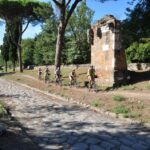
Starting at Porta San Sebastiano: where the city narrows into history
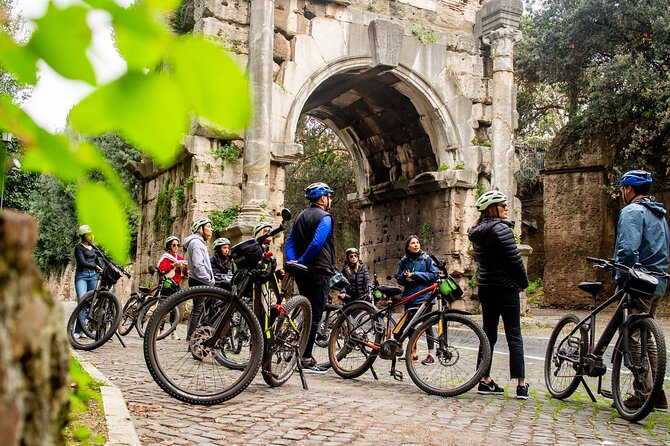
Your first stop is Porta San Sebastiano, a massive southern gateway tied to the Aurelian Walls built around 275 AD. It’s also the marker for the start of the historic Via Appia Antica—the road that turned Rome outward, toward trade, troops, and pilgrims.
This stop is worth it because it sets the mood. You’re not staring at a single ruin. You’re standing at a transition point—where a walled city gives way to the long road beyond.
It also has that small but memorable bonus of medieval graffiti, proof that people kept coming through this same passage long after the original Roman purpose faded.
Catacombe di San Callisto: the underground part you’ll remember
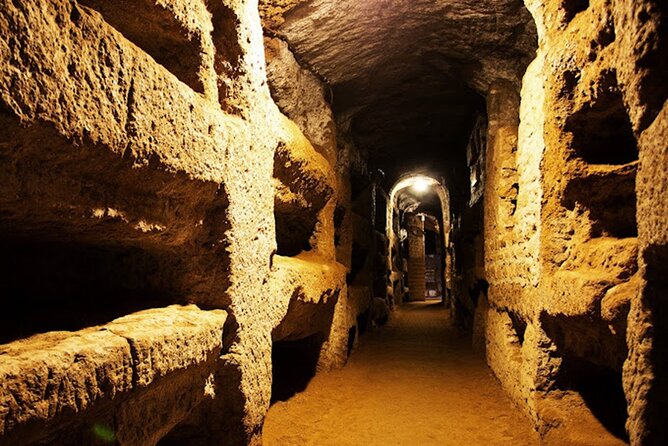
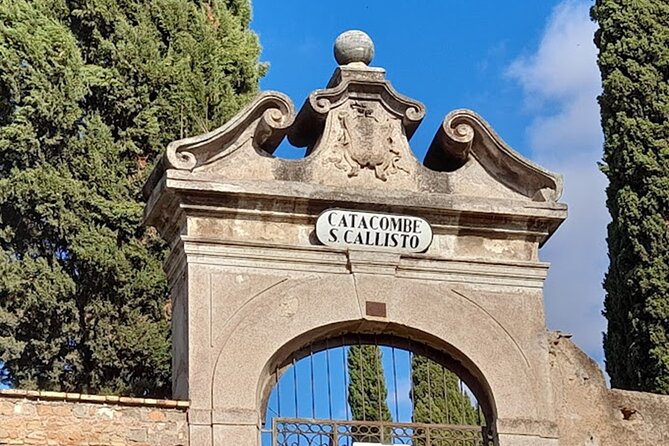
Then comes the big pivot: the Catacombs of San Callisto, a major funerary complex associated with the Church of Rome. This is the largest underground cemetery in the city, with corridors that reach roughly 20 km in length.
The stop is about 50 minutes, and the key detail is that the guided visit is included. You’re not trying to interpret dim passages alone. You’ll see why this place mattered: more than 50 martyrs, 16 popes, and about half a million Christians are described as buried here.
One practical tip: catacombs are cooler than Rome’s street heat, but the passages can still feel close. Wear something comfortable and plan to keep your voice low. This stop is a highlight for a reason—it turns the Appian Way story into something personal and human.
Parco della Caffarella: the Rome you can feel breathing
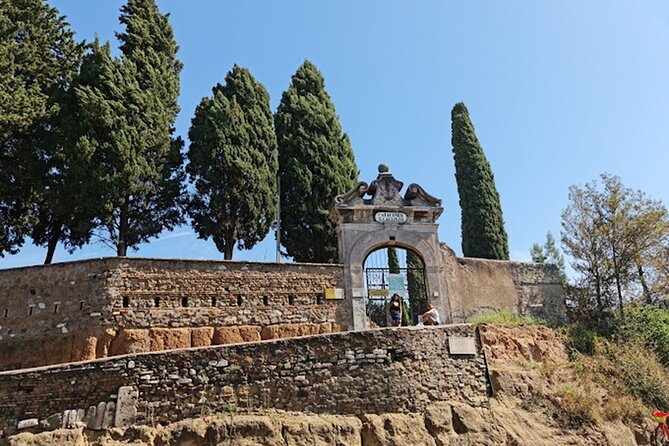
After the underground, you ride into daylight at Parco della Caffarella. This park is part of the Appia Antica Regional Park and is one of the largest green areas not only in Rome but in Europe.
This stop is about time to reset. You get around 50 minutes here, and it’s a chance to look at how history survived not behind museum glass, but out in the open—among paths, groves, and scattered ancient remains.
The setting matters. In parks like this, you can slow down without feeling like you’re wasting time. You’ll also get better photos here than you will in the middle of traffic-choked streets.
Ninfeo di Egeria: a love story you can still visit
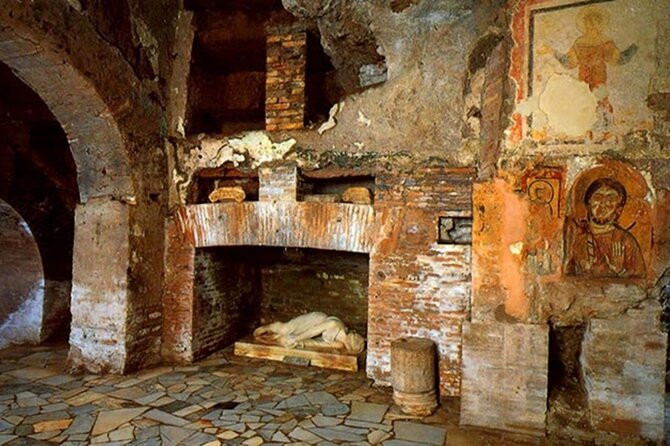
Next up is the Ninfeo di Egeria, tied to the myth of the nymph Egeria and Numa Pompilius, the second king of Rome. The story goes that Egeria, grieving the death of her beloved, cried until her tears became a spring.
It’s a short stop—about 20 minutes—but it’s the kind of moment that breaks up the technical side of Roman engineering you’ll see later. It adds a human-scale myth that helps the whole Appian Way area feel less like a textbook.
You can also read our reviews of more tours and experiences in Rome



Mausoleo di Cecilia Metella and Castrum Caetani: power, then reuse
For a quick but impressive glimpse, you’ll stop at Mausoleo di Cecilia Metella and Castrum Caetani within the Appia Antica archaeological park.
This mausoleum is a pagan tomb dating to the 1st century BC, and it’s described as the best preserved mausoleum along the Via Appia Antica. You’ll also see how later eras repurposed the landscape: it was incorporated into Castrum Caetani, where you can still appreciate remains of the medieval house of the wealthy Caetani family. The church of San Nicola is also part of the picture, though only perimeter walls remain.
Why this stop works on a bike tour: you’re not only moving past monuments. You’re getting the timeline—Roman wealth, later medieval use, and the way ruins stayed useful even as their original meanings changed.
Riding into aqueduct country: lunch or aperitif under ancient water lines
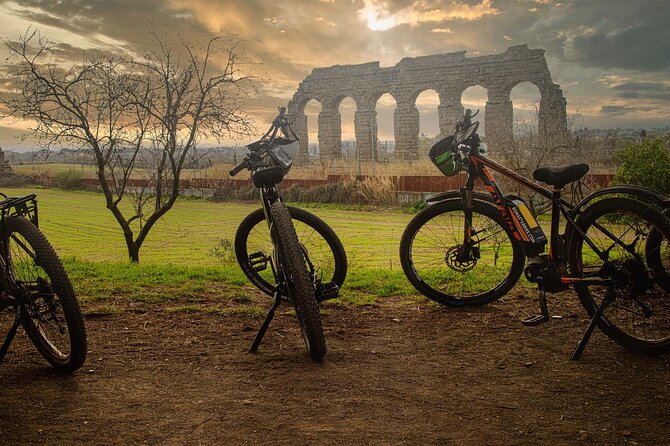
At the Park of the Aqueducts, a lunch stop is planned. You’ll eat Italian specialties in a restaurant setting, in the shadow of the Appian Way’s famous aqueduct landscape.
Timing matters here. This tour has two versions depending on the day’s schedule:
- In a morning departure, you get lunch plus water.
- In an afternoon departure, lunch is replaced by a tasty aperitif with cold cuts and drinks.
So you’re always fed, but what you eat changes. It’s a helpful trade-off, because the afternoon tends to be when Rome’s heat can be at its worst. Either way, it’s a good time to refuel before you push back out through the parks.
Parco degli Acquedotti: where you see Roman water engineering in the open
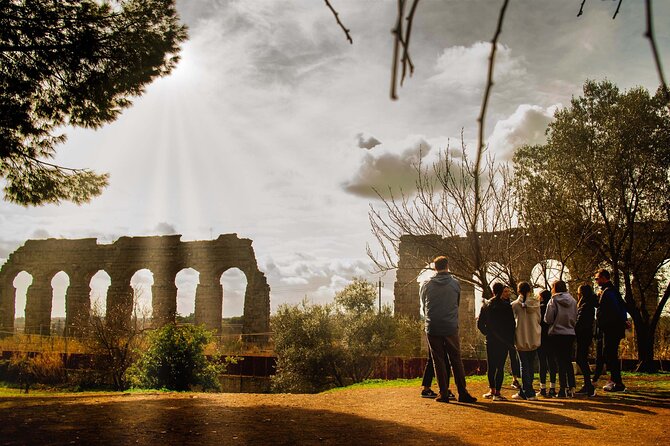
After the break, you continue on your e-bike through Parco degli Acquedotti in the Appia Antica archaeological park. Expect about 50 minutes riding and stopping along the way.
This is where Roman engineering stops being an idea and becomes visible infrastructure. The area sits at crossroads of the ancient water network, and you can see aqueduct remains in places that are well preserved. Even better, the tour description notes that some aqueducts are still in operation—so you’re looking at technology that didn’t just end with the empire.
You’ll also feel the difference from central Rome. The route through park space means fewer interruptions and calmer pacing. It’s easier to take in details when you’re not constantly dodging scooters.
Villa dei Quintili and Santa Maria Nova: the fifth mile story
Another key stop is Villa dei Quintili, plus Santa Maria Nova, tied to the Appia Antica archaeological park.
You’ll see the remains of the villa at about the fifth mile of the Appian Way. The villa belonged to the brothers Sesto Quintilio Condiano and Massimo Valerio, consuls in the 2nd century AD. There’s a sharp political turn here: they were killed by Commodus I, who confiscated the villa and made it imperial property.
This stop pairs well with the aqueducts because it shows how the landscape was used across functions. Water brought life. Villas lived on that life. Empire kept tightening its grip.
Then Santa Maria Nova adds a religious layer near the same area. Even if you’re mainly focused on the Roman remains, it helps you understand why people kept building and re-building here.
Terme di Caracalla and the Circus of Maxentius: the day’s big contrasts
Two more iconic sites round out the back half of the route.
Terme di Caracalla
You stop at the Baths of Caracalla, built by Emperor Caracalla. These baths were for about a century the largest public baths ever built, and much of the structure still exists.
You’ll also hear the water connection: a branch of the Aqua Marcia brought water to the baths through the Antoninian aqueduct. The stop notes that small remains can be admired at Porta San Sebastiano as well, which makes the route feel linked instead of random.
This stop is short—about 15 minutes—but it’s valuable because it shows Rome’s water system had a public purpose, not just private or ceremonial ones.
Circus of Maxentius
Then comes the Circus of Maxentius. This is described as the best surviving example of a Roman circus on the Via Appia Antica, and you’ll see how the track layout guided spectacle and motion.
The spina is still visible, and it once housed the Agonale obelisk. That obelisk was moved during the Renaissance to the Fountain of the Four Rivers in Piazza Navona—a neat reminder that Roman material has a second life in later Rome.
The stop is about 20 minutes, and it’s a great way to end a bike day. Rome’s streets can feel like museum crowds. This circus feels like time paused.
What to expect on the ride: cobbles, heat, and bike skills
Even with e-bikes, you’re not taking a stroller tour. You should plan for:
- Moderate physical fitness
- Knowing how to ride a bike well
- A route that can include cobblestones and bumpy stretches
One review note that’s especially relevant: the Appian Way includes an extended section of original cobblestones that can be “bone rattling” even when you’re cruising on electric assist. Another common comfort issue is saddle soreness, especially on harder saddles.
Practical move: wear comfortable clothing and consider bringing your own cushioned saddle cover if you’re sensitive. Helmet use and safe bike handling are part of the experience, and the guide stays focused on keeping riders together and moving through each stage smoothly.
Also, Rome in summer can feel brutal. If you’re visiting in peak heat, start hydrated and expect that the afternoon can sap energy. The e-bike helps, but your body still feels the temperature.
Guides and group size: why the experience stays smooth
A tour like this lives or dies by flow. You’re moving between a gateway, a catacomb complex, parks, archaeological stops, and then long park cycling.
That’s why the max 12 travelers matters. It’s small enough for the guide to notice if someone’s struggling or lagging behind. It’s also small enough that you can get answers without waiting your turn.
From what’s been shared, guides such as Lorenzo and Iman are specifically called out for:
- being patient during the bike setup and ride
- giving clear expectations before harder sections
- keeping groups together without rushing
If you like history but also like your feet on the ground (or your hands on the handlebars), this setup tends to work well.
Price and value: is $107.41 a fair deal?
At $107.41 per person for about 5 hours, this isn’t a bargain in the way of a free walking tour. But it can still be good value because you’re getting several expensive pieces bundled together:
- A quality e-bike plus helmet and bike accessories (like handlebar phone/handlebar holders)
- A guided catacombs visit, including the official experience
- Food: lunch with water or an aperitif with cold cuts and drinks
- A guided, structured route across out-of-the-way sites you’d likely struggle to string together on your own
Where the value shines is in access. You’re getting catacombs + the Appian Way countryside feel in one half-day block. If you only have limited time in Rome, this kind of bundling can save you time, transit hassle, and decision fatigue.
Your main trade-off is comfort: you’re riding. If you hate cycling or feel unsure on bikes, you’ll feel it more here than on a bus tour.
Who this tour fits best (and who should skip it)
This is a strong fit if you:
- Want to see Rome beyond the central sites
- Like history but prefer movement over standing still
- Are comfortable riding a bike and don’t mind some cobbled sections
- Want a guided catacombs visit without planning ahead for tickets and timing
You might skip it if you:
- Don’t ride bikes confidently
- Have a hard time with bumpy surfaces or long stretches on a saddle
- Expect a relaxed, mostly-flat sightseeing day
If you’re visiting with a partner or small family group, the small size also helps. Just note the tour has specific child rules: child pricing for ages 6–10 applies only if they’re under 4/7 feet (143 cm), because the setup uses a trailer bike rather than a separate e-bike.
Should you book this Appian Way e-bike with catacombs and lunch?
If you want the Appian Way’s aqueducts and park spaces but don’t want to spend your vacation sore and slow, I’d book this. The catacombs stop plus the outdoor aqueduct scenery is a combo that’s hard to replicate without a guide and without cobbling together separate plans.
Book it if you’re ready to ride for close to a full half day and you know how to handle a bike. Pass if your ideal Rome day is mostly flat, mostly indoor, and mostly slow.
If your timing lines up with the lunch version, grab it for the full sit-down break. If it’s the afternoon schedule, the aperitif keeps the rhythm going without turning your day into a long restaurant detour.
FAQ
How long is the Appian Way Aqueducts Bike Tour?
It runs for about 5 hours.
What’s included in the price?
You get an e-bike with helmet and bike equipment, water for the lunch option, lunch or an afternoon aperitif (cold cuts and drinks), and a guided visit of the catacombs.
Is the Catacombs of San Callisto visit included, or do I need separate tickets?
The catacombs guided visit is included as part of the tour experience.
How big is the group?
This tour has a maximum of 12 travelers.
Do I need to know how to ride a bike?
Yes. You must know how to ride a bike well, and the tour is recommended for travelers with moderate physical fitness.
What’s the food like, lunch or aperitif?
In the morning, you receive lunch plus water. In the afternoon, lunch is replaced by a tasty aperitif with cold cuts and drinks.