REVIEW · ROME
All-included Rome in a Day Tour with Vatican Sistine Chapel Colosseum & Pantheon
Book on Viator →Operated by Walking Tours of Italy · Bookable on Viator
Rome hits, crammed into one smart route.
This private, English-language day tour is built for time-pressed visitors who want the big names—Colosseum, Vatican Museums, Sistine Chapel—without doing a bunch of separate ticket errands. I like that it includes reserved entry where it matters most and pairs it with an art historian guide who can connect what you see to what it meant back then. I also like the pacing of the day: long enough at the heavyweights, shorter stops where you still get the key photo and context. The main drawback is simple: it’s a fast-moving 6 hours with several walk-and-queue moments, and Vatican access can change last minute for major papal events.
You’ll feel that private-tour edge right away, especially with guides who don’t just point. In past runs, the guide Francesco has been described as intensely prepared—one review even highlighted that he’s a professor of archaeology—and when someone in the group is late, the plan adjusts so you still cover the must-sees. One more consideration: lunch costs extra, so you’ll want to decide how you handle that before you’re hungry.
In This Review
- Key Things That Make This Tour Work
- Why This 6-Hour “Best Of” Day Feels Efficient
- Entering the Colosseum With Reserved Tickets and a Real Game Plan
- Roman Forum Highlights: Arches, Temples, and the Civic Center
- Climbing Into Meaning: Sacred Way, Capitoline Hill, and Il Vittoriano
- Trevi Fountain and the Pantheon: Two Icons, Two Different Kinds of Wow
- Piazza Navona: Bernini’s Four Rivers in a Live City Setting
- Vatican Museums and the Sistine Chapel: Art on a One-Stop Shortcut
- Sistine Chapel timing matters
- St. Peter’s Basilica and St. Peter’s Square: The Final Walk and What to Notice
- When access changes: pope events and the Jubilee
- Price and Value: Is $662.26 Worth It?
- Practical Tips That Keep This Day From Getting Messy
- Who This Tour Suits Best (and Who Should Skip It)
- Should You Book This Rome-and-Vatican Day Tour?
- FAQ
- How long is the Rome in a Day tour?
- Is this tour offered in English?
- Is the tour private or shared?
- What tickets are included?
- Do I need transportation provided?
- What dress code do I need for this tour?
- Do I need to bring my ID or passport?
- What if parts of the Vatican close due to pope activities?
- Will St. Peter’s Basilica always be accessible during the tour?
- What happens if I cancel?
Key Things That Make This Tour Work
- Skip-the-line style access at the Vatican Museums so you spend more time inside the art than waiting outside
- Reserved Colosseum entry (ticket + reservation fee included) to reduce ticket-stress right at opening
- A single, connected walking day linking the Forum/Pantheon/Trevi side of Rome to the Vatican
- Sistine Chapel focus with time set aside for Michelangelo themes like The Last Judgment and Creation of Adam
- St. Peter’s Basilica tour plus crypt level context and a final walk through St. Peter’s Square
- Dress code and ID are handled the right way by requiring full traveler names and matching ID/passports
Why This 6-Hour “Best Of” Day Feels Efficient
This tour is essentially Rome in two halves: the ancient power center, then the Vatican art-and-faith axis. In about 6 hours you’ll move from the Colosseum area to the Pantheon/Trevi/Navona zone, then finish in Vatican City with the Museums, Sistine Chapel, and St. Peter’s Basilica.
The value here is not just that you’re ticking off landmarks. It’s that the route is arranged so you don’t keep crisscrossing the city. You’ll also get a guide who treats each stop like a chapter, not a billboard—especially helpful at places where you can easily stare and miss what matters.
Yes, it’s tight. You’ll be walking and you’ll have limited time at some stops (many are around 20 minutes). If you want to wander at your own speed and linger for 45–90 minutes at every piazza, this might feel like you’re always “on the move.”
You can also read our reviews of more tours and experiences in Rome.



Entering the Colosseum With Reserved Tickets and a Real Game Plan
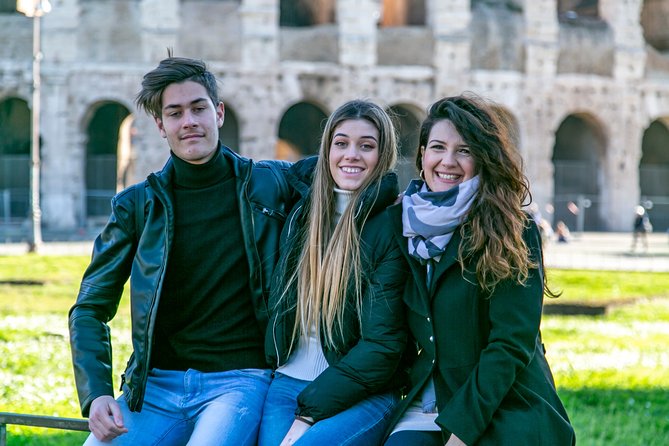
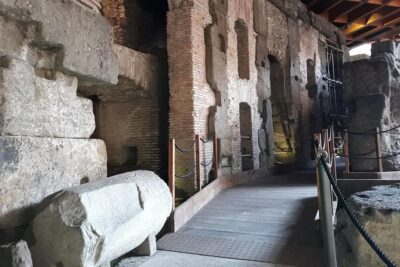
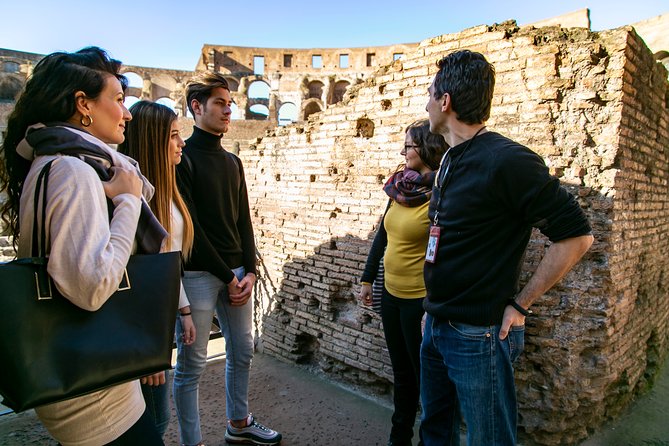
At the start, you meet at Piazza del Colosseo and head straight inside with held tickets. That matters because the Colosseum is one of those places where time evaporates fast if you’re juggling tickets.
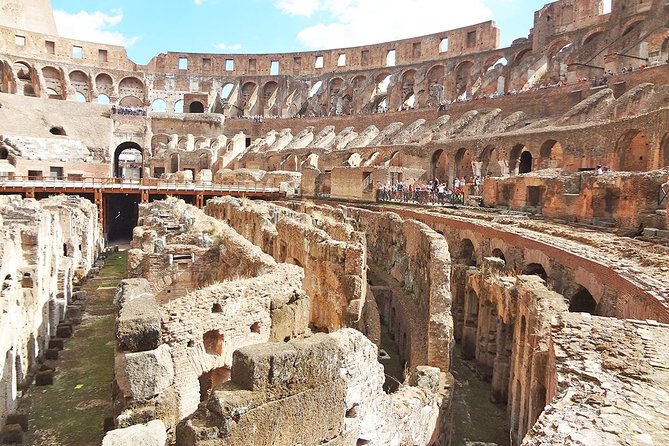
Once inside, you investigate the amphitheater like it’s still a working machine: big scale, public spectacle, and why this structure became the symbol of Roman entertainment. The guided approach is key here. Without context, it’s easy to look up at stone and miss how the whole space is arranged for crowds.
After your Colosseum time, the tour transitions into the adjacent world of Roman civic life, with a beeline toward the Arch of Constantine and the Roman Forum area. Expect the day to lean into interpretation—why these sites were central to social, political, and religious activity in Ancient Rome.
What I like: you’re not stuck in ticket lines or slow starts.
What to watch: Colosseum and Forum areas can be physically demanding, and you’ll need a moderate fitness level to keep up.
Roman Forum Highlights: Arches, Temples, and the Civic Center
The Forum is the part of Rome that makes the Colosseum feel less like a movie set and more like a lived-in city. You’ll see key remnants around the open civic square, including the Arch of Titus, the House of the Vestal Virgins, the Temple of Saturn, the Senate House, and the white marble Arch of Septimius Severus.
Even if the stones are fragmentary, the guide helps you connect them into a mental map: where power was displayed, where ceremonies mattered, and where the city’s decision-making happened.
This is one of the areas where the time limit is noticeable. The tour slot here is about an hour, so you’ll cover the big beats rather than treat the Forum like a self-guided excavation.
Climbing Into Meaning: Sacred Way, Capitoline Hill, and Il Vittoriano
After the Forum segment, you stroll up the Sacred Way toward Capitoline Hill and Il Vittoriano. This part of the route is less about one single artifact and more about changing your perspective.
Capitoline Hill is where you start thinking like a Roman: the city as a series of stages, each with symbolism. And Il Vittoriano, while not ancient, is a very Roman kind of statement—Italy’s later monument that still dominates the skyline.
This short “up and around” sequence is also a good reset before heading toward the more crowd-favorite stops like Trevi and Pantheon. Just know that it’s another walking stretch in a day already full of movement.
Trevi Fountain and the Pantheon: Two Icons, Two Different Kinds of Wow
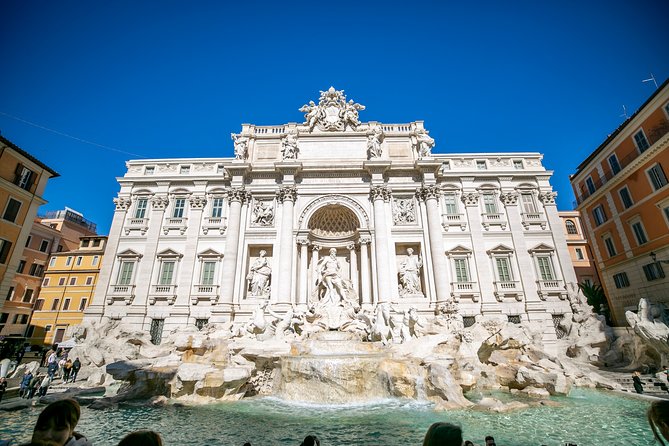
Trevi Fountain gets its own stop, about 20 minutes. You’ll head to the fountain that shows up in film culture as well as travel dreams, and you’ll follow legend—coin toss and the wish to return to Rome.
Time is short, so the best use of your minutes is to look beyond the obvious. The guide’s job is to make sure you don’t just stand there for a photo; you’ll learn what to notice and how the design fits into Rome’s broader obsession with grandeur.
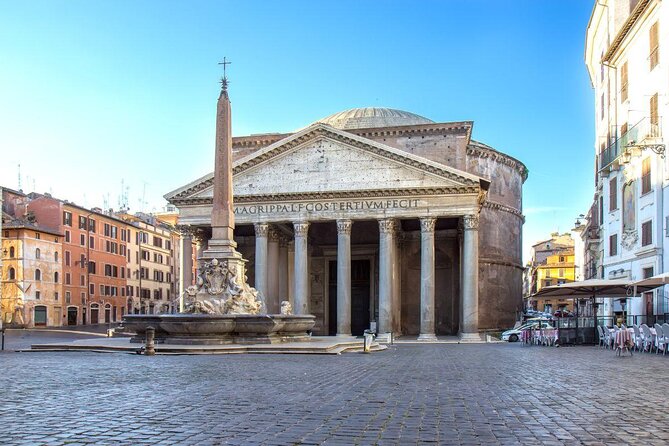
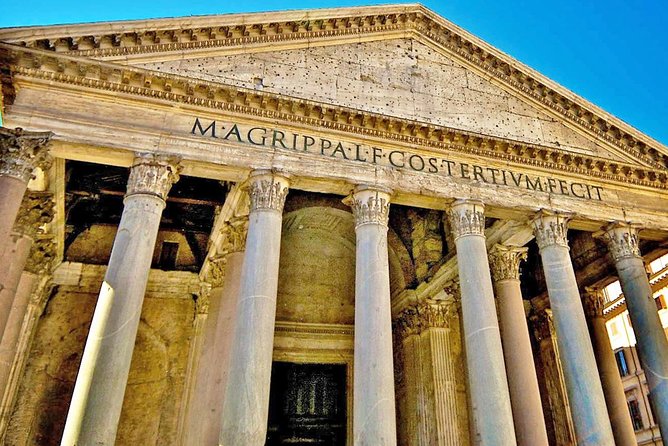
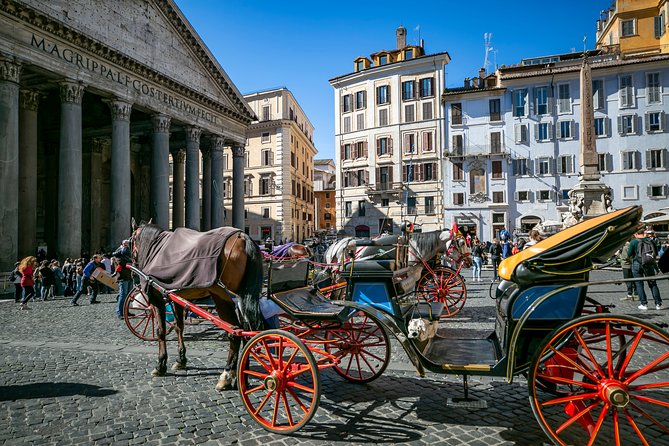
Then comes the Pantheon. The pace shifts here: after lunch, you head “down a thin vicolo” toward the Pantheon and you’ll also see the tomb of Raphael. That detail is a nice reminder that Rome isn’t only ancient—Renaissance figures are part of the story too.
The Pantheon stop is also around 20 minutes. Again: you’ll experience it, you won’t park there for an hour. If you’re the type who needs slow time to appreciate architecture, aim to take in the dome and interior structure early—before crowds thicken.





Piazza Navona: Bernini’s Four Rivers in a Live City Setting
Next you pass the Ancient Baths of Nero on the way to Piazza Navona. The tour then focuses on Bernini’s Fountain of the Four Rivers.
Piazza Navona is where Rome’s outdoor life shows up loud and clear. Even with guided commentary, you’ll still feel the place as a functioning public square, not a museum room. If you’re visiting in busy season, this stop can also feel crowded—so a guide helps you find the best way to see and understand without getting stuck in a slow-moving knot of people.
This is another shorter stop (about 20 minutes). But it’s the kind of place where even a brief visit can still feel satisfying if you know what you’re looking at.
Vatican Museums and the Sistine Chapel: Art on a One-Stop Shortcut
The day’s final arc goes from central Rome to the Vatican across the Tiber. Then you enter the Vatican Museums with skip-the-line access.
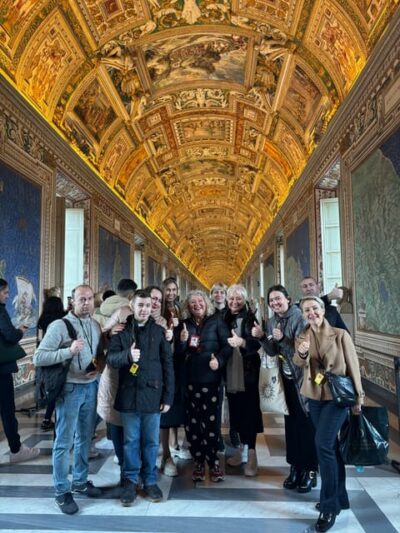
The Museums are massive, and without guidance they can become a blur of rooms. Here, your time slot is about 1 hour 30 minutes, so the guide focuses your attention on major highlights—including frescoes by Raphael and Michelangelo’s well-known ceiling frescoes that lead you directly toward the Sistine Chapel.
Sistine Chapel timing matters
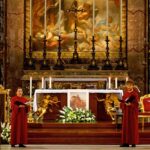
The Sistine Chapel visit is about 1 hour. You’ll see frescoes including Michelangelo’s The Last Judgment and biblical scenes like the Creation of Adam. You’ll also learn how the chapel is still used today for papal elections, which adds a real-world layer beyond the viewing experience.
One practical note: the Sistine Chapel has its own rules for movement and behavior. Even if you’re not a “museum person,” this stop tends to land because it combines scale, famous details, and a sense of ongoing importance.
St. Peter’s Basilica and St. Peter’s Square: The Final Walk and What to Notice
Your last major stop is St. Peter’s Basilica, about 30 minutes, with a guided tour that covers side chapels and crypt-level sights. You’ll see Michelangelo’s Pietà and learn a key detail: it’s the only work by Michelangelo that he signed. You’ll also hear explanations tying Michelangelo’s role and Bernini’s altar work to what makes the interior feel so dramatic.
Then you go below ground to the papal crypt, where many Popes are interred. Even if you don’t focus on Catholic history, this part can be surprisingly moving because it changes your scale and mood.
The tour ends in St. Peter’s Square, where you can admire the balcony where the Pope blesses pilgrims during the Sunday Angelus.
When access changes: pope events and the Jubilee
The tour provider flags two real-world issues you should plan around:
- Some Vatican areas might close last minute due to pope-related mass events. In that case, your guide provides an alternative focusing on the Vatican Museums.
- Due to the Jubilee, the Basilica might not be accessible as part of the tour, and you may need to queue after the tour.
This is the one uncertainty you can’t fully control. The best way to handle it is to keep expectations flexible: the “must see” art in the Vatican Museums should still be part of the experience.
Price and Value: Is $662.26 Worth It?
This tour costs $662.26 per person for an approximately 6-hour private outing, in English. On the surface, it’s not cheap. But when you break down what’s included, it becomes easier to judge.
Here’s the value logic I’d use:
- Tickets and reservation effort are handled for the Colosseum (the entrance ticket and the reservation fee are included, listed as €18 + €2 per person).
- You get a professional art historian guide, which matters most at the Vatican and in ancient sites where the difference between random looking and understanding is huge.
- It’s private, meaning your pace and attention are tailored to your group instead of getting squeezed into a large herd.
What’s not included is also clear: transportation and lunch cost extra. So you’ll want to budget for at least one meal.
If you’re traveling solo or as a small group and you hate wasting time with self-guided tickets, this can feel like a practical “pay for time” choice. If you’re comfortable organizing entry times yourself and you want to linger at each spot, you might find cheaper options. But if your priority is seeing the biggest icons with minimal friction, this price starts to make sense.
Practical Tips That Keep This Day From Getting Messy
This is a walking-heavy day with sacred-site rules, so a few prep steps can save your mood.
- Dress code: no shorts or sleeveless tops. Knees and shoulders must be covered for places of worship and select museums, or you risk refused entry.
- ID matching is required: you must present a valid passport or ID document that matches the names used for Colosseum and Roman Forum entry.
- Bring the right group info: you’ll need the full names of all travelers when booking. If the voucher names don’t match, it can cause entry problems.
- Expect moderate physical effort: the day mixes flat walks with uphill sections like Capitoline Hill and involves navigating historic areas.
- Plan lunch: lunch is not included. You can ask the guide for options ranging from pizza and sandwiches to sit-down meals, but don’t rely on “we’ll figure it out later” once hunger hits.
- Use your time smartly: some stops are about 20 minutes. That’s enough for key sights, but not for drifting. Decide in advance what you want to photograph and what you want to learn.
Who This Tour Suits Best (and Who Should Skip It)
This tour is a strong fit if:
- You’re seeing Rome for the first time and want a fast hits plan.
- You care about art and interpretation, not only photos.
- You want the convenience of held/reserved entry where it counts.
- You’d rather walk with a guide than solve ticket logistics across multiple attractions.
It’s less ideal if:
- You want a slow, unstructured day with lots of free time.
- You’re sensitive to crowds and short stop windows.
- You don’t want to follow strict dress code rules.
Should You Book This Rome-and-Vatican Day Tour?
Yes—if your priority is covering the biggest landmarks in one organized day with an art historian guide and reserved access where it’s most valuable. The itinerary makes sense for first-timers, and the guided focus at the Vatican Museums and Sistine Chapel is the kind of difference you feel immediately inside those rooms.
But book with the right expectations. This is not a leisurely day, and Vatican access can shift due to real pope event closures or Jubilee-related limits on the Basilica. If you can handle that flexibility—and you’re ready for a structured 6-hour schedule—this tour is a solid, time-saving way to see Rome’s headline icons.
If your top goal is maximum freedom and long lingering at each site, you’ll probably prefer a self-guided plan. If your top goal is speed plus meaning, this is the style of tour that delivers.
FAQ
How long is the Rome in a Day tour?
The tour is about 6 hours.
Is this tour offered in English?
Yes. The tour is offered in English.
Is the tour private or shared?
It’s a private tour/activity. Only your group participates.
What tickets are included?
The Colosseum entrance ticket is included, along with the Colosseum reservation fee. Admission tickets are also included for each stop listed (Colosseum, Roman Forum, Trevi Fountain, Pantheon, Piazza Navona, Vatican Museums, Sistine Chapel, and St. Peter’s Basilica).
Do I need transportation provided?
No. Transportation to and from attractions is not included.
What dress code do I need for this tour?
You need to cover knees and shoulders. No shorts or sleeveless tops are allowed for places of worship and select museums. You may be refused entry if you don’t comply.
Do I need to bring my ID or passport?
Yes. Each traveler must present a valid passport or ID document that matches the name used at booking for successful entry to the Colosseum and Roman Forum.
What if parts of the Vatican close due to pope activities?
Areas might close last minute because of pope-related events. If that happens, your guide will provide an alternative focusing on the Vatican Museums.
Will St. Peter’s Basilica always be accessible during the tour?
Not necessarily. Due to the Jubilee, the Basilica might not be accessible as part of the tour. If so, you can visit it after the tour by queuing.
What happens if I cancel?
This experience is non-refundable and cannot be changed for any reason. If you cancel or ask for an amendment, the amount you paid will not be refunded.