REVIEW · ROME
Ultimate Colosseum Small Group Tour
Book on Viator →Operated by City Walkers Tours · Bookable on Viator
Rome’s biggest ruins reward calm planning. This small-group Colosseum tour (limited to about 10 travelers, max 12) gets you past the usual chaos with a guide you can actually ask questions to, plus time to walk the Roman Forum and Palatine Hill after the main stop. You’re not just staring at stone—you’re moving with purpose.
I especially love that the tour includes admission to the Colosseum plus the Roman Forum and Palatine Hill, so you’re not piecing together tickets and timing on the fly. One watch-out: the tour works only if you’re ready to meet up on time—arrive about 20 minutes early and bring ID/voucher details that match your booking, or entry can get messy.
In This Review
- Key highlights worth your time
- Why this Colosseum route works better than doing it alone
- Meeting point: get your bearings early and you’ll feel stress-free
- Entering the Colosseum: you get the ticket plus the context
- A quick tip about the headphones
- What you learn on the Colosseum floor (without turning it into a lecture)
- Roman Forum stop: the political center behind the spectacle
- What to expect in the Forum time window
- Palatine Hill: imperial views 40 meters above the Forum
- Timing and crowd reality: why the 2.5 hours feels right
- Value: what you’re really buying with the bundle
- Who this tour suits best (and who might want something else)
- Should you book this Ultimate Colosseum Small Group Tour?
- FAQ
- How long is the Ultimate Colosseum Small Group Tour?
- What’s included in the tour?
- Does the tour include the Roman Forum and Palatine Hill?
- How many people are in the group?
- Where does the tour start and where does it end?
- What time should I arrive at the meeting point?
- What documents do I need for entry?
- Do I need to provide names for everyone in my group?
- After the tour ends, can I stay to ask questions?
Key highlights worth your time
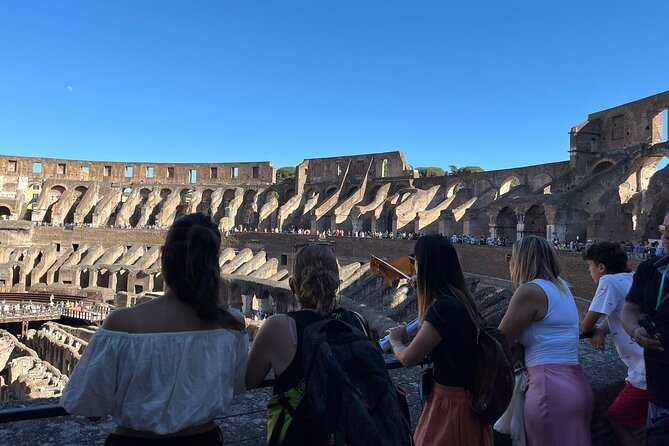
- Two big layers of Rome in one go: Colosseum first, then the Roman Forum and Palatine Hill within the same tour window.
- Tickets are bundled: Colosseum admission plus Roman Forum and Palatine Hill tickets are included.
- Headphones for the Colosseum: included for audio while you’re inside the arena area.
- A guide you can question: you’ll have time to ask things while you wander across centuries.
- Limited group size: a max of 12 travelers helps you stay oriented and not get swallowed by the crowd.
- Strong “where are we and why does it matter” pacing: the itinerary is short enough to keep momentum, but long enough to make each site feel connected.
Why this Colosseum route works better than doing it alone
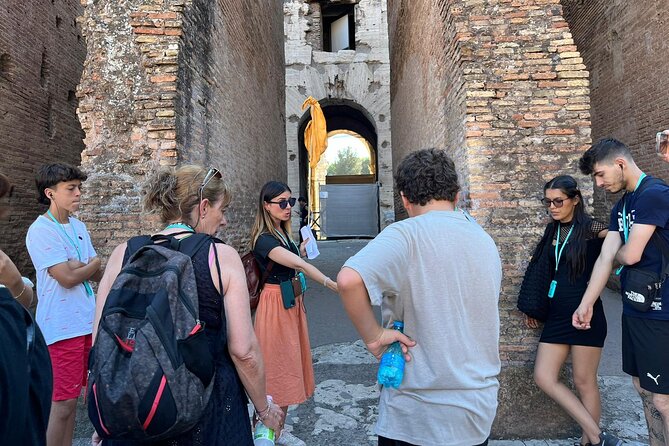
The Colosseum is famous for a reason. But fame also brings lines, noise, and the kind of crowd flow that makes you forget what you’re actually looking at. What I like about this tour is that it gives you a sequence: arena first, then the government-and-everyday-life core of the city, then the imperial viewpoint on Palatine Hill.
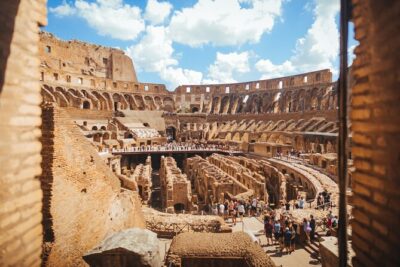
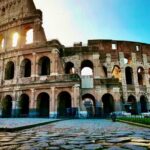
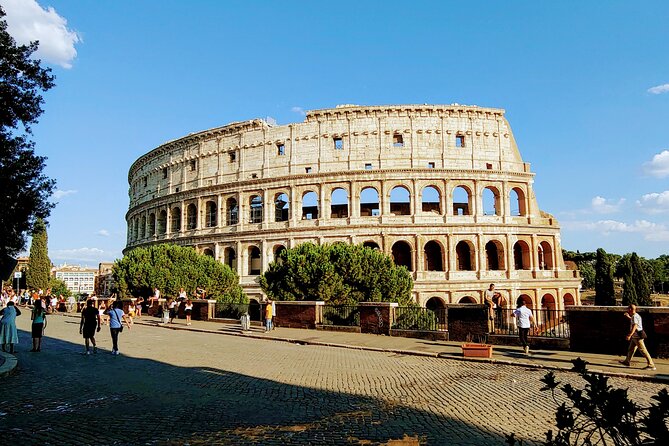
You start at the Colosseum, built in the Roman era with travertine, tuff, and brick-faced concrete. Emperor Vespasian began construction in 72 AD, and Titus completed it in 80 AD. Knowing that timeline helps you see the building as something living and political, not just old architecture.
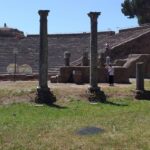
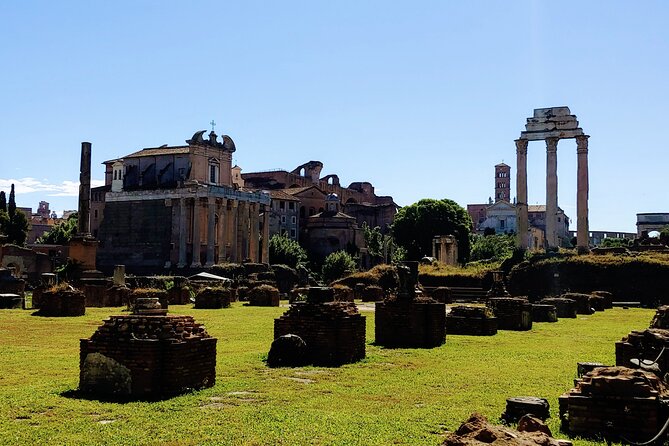
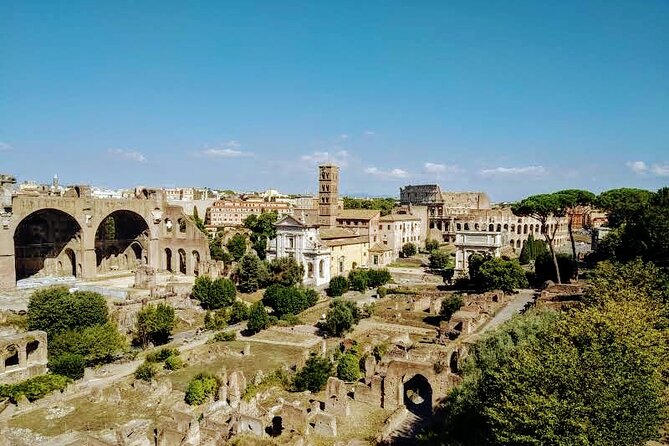
Then you shift to the Roman Forum, the square of ruins where Rome’s governing buildings clustered. It started as a market, and people referred to it as the Magnum Forum—tiny detail, big payoff, because it changes how you imagine daily life. Finally, Palatine Hill sits about 40 meters above the Forum, facing the Circus Maximus, and it’s tied to early power—especially Augustus’s imperial palaces.
This is the kind of route that makes the Colosseum feel less random. It becomes part of a system: spectacle, politics, and the power center that watched it all from above.
You can also read our reviews of more tours and experiences in Rome.



Meeting point: get your bearings early and you’ll feel stress-free
This tour starts at L.go Gaetana Agnesi, 5, 00184 Roma RM, Italy. It ends at Parco archeologico del Colosseo, Via di S. Gregorio, 30, 00186 Roma RM, Italy. Use the provided Google Maps link so you’re not guessing around the area.
Here’s the practical truth: the biggest risk isn’t the Colosseum. It’s the human part—finding the group before the entry window. The tour notes say you should show up about 20 minutes early to keep the departure smooth. That matters because entry requires matching names to IDs.
Also make sure you have the full names of everyone in your party exactly as booked. If ticket office staff can’t match your voucher details, entry can be denied. Bring a passport or ID that matches the booking name, not just any document.
If you like to travel fast, you’ll still want to travel smart. Arrive early, confirm your group, then you can enjoy the pace.
Entering the Colosseum: you get the ticket plus the context
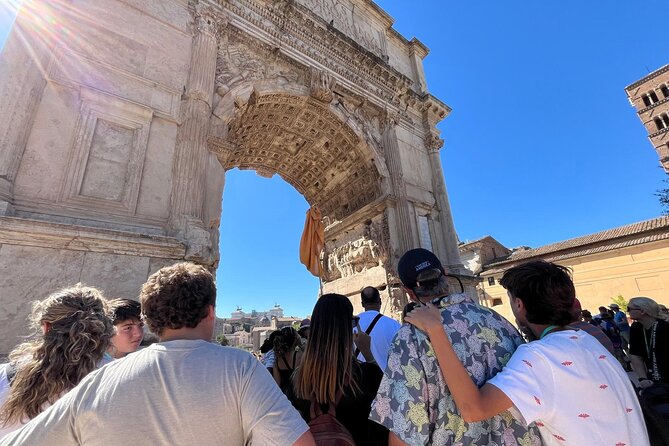
The first stop is Colosseum, with about 1 hour 30 minutes on site. The ticket includes Colosseum entry, and you’ll also have headphones for the Colosseum audio tour.
What that means for you: you can keep moving while still catching key explanations. It’s a win if you’re the type who likes to look and learn without stopping every 30 seconds.
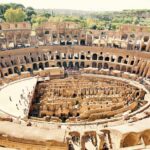
The Colosseum itself is the massive oval structure east of the Roman Forum. You can easily get stuck taking generic photos from the same handful of spots. A guide helps you reframe it. Instead of thinking, This is an amphitheater, you start noticing why it was built the way it was and what that building signaled in Roman society.
And because this is a small-group tour, you’re not trying to locate your party every time the crowd shifts. You can follow the plan without doing constant mind-juggling.
A quick tip about the headphones
Headphones are included, but in loud, moving spaces they can be tricky. If you rely on audio, keep one ear ready and be ready to look up when the guide speaks. It’s not a deal-breaker—just a heads-up so you don’t miss important bits while your eyes are busy.
What you learn on the Colosseum floor (without turning it into a lecture)
The goal here isn’t to memorize dates. It’s to understand what the building meant and how Romans used it. With your guide leading the way, you’re guided through the Colosseum with explanations you can ask questions about.
Even the construction facts help anchor the experience. The materials matter: travertine and tuff weren’t random choices. Concrete construction allowed scale, and the layered building logic tells you something about Roman engineering ambition.
You’re also learning the Colosseum as a product of its era. Vespasian’s start in 72 AD and Titus’s completion in 80 AD place it firmly in an empire that’s managing power through public spectacle. That changes your mental picture. This isn’t just where fights happened. It was also where messages were delivered.
If you’re traveling with teenagers, this kind of “story + questions” approach tends to work better than a static guidebook. One art-history professor-style guide experience is often praised, which makes sense: when someone can connect architecture to art and politics, the Colosseum becomes easier to care about.



Roman Forum stop: the political center behind the spectacle
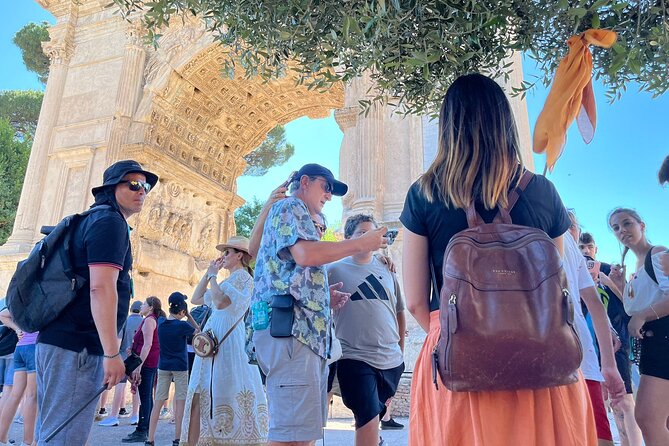
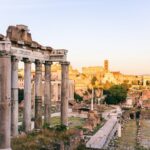
After the Colosseum, you move to the Roman Forum (Foro Romano) for about 30 minutes. The Forum is described as a square surrounded by ruins of buildings that were once central to Rome’s government, located in the city’s core.
This stop is short, so it helps to know what you’re looking for. The Forum wasn’t just a landmark; it was where decisions happened and where city life mixed with official power. People originally called it the Magnum Forum, which hints at market life mixed with governance.
What to expect in the Forum time window
In a half-hour, you won’t read every carved fragment. But you should come away with a map in your head: this area is tied to leadership and policy, this area connects to civic life, and these ruins represent what the empire used to run on.
A good guide makes it feel less like you’re walking through random piles of stone. It becomes a place with a job.
One practical consideration: the Forum area is crowd-dependent. You’ll move when space opens, and sometimes you’ll pause in whatever shade or open spot you can find. That’s not unique to this tour. It’s how the Forum works.
Palatine Hill: imperial views 40 meters above the Forum
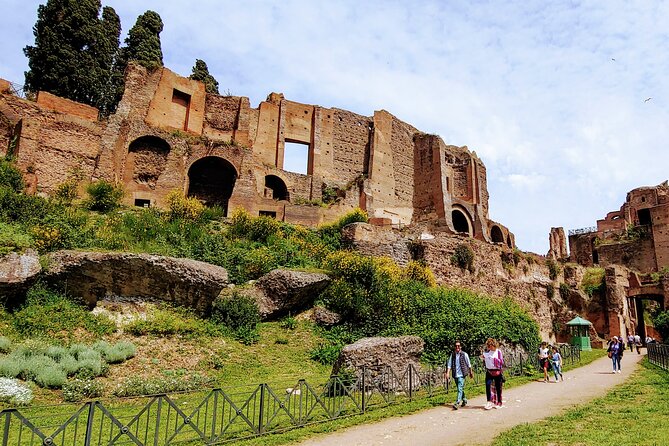
The final stop is Palatine Hill for about 30 minutes. It’s the only hill of Rome’s Seven Hills located right in the center, sitting about 40 meters above the Roman Forum. It faces the Circus Maximus, and it’s tied to early power—specifically the imperial palaces of Augustus.
This is where the tour’s meaning really clicks for many people. From the Forum, you’re in the action zone where governance and public life overlapped. On Palatine Hill, you’re thinking about who watched the city, controlled it, and built their base where the view mattered.
If you like panoramic city thinking, you’ll appreciate the shift in perspective. The structure of the tour nudges you upward, which makes the geography feel intentional.
And because this is toward the end of the itinerary, it often feels like the “payoff.” You can look back mentally and connect the Colosseum spectacle and Forum governance to the imperial presence above it.
Timing and crowd reality: why the 2.5 hours feels right
The tour runs about 2 hours 30 minutes. That’s a smart length for these sites because it balances two things you need in Rome: time efficiency and mental clarity.
Too short, and you just rush. Too long, and you start collecting fatigue instead of understanding. This tour’s pacing—Colosseum first (1h30), then Forum (30m), then Palatine Hill (30m)—matches how your brain can handle ruins.
Crowds still happen. If there’s a bottleneck, the route will flex. The good news is that the itinerary is built around the big essentials, so you’re not gambling on seeing nothing. The small-group structure helps, because you’re less likely to lose time regrouping.
Value: what you’re really buying with the bundle
The price listed may vary depending on promotions, but the value logic is consistent. You’re paying for:
- Colosseum admission
- Roman Forum + Palatine Hill tickets
- A tourist guide officer
- Headphones for the Colosseum
And this matters because entry fees for these sites aren’t small. The information you’re given also notes adult ticket pricing as 18€, with children under 18 listed at 0€. When admissions are bundled into your tour, you reduce the biggest headache: coordinating separate tickets and time slots.
So the real question isn’t just, What does the tour cost. It’s, Does it save you time and reduce stress while giving you context? With a small group and a guide who answers questions, it usually does.
Who this tour suits best (and who might want something else)
This tour fits best if you:
- Want a guided, structured visit to three related sites
- Like asking questions instead of wandering alone
- Prefer limited group sizes so you can actually see what’s in front of you
- Want tickets handled in one package
It might be less ideal if you:
- Want a long, self-paced crawl where you spend hours at one location
- Hate using headphones or find audio distracting in crowded spaces
- Are likely to be late to meeting points (this tour expects you to show up early for a smooth departure)
Overall, it’s a strong pick for first-time Colosseum visitors who want the big hits without turning the day into logistics.
Should you book this Ultimate Colosseum Small Group Tour?
If you want the Colosseum plus the Roman Forum and Palatine Hill in one clean, guided sweep, I’d lean yes. The combination is the real reason to book: the tour gives you a “from spectacle to power” storyline, not just three separate stops.
I’d especially book if you value small-group flow, included admissions, and a guide who can explain what you’re seeing while you walk. Just do your part: arrive early at L.go Gaetana Agnesi, 5, bring the ID/voucher details that match your booking names, and give yourself time to confirm your group before entry.
If you like your Rome experiences clear, efficient, and easy to follow, this one earns a spot on your itinerary.
FAQ
How long is the Ultimate Colosseum Small Group Tour?
It’s approximately 2 hours 30 minutes.
What’s included in the tour?
The tour includes admission to the Colosseum, the Roman Forum, and Palatine Hill, a tourist guide officer, and headphones for the Colosseum audio tour.
Does the tour include the Roman Forum and Palatine Hill?
Yes. The itinerary includes a stop at the Roman Forum (about 30 minutes) and a stop at Palatine Hill (about 30 minutes).
How many people are in the group?
The tour is limited to a maximum of 12 travelers, with limited groups noted as around 10 travelers.
Where does the tour start and where does it end?
It starts at L.go Gaetana Agnesi, 5, 00184 Roma RM, Italy and ends at Parco archeologico del Colosseo, Via di S. Gregorio, 30, 00186 Roma RM, Italy.
What time should I arrive at the meeting point?
You should arrive about 20 minutes before the meeting time to help guarantee a smooth departure.
What documents do I need for entry?
Each traveler must present a valid passport or ID document that matches the name provided at booking.
Do I need to provide names for everyone in my group?
Yes. You must provide the full names of all travelers when booking. If a voucher with all travelers’ full names isn’t presented at the ticket office prior to entry, entry may be denied.
After the tour ends, can I stay to ask questions?
Yes. After the tour is over, you can ask your guide questions and stay as long as you want.