Rome looks different after dark. This Trastevere tour strings together several classic sights into one flowing night walk—from circus-era Rome to the truth ritual at Boca de la Verdad, then onward into the Jewish Ghetto area and Trastevere itself.
What I like most is how the tour connects places you’d otherwise visit one at a time. I especially love the focus on story-driven landmarks (not just photo stops), and the way the guides keep the group moving while sharing practical tips along the route. One small thing to consider: this is set up like a lively walking tour at an evening hour, so if you’re not comfortable with hands-on legend participation at Boca de la Verdad, simply opt out and watch—don’t force it.
Also, double-check your expectations about format. A few people notice it can feel like a free-tour style experience even when booking includes a set price, so it helps to go in knowing you’re paying for the guided route and narration, not a museum ticket.
In This Review
- Key Highlights at a Glance
- Rome After Dark: What Makes This Trastevere Tour Worth Your Evening
- Meeting at Via del Teatro di Marcello: The Easiest Start Point for a Night Walk
- Circus-Era Sights and the Run-Up to Boca de la Verdad
- The Port Before Rome: Forum Boarium and Ancient Temple Area
- Teatro Marcello and the Octavia Portico: Imperial Power in Stone
- Jewish Ghetto History and Trastevere: Learning Without Turning It Into a “Stop”
- Guides Matter: Ana Sofía and Iván’s Impact on the Experience
- Price and Value: $17.38 for a Concentrated Night Narrative
- Who Should Book This Trastevere Night Tour (and Who Should Think Twice)
- Quick Practical Notes That Help You Enjoy It More
- Should You Book This Trastevere Tour?
- FAQ
- FAQ
- How long is the Trastevere Tour?
- What time does the tour start?
- Where is the meeting point?
- Where does the tour end?
- How much does the tour cost?
- Is there a mobile ticket?
- How many people are in a group?
- Is the tour near public transportation?
- Can I cancel for a full refund?
- Are service animals allowed?
Key Highlights at a Glance
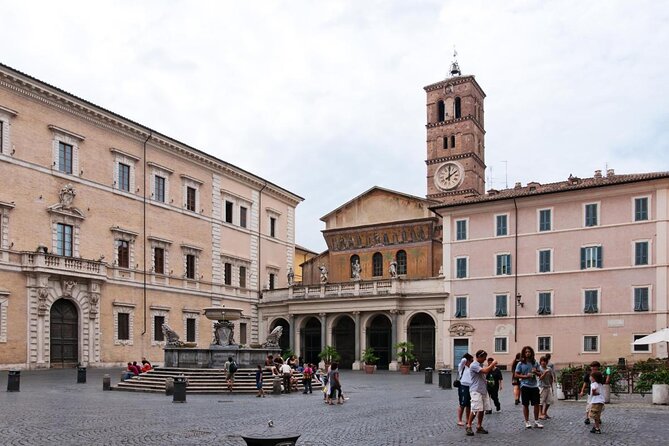
- Rome at 7:30 PM: Designed for the streets-after-dark vibe, starting at Via del Teatro di Marcello
- Circus-era Rome to Boca de la Verdad: One evening route that ties together spectacle and legend
- Forum Boarium and ancient port life: You’ll hear how this area worked before Rome became Rome
- Teatro Marcello and Octavia Portico: Architecture with imperial backstory you can actually picture
- Jewish Ghetto context: Stops include history of Jews in Rome as you pass through relevant streets
- Small-group feel: A maximum of 30 travelers, plus a mobile ticket for entry-free stops
Rome After Dark: What Makes This Trastevere Tour Worth Your Evening
A lot of Rome tours run by daylight. This one leans into the idea that night is when the city feels theatrical. You’re walking through neighborhoods and monuments that make more sense when you hear the stories out loud—especially because several stops are tied to rumor, public spectacle, and everyday life.
I also like that the tour’s pace fits a short attention span. It’s only 2 to 3 hours, so you get a concentrated “greatest hits” feel without committing your whole evening. For first-timers, that’s gold. For repeat visitors, it’s still handy because it connects landmarks into a single narrative: circus entertainment, port commerce, imperial building projects, and then the layered history around the Ghetto and Trastevere.
The evening start time matters, too. Meeting at 7:30 pm (at Via del Teatro di Marcello) puts you right in the thick of night energy while you’re still awake and able to follow the details. And because the ending point is Piazza Trilussa in Trastevere, you finish near places where you can keep wandering or grab a drink or dinner.
You can also read our reviews of more tours and experiences in Rome.



Meeting at Via del Teatro di Marcello: The Easiest Start Point for a Night Walk
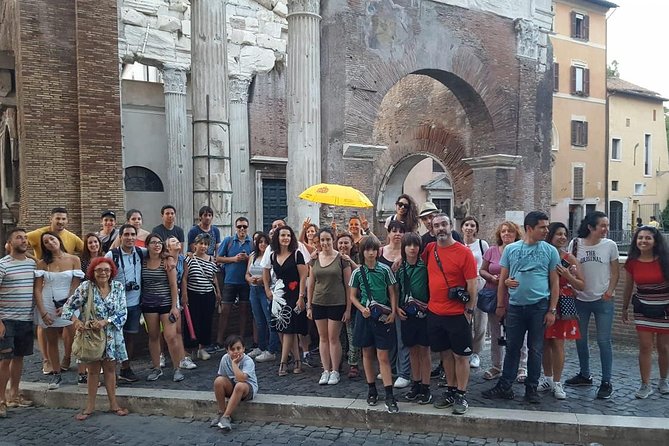
The tour begins at Via del Teatro di Marcello, 00186 Roma RM, which is convenient because it’s in the same general zone as the Teatro Marcello complex. That’s a smart choice: you’re not starting from a far-flung hotel pickup point, and you’re not arriving late to your first story.
You’ll need to plan for a walking start. This isn’t a bus tour. It’s a city-stroll format, and that’s part of the value. You see more street-level Rome—curbs, alleys, and sightlines—so the guide can point out what mattered historically in the spaces you’re standing in now.
Logistically, it’s friendly. You get a mobile ticket, there’s near public transportation, and the group max is 30. That size is big enough to keep things lively, but small enough that you’re not lost in a sea of heads.
Circus-Era Sights and the Run-Up to Boca de la Verdad
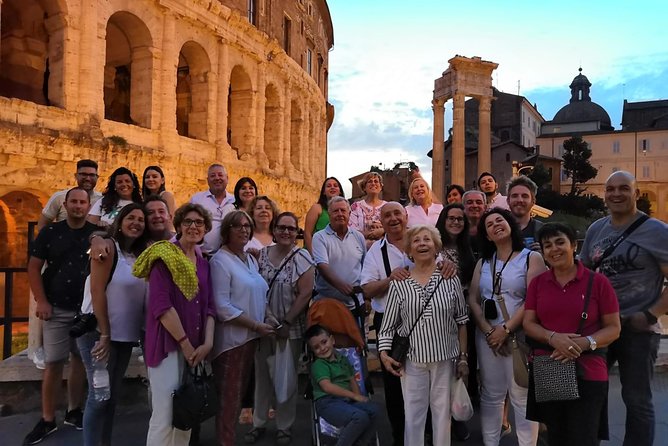
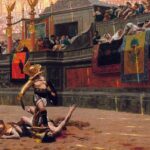
One of the most memorable sequences in this tour is the move from circus-era Rome toward Boca de la Verdad. The guide sets up the contrast: ancient Rome loved public spectacle, and circus spaces were where crowds gathered for the energy of the empire.
As you walk, you’re not just being told that Circus Maximus existed. You’re taken to the areas associated with the circus world, then guided toward the next stop where legend takes over. That matters because Boca de la Verdad isn’t just a photo moment—it’s a ritual tied to a simple question: are you willing to play along?
Here’s the practical consideration: Boca de la Verdad involves putting your hand into a carved structure. The tour explicitly warns that if you are not 100% sure of your honesty, you should not go hands-first. That’s fair advice. If you don’t want to participate, you can still enjoy it by watching and soaking in the story behind it.
Why this works at night: there’s less daytime “background noise” from tour buses and museum crowds, so the guide’s explanation lands better. It also keeps the tour playful without losing historical context.
The Port Before Rome: Forum Boarium and Ancient Temple Area
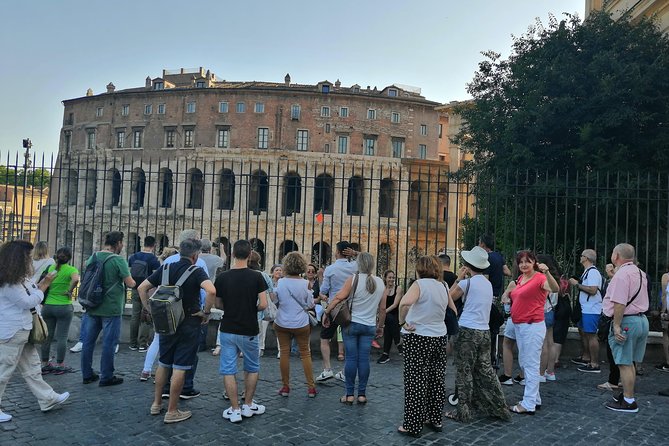
After the circus-to-legend stretch, the tour shifts into an older, more grounded side of Rome: the idea of the port area where life developed before Rome’s founding. Then it moves into the Forum Boarium area, famous for its ancient temples.
This is where the tour becomes useful even if you’re not obsessed with Roman history. The guide is basically helping you answer a question: why were people here in the first place? The port and market zone concept turns Rome from a list of famous buildings into a living city that depended on trade, movement, and everyday commerce.
The Forum Boarium stop also gives you a chance to understand Rome’s “layers.” Temples and public spaces aren’t isolated artifacts; they’re part of a city built on movement—people coming in, supplies arriving, and crowds forming around economic life. When a guide connects those dots, you walk away with more than just a few locations saved on your phone.
A note for your expectations: if you’re hoping for nonstop big-ticket sights every ten minutes, this section is more about comprehension. It’s still interesting, but it’s “slow history” compared with the circus-and-legend rhythm.
Teatro Marcello and the Octavia Portico: Imperial Power in Stone
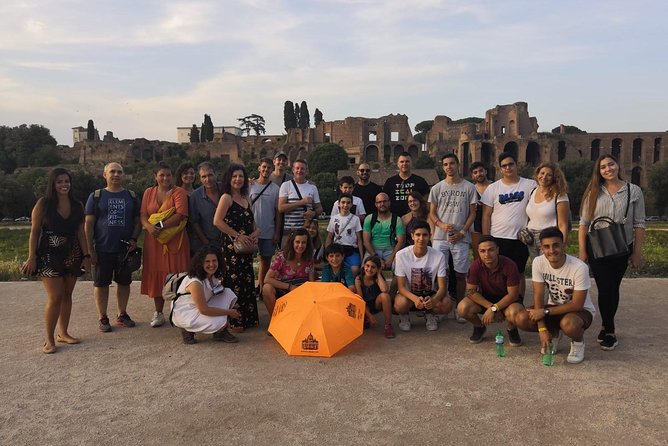
Then comes Teatro Marcello, a theater complex that the tour connects to imperial-era stories—named for Emperor Octavius (as described in the tour’s framing), and tied in the walk to the Octavia Portico built by the Emperor. Even if you’ve seen photos of these structures, hearing how they fit into power and memory makes the buildings easier to read.
The Teatro Marcello angle works because it’s not abstract. The guide links it to names and context you can hold onto as you’re standing there. When you understand who is remembered in a place like this, the structure feels less like a random ruin and more like a deliberate message from the empire.
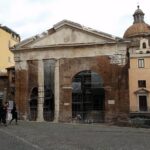
The Octavia Portico portion adds another layer. It’s the kind of architectural stop that can be easy to miss if you’re just moving quickly between major sights. In this tour style, the guide helps you notice what to look for—so you come away with a clearer sense of scale and purpose.
At night, buildings like these can feel darker and less crisp than during the day. That’s not a flaw; it just means you’ll want to listen closely in this stretch. The guide’s job here is to translate what you’re seeing into what it meant.






Jewish Ghetto History and Trastevere: Learning Without Turning It Into a “Stop”
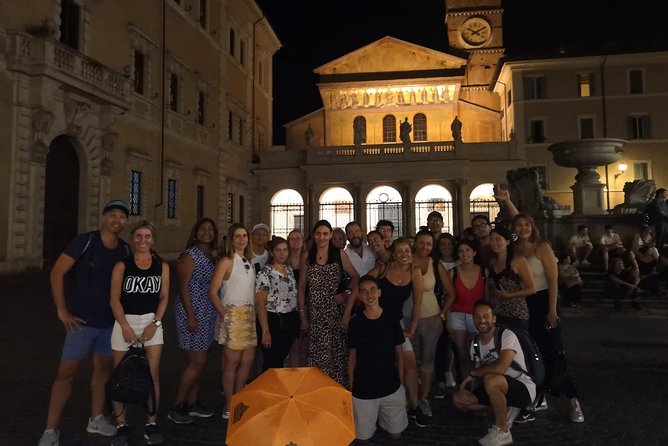
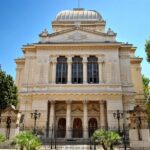
A standout part of this tour is that it doesn’t treat the Jewish history of Rome as an afterthought. The route includes passage through the Jewish Ghetto (Jewish quarters of Rome) and then into Trastevere, with the tour explaining the history of Jews in Rome while you’re walking through relevant streets.
This is valuable because it grounds “Rome history” in real communities, not just emperors and buildings. You’re walking through spaces where history is still tied to the urban layout, so the stories land with more weight than they would in a purely theoretical lecture.
The best way to get value here is attitude. If you treat this section like a box to check, it’ll feel heavy. If you treat it like context for the city you’re currently standing in, it becomes one of the most meaningful pieces of your evening.
Also, it helps to know you’re finishing in Trastevere after this. Trastevere can feel relaxed and fun on the surface. The tour keeps you aware that behind the charm, Rome is layered—and the Ghetto history is part of that layering.
Guides Matter: Ana Sofía and Iván’s Impact on the Experience
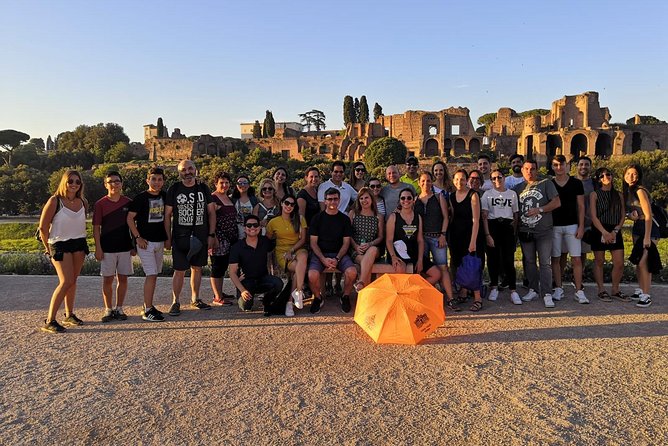
The quality of this kind of walking tour rises or falls with the guide. And here, the standout names mentioned in guide feedback include Ana Sofía and Iván.
Ana Sofía is described as extremely effective with strong group handling, plus a knack for capturing attention. That matters because a night walk needs momentum; if people get scattered, you lose the story thread.
Iván is praised for an engaging way of teaching Roman and Jewish cultural context, with recommendations for places to eat and a talent for bringing forward the details people often miss. Even if you don’t plan to follow restaurant suggestions, that kind of local guidance improves your whole evening.
If you’re booking with the hope of getting more than facts—if you want a guide who can connect dots and steer your attention—this tour is set up for that.
Price and Value: $17.38 for a Concentrated Night Narrative
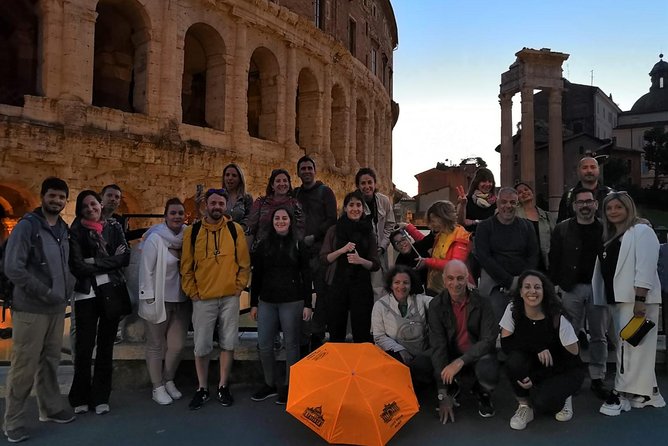
At $17.38 per person, you’re not paying for a museum entry or a set of attractions with timed tickets. You’re paying for a guided route that connects multiple key stops into one storyline—circus-era Rome, Forum Boarium, Teatro Marcello, Octavia Portico, Boca de la Verdad, and the Ghetto-to-Trastevere context.
That’s good value for two reasons.
First, walking tours are one of the best ways to turn “I saw it” into “I understood it.” Rome can be confusing at street level, and the guide’s job is to help you connect the dots quickly.
Second, you end your tour in Trastevere near nightlife, so the time you spend is directly usable. The best walking tours don’t just fill time; they set you up for what comes next—where to go, what to notice, and how to keep the story going on your own.
One thing to keep in mind: some visitors point out that the format may feel like a free walking tour style experience even though you’re booking at a set price. Either way, the core value remains the same—your experience is built around the guide-led route and the nighttime flow.
Who Should Book This Trastevere Night Tour (and Who Should Think Twice)
This tour is a great match if you want:
- A Rome-at-night introduction that focuses on atmosphere and stories
- An itinerary that connects major sights into a single theme (spectacle, empire, daily life, and Jewish history)
- A guided walk that ends in Trastevere, so you can keep exploring afterward
- A tour with a manageable group size (up to 30) and a mobile ticket
It might be less ideal if you:
- Don’t want to participate in Boca de la Verdad’s hand ritual (it’s optional, but the presence of the moment is part of the flow)
- Prefer daytime sightseeing or big indoor attractions over street-level storytelling
- Have a very limited ability to walk for a 2 to 3 hour evening window
Quick Practical Notes That Help You Enjoy It More
- Start time is 7:30 pm, so plan to arrive early enough to find the meeting spot at Via del Teatro di Marcello without stress.
- The tour ends at Piazza Trilussa in Trastevere, making it easy to transition into dinner plans.
- Confirmation is provided at booking, and you’ll receive a mobile ticket.
- Service animals are allowed, and the meeting area is near public transportation.
- The experience has a maximum of 30 travelers, which supports a more personal feel than huge group tours.
Should You Book This Trastevere Tour?
Yes, if you want a compact evening plan that feels like more than a checklist. The combination of circus-era Rome, the legend at Boca de la Verdad, the Roman architecture around Teatro Marcello and the Octavia Portico, plus the added context of Jewish history in the Ghetto makes this a strong “one-night” experience.
Skip it (or rethink it) only if you strongly dislike guided walking formats or if the hands-on legend moment at Boca de la Verdad is something you don’t want to deal with at all. Otherwise, this is exactly the kind of tour that helps you understand why Trastevere feels special after dark.
FAQ
FAQ
How long is the Trastevere Tour?
It runs about 2 to 3 hours.
What time does the tour start?
The start time is 7:30 pm.
Where is the meeting point?
The meeting point is Via del Teatro di Marcello, 00186 Roma RM, Italy.
Where does the tour end?
The tour ends at Piazza Trilussa, 35, 00153 Roma RM, Italy.
How much does the tour cost?
The price is $17.38 per person.
Is there a mobile ticket?
Yes, the tour includes a mobile ticket.
How many people are in a group?
The tour has a maximum of 30 travelers.
Is the tour near public transportation?
Yes, it is near public transportation.
Can I cancel for a full refund?
Free cancellation is available up to 24 hours in advance for a full refund.
Are service animals allowed?
Yes, service animals are allowed.