REVIEW · ROME
Tour of Rome in 7 Seater Golf Cart
Book on Viator →Operated by ETuk Tours Rome · Bookable on Viator
A golf cart tour keeps Rome moving. This 7-seater route is built for fast orientation: you cover major landmarks with short stops for photos and guide commentary, without a day full of long walks. It’s a smart way to see a lot while keeping your energy for dinner and gelato.
I love two things right away. First, you get close to the big sights and spend less time slogging across Rome’s streets—especially helpful if you’re dealing with mobility needs. Second, the stop pattern hits the moments most people come for, including scenic viewpoints like Janiculum Hill and the classic postcard shots around the center.
One consideration: entrance fees aren’t included for the Pantheon and the Colosseum. You’ll want to budget a bit extra and be ready for the official entry process at those two.
In This Review
- Key things to know before you go
- A 7-Seater Rome Golf Cart: The Fast Way to See More
- What You’re Paying For at $118.94 per Person
- Your 3-Hour Route: From Aventine to the Colosseum Area
- Aventine Hill Photo Stops: Rose Garden, Orange Grove, Keyhole
- Trastevere and Janiculum Hill Views Without the Grind
- Vatican City, Pantheon, and Trevi Fountain: The Three Big Dividers
- Piazza Venezia, Mouth of Truth, and the Roman Forum Pass-Through
- Spanish Steps, Villa Borghese, and Piazza del Popolo in Quick Hits
- From Augustus to the Colosseum: What to Expect at the Paid Stops
- How the Guides Keep It Relaxed (and Mentioned by Name)
- Should You Book This Rome Tour or Walk It Instead?
- FAQ
- How long is the Rome tour by 7-seater golf cart?
- Where does the tour start and where does it end?
- Is the tour offered in English?
- What’s included in the price and what entrance fees should I expect?
- How many people are in the group?
- Do I get a mobile ticket?
- What if I need to cancel or the weather is bad?
Key things to know before you go
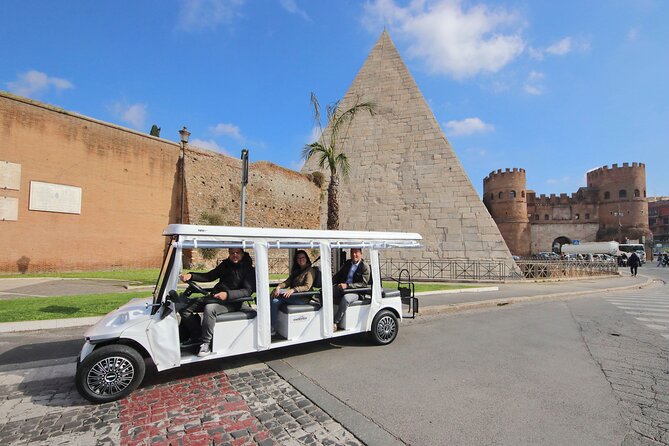
- Max 7 travelers keeps the cart experience calm and easy to manage.
- About 3 hours makes this a great first-day overview plan.
- English guide commentary helps the stops make sense fast.
- Many stops are outside or quick photo visits, which cuts down walking time.
- A couple paid sights (Pantheon and Colosseum) require entrance tickets.
- Designed for extra mobility needs, so fewer stairs and long distances are part of the point.
A 7-Seater Rome Golf Cart: The Fast Way to See More
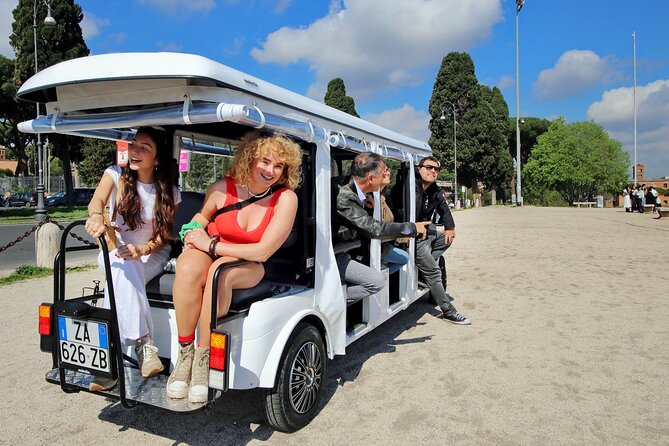
Rome is spread out, and walking can turn into a full-day mission. This tour fixes that by using a private golf cart setup that helps you move between neighborhoods efficiently. You still get real stops—just without the hours of legs-on-stone time.
The best part is how the route is paced. The itinerary mixes quick highlights with viewpoint time, so you’re not just chauffeured past buildings. You’ll get photo opportunities at major sites, plus commentary that’s meant to stay at a pace you can actually enjoy.
Also, small group size matters. With a maximum of 7 travelers, the guide can steer the moment—stopping where your group needs a break or spending an extra minute on a photo angle.
You can also read our reviews of more tours and experiences in Rome.



What You’re Paying For at $118.94 per Person
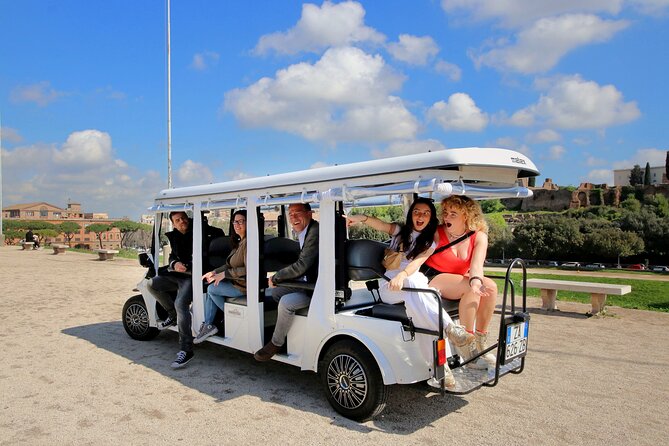
At $118.94 per person for about 3 hours, you’re paying for two things: transportation that’s private and practical, and a guided route that strings the right sights together. The price is also positioned for value because many of the landmark moments are included as stops where admission is listed as free.
Here’s where the math gets real. The tour includes private transportation, but entrance tickets are not included for the Pantheon and the Colosseum. So your total trip cost may go up slightly depending on ticket prices on the day. Still, this kind of routing is often cheaper than piecing together multiple day-taxi plans plus walking tours.
One more pricing signal: the experience is commonly booked about 67 days in advance. That doesn’t guarantee availability on your exact day, so if you’re set on it, booking ahead is a smart move.
Your 3-Hour Route: From Aventine to the Colosseum Area
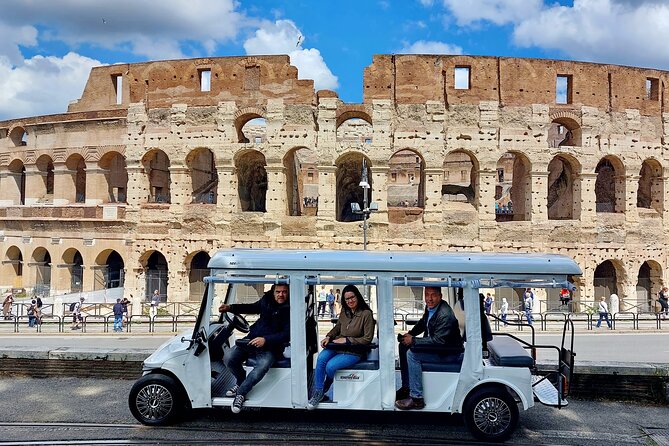
You start at Via di S. Giovanni in Laterano, 2 and end at Piazza Venezia. That start-and-finish setup is useful because you’re not trapped in one endless loop; you’re moving across the city’s main storylines.
The route is also structured in a way that feels like Rome in chapters:
- Elevated viewpoints and classic photo spots (Aventine, Janiculum Hill)
- Big landmark zones (Vatican City, Piazza Venezia)
- The central icons people plan their whole trip around (Pantheon, Trevi Fountain, Spanish Steps)
- The ancient core (Mouth of Truth pass-by, Roman Forum visit)
- The big finale symbolism (Augustus area and the Colosseum)
Since it’s offered in English and includes mobile tickets, you’re not stuck decoding signs or coordinating complex meeting-time logistics.
Aventine Hill Photo Stops: Rose Garden, Orange Grove, Keyhole
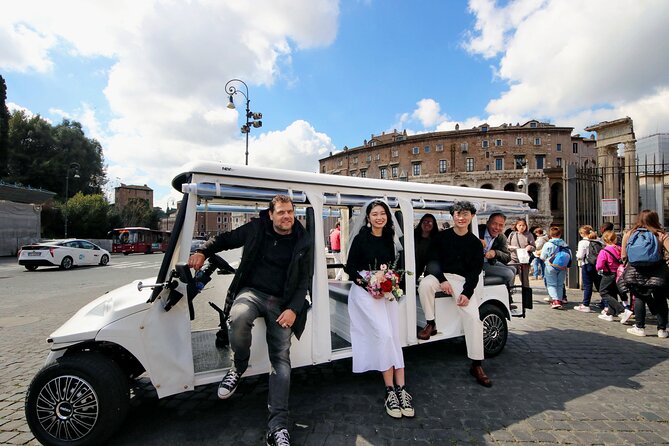
Aventine Hill is a strong opening. You’ll stop at the rose garden, the orange garden, and the famous keyhole viewpoint. Even if you’ve seen photos before, this stop works because the cart gets you there without making you earn every view with uphill walking.
Timing helps too. You’ve got about 20 minutes at Aventine, which is long enough to wander a bit, find the right angle, and take photos without rushing. Admission here is listed as free, so you can focus on the experience rather than ticket math.
What I like about starting here is the mood shift. Rome often feels loud and crowded in the center, but Aventine gives a quieter, more “see it, photograph it, move on” feeling. You’re setting your mental map early.
Trastevere and Janiculum Hill Views Without the Grind
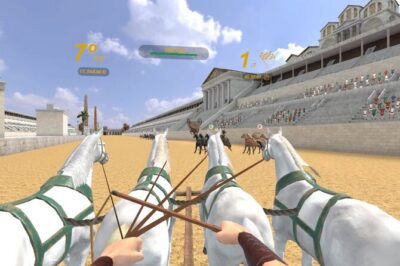
Next up: Circo Massimo for about 5 minutes. You’ll look at the place where Romans held chariot races. It’s short on purpose. The goal isn’t a long history lecture—it’s a quick “this is the stadium-scale space where Roman spectacle happened” moment.
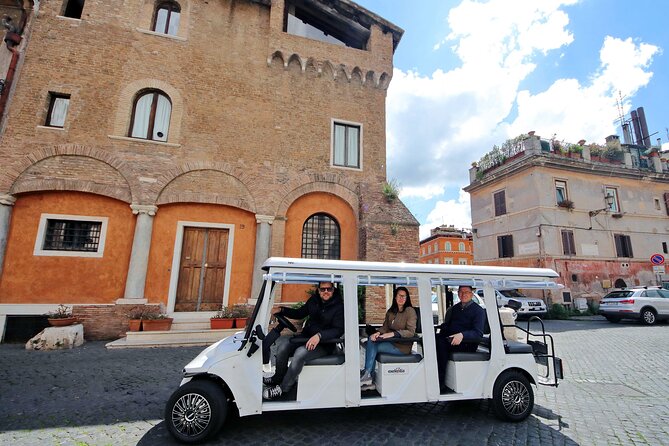
Then you head to Trastevere for about 15 minutes. This stop is all about the vibe: small streets with restaurants, pizzerias, and ice cream parlors. Trastevere is one of those neighborhoods where walking can be great—until your energy runs out. Here, you get a taste fast and you can decide later whether to come back on foot.
After that, Janiculum Hill is the big view segment, with about 30 minutes. This is where you should slow down mentally. You’re going for the best overall city perspective, not checking boxes. If you’re traveling in warm weather, this is also a practical place to sit for a bit and reset before the heavier landmark zones.






Vatican City, Pantheon, and Trevi Fountain: The Three Big Dividers
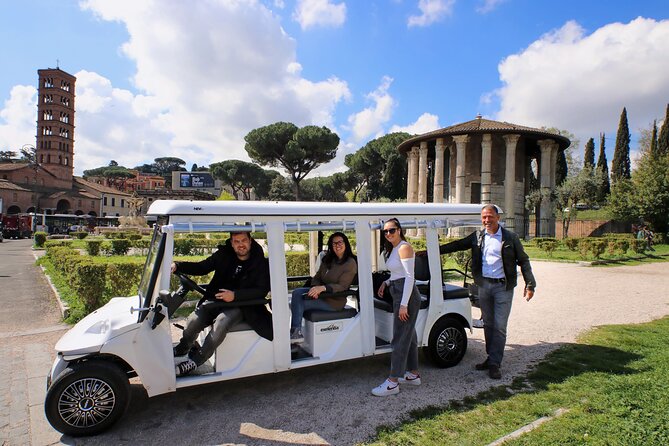
The tour then moves to Vatican City for about 15 minutes. You’ll see Piazza S. Pietro and the Basilica of S. Pietro. This is one of the main reasons to choose a cart route—getting around the Vatican area without a lot of backtracking and long walking legs.
From there, it’s on to Pantheon for about 20 minutes. The Pantheon stop is listed with admission not included. That means you’ll likely need to pay for entry if you want to go in. Still, the short stop duration is useful: you can decide quickly whether you want the inside experience or focus on capturing it from the right angles.
Then comes the classic: Trevi Fountain for about 20 minutes. Admission is free for this stop, and the tour frames Trevi as the most famous fountain in the world. The practical value here is timing and positioning. You’ll get photo time without turning the day into a line-watching contest.
If you care about photos, these three stops are where you’ll feel the tour’s design. You’re bouncing between major icons with minimal wasted time between them.
Piazza Venezia, Mouth of Truth, and the Roman Forum Pass-Through
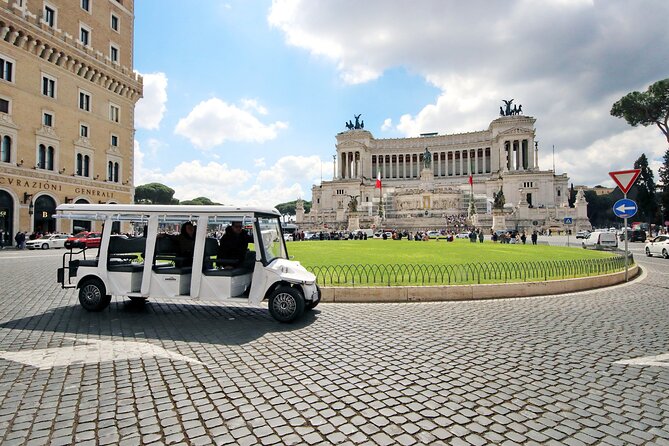
After Trevi, you move to Piazza Venezia / Ancient City for about 10 minutes. You’ll see the Altare della Patria, which is a great anchor landmark because it’s bold and central—useful when you’re trying to orient yourself later on foot.
You’ll also pass in front of the Mouth of Truth. That’s a quick, fun detour moment. It works best if you’re traveling with someone who loves quirky photo spots and instant recognition landmarks.
Then you go to see the Roman Forum. This is one of the most historically charged areas on your route, and the pacing matters. Instead of tackling it cold and wandering, you get a guided “you are here in the story of ancient Rome” approach.
One important note: the itinerary doesn’t give a duration for the Forum segment in the info I received, so you should expect it to feel like part of the flow rather than a standalone long visit. If the Forum is a top priority for you, plan your expectations around that.
Spanish Steps, Villa Borghese, and Piazza del Popolo in Quick Hits
Next is Spanish Steps for about 10 minutes, listed as a stop to see the Spanish Steps. For many people, this is where Rome instantly looks like Rome. You’ll have just enough time for photos and to feel the street-level energy around it.
Then there’s a short stop at Villa Borghese for about 10 minutes. You’ll see one of the most beautiful villas—so expect a calm, scenic contrast after the denser center. Ten minutes is brief, but it’s enough for a visual reset and a few key viewpoints.
Then it’s on to Piazza del Popolo for about 5 minutes, described as the largest square in Rome. This is a classic “look up, take in the scale, move along” stop. With only a few minutes, you’ll want to be ready to spot your photo angles quickly.
If you like strolling, this part of the day is also where you’ll start thinking about what to revisit later—especially if you want to explore streets beyond the main landmarks.
From Augustus to the Colosseum: What to Expect at the Paid Stops
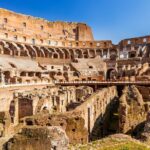
Later in the route you’ll see the Tomb of Emperor Augustus (listed without a specific time in the info provided). After that, you reach the big symbol moment: the Colosseum.
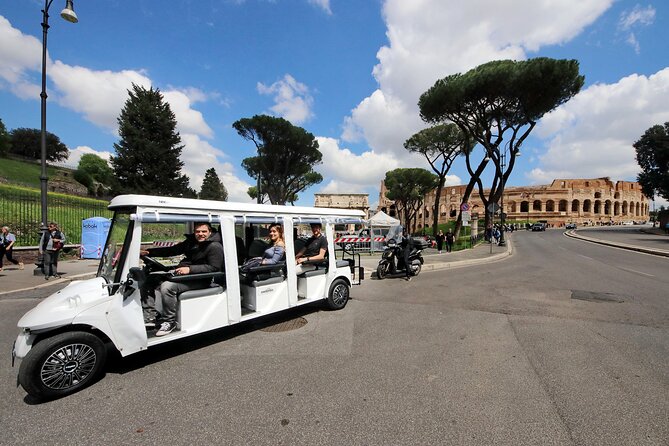
The Colosseum stop is about 10 minutes, and it’s marked with admission not included. So you have two choices in your head before you arrive:
- Do a quick exterior-and-viewing moment if you’re focused on seeing it from the route
- Or plan to pay for entry if you want to go inside
Either way, ten minutes sounds short, but the cart format makes it feel efficient because you’re not spending that same time fighting traffic on foot or searching for the best approach.
I also want to call out comfort realities. A few visitors note that the cart ride can feel less comfy on Rome’s pavements and that visibility can be limited depending on where you sit. If you’re sensitive to bouncing or you need the clearest view, ask where to position yourself when you get on.
How the Guides Keep It Relaxed (and Mentioned by Name)
A big part of why this tour gets such a strong rating is the human factor: the guides set a relaxed tone and adjust to the group. In the feedback I saw, guides like Tomas, Frederico, Cristiano, Andrea, Edwin, Luka, Fabio, and Mauricio came up repeatedly for being patient, friendly, and good at sharing Rome in a way you can actually absorb in three hours.
A couple practical guide details that matter:
- One guide, Cristiano, even paused twice to buy drinks, which is a small thing that makes the tour feel more cared-for.
- One review also mentioned a sound-listening issue (no earbuds, so hearing from a distance was tougher). If audio matters for you, I’d ask what the setup is before you start, so you’re not guessing.
The overall goal is a pace that works. Reviews point out the value for people who can’t see as much if walking, and that’s exactly what this route is built to do.
Should You Book This Rome Tour or Walk It Instead?
If you want an efficient Rome overview with minimal walking, this is a strong pick. It’s especially worth booking if you’re:
- Short on time and want major landmarks covered in about 3 hours
- Traveling with someone who needs a lower-walking plan
- Visiting in good weather and want a relaxed, scenic ride between highlights
I’d think twice if you’re the type who wants long, in-depth museum-style touring. The stops are designed for highlights and photo time, and you’ll still need entrance tickets for the Pantheon and the Colosseum.
One last practical reality: the experience requires good weather. If it’s canceled due to weather, you should be offered a different date or a full refund. If your schedule is flexible, that risk is easier to handle.
FAQ
How long is the Rome tour by 7-seater golf cart?
The tour lasts about 3 hours.
Where does the tour start and where does it end?
It starts at Via di S. Giovanni in Laterano, 2, 00184 Roma RM, Italy and ends at Piazza Venezia, Roma RM, Italy.
Is the tour offered in English?
Yes, it’s offered in English.
What’s included in the price and what entrance fees should I expect?
Private transportation is included. Entrance tickets are free for many stops, but admission is not included for the Pantheon and the Colosseum.
How many people are in the group?
This tour has a maximum of 7 travelers.
Do I get a mobile ticket?
Yes, it uses a mobile ticket.
What if I need to cancel or the weather is bad?
Cancellation is free up to 24 hours in advance for a full refund. The tour requires good weather, and if it’s canceled due to poor weather, you’ll be offered a different date or a full refund.