REVIEW · ROME
The secret lives of artists
Book on Viator →Operated by Luisa Belviso · Bookable on Viator
Baroque Rome has a darker side. This guided walk ties together Bernini, Borromini, and Caravaggio with the human stuff behind the masterpieces: rivalry, secrets, passion, and the temptations of court life. Led by Luisa Belviso, the art feels less like museum labels and more like a plot you can follow street by street.
I love how the tour balances headline sights with high-impact interiors. You’ll spend time at major landmarks like the Pantheon while also getting church moments where the paintings are the point, not a quick glance.
One consideration: this is a focused walking route through central Rome, so wear comfortable shoes and expect tight timing at each stop.
In This Review
- Key highlights you should care about
- Baroque Rome, but make it personal
- Who Luisa Belviso is to the experience
- The opening loop: Trevi to Hadrian’s columns
- Sant’Ignazio di Loyola: the fake dome that changes how you look up
- Pantheon and Raphael: looking up without rushing
- Caravaggio at work: St. Louis of the French and Sant’Agostino
- Piazza Navona: Bernini’s fountains, Borromini’s presence
- Pasquino and Casa di Fiammetta: the story closes with a wink
- Price, pace, and what you really get for $52.09
- Practical tips so you enjoy every stop
- Should you book this Baroque artist story walk?
Key highlights you should care about
- Luisa Belviso’s story-first approach connects Baroque art to personal drama, not just dates and facts
- Major sites in smart order, from Trevi through the Pantheon and on to Piazza Navona
- Caravaggio in two churches, with dedicated time to actually look at what you came for
- Andrea Pozzo’s theatrical illusion at Sant’Ignazio di Loyola, including the famous fake dome
- A small group (max 15) keeps the experience lively without feeling rushed
Baroque Rome, but make it personal
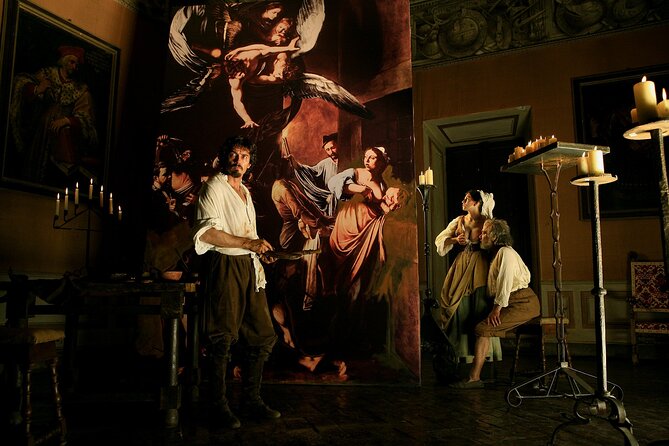
If you think Baroque Rome is only about big churches and bigger domes, this tour nudges you to look closer. The whole idea is that famous artists were people with dangerous ambition, complicated patrons, and messy lives. You don’t get a dry lecture; you get a guided story that helps the buildings make emotional sense.
The focus stays on the golden centuries of Baroque art, when Rome was a magnet for talent and ego. That matters, because a lot of what you see around you was built with real stakes: money, influence, and reputation.
With Luisa Belviso leading, the walk stays anchored in what you can see right now. That’s what makes it feel practical. Instead of collecting trivia, you’re learning how these artists operated in the city where commissions, politics, and personal rivalries could all collide.
You can also read our reviews of more tours and experiences in Rome.
Who Luisa Belviso is to the experience
You’re not just getting a route. You’re getting a guide who ties visual details to the human drama around them. In the short reviews you read before booking, the common thread is clear: Luisa’s passion and deep knowledge show up in the way she connects the art to the stories.
That kind of guide matters in Rome, where the eye can get overwhelmed fast. You might recognize a façade, but you might miss why a church mural feels like a stage, or why a fountain and a neighboring church start to look like a challenge.
This tour stays small, with a maximum of 15 people. That size helps a lot: you can ask questions, the guide can manage the pacing, and you’re not stuck watching from the back of a crowd.
The opening loop: Trevi to Hadrian’s columns
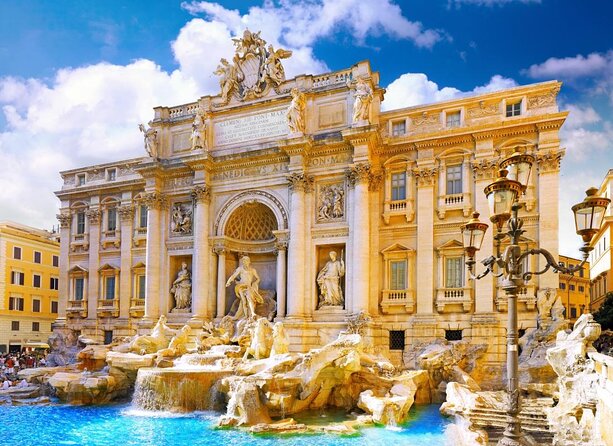
You start near Via della Stamperia 72 and your first real destination is Fontana di Trevi. It’s a famous starting point, sure, but the point here is what it represents in the larger Baroque story. You get a brief, guided look in about 10 minutes, with admission included.
Trevi can swallow time if you let it. The trick is to treat this first stop as orientation: get your bearings, look at the sculptural drama, and let the guide set up the theme before you rush ahead. After that, Rome’s artist world becomes easier to track.
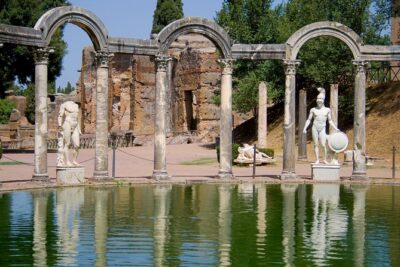
Next comes Tempio di Adriano in Piazza di Pietra. You’ll see the ruins of the ancient temple and the famous 11 columns. Admission is free here, and the stop is short (about 5 minutes). Even if your brain isn’t fully in “ancient Rome” mode yet, these columns help you remember something important: the Baroque artists you came for worked in a city that already had strong visual rules from earlier empires.
This stop is quick, but it sets a useful baseline. Rome never stops layering eras on top of each other, and the tour uses that to make the Baroque feel grounded, not floating.
Sant’Ignazio di Loyola: the fake dome that changes how you look up
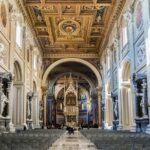
Then you hit Chiesa di Sant’Ignazio di Loyola, one of the most satisfying stops on the route for anyone who loves illusion in art. This is where you get about 20 minutes and a clearer sense of what Baroque artists were really doing: staging your experience.
The big draw is the work by Andrea Pozzo, including the breathtaking frescoes and the church’s fake dome. If you’ve ever wondered how paintings can trick your eye into believing you’re seeing space that’s not there, this is the kind of place where you can actually feel the technique working while you stand inside.
You’ll also notice additional details tied to power and leadership—there’s a monument in honor of Pope Gregory XV, plus other elements the guide points out so you’re not just looking at the ceiling and guessing. The best part is that this stop doesn’t just show you art; it teaches you how to read it.
A mild caution: because it’s a church interior, you’ll want to keep movement respectful and steady. The guide’s timing helps, but slow your pace enough to look rather than just pass through.
Pantheon and Raphael: looking up without rushing
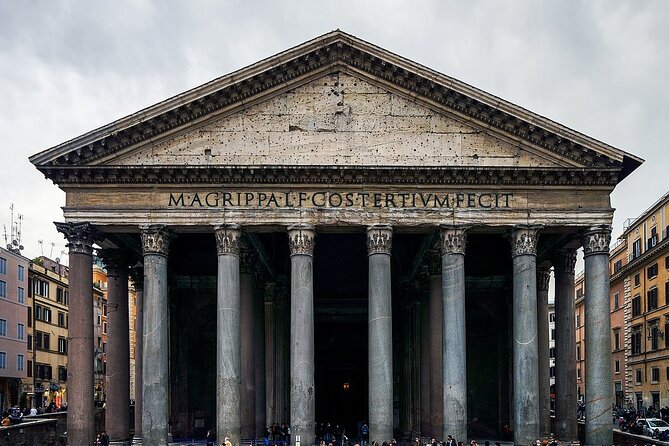
From Sant’Ignazio you move to the Pantheon, with around 15 minutes here. You’ll see the majestic dome inside and the Tomb of Raphael. Admission is free.
The Pantheon is the kind of place where you can accidentally spend your time doing the same thing everyone does: standing in one spot and hoping the “wow” hits on schedule. This is where having a guide helps. You’ll get prompted to focus your attention where it matters—especially upward—so the dome isn’t just impressive, it becomes comprehensible.
The Tomb of Raphael adds a different kind of meaning. Baroque Rome is still tied to earlier masters and ongoing reverence. Even when the tour theme zooms into Bernini, Borromini, and Caravaggio, the Pantheon reminds you how Rome continually treated great artists as part of the city’s identity.
If you’re short on time later in your trip, you could skip some secondary stops. But don’t cut this one. It’s a hinge point for understanding why artists kept landing in Rome.
Caravaggio at work: St. Louis of the French and Sant’Agostino
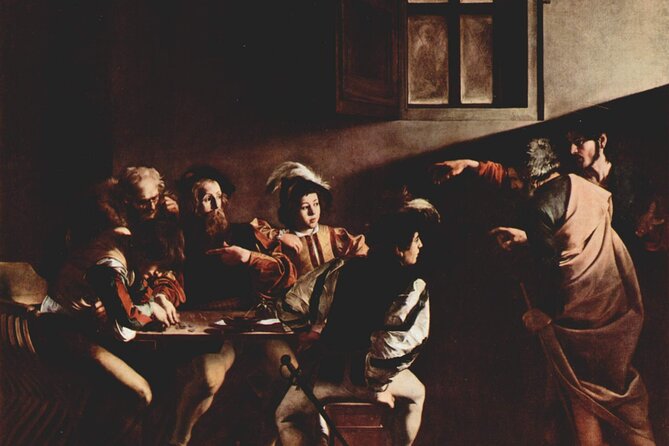
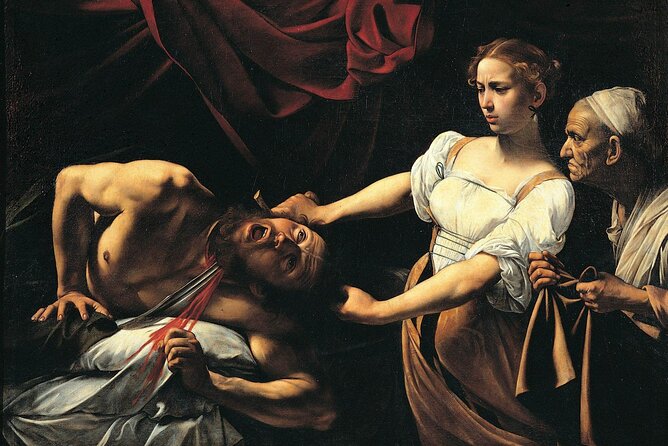
The route gives you two distinct Caravaggio stops, and that’s a big deal. Church of St. Louis of the French comes next, with about 20 minutes. Admission is free, and the focus is on Caravaggio paintings inside.
Then you continue to Basilica di Sant’Agostino, where the tour highlights another Caravaggio work: the Virgin of pilgrims. This one is much shorter—about 5 minutes—but it’s deliberately placed so you see Caravaggio’s approach twice in two different church atmospheres.
What I like about this setup is the rhythm. Caravaggio isn’t a single portrait you check off. It’s a style that changes the mood of a room. Seeing him in more than one setting trains your eye faster than “one and done.”
Here’s how to make the time count at each church:
- Slow down your walking as soon as you enter. Your eyes need a moment to adjust.
- Look for the painting’s emotional center first, then zoom out to how the church frames the artwork.
- Let the guide point out what to notice, even if you think you already know Caravaggio.
If Baroque Rome is a story about power and ambition, Caravaggio’s work is the human scale version of that theme—light, emotion, and drama, right where people pray.
Piazza Navona: Bernini’s fountains, Borromini’s presence
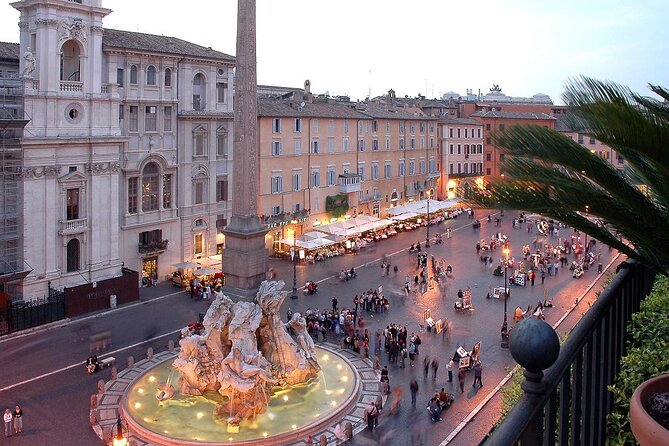
Next is Piazza Navona, with about 10 minutes. This stop is easy to love because it connects multiple artists in one glanceable space. You’ll see the fountains by Bernini and the church by Francesco Borromini.
This is a good place to think about competition without turning it into gossip. The Baroque era was fueled by commissions and visibility. When you stand in a major square like this, the city is basically saying: these artists matter.
Navona can be crowded, especially at peak hours, and that’s where your guide’s timing helps. Don’t try to do everything. Let this be a visual summary stop: look at how the fountains shape the space, then notice how the church’s presence changes the tone of the square.
If you want photos, plan for short bursts rather than long posing. The tour time is tight enough that it’s better to get a couple of solid shots and keep your attention on the art.
Pasquino and Casa di Fiammetta: the story closes with a wink
The final stretch takes you to Piazza di Pasquino, where you’ll learn the story of Pasquino, the talking statue. From there, the walk ends in Piazza di Fiammetta, in front of the House of Fiammetta.
This ending feels smart because it ties the theme back to voice and power. Talking statues, public commentary, and the city’s street-level rumor mill were part of how people processed politics and culture in earlier centuries. It’s not only about grand art. It’s also about how stories traveled.
The stop is short (about 5 minutes), but the guide’s storytelling lens helps you connect it to what came before. When you finish, you’ll likely notice the way Rome’s corners feel like set pieces. Even the quiet places seem to have a role.
Price, pace, and what you really get for $52.09
At $52.09 per person for about 2 hours 45 minutes, the value comes from what’s included: a private guide and a walking route that focuses on major Baroque touchpoints plus multiple church interiors. Admission is included for Trevi, while the other featured sites are listed as free entry in the route details.
So you’re paying mostly for time, interpretation, and access to the right kinds of viewing moments. That’s often where guided walking tours earn their keep in Rome. The city is beautiful, but it can also turn into a blur if you don’t know where to look and why.
The pace is also important. You’re not being marched through every church for an hour. You get short, targeted visits that keep you moving but also protect the chance to actually look.
Group size stays capped at 15. That sweet spot matters if you hate the vibe where everyone’s staring at the same wall. Here, you’re usually close enough to get context, and the guide can keep the story coherent.
Practical tips so you enjoy every stop
You don’t need special equipment for this tour, but you do need a little planning mindset.
- Wear comfortable shoes. Central Rome surfaces can be uneven and you’ll cover distance between sites.
- Bring something for good weather. This experience requires decent conditions and may be rescheduled if weather is bad.
- Plan to enter churches with a calm pace. Interiors often demand respectful quiet and slower movements.
- Use the mobile ticket on your phone when you’re asked.
- If you rely on public transportation, the route is near transit, so you should be able to join easily.
Also, if you’re the type who loves art but gets lost in name-only sightseeing, this is made for you. The guide’s job is to keep the names connected to what your eyes are seeing.
Should you book this Baroque artist story walk?
I think this tour is a great booking choice if you want Rome to feel like a living story. It’s especially worth it if you’re interested in how Bernini, Borromini, and Caravaggio show up across the city—not just as famous names, but as artists with personality, conflict, and influence.
Skip it only if you want a wide-ranging museum-style day. This isn’t about seeing everything. It’s about seeing the right places in a tight loop and learning how the Baroque works as theater, persuasion, and personal ambition.
If your dates are flexible, keep an eye on weather. Since the experience needs good conditions, you’ll enjoy it more if you book for a stable day and come ready to walk.