REVIEW · ROME
Rome: Sightseeing Tour by Golf Cart
Book on GetYourGuide →Operated by Alfredo Tour s.r.l. · Bookable on GetYourGuide
Rome moves at cart speed. I love how the electric golf cart lets you glide between major sights without turning the day into a marathon. I also like the private guide angle, where stops come with clear explanations and quick storylines you can actually use while you’re there.
One consideration: even with the cart, you’ll still do some walking (and you’ll want comfortable shoes), so it’s not a zero-footsteps kind of tour.
In This Review
- Key things you’ll notice right away
- Why a private electric cart works so well in Rome
- Meeting at Via Urbana 167: how you start without stress
- Rione Monti and Via dei Fori Imperiali: setting the Rome scene
- Colosseum photo stop plus guided time: seeing it twice
- Trevi Fountain: the classic view with less scramble
- Sant’Ignazio di Loyola and Palazzo di Montecitorio: baroque and civic Rome
- Piazza Navona: where a great guide adds a bonus story
- Sant’Eustachio break: coffee and a real pause
- Pantheon and Piazza Venezia: finishing strong
- Customizing your route without losing the rhythm
- Price and what you’re really paying for ($135.94 per person)
- The guides are a big part of the experience
- What to expect day-of: timing, comfort, and walking
- Should you book this Rome electric golf cart tour?
- FAQ
- How long is the Rome sightseeing tour by electric golf cart?
- What is the price per person?
- Is the tour private?
- How many people are in the group?
- What landmarks does the tour include?
- What’s included in the price?
- Are meals included?
- Where do we meet the tour?
Key things you’ll notice right away
- Private small-group size (up to 7) with an electric cart ride
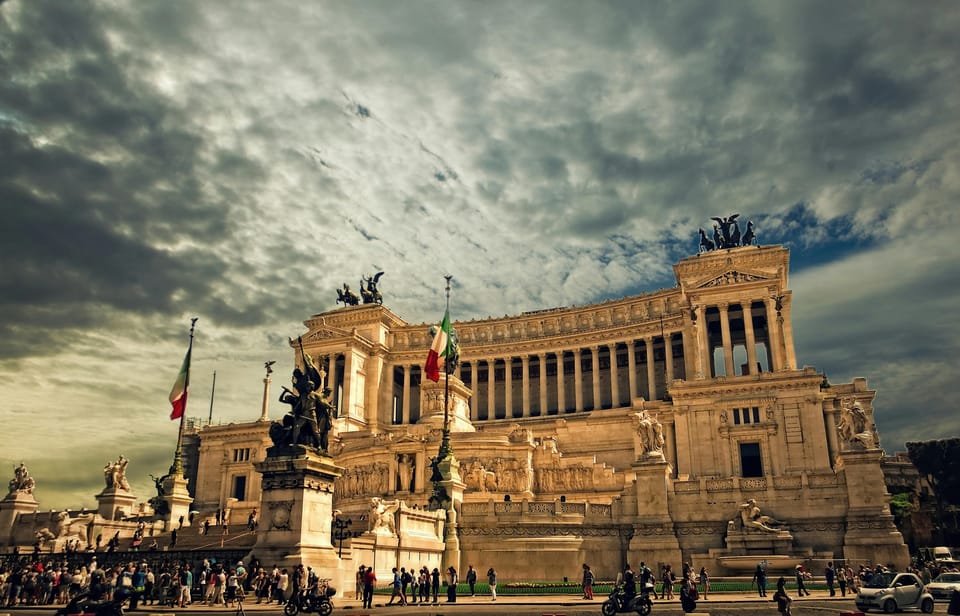
- A best-of Rome route that hits ancient monuments and classic piazzas
- Photo stop timing at the Colosseum, Trevi Fountain, and more
- Time for a break with food and coffee tasting at Sant’Eustachio
- Guided moments at key stops like the Colosseum and the Pantheon
- A practical starting point near Via Urbana 167 and the restricted traffic zone gate
Why a private electric cart works so well in Rome
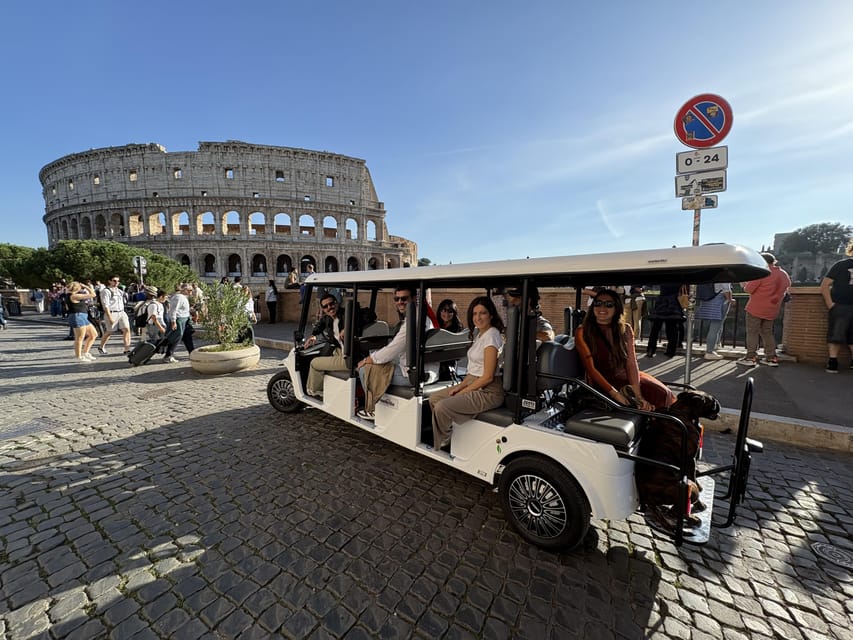
Rome can be beautiful and stubborn at the same time. Streets can be tight, corners can be cramped, and you still want photos without arriving totally cooked. An electric golf cart is a smart match for a city built for walking—but driven by reality.
This is a private setup with a live guide, limited to a small group of up to 7. That matters because you’re not just riding from one postcard to the next. You’re going at a pace that lets you stop for photos, hear what you’re looking at, and ask questions while your energy holds out.
Also, the tour is flexible. You can customize the route to fit your interests, which is great if you care more about architecture, churches, or the big ancient sites.
You can also read our reviews of more tours and experiences in Rome.



Meeting at Via Urbana 167: how you start without stress
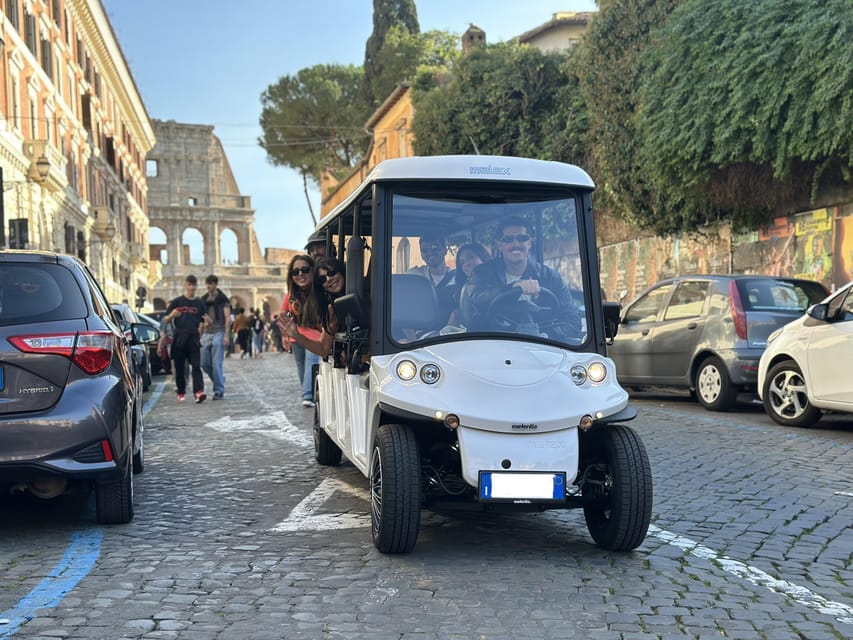
Your meeting point is just outside the restricted traffic zone gate at Via Urbana 167. The golf cart driver will be there waiting for you, so you’re not playing guessing games with pickup points.
This start location matters in Rome. Getting near the right access points helps you spend more time seeing and less time crossing busy areas on foot. It also sets the tone: this tour is designed for efficient movement, not wandering at random.
Bring what you’ll actually use: a camera and comfortable shoes. You’ll have enough walking to want good footwear, but you won’t be locked into long stretches all day.
Rione Monti and Via dei Fori Imperiali: setting the Rome scene
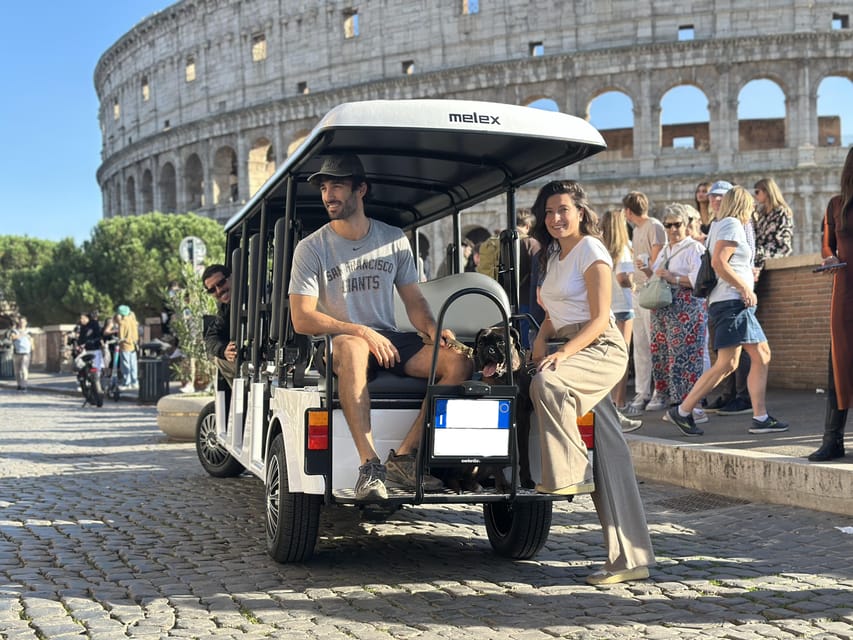
The first major stop is Rione Monti. Expect a guided walk-through component plus scenic driving and views on the way. This area works well early because it gives you the texture of Rome—less like a museum hallway, more like a living neighborhood.
Then you roll onto Via dei Fori Imperiali for a photo stop and short guided moments. This road is famous for the way it frames ancient ruins and monumental perspectives. Even if you already know the headlines about ancient Rome, this is where your brain starts lining things up: street, scale, and how the city used to function.
Time is tight, though. Plan to treat these moments as “look-and-learn” rather than “slow-and-stare.” You’ll get the big guided content at the top stops later.
Colosseum photo stop plus guided time: seeing it twice
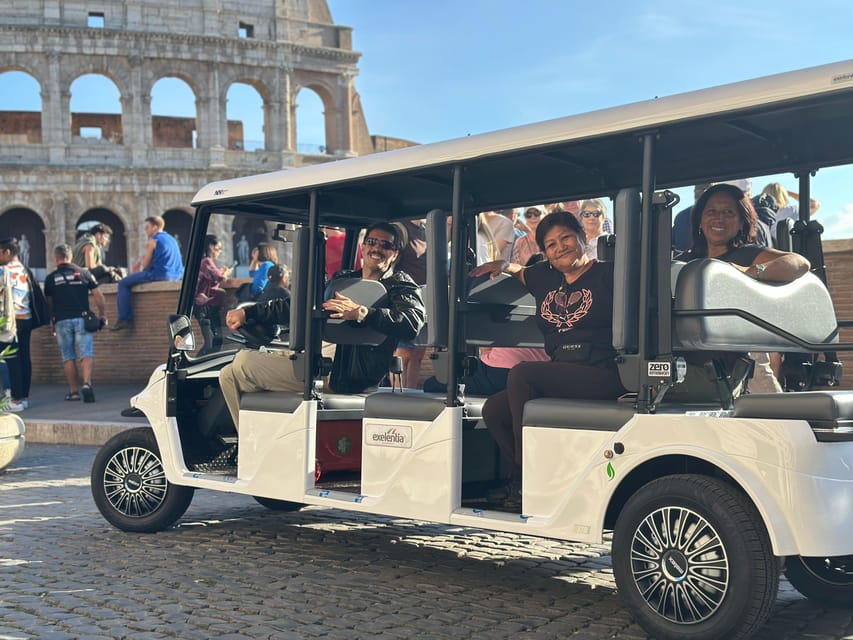
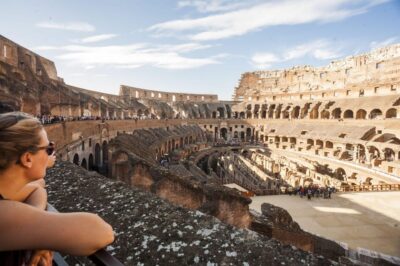
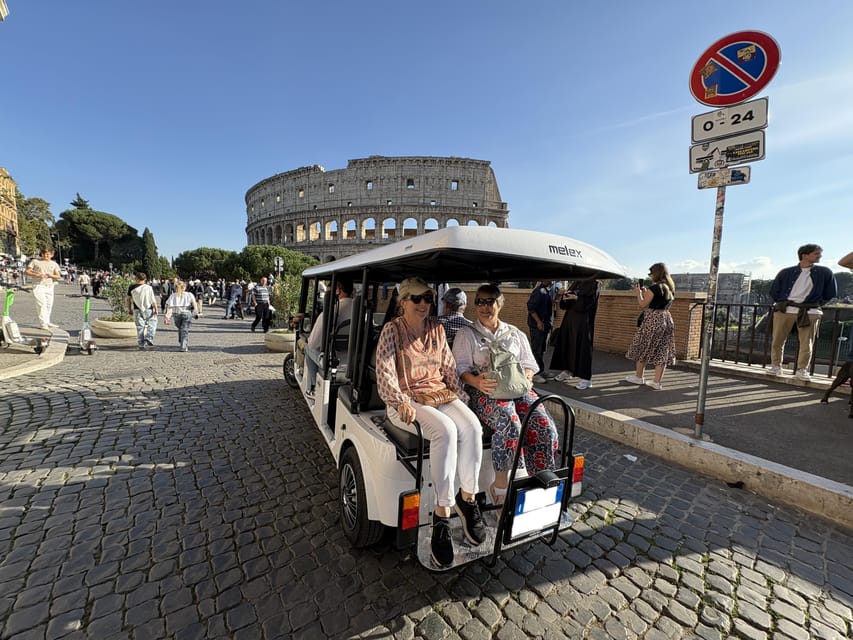
The Colosseum is next, with a photo stop and scenic views, then a guided visit later in the route as well. That gives you a useful rhythm: you can get your first dramatic photos, then come back with the guide’s explanation in your head.
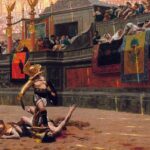
Here’s what I like about this approach. The Colosseum looks iconic from a distance, but it becomes more meaningful once someone helps you notice the details and the layout. With a guide, you’re not just photographing stone—you’re understanding why it’s arranged the way it is.
The Colosseum stop is also where you’ll feel the value of the cart. Rome can be slow when you’re hauling yourself across crowded areas on foot. This tour keeps you moving, but still gives you moments to pause.
Trevi Fountain: the classic view with less scramble
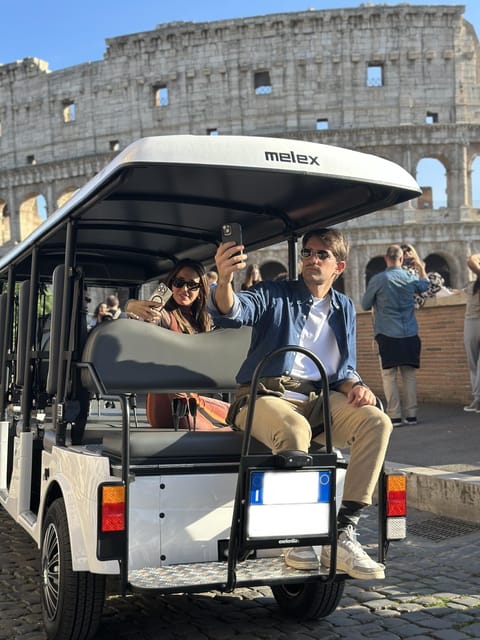
At Trevi Fountain, you get another photo stop and sightseeing time. The main advantage here is pacing. You’re arriving by cart, so you’re not fighting for position from blocks away.
Trevi is one of those places where timing changes everything. The cart-and-guide format helps you spend your energy where it counts: photos, quick orientation, and then onward before you’re stuck in long delays.
A practical tip: if you want the best photos, bring patience and work the angles. The guide’s job here is to help you find the view you want without wasting your whole session.





Sant’Ignazio di Loyola and Palazzo di Montecitorio: baroque and civic Rome
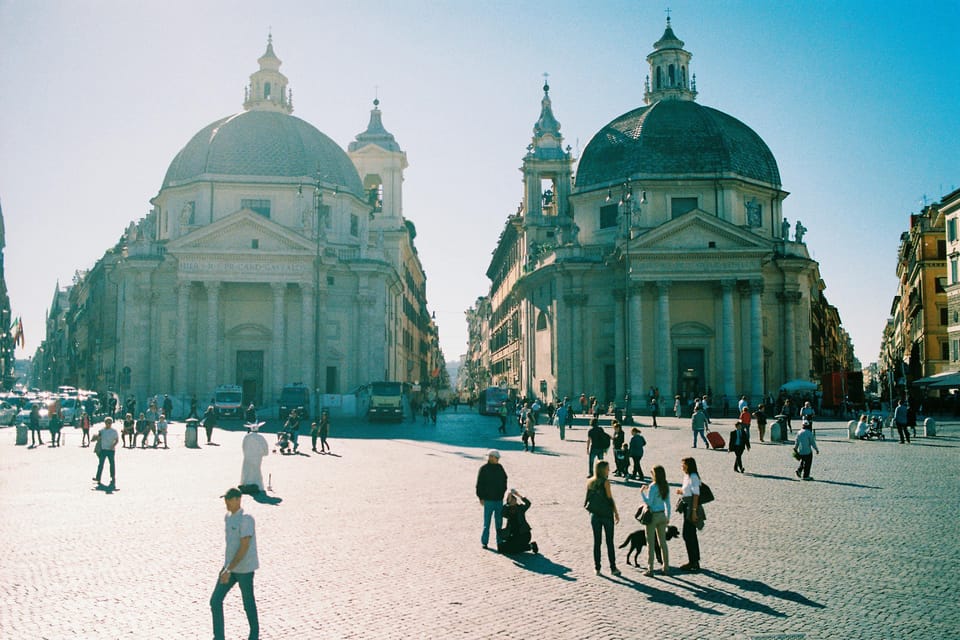
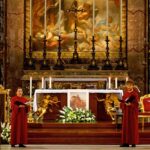
Rome isn’t only ancient. The tour takes you into more layered territory, including Sant’Ignazio di Loyola for a photo stop and visit. This is the kind of church stop that can feel random if you’re on your own, but it lands better when a guide connects it to style, symbols, and the city’s cultural habits.
Then you pass Palazzo di Montecitorio for sightseeing and scenic driving views. This is a civic stop—different from the Colosseum and Trevi—yet it’s part of how Rome continues as a functioning capital rather than a theme park.
If you like variety, this part of the route pays off. It reminds you that Rome’s story runs from antiquity into modern governance and daily life.
Piazza Navona: where a great guide adds a bonus story
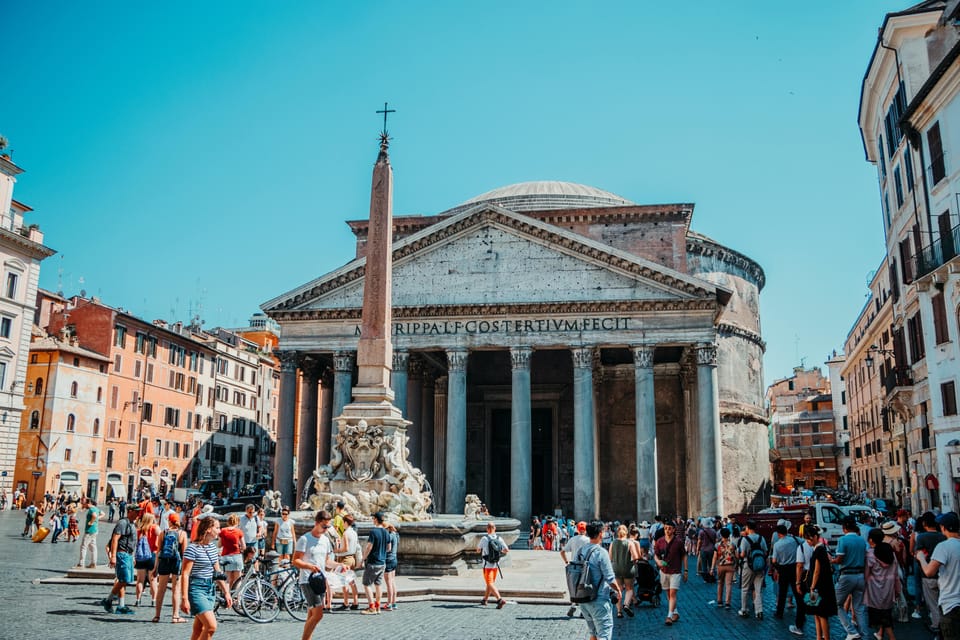
Piazza Navona is next for sightseeing and scenic driving views. It’s a favorite because it feels open, social, and instantly Roman. It also tends to pull in street artists and conversation, so having a guide helps you sort through what you’re seeing.
This is also where the guide stories get fun. One driver named Alberto is known for turning Piazza Navona into a mini lesson—especially if you ask him about the Borromini versus Bernini debate. It’s the kind of conversation that sticks because it gives you a lens for the architecture you’re surrounded by.
You’ll have short time windows, so don’t treat it like a long lunch break. Treat it like: look closely, ask a question, get a few photos, then keep rolling.
Sant’Eustachio break: coffee and a real pause
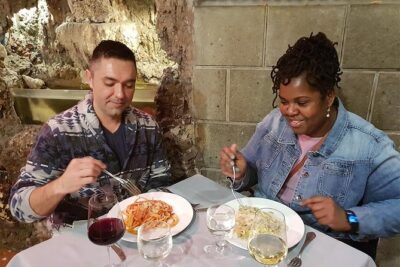
At Sant’Eustachio, you get a break time plus food tasting and coffee tasting. This is more than a comfort stop. It’s a chance to slow down just enough to reset your energy before the route’s final “big sights” sweep.
Coffee in Rome isn’t one-size-fits-all, and taste breaks help you experience the city instead of only viewing it. You’ll also get a short moment to check your photos and decide what you still want to capture before the Pantheon finale.
Keep expectations realistic: this is tasting time, not an all-you-can-eat situation. But for a 3-hour total duration, the break is a smart use of time.
Pantheon and Piazza Venezia: finishing strong
Then comes the Pantheon for a photo stop, guided tour, and sightseeing. This is a major payoff moment. The Pantheon can look awe-worthy from any angle, but guided context helps you notice proportions and details faster than you’d manage alone.
After that, Piazza Venezia rounds out the route with sightseeing and scenic driving views. It’s a classic Roman vantage point that ties together the “where are we in the city?” feeling. By the time you reach this stop, you’ll understand your geography more clearly than you would after a day of random walking.
From there, the route returns you to Via Urbana 167, where the tour ends back at the meeting point.
Customizing your route without losing the rhythm
Because this is private, customization is one of the real perks. You can steer the guide toward what you care about most—ancient monuments, famous fountains, major churches, or simply the best photo sequence.
The catch is simple: Rome can’t be everything in 3 hours. So when you customize, do it with a strategy:
- Pick one “must-see” you want most.
- Decide whether you want deeper guidance at one key site or more time for photos at multiple stops.
- If you’re traveling with mixed interests, use the guide to balance the group’s priorities.
If you’re the kind of traveler who likes to understand what you’re looking at, you’ll get extra value by asking questions at each guided moment rather than saving all your questions for the end.
Price and what you’re really paying for ($135.94 per person)
At $135.94 per person for a 3-hour private electric golf cart tour, you’re paying for three things:
1) a live guide in your language (English or Italian),
2) an electric cart ride that helps you move efficiently through central Rome,
3) a planned route connecting the top monuments and a couple of meaningful “in-between” stops.
Meals and beverages aren’t included, so you’ll want to plan around the tasting break at Sant’Eustachio as part of your day. The rest is about saving time and reducing the physical strain of constant walking.
In practical terms, this tour is a good value if:
- you want the big sights without spending hours lining up or trekking across the city,
- you like guided explanations but don’t want a full-day commitment,
- you’re traveling with someone who moves slower or gets tired faster.
If you already love walking long distances and don’t care much about guided context, you might find other low-cost options. But if your priority is efficient sightseeing with human guidance, this fits that goal nicely.
The guides are a big part of the experience
The tour’s quality shows up in the guide style. You might be with Irene, who’s described as amazing, very informative, and kind. Or you might get Luca and Franchez, credited with friendliness, excellent knowledge, and a talent for pointing out both major and lesser-known pieces. You could also have Alfredo, praised for accommodating requests and making the experience worthwhile.
And yes, you might get a guide-driver like Alberto, who is especially engaging with stories at Piazza Navona. The common thread is that the tour isn’t just moving you around—it’s feeding you context while you’re in place.
That’s the difference between a ride and a tour.
What to expect day-of: timing, comfort, and walking
This is a 3-hour experience with scheduled stops and short windows at each site. Expect a mix of:
- guided moments (especially at the Colosseum and the Pantheon),
- photo stops,
- scenic driving segments where you’ll get views without walking the whole time,
- one dedicated break with coffee and food tasting.
Not suitable for wheelchair users, and you’ll still want to be prepared for some walking even with the cart. If mobility is a concern, consider how comfortable you are with short transfers and uneven surfaces near historic sites.
Weather matters in Rome. The route includes outdoor time, so check the forecast and dress accordingly.
Should you book this Rome electric golf cart tour?
Book it if you want a high-impact Rome day with less leg work and more guidance. It’s especially smart for couples, small groups, and first-timers who want Colosseum, Trevi Fountain, and the Pantheon without turning the day into an endurance event.
Skip it—or at least think hard—if you hate any walking at all, or if you’d rather spend your time fully self-guided at street level. Also, if you’re obsessed with a slow, linger-at-every-corner style, the stop timing may feel a bit “on we go.”
One final decision helper: if you like asking questions and getting architectural or historical pointers while you’re standing in the exact spot, this tour format is built for you.
FAQ
How long is the Rome sightseeing tour by electric golf cart?
The tour lasts about 3 hours.
What is the price per person?
The price is $135.94 per person.
Is the tour private?
Yes. It’s a private tour with a private guide.
How many people are in the group?
The group is limited to 7 participants.
What landmarks does the tour include?
You’ll see stops such as Rione Monti, Via dei Fori Imperiali, the Colosseum, Trevi Fountain, Sant’Ignazio di Loyola, Palazzo di Montecitorio, Piazza Navona, Sant’Eustachio, the Pantheon, and Piazza Venezia.
What’s included in the price?
Included: a private tour guide and an electric golf cart ride through Rome’s landmarks.
Are meals included?
No. Meals and beverages are not included, though there is a food tasting and coffee tasting break at Sant’Eustachio.
Where do we meet the tour?
Meet just outside the restricted traffic zone gate at Via Urbana 167, where the golf cart driver will be waiting.