REVIEW · ROME
Rome: Michelangelo’s Wonders at the Baths of Diocletian Tour
Book on GetYourGuide →Operated by Touriks · Bookable on GetYourGuide
Rome rewards the patient eye. Here you get Michelangelo’s genius on top of the Baths of Diocletian. Two things I like a lot: the way the tour turns big, ruined spaces into a clear story, and the chance to slow down in Michelangelo’s cloister. One thing to consider: it’s a short visit in the middle of a busy area, so if you want lots of unstructured time, you may wish you had more hours.
I also appreciate how this is run. You start at Piazza della Repubblica, meet a staff member holding a yellow Touriks sign, and then follow the guide with headsets (so you’re not guessing in echo-y churches or galleries). On tour days, guides like Chiara, Francesca, and Rosy are specifically praised for being upbeat, friendly, and packed with details—exactly what you want when you’re staring at marble, mosaics, and ancient engineering.
In This Review
- Key highlights you’ll actually feel
- Michelangelo’s basilica: where ruins become a work of art
- The meridian line and astronomy details you’ll want to notice
- Baths of Diocletian: ancient engineering that still feels huge
- Michelangelo’s cloister: the pause inside the noise
- Palazzo Massimo and the National Roman Museum: where the story gains details
- Order changes, but the flow makes sense
- Value for $77: why this tour is priced like a smart Roman compromise
- Practical tips: what to wear, what to bring, and what to watch for
- Who should book this Michelangelo and Diocletian tour?
- Should you book it?
- FAQ
- How long is the tour?
- Where do we meet?
- Is this a small-group tour?
- What are the main guided parts of the experience?
- Is Palazzo Massimo guided?
- Does my ticket include Palazzo Altemps?
- Do I need to bring an ID?
- Are there dress code restrictions?
- What languages are available for the guide?
- What isn’t included in the price?
Key highlights you’ll actually feel
- Michelangelo’s transformation of ancient baths into Santa Maria degli Angeli e dei Martiri
- The basilica’s 18th-century meridian line used to track the sun, plus an astronomical clock feature
- Diocletian’s Baths scale and tech, including heated-floor and heated-pool systems and vaulted spaces
- A calm cloister walk designed by Michelangelo inside the complex
- Museum time that adds punch, with mosaics and sculpture at the National Roman Museum (Palazzo Massimo)
Michelangelo’s basilica: where ruins become a work of art
This tour is built around a clever idea: don’t treat Rome’s history as separate chapters. You’ll see what happens when one era reuses and reshapes the remains of another.
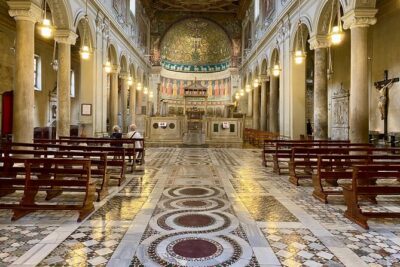
Santa Maria degli Angeli e dei Martiri is Michelangelo’s big statement, and it’s easier to grasp once you see it in person. You’re not looking at a standalone Renaissance building dropped onto empty ground. You’re standing inside a space with ancient bones—rooms, volumes, and structure influenced by what Diocletian’s bath complex already offered. The result feels both monumental and oddly human: big scale, but with corners where you can actually catch your breath.
What makes this stop especially worth your time is that the guide connects design choices to the visitor experience. You’re not just told to admire. You’re shown why certain views matter, and how the basilica’s layout lets light and sightlines do their own storytelling.
You can also read our reviews of more tours and experiences in Rome.



The meridian line and astronomy details you’ll want to notice
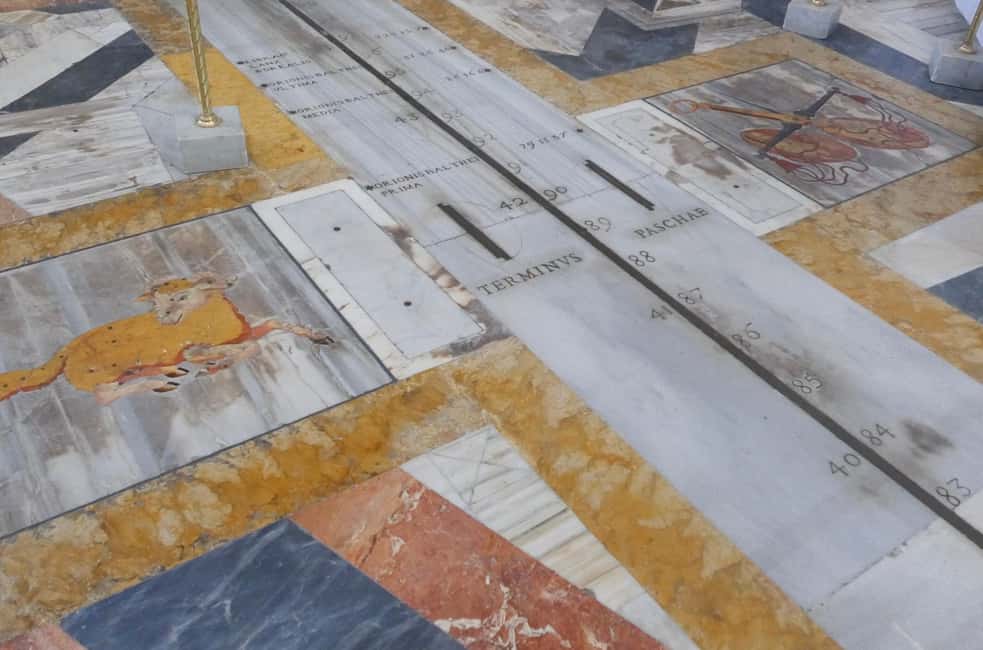
After you take in the overall basilica view, the guide steers you toward one of the more unusual features: the meridian line (from the 18th century) and the astronomical clock concept tied to it.
Why is that fun, besides the fact it sounds nerdy? Because it gives you a concrete way to understand time, light, and design. Instead of “art and history” being vague categories, you get a physical mechanism inside a church space—something that once helped people track the sun’s movement.
This is the kind of detail that’s easy to miss on a quick visit. On a guided tour, you learn where to look and what the system was intended to do. You’ll come away with the feeling that Rome has always mixed science and spectacle, even when you think you’re only looking at religion or architecture.
Baths of Diocletian: ancient engineering that still feels huge
Then you shift into the other half of the story: the Baths of Diocletian, one of Rome’s largest public bath complexes.
The scale matters. This wasn’t a small civic perk for a handful of people. The baths once served an enormous crowd—around 3,000 Romans at a time, when it was running at full strength. That number helps explain why the space feels the way it does: big vaulted ceilings, wide rooms, and the sense that the Romans planned for crowds, not quiet contemplation.
Here’s what you’ll focus on:
- Heating and plumbing know-how: the baths used engineered systems, including heated floors and heated pools, showing a command of hydraulics that you can still appreciate even through the modern ruins.
- Vaulted architecture: the ceilings make it feel theatrical. Even if you’re not a “ruins person,” you get the sense of serious planning.
- Mosaic and decorative surfaces: you’re not only reading the stone structure—you’re seeing the artistry layered into daily life.
If you’ve only seen one Roman bath site before, this is the one that helps you compare. The guide’s job is to translate the leftovers into what life must have felt like—sounds, movement, the rhythm of spaces used for washing, relaxing, and gathering.
Michelangelo’s cloister: the pause inside the noise
Between the big cathedral moments and the large bath spaces, you get a chance to slow down in Michelangelo’s cloister.
This is one of the stops that tends to make people smile. It’s serene, and it’s also the kind of place you often miss if you’re just rushing from landmark to landmark. In the reviews, the cloister specifically gets called out as charming, which makes sense: it’s where Renaissance elegance settles into a quieter corner of a much larger complex.
Practical note: the rest of Rome can be hot and loud. A cloister space is one of the best ways to reset your head for the next room. If you’re traveling in the warmer months, I’d treat this as your small “breather checkpoint,” not just a photo stop.
Palazzo Massimo and the National Roman Museum: where the story gains details
After the baths and basilica, the tour continues to the National Roman Museum at Palazzo Massimo alle Terme.
This part is where you get more than architecture. You see Roman mosaics and sculpture in a curated museum setting, which helps you understand what you might have been looking at in the baths. Even if you’re not a museum power-user, this is where the tour becomes more satisfying: the guide can point out connections between everyday objects and the bigger civic picture.
Important detail about your options: a guided tour of Palazzo Massimo is not automatically included. Your ticket includes entry, so you can visit on your own. If you choose the private option, you can add an optional 1.5-hour visit with more structured guidance.
When that optional guided time is included, you’ll get specific highlights called out by the tour’s description:
- a copy of the Sleeping Hermaphrodite
- frescoes from the Villa of Livia, featuring countryside scenes and idyllic imagery
And you’ll also have access to Palazzo Altemps with your ticket, plus Palazzo Massimo.
So you’re not locked into only one museum stop. You get flexibility depending on how much guided time you want.






Order changes, but the flow makes sense
One thing to keep in mind: the itinerary can start either at the Baths of Diocletian and then move to the basilica, or go basilica-first and then end at the baths.
That matters less than you might think, because the tour’s themes are linked either way:
- Basilica-first helps you see Michelangelo’s concept of reuse before you look at the ancient source material.
- Baths-first makes the basilica feel like a transformation you can actually measure with your eyes.
Either way, plan to keep your expectations flexible. The pacing is designed to fit within about 1.5 to 3 hours, and you’ll get guided time at the basilica, guided time at the baths, and museum access that’s partly guided (depending on which option you select).
Value for $77: why this tour is priced like a smart Roman compromise
Let’s talk value, because $77 is only a deal if what you get is actually worth your time in Rome.
For your money, you’re getting:
- live guidance at Santa Maria degli Angeli e dei Martiri
- live guidance at the Baths of Diocletian
- entry tickets that include Palazzo Massimo and Palazzo Altemps
- headsets, so the guide is easy to follow even when rooms get echo-y
- the option of a small group (up to 10) or a private experience
What I like about the value here is the structure. You don’t pay to “wander.” You pay to understand. A good guide can turn scattered details into a map in your head. With headsets, you keep that clarity without needing to stand in the front row like a statue.
Also, the lineup is efficient. You’re combining a major Renaissance interpretation (Michelangelo) with a major ancient engineering site (Diocletian’s baths) and then adding museum context. That’s a strong way to spend limited hours near Termini without feeling like you’re doing three random stops that don’t talk to each other.
Practical tips: what to wear, what to bring, and what to watch for
A few details can make or break your comfort level on this kind of guided visit.
Bring:
- a passport or ID card (each traveler needs one matching the name used for booking)
Wear (and avoid):
- no shorts
- no short skirts
- no sleeveless shirts
These rules are there for entry, so it’s worth taking seriously rather than hoping for flexibility.
Also don’t bring:
- luggage or large bags
- drones
- weapons or sharp objects
Expect logistics to be light:
- no pickup or drop-off is included
- the meeting point is specific: in front of the gate of Basilica di Santa Maria degli Angeli e dei Martiri, Piazza della Repubblica, looking for staff holding a yellow Touriks sign
If you’re sensitive to heat, plan water on your own (food and drinks aren’t included). The basilica and baths are indoor-heavy, but Rome heat can still be a factor when you’re moving between stops.
Who should book this Michelangelo and Diocletian tour?
This tour fits best if you want:
- architecture + storytelling in one package
- a guided explanation of specific features like the meridian line and astronomical elements
- ancient engineering that’s framed clearly, not just a pile of walls
- museum time that connects objects and mosaics to the bigger site
You’ll especially like it if you’re the kind of traveler who enjoys seeing “how” something works—how the baths heated water, how a church space can incorporate older structure, how light can become part of a system.
If you dislike guided tours, or you want hours of quiet solo wandering with no set pacing, this may feel too structured. But if you want the short, high-impact version of this corner of Rome, it’s a solid choice.
Should you book it?
Yes, I’d book it if you want a compact Rome experience that connects Michelangelo’s Renaissance vision to the scale and engineering of the Baths of Diocletian, with museum follow-through at Palazzo Massimo.
Choose the private option only if you know you’ll want extra guided time in Palazzo Massimo. If you’re happy visiting museums on your own after you’ve already learned the main story from the guide, the standard setup still gives you a lot of structure for the price.
If you’re traveling with kids, this is a mixed bag: it’s fascinating, but it’s also focused on indoor spaces and rule-based entry. For adults and older teens who enjoy explanations, it’s a great fit.
FAQ
How long is the tour?
The duration is listed as 1.5 to 3 hours, depending on the schedule.
Where do we meet?
Meet in front of the gate of the Basilica di Santa Maria degli Angeli e dei Martiri in Piazza della Repubblica. Look for a staff member holding a yellow Touriks sign.
Is this a small-group tour?
Yes. It’s offered as a small group of up to 10 people, or you can book a private option.
What are the main guided parts of the experience?
The basilica stop and the Baths of Diocletian stop are guided. Headsets are included to help you hear the guide clearly.
Is Palazzo Massimo guided?
A guided tour of Palazzo Massimo is not included unless you specifically choose the private option during purchase. Your ticket does allow un-guided access.
Does my ticket include Palazzo Altemps?
Yes. Your ticket includes entry to Palazzo Altemps and Palazzo Massimo.
Do I need to bring an ID?
Yes. You need a passport or ID card, and the document name must match the name provided at booking.
Are there dress code restrictions?
Yes. Shorts, short skirts, and sleeveless shirts are not allowed.
What languages are available for the guide?
Guides are listed as available in French, Portuguese, Spanish, English, Italian, and German.
What isn’t included in the price?
Food and drinks are not included, and pickup/drop-off is not included.