REVIEW · ROME
Rome: Highlights Tour with Pantheon & Trevi Fountain
Book on GetYourGuide →Operated by Walks of Italy · Bookable on GetYourGuide
Pantheon and Trevi in one smooth walk. I love the way this tour bundles the Pantheon with a visit underground at Vicus Caprarius, then caps it with the classic throw-a-coin ritual at Trevi Fountain. You also get a proper Rome-style break with local gelato that feels like part of the day, not an afterthought.
The main thing to plan for is the pace and terrain. It’s a walking tour with steps involved, including an underground stop, and it’s not suitable for wheelchairs, strollers, or people with mobility impairments—so wear comfortable shoes and come ready to walk.
In This Review
- Key things I’d circle before you go
- Rome’s highlights, stitched together by foot
- Where you meet at Piazza Navona (and how to not lose your group)
- Piazza Navona and Bernini’s Four Rivers fountain square time
- Inside the Pantheon: why the dome feels unreal
- A gelato break that actually fits the pace
- Sant’Ignazio Church and the Baroque trick you can’t ignore
- Vicus Caprarius: the Water City under Trevi
- Trevi Fountain coin timing and legend context
- Spanish Steps: finishing with a view and a story
- Price and value: why $55.80 can make sense
- Who should book this tour (and who should skip it)
- Should you book this Rome Highlights Tour?
- FAQ
- How long is the Rome Highlights Tour?
- What is the meeting point for the tour?
- Where does the tour end?
- What attractions are included with admission?
- Is gelato included?
- Are headsets provided?
- Is hotel pick-up or drop-off included?
- Is the tour suitable for wheelchair users or strollers?
Key things I’d circle before you go
- Pantheon entry time inside the dome instead of a quick pass-by
- Vicus Caprarius underground ruins near Trevi that most first-timers miss
- Gelato break built into the flow, not crammed at the end
- Trevi Fountain coin tradition plus legend context from your guide
- Sant’Ignazio Church fresco viewing in a quieter Baroque moment
- Local guide recs for what to do next after you finish the route
Rome’s highlights, stitched together by foot
This tour works best on day one or any time you want a fast, organized introduction to Rome’s core sights. In about three hours, you’ll move from big-name landmarks into smaller moments that make Rome feel lived-in—especially once you step underground.
What makes it feel worth your time is the mix of scale. You start at grand public squares and move to an interior you can actually stand inside (the Pantheon). Then you get a contrast stop underground, where the city’s past feels closer and less polished. After that, it’s back above ground for Trevi and finishing with a classic viewpoint at the Spanish Steps.
Guides vary, but the vibe is consistent: you’ll get clear storytelling and practical advice for the rest of your trip. In the tour experience, I’ve seen guides like Emma, Tiberio, Martina, Sev, Cristina, Rosa, and Enza highlighted for their humor, pacing, and for going beyond dates to explain how the city works day to day.
You can also read our reviews of more tours and experiences in Rome.



Where you meet at Piazza Navona (and how to not lose your group)
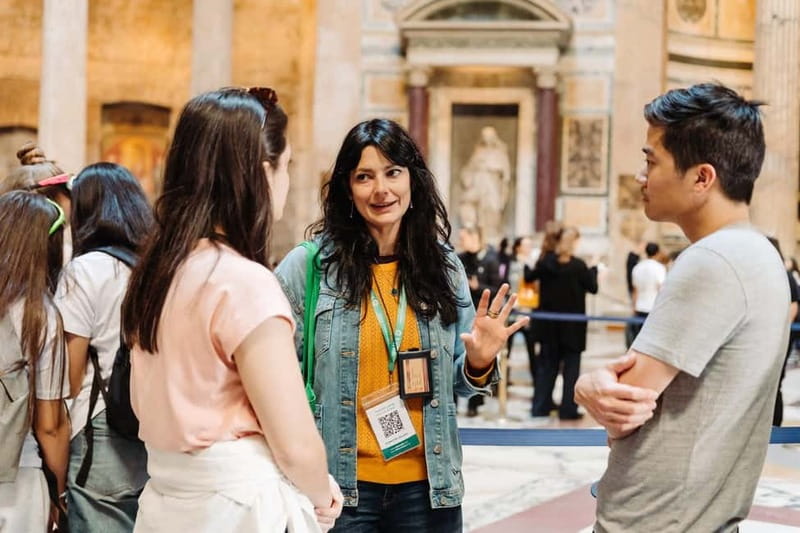
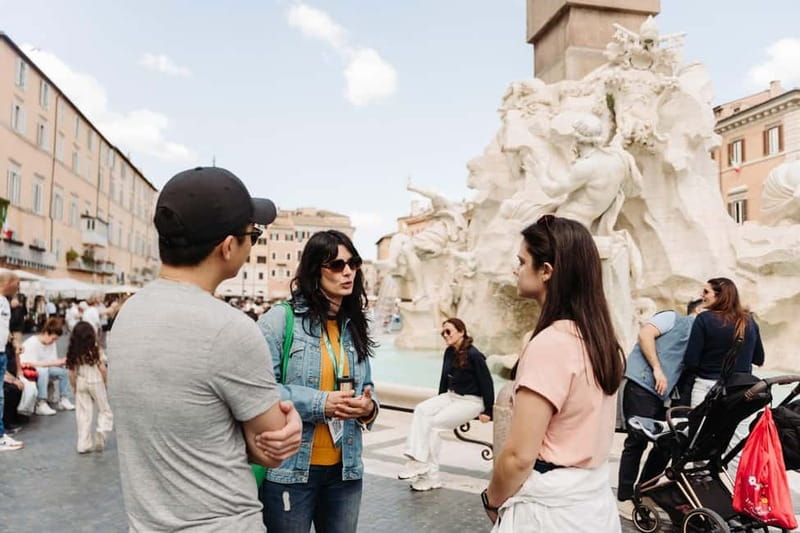
You’ll meet at Piazza Navona, 14, outside the Embassy of Brazil. Plan to arrive about 15 minutes early. Your guide will be holding a green Walks sign, and you’ll meet in front of the building under the Brazilian flag.
This matters more than it sounds. Piazza Navona is crowded, and the easiest way to miss the start is to arrive on time while traffic and street chaos do their thing. A few extra minutes to get oriented pays off because the first part of the walk is paced to get you through the busiest-looking areas before they tighten up.
Also note the dress rules. The tour isn’t set up for very casual clothing—no shorts, baby strollers, short skirts, or sleeveless shirts. If you’re visiting in warmer weather, bring something light that still covers appropriately.
Piazza Navona and Bernini’s Four Rivers fountain square time
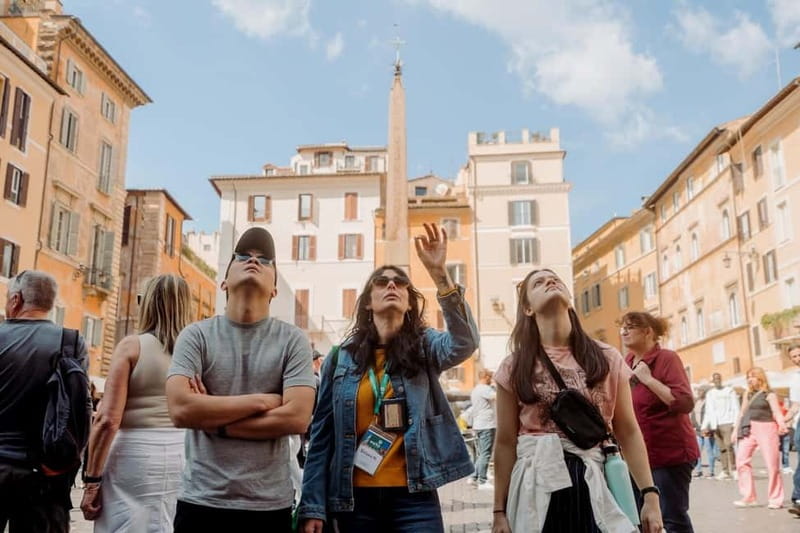
Piazza Navona is one of Rome’s showplaces, and the tour uses it smartly as a warm-up. You’ll get a guided walk through the square, with time to take in its geometry and the energy of the place.
The key draw here is Bernini’s Fountain of the Four Rivers, tied to the broader story of Baroque Rome and its power to shape public space. Even if you’ve seen photos, standing in the square helps you understand why Rome built “stages” for people—this is where crowds watch, meet, argue, sketch, and linger.
One small consideration: Piazza Navona can be packed. The guide’s job is to keep the flow moving, but you still want to be mentally ready for a squeeze when you’re trying to get clear photos or take a moment without bumping into someone.
Inside the Pantheon: why the dome feels unreal

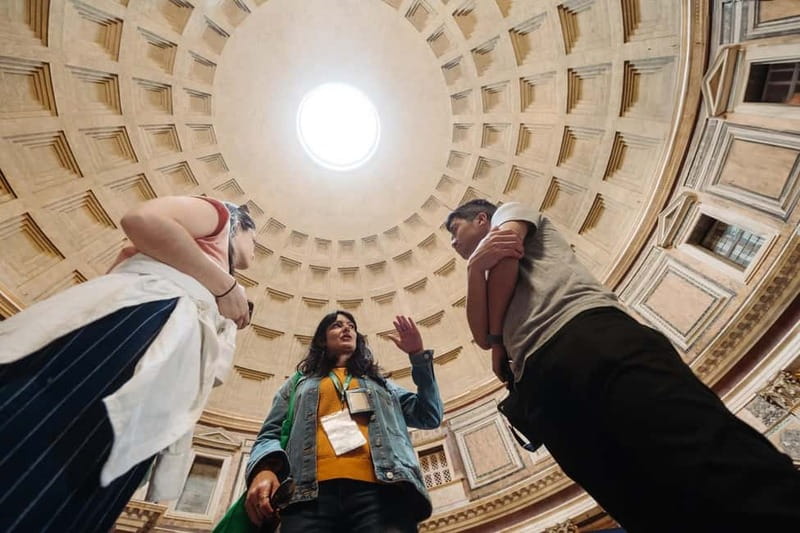
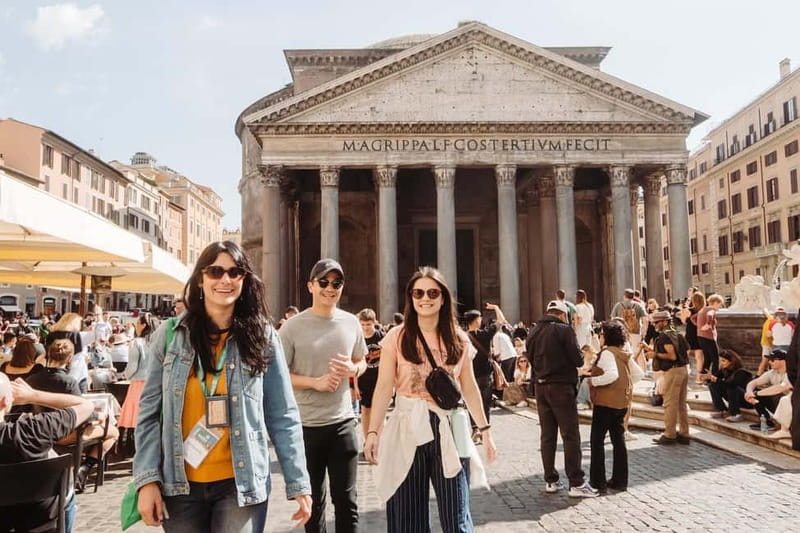
Then you step into the Pantheon, and this is the moment most people came for. You’ll go beyond a curbside view and actually enter, with guided time focused on what makes it one of Ancient Rome’s best-preserved monuments.
Here’s what to pay attention to when you’re inside:
- The space reads bigger than it photographs. Your brain wants to measure it, but the proportions keep tricking you—in a good way.
- The guide’s explanations tie the structure to how Romans thought about power, religion, and engineering.
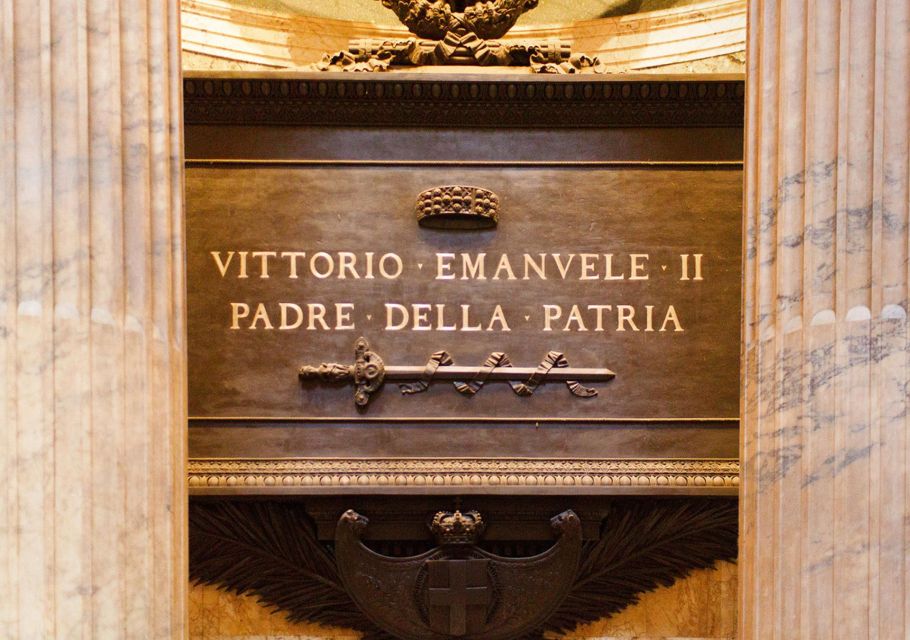
- You’ll learn what to notice visually, including the famous figures laid to rest inside.
If this is your first time in Rome, the Pantheon visit does something huge: it gives you an anchor. Once you understand how Romans built public awe into everyday space, the rest of the city makes more sense—churches, squares, even street layout start feeling like planned storytelling.
Practical tip: expect crowds. Headsets help if you’re in a busy cluster, but the best strategy is to keep your eyes up and trust the guide to point out what to look at.
A gelato break that actually fits the pace
About mid-tour you’ll stop at a local café for dessert. That’s your gelato break, and it’s timed in a way that refreshes you without breaking momentum.
This part is more than sugar. Your guide will also help you understand the difference between traditional Italian gelato and mass-produced ice cream. It’s useful context because it affects what you should order and what you should expect in texture and flavor.
A practical advantage: doing gelato here, not at the end, keeps you from arriving at Trevi or the Spanish Steps with that post-sugar slump. You’ll have enough energy to walk, look, and take photos.



Sant’Ignazio Church and the Baroque trick you can’t ignore

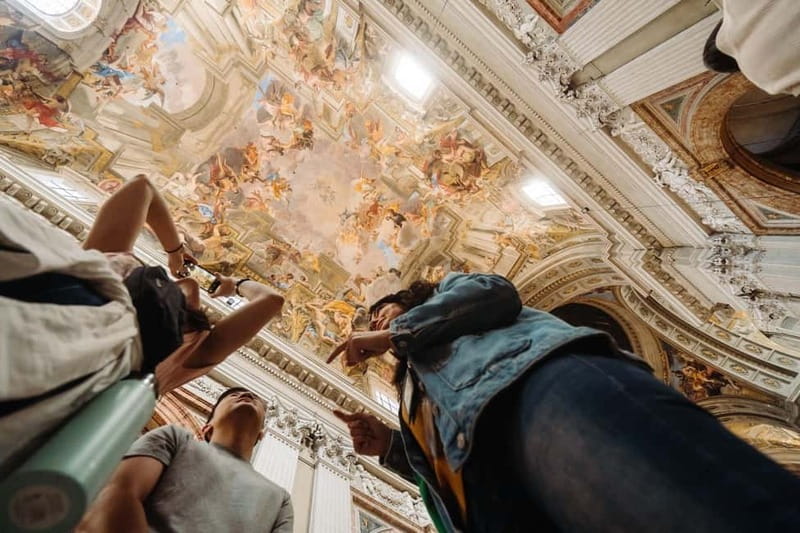
Next comes a quieter but very specific stop: Sant’Ignazio Church. You’ll admire frescoes here with guided time, and this is a chance to see Baroque art up close without the same crowds you get at the big-ticket churches.
Why this matters for your trip: Rome’s best experiences often hide inside smaller, less famous interiors. The guide’s explanation helps you connect what you’re seeing to why it was made—how Baroque artists used illusion, light, and composition to create emotion in a space that still feels human-scale.
Drawback to plan for: interiors can be cool and dim, and it can be hard to take clear photos. Don’t make your goal getting the perfect shot. Make your goal seeing the fresco details the way the guide directs you.
Vicus Caprarius: the Water City under Trevi
Then you go underground at Vicus Caprarius—often described as the Water City. You’ll descend into the remnants of an ancient Roman neighborhood and explore the underground remains with guided time.
This is the stop that gives your walk real variety. Rome above ground can feel like a museum you’re walking through. Underground, it feels like the city’s infrastructure and daily life—water systems, walls, and layers of time—have been preserved in a way that makes history physical.
Two practical points:
- Underground areas can affect headset sound. I’ve found that sometimes they don’t carry as well in tight spaces, so if you have your own headphones, consider bringing them.
- This is still part of a walking tour. Even if the underground area is short, it’s not “sit down and rest”—you’ll move and look.
If you want to go beyond the postcard Rome list, this is the best evidence in the whole route that the city keeps rewriting itself.
Trevi Fountain coin timing and legend context

After you come back above ground, Trevi Fountain is pure theater: statues, motion, and that classic moment where everyone lines up for photos. You’ll have guided time here and a photo stop while your guide shares traditions and legends tied to this iconic fountain.
The practical takeaway: don’t just toss the coin and move on. Your guide will explain why the tradition exists and what it’s tied to today. One of the memorable specifics from guides is that the coins you see are used to benefit the city, which changes the feeling from silly tourist ritual into something civic.
If you’re sensitive to crowds, keep your expectations flexible. The best strategy is to stand where the guide directs you, take your photos quickly, then let your eyes adjust to the fountain’s details instead of trying to capture everything at once.
Spanish Steps: finishing with a view and a story
You’ll end at the Spanish Steps, with guided time and a chance to soak in the view. Even if you’ve walked past them in photos a hundred times, being there is different—because the steps pull people upward and onward, like they’re designed to keep you moving even when you’re stopping.
This finish works because it gives you a “breather” moment. You’ve spent time inside, underground, and in crowds. Now you can look out and reset.
Your guide may also share what to do next—restaurant ideas, what to avoid, and where to spend your remaining hours. That kind of guidance is worth real money in Rome, where menus and prices can vary wildly street to street.
Price and value: why $55.80 can make sense
At $55.80 per person for a three-hour guided walking tour, you’re paying for two big included admissions and expert direction.
Here’s where the value shows up:
- Pantheon entrance is included, so you’re not trying to line up a ticket while your day is already in motion.
- Vicus Caprarius entrance is also included, which is exactly the sort of stop you wouldn’t reliably find on your own on a tight first day.
- You also get gelato built into the route.
- Headsets are provided for groups larger than six, which helps you hear your guide in crowded sections.
The main cost you should consider isn’t the tour price—it’s time. With this route, you trade a bit of walking effort for a guided sequence that keeps key sights connected. If your goal is first-night orientation and you want to see more than just the headline monuments, this is a smart way to spend a few hours.
Who should book this tour (and who should skip it)
This tour is a strong match if you want a first-day plan and you like learning how the city fits together. It’s also a good choice for couples and families, since the pacing is gentle enough for multiple ages, and the sights are iconic even for non-history lovers.
Book it if:
- You want the Pantheon plus a meaningful underground stop near Trevi.
- You’d like restaurant and sightseeing tips after the walk.
- You prefer organized walking over sorting tickets and routes.
Skip it (or consider a different option) if:
- You use a wheelchair, need mobility assistance, or require stroller access. This tour isn’t suitable for wheelchairs, strollers, or mobility impairments.
- You want to avoid lots of walking and stairs. It’s moderate-paced, but it includes underground terrain.
Should you book this Rome Highlights Tour?
If you’re in Rome for a short stay and you want a “most important landmarks” starter pack with two meaningful admission stops, I’d book it. The Pantheon entrance is the headline, but Vicus Caprarius is the surprise payoff. Add gelato and a guide who can point out what to look for at Sant’Ignazio and Trevi, and you get a trip that feels more like Rome than like a checklist.
If you hate walking in crowds or you need stroller/wheelchair support, you’ll likely feel stressed rather than delighted. In that case, look for a more accessible format. But for everyone else who can handle a comfortable walking pace, this is a solid use of your first three hours in the city.
FAQ
How long is the Rome Highlights Tour?
The tour lasts about 3 hours.
What is the meeting point for the tour?
The tour meets at Piazza Navona, 14 (the Embassy of Brazil). The guide will hold a green Walks sign under the Brazilian flag.
Where does the tour end?
The tour finishes at the Spanish Steps.
What attractions are included with admission?
Entrance to the Pantheon and entrance to Vicus Caprarius – The Water City are included.
Is gelato included?
Yes. Gelato is included as part of a local café dessert stop.
Are headsets provided?
Headsets are provided for groups larger than six.
Is hotel pick-up or drop-off included?
No. Hotel pick-up and drop-off are not included.
Is the tour suitable for wheelchair users or strollers?
No. The tour is not suitable for wheelchair users or strollers, and it’s also not suitable for people with mobility impairments.
If you want, tell me your travel month and whether you’re traveling with kids or anyone who has mobility limitations, and I’ll help you decide if this is the right fit for your exact timing.