REVIEW · ROME
Rome: Guided Underground Tour
Book on GetYourGuide →Operated by TOURISTATION · Bookable on GetYourGuide
Rome has a secret underground route. I like that the VIP return transfer removes the guesswork, and the catacombs portion is guided well enough that you actually understand what you’re seeing. It turns Rome from postcard city into a place where burial culture, religion, and Roman engineering connect.
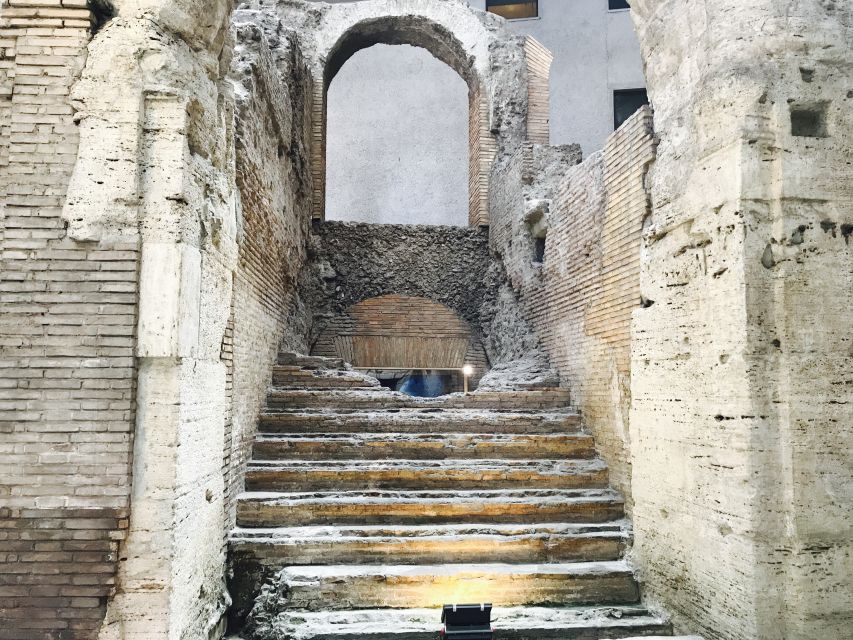
I also really enjoyed the second half, especially the Stadium of Domitian stop. You get a mix of panels, 3D reconstructions, video, and an audio guide, plus details like travertine blocks and brickwork you’d never notice from street level. It’s a smart way to connect underground spaces with the above-ground piazzas you already know.
The catch: the whole experience is tight—3 hours—so timing matters. If you choose a later slot, you can end up squeezed on the underground combo, and the tour isn’t a good match for claustrophobia or mobility limits.
In This Review
- Key takeaways before you go
- Getting started at the Touristation office and why the meet point matters
- Catacombs: what you’ll actually learn, and how the guide pacing affects it
- Navona Underground and the descent 5 meters below: expect engineering details, not just vibes
- Stadium of Domitian: multimedia plus audio guide for a rare Ancient Rome site
- Roman Empire artifacts: why these objects add weight to the story
- Transportation and timing: how to avoid the most common disappointment
- Price and value: what you’re really paying for at $79
- Dress code and comfort: what to wear underground in Rome
- Who should book this tour, and who should skip it
- Should you book this Underground Rome tour?
- FAQ
- FAQ
- How long is the Rome Guided Underground Tour?
- Where do I meet for the tour?
- Do I need to bring a jacket?
- Is there a dress code?
- Is the catacombs visit self-guided?
- What languages are available for the tour?
- What’s included besides entry tickets?
- What is not included?
- Is this tour suitable for wheelchair users or mobility impairments?
- Is it suitable for claustrophobia?
Key takeaways before you go
- VIP return transfer in a minivan saves time getting in and out of the underground areas
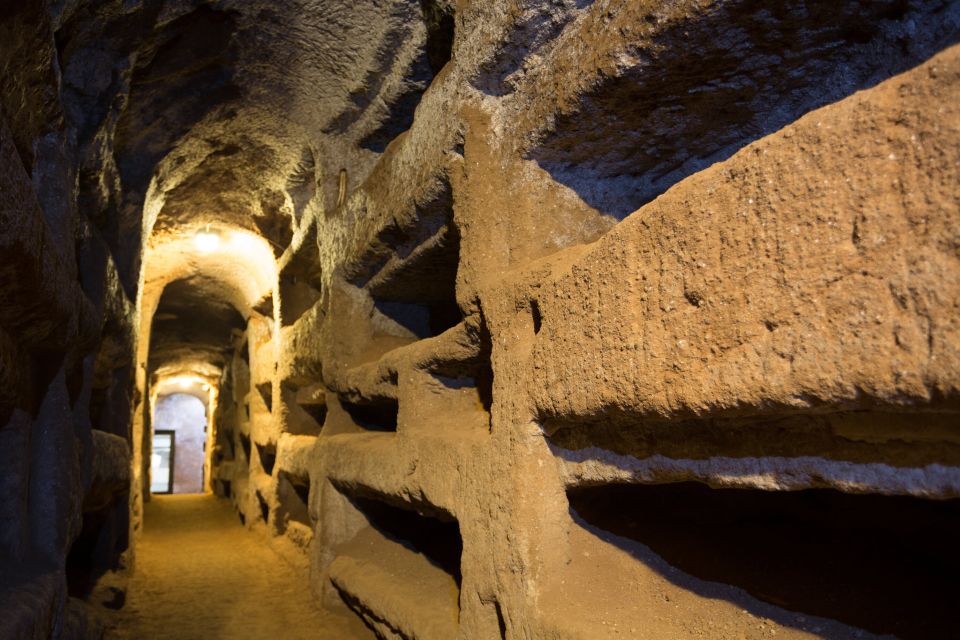
- Catacombs are guided and required (you can’t wander in on your own)
- Navona Underground sits 5 meters below street level, with visible masonry details at the entrances
- Stadium of Domitian is the focus of the audio-supported section, with multimedia displays
- The underground can feel cold and you must dress respectfully (shoulders and thighs covered)
- Not ideal for claustrophobia or mobility impairments, and short skirts aren’t allowed
Getting started at the Touristation office and why the meet point matters
This tour starts at Piazza d’Aracoeli, 16 (close to Piazza Venezia), at the Touristation Colosseo and Foro Romano office. There’s a small fountain in front, and the office is on the right when you face the Vittorio Emanuele II monument. Sounds simple, but in Rome the difference between right turn and wrong turn can be ten minutes and a lot of sweat.
From there, you head to the departure area around Venice Square next to the Town Hall. The good part is that you’re not trying to navigate transit and drop-offs in a hurry. You step into a VIP minibus that handles the round-trip movement for you, and that’s a real value when you’re stacking sights in a compact itinerary.
One practical note: arrive with a few extra minutes. Underground tours run on schedules, and the whole vibe depends on staying on time so the group can connect the catacombs segment with the stadium area.
You can also read our reviews of more guided tours in Rome



Catacombs: what you’ll actually learn, and how the guide pacing affects it
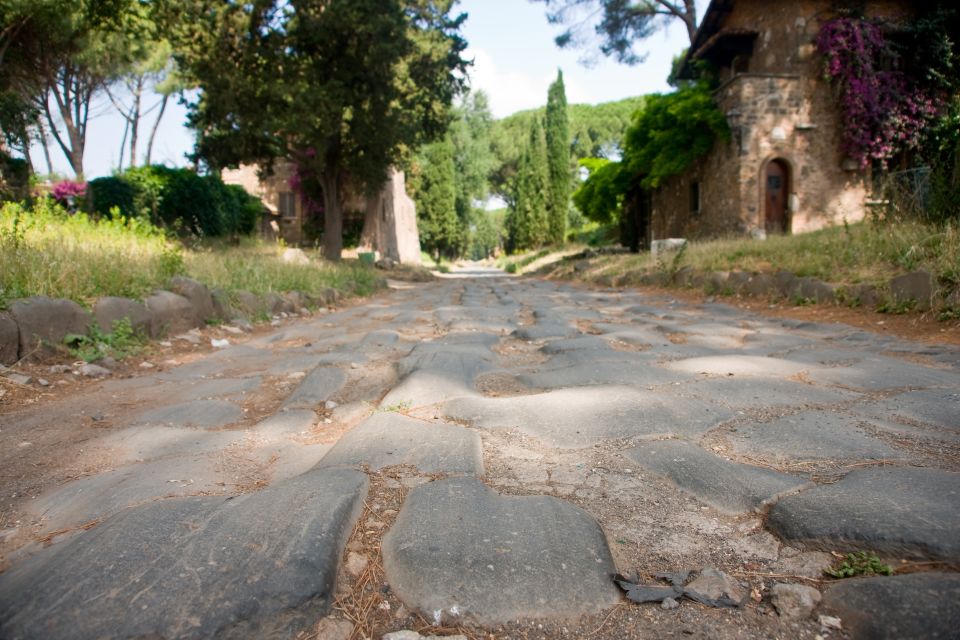
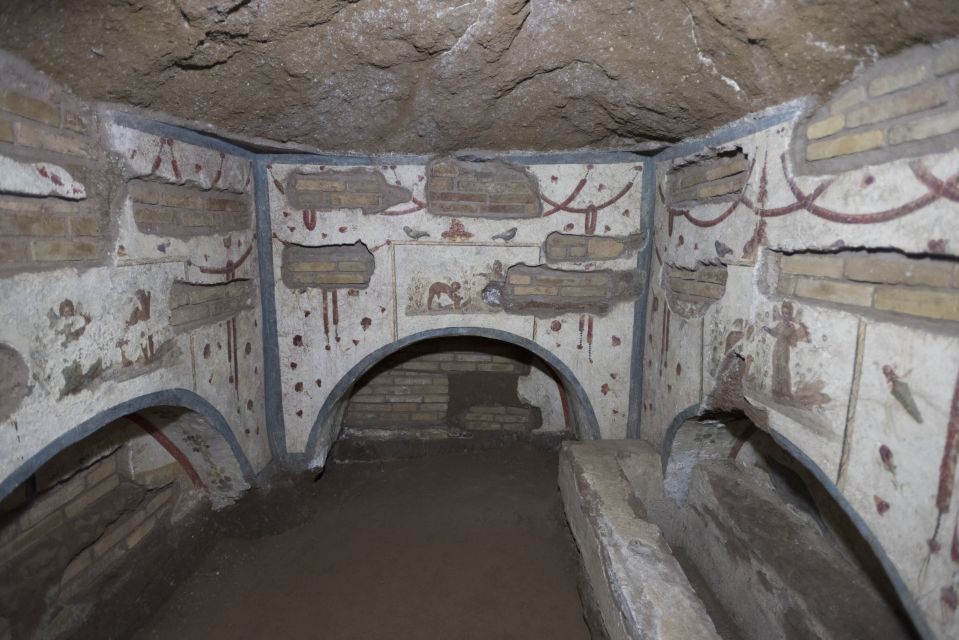
The main catacombs portion is the guided heart of the experience. You go down into a sacred space that served as a burial network connected to early Christianity. Expect an explanation of how these tunnels and galleries responded to the land shortage for graves, with the story often anchored in the second century.
You’ll hear about burial grounds associated with martyrs, popes, and hundreds of Christians, and the guide helps translate the “this is old” feeling into something more human. You’re not just looking at walls—you’re seeing how Romans and early Christians handled death, memory, and faith in the same physical system.
In a perfect world, this segment hits a sweet spot: enough time to follow the story, not so long that you feel lost underground. In practice, group size and guide clarity can make a difference. If you’re sensitive to hearing every detail, I’d go into it with patience and keep your expectations realistic: you’re in a tunnel. Sound doesn’t travel like it does on a sunny street.
Also remember: these are holy places. You cannot visit independently, and your dress needs to be respectful—shoulders and thighs covered, and a light jacket is a smart move because underground temperatures can feel chilly.
Navona Underground and the descent 5 meters below: expect engineering details, not just vibes
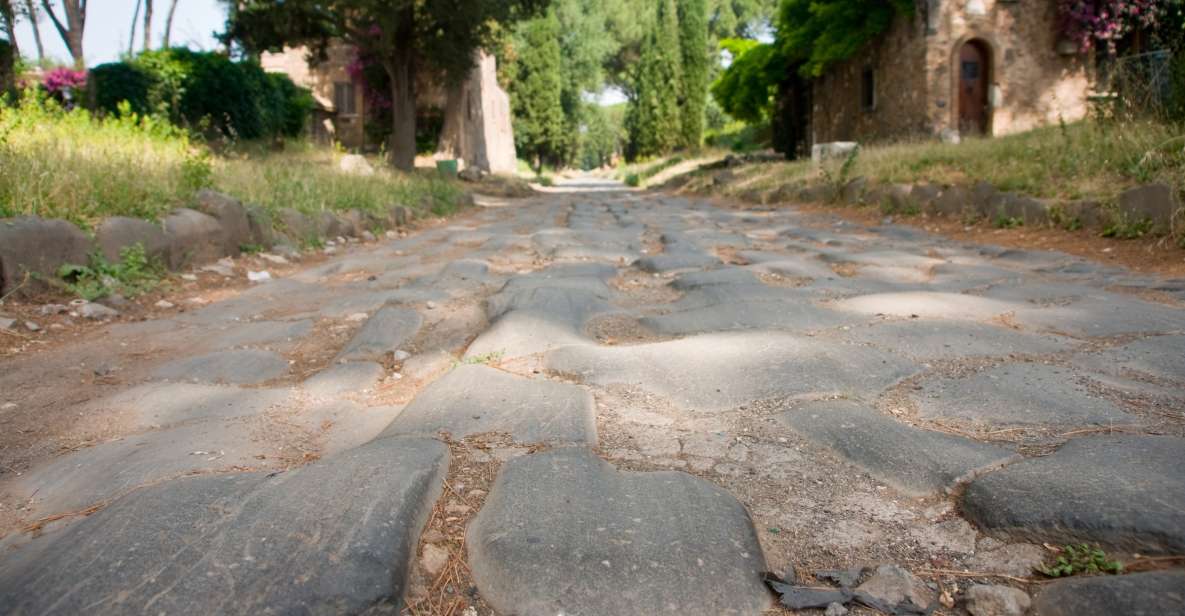
After the catacombs segment, the tour shifts toward the Navona Underground area. This is where the experience gets more visually “Roman” in a different way. You descend about 5 meters below street level, into spaces tied to an ancient circus and later use.
What I like here is that you can see architectural and construction choices up close. You’re not just getting a quick scan of a tunnel; you’re shown entrance features with travertine blocks, brickwork, and marble columns. Those details matter because they remind you that this wasn’t random digging. It’s an extension of Roman construction skills, adapted to the city’s needs.
One logistical point: the materials you’ll receive focus on what the site used to be and how it evolved. The information you get is tied to the entrances and the layout—so you’ll want to stay attentive rather than treat it like a casual walk.
Because the tour structure is part guided and part supported by materials, you may find the Navona portion less “hand-held” than the catacombs part. If you like being constantly coached through what you’re seeing, you might feel less supported here. Still, for most people it works, because you’re given enough context to connect the underground view to what sits above.
Stadium of Domitian: multimedia plus audio guide for a rare Ancient Rome site
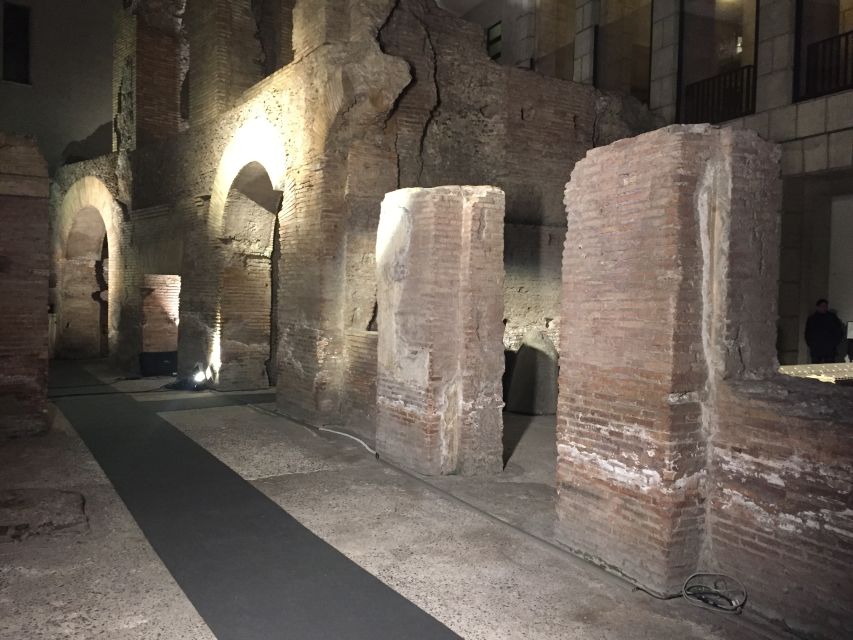
The Stadium of Domitian stop is one of the most interesting parts of this tour because it addresses something you rarely see explained on standard Rome walking routes: Roman sports infrastructure built in masonry.
This stadium area is described as the only stadium in Ancient Rome built out of masonry. That makes it more durable—and more likely to survive into later layers of the city. You also learn how the site developed into what you know now as a piazza, which is a great reminder that Rome’s “same streets” often hide entirely different eras underneath.
You’ll get to view a selection of unpublished photographs, 3D reconstructions, videos, and informative panels. That matters because a stadium is hard to fully picture if you only know the shape as a modern open space. The multimedia helps you see the original proportions and how the arena functioned.
There’s also an audio guide included for the Stadium of Domitian in seven languages (English, Italian, Spanish, French, German, Russian, Portuguese). If you’re choosing this tour based on language comfort, this is a big plus. You’re not limited to the live guide’s language only for every moment.
Roman Empire artifacts: why these objects add weight to the story
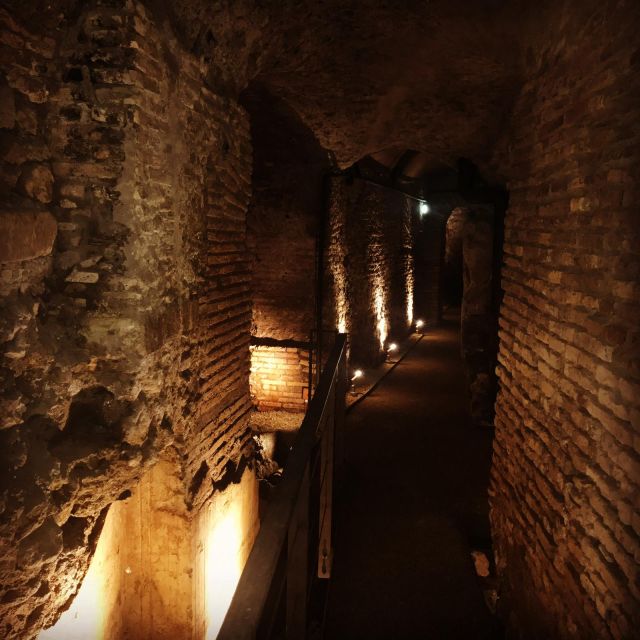
One reason I think this tour gives better value than some “just walk and see” underground options is that it doesn’t stop at descriptions. You’ll encounter archaeological finds and material culture connected to Roman times.
Among the examples mentioned are fragments of sculpture and a torso made from Pentelic marble—a marble associated with quarries from Penteli. Seeing (or being told about) objects tied to specific sources helps you understand that underground Rome wasn’t only religious. It was also art, craftsmanship, and the daily visual language of the empire.
Even when you’re not an art history specialist, these object details make the explanations feel anchored. Instead of “people lived here long ago,” you get “here’s what was made, used, and preserved,” which is the difference between a fun walk and a meaningful one.



Transportation and timing: how to avoid the most common disappointment
This tour runs for about 3 hours, and it includes VIP return transfer plus catacombs entry and the Domitian-related audio-supported segment. That’s a fairly efficient chunk of Rome. But the tight schedule is also where you can get burned if you pick the wrong time.
If you’re aiming to see everything on one outing, I’d strongly favor an early time slot. Underground plans work best when you’re not rushing afterward, and when you’re not depending on everything to run perfectly on the minute.
Also, underground experiences aren’t about fast throughput. You descend, you pause, you listen, you regroup. If your day is already packed, you can end up stressed, which is the opposite of what you want underground.
Here’s my practical advice: build a little slack into the day. If Rome is your only priority, great. If you’ve got other timed tickets afterward, choose times that won’t cause a chase.
Price and value: what you’re really paying for at $79
At $79 per person, you’re not just buying entry tickets. You’re paying for a smoother day.
You get:
- VIP return transfer from the city center to the underground venue
- An entrance ticket to the main catacombs in Rome
- A guided tour inside the catacombs (available in Italian, English, French, Spanish, German)
- 2 admission tickets to the underground archaeological site
- An audio guide for the Stadium of Domitian in multiple languages
That mix is where the value sits. Many Rome tours make you handle transfers yourself. Here, you’re spared that stress. And instead of one guided lecture followed by wandering, you get structured support for both the catacombs narrative and the stadium explanations.
What you don’t get: food and drinks, hotel pickup/drop-off, and a guide for the Navona Underground archaeological site. So if you expect a full guide-on-every-step experience for everything underground, adjust your expectations.
For me, the $79 feels most fair when you:
- want the catacombs guidance (and you like hearing the story, not just reading panels)
- want the Domitian materials without extra ticket juggling
- appreciate transfer help to start and finish with less hassle
Dress code and comfort: what to wear underground in Rome
This is a holy site, so you need to dress appropriately. Short skirts aren’t allowed. Plan to cover your shoulders and thighs. And bring a light jacket if you run warm outside—underground areas can cool you off quickly.
Also consider the physical feel of the spaces. This tour is not suitable for:
- people with mobility impairments
- wheelchair users
- people with claustrophobia
Even if you’re generally fine with stairs, underground corridors can feel narrower than you expect. If that thought makes your chest tighten, skip this one and pick a Rome experience that’s kinder to small spaces.
Who should book this tour, and who should skip it
I’d recommend this tour if you want:
- a guided entry into the catacombs with clear historical context
- a structured look at both underground spaces and the Stadium of Domitian area
- a time-efficient package that saves transfer effort through the VIP minivan
I’d skip it if you:
- need full accessibility support for mobility constraints
- get anxious in tight, enclosed spaces
- are determined to visit underground areas independently (this one requires a guide for the catacombs segment)
If you’re traveling with mixed interests—someone who loves Roman architecture and someone who’s more into early Christian history—this itinerary can work well because it covers both without asking you to choose one theme.
Should you book this Underground Rome tour?
Book it if you want a well-paced underground combo that includes guided catacombs plus strong support for the Stadium of Domitian area. At $79, the VIP return transfer, guided catacombs entry, and included audio-supported stadium materials make it a practical deal, especially when you’re trying to fit a lot into a limited time window.
Don’t book it if timing stress ruins your travel day. Choose an early start so you’re not fighting the clock. And if claustrophobia or mobility limitations are in play, pass. Underground Rome is stunning, but it isn’t a quiet stroll—and this tour is built for people who can comfortably handle enclosed spaces.
FAQ
FAQ
How long is the Rome Guided Underground Tour?
The tour lasts about 3 hours.
Where do I meet for the tour?
Meet at Piazza d’Aracoeli, 16, 00186 Rome. You meet at the Touristation Colosseo and Foro Romano office next to Piazza Venezia, on the right side when facing the Vittorio Emanuele II monument, with a small fountain in front.
Do I need to bring a jacket?
Yes, it’s a good idea. The tour notes that it can get cold underground due to the delicate surroundings.
Is there a dress code?
Yes. Short skirts aren’t allowed. You should cover your shoulders and thighs, as the catacombs are holy places.
Is the catacombs visit self-guided?
No. You can’t visit the catacombs independently, and a guide is required.
What languages are available for the tour?
The guided catacombs tour is available in Italian, English, French, Spanish, and German. The audio guide for the Stadium of Domitian is available in English, Italian, Spanish, French, German, Russian, and Portuguese.
What’s included besides entry tickets?
You get VIP return transfer in a fully equipped minivan, a guided tour within the catacombs, entrance tickets to the underground archaeological site, and the Stadium of Domitian audio guide.
What is not included?
Food and drinks are not included, and there is no hotel pickup and drop-off. A guide for the Navona Underground archaeological site is also not included.
Is this tour suitable for wheelchair users or mobility impairments?
No. It is not suitable for people with mobility impairments or wheelchair users.
Is it suitable for claustrophobia?
No. It’s not suitable for people with claustrophobia.