REVIEW · ROME
Rome: Golf Cart Tour of the Eternal City
Book on Viator →Operated by Facile Tours · Bookable on Viator
Rome, but with less walking. This golf cart tour gives you a fast, photo-friendly way to see major Rome sights plus quieter routes through neighborhoods you’d usually skip. It’s built for an easy flow: stop, look, snap photos, then roll on.
Two things I really like: the central hotel pickup makes the start low-stress, and the English-speaking guides bring the city to life with personality and sharp explanations. Names like Hadi, Francesco, Marco, and Sabrina show up in the guide credits—and that matters, because the tour moves through a lot of big moments fast.
One thing to consider: the schedule is packed, so you’ll get brief time at each stop. If you want long museum-style pacing, you may have to trade depth for breadth, and your experience will depend on how well you can hear your guide in the cart.
In This Review
- Key Takeaways Before You Go
- Why a Golf Cart Makes Rome Feel Easier
- Villa Borghese Gardens to Piazza del Popolo: The Park-and-Square Opening
- Mausoleo di Augusto and the Column of Marcus Aurelius: Ancient Power, Close Up
- Piazza Venezia to the Imperial Fora: Vittoriano, Trajan’s Market, and Big-City Rome
- Circo Massimo and Giardino degli Aranci: Views Without the Long Climb
- Mouth of Truth to Piazza Campidoglio: Playfulness Meets Design
- Piazza Navona to the Pantheon: Baroque Energy to Perfect Engineering
- Sant’Ignazio, Trevi, and Piazza di Spagna: Short Stops with Big Visual Payoff
- How the Pickup Works (and the One Thing You Should Double-Check)
- Price and Value: Is $160.91 for 3 Hours Worth It?
- Who This Tour Fits Best
- Should You Book This Rome Golf Cart Tour?
- FAQ
- How long is the Rome golf cart tour?
- What language is the guide?
- Is pickup from my hotel included?
- Where does the tour meet?
- Is this a private tour?
- Do the scheduled stops require admission tickets?
- How do I access the tour?
- What is the cancellation policy?
- Is the tour easy for most people to join?
Key Takeaways Before You Go
- Private-group tour means your pace and interests matter more than a crowd.
- Central hotel pickup (or a nearby meet-up when you’re outside the core) saves time.
- A route designed for narrow streets gets you places without the stress of buses and traffic.
- Photo-friendly timing keeps you moving, but not at a breakneck sprint.
- Guides like Hadi, Francesco, and Marco often add extra context and smart local tips.
Why a Golf Cart Makes Rome Feel Easier
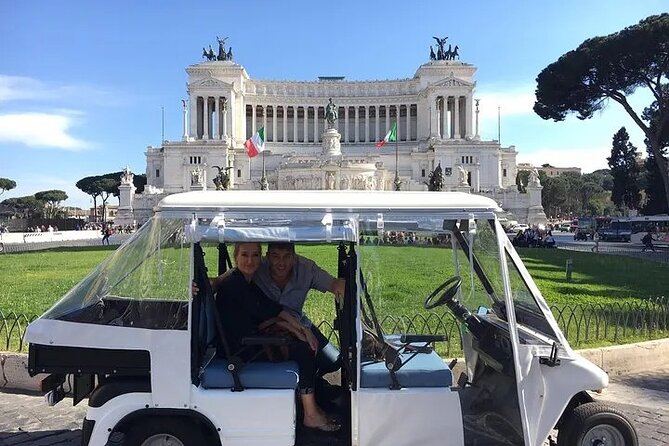
Rome can be a leg workout disguised as an art trip. This tour uses a golf cart to solve the big problem: getting across the city without burning your energy before you even hit the monuments.
The real value here is not speed for its own sake. It’s speed with purpose. You’re not just zooming between icons—you’re using the cart to reach lots of sights in a short window, including viewpoints and photo stops. That matters if you’re on a tight schedule or if you just don’t want your day to become a repeat of “one more block.”
And because it’s open-air, you still get that Rome feeling: breeze, street life nearby, and constant visual context. Some guides even bring a playlist vibe—Sabrina’s Bluetooth music is one example that helps the tour feel fun instead of lecture-only.
If you’re traveling with mixed ages or you want to keep energy for evenings (pizza, gelato, and wandering), this format makes the whole trip more sustainable.
You can also read our reviews of more city tours in Rome


Villa Borghese Gardens to Piazza del Popolo: The Park-and-Square Opening
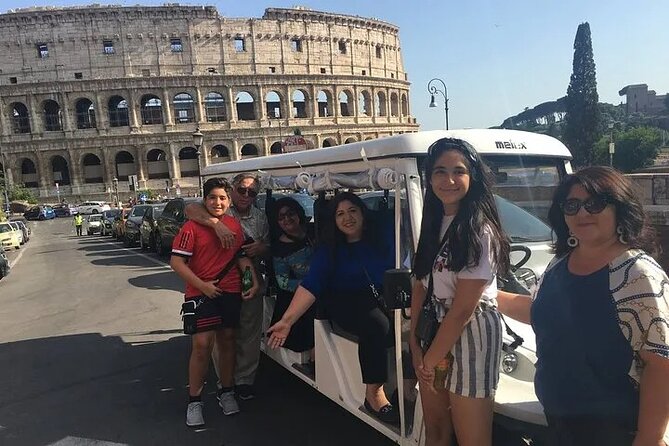
You start in a calmer zone, which is smart. Villa Borghese Gardens is Rome’s big green breath—80+ hectares of paths, lakes, fountains, sculptures, and viewpoints. Even if you don’t go deep into museums, the park itself helps you shake off the city’s traffic noise and reset your eyes.
This stop also sets the tone for the tour: you get time to look around, not just pose for a quick photo. You’ll likely notice how the gardens feel like a mini world inside the city, plus you’ll be close enough to imagine what it would be like to slow down here on a separate half day.
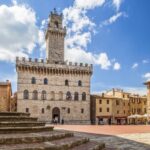
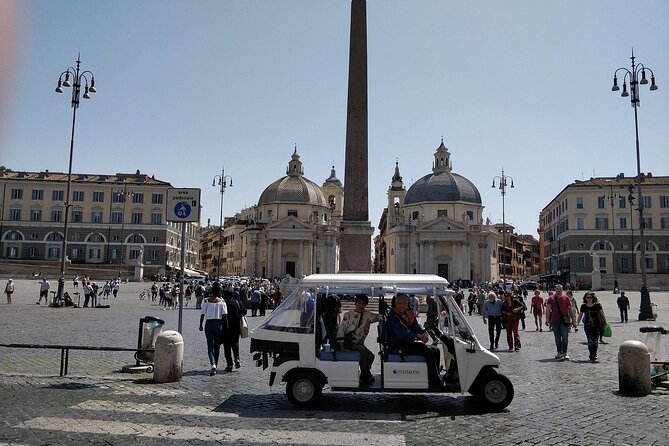
Then you roll into Piazza del Popolo, one of the city’s classic showpiece squares. The Egyptian obelisk anchors the space, and the surrounding historic buildings frame it in a way that’s easy to photograph. If you want a quick “where am I in Rome” moment, this square is a strong one—plus it’s near the Pincio terrace, which gives panoramic views over the city.
A practical tip: for photos, aim to stand slightly off-center so you can capture more buildings in the frame, not only the obelisk.
Mausoleo di Augusto and the Column of Marcus Aurelius: Ancient Power, Close Up
Next comes the ancient Rome side of the itinerary, and it’s one of the best parts of the whole day. You’re not stuck in a single neighborhood of ruins. You see how Rome’s emperors used monuments to project control across centuries.
At the Mausoleum of Augustus, you’re looking at a tomb built to commemorate the first Roman emperor. Even though only part of the original structure remains, the scale and setting still hit. This stop also gives you a calmer vibe than many other big-name ruins, since the mausoleum sits in a park setting.
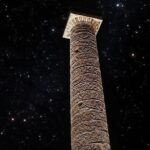
Then you move to the Column of Marcus Aurelius in Piazza Colonna. This column is about 38 meters tall and covered with a continuous spiral relief showing Marcus Aurelius’ military campaigns. It’s a monument where details matter, and the tour gives you a quick way to appreciate that craftsmanship. You can also climb the staircase inside the column for city views, which turns a short stop into something more memorable than “walk-by and go.”
If you’re photo-driven, these two stops help you get variety: one is about ancient commemoration in a peaceful setting, the other is about imperial storytelling wrapped into one tall, readable monument.
Piazza Venezia to the Imperial Fora: Vittoriano, Trajan’s Market, and Big-City Rome
Piazza Venezia is a land of scale. The centerpiece is the Vittoriano, the white marble monument dedicated to King Victor Emmanuel II. Even if you don’t climb inside, you’ll feel how designed this space is to impress. And if you do want the views, there’s an option to go to the top for panoramas across Rome.
From there, you head toward the Mercati di Traiano (Museum of the Imperial Fora). This is one of those places where Rome’s engineering shows up as architecture you can still walk around. The Trajan Market was a hub of commerce under Trajan’s rule, and the restored complex gives you a tangible sense of how the imperial city worked.
What I like about this portion is that it’s not only about monuments you can see from far away. You get ruins, courtyards, and interconnected spaces that feel like a living puzzle. For people who enjoy Roman history that isn’t just column-and-temple, this stop tends to land well.
One caveat: because this tour is short, you won’t have hours to wander every corner. Think of it as a strong sampler that makes you want a deeper return visit.
Circo Massimo and Giardino degli Aranci: Views Without the Long Climb
Then the day shifts into “Rome as a view” mode. At Circus Maximus, you’re looking at the ancient chariot racing stadium area. It’s hard to picture at first—until you realize how huge it once was, with capacity described at up to 250,000 spectators for events. Even with much lost over time, the site still gives you a sense of how central these spectacles were to Roman public life.
After that, you head to Giardino degli Aranci (Orange Gardens) on Aventine Hill. This stop is popular for a reason. The gardens feel like a pause button: citrus trees, flower beds, and a quieter atmosphere compared to the main streets. Plus, the viewpoint element is real. You’ll get city and Tiber-area views without needing a long trek.
And yes, there’s the famous keyhole viewpoint that frames St. Peter’s Basilica in the distance when you look from the correct angle. It’s a small moment, but it’s such a clever bit of Roman trivia that it’s worth the effort.
If you’re bringing a camera, this part is where you’ll get some of your cleanest shots with fewer interruptions.





Mouth of Truth to Piazza Campidoglio: Playfulness Meets Design
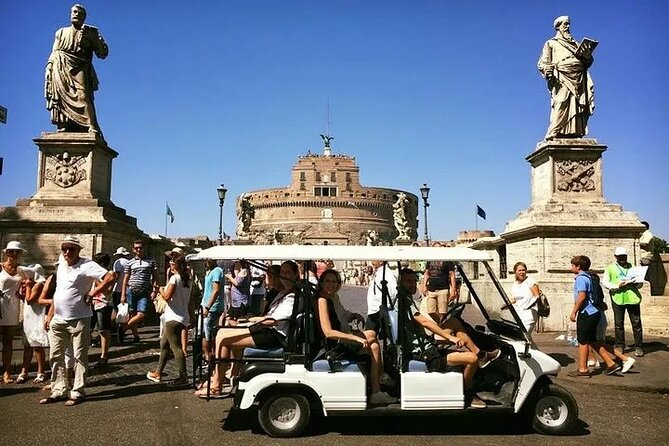
A highlight for many people is the playful stop at Bocca della Verità. It’s a carved stone disk at the portico of Santa Maria in Cosmedin, known for the legend that a liar’s hand gets bitten. It’s appeared in films like Roman Holiday, so you’ll likely recognize the look even if you’ve never studied the story before.
This isn’t a serious-monument stop. It’s a fun break that adds character to the route. You’ll see people line up to do the hand-in-the-mouth photo, and it gives your day a more human, silly side.
Then the tour moves to Piazza del Campidoglio on Capitoline Hill, designed by Michelangelo. The square is an important stage in Rome’s story—religious and political in ancient times—and it holds the equestrian statue of Marcus Aurelius, one of the few surviving equestrian statues from ancient Rome.
If you care about art and architecture, this is one of those “you can see the designer’s intention” places. Even in a short visit, you’ll likely notice the composition and how the space guides your eye.
Piazza Navona to the Pantheon: Baroque Energy to Perfect Engineering
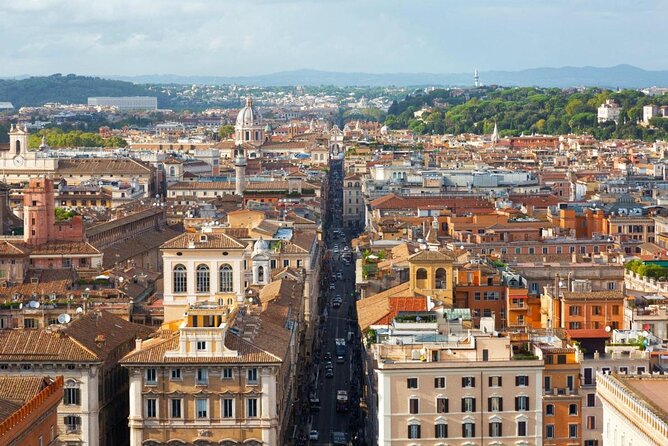
Rome leans baroque at Piazza Navona, where the big draw is the three fountains. The most famous is Fontana dei Quattro Fiumi by Bernini. The square works as an outdoor room: historic façades, street life, and a constant flow of people. It’s also a natural place to pause and decide what you want to linger over later.
Next is the Pantheon, and it’s hard to overstate how powerful this building feels in person. It was built as a temple to all the gods and remains one of the best-preserved ancient structures. The dome is still the largest unsupported dome in the world, and the oculus in the center brings in daylight that makes the inside feel alive.
The Pantheon stop is one of the best reasons to do a tour like this because you get it as a focused segment, not as one more attraction you try to fit in during a busy day. Also, some groups report walking in efficiently when the timing aligns.
Bring patience for crowds. Even when things move smoothly, Rome is Rome.
Sant’Ignazio, Trevi, and Piazza di Spagna: Short Stops with Big Visual Payoff
After the Pantheon, you go straight into late-afternoon Rome energy with some of the most photographed interiors and streets.
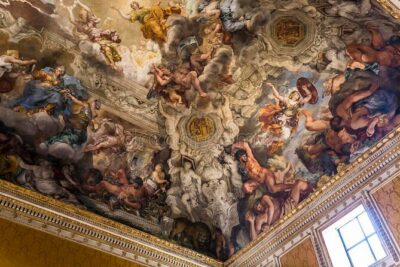
At Chiesa di Sant’Ignazio di Loyola, you’ll see the famous False Dome—a painted trompe-l’oeil dome created by Andrea Pozzo. The effect is the point: from inside, the ceiling tricks your eyes and makes you feel like there’s real architecture above you. This is a “look up” church, and it rewards even a short visit.
Then it’s on to Trevi Fountain, probably Rome’s most famous fountain view. The tradition of tossing coins is everywhere, and you’ll see constant activity around the fountain. It’s crowded, yes, but it’s also one of those places where the city’s myth and art collide. If you want better photos, try to position yourself a bit to the side to reduce the “everyone faces the same direction” look.
Finally, Piazza di Spagna and the Spanish Steps. This area is great for sitting briefly, people-watching, and resetting before your evening plans. The steps lead up to Trinità dei Monti church and are lined with seasonal flower beds when conditions allow. The overall view angle makes it a natural end point for a day that’s been about big sights and constant motion.
How the Pickup Works (and the One Thing You Should Double-Check)
This tour uses a driver guide waiting at the main entrance of your central Rome hotel. That’s the part that makes the whole day smoother. But Rome covers a lot of territory, and some hotels are outside the central zone.
If your hotel is outside the core, you’ll meet at a designated central meeting point. The listed meet location is Piazzale delle Canestre, SNC, 00197 Roma RM, and the tour ends back at the meeting point.
Before you book, do yourself a favor: check your hotel’s exact location on a map and ask whether it’s considered central for pickup. A mismatch can create stress right at the start, and this kind of tour is best when the first 15 minutes feel easy.
Price and Value: Is $160.91 for 3 Hours Worth It?
At $160.91 per person for about 3 hours, you’re paying for three main things: private-group time, hotel-area pickup, and transportation that helps you cover far more ground than you can do on foot without wrecking your legs.
Because the stops listed are marked admission ticket free, the cost is mostly for the guide and the tour operation rather than for entrance fees. In practice, that makes the deal clearer: you’re not paying extra every time you arrive at a site.
Is it perfect value for everyone? Not exactly. If you love slow wandering, you might find it short. But if you want a top-sights orientation plus the convenience of a cart through narrow streets, the price makes more sense.
Also, it’s often booked about 62 days in advance, which tells me people plan this as a key day-one or day-two orientation activity. That’s the right use case.
Who This Tour Fits Best
This works especially well if:
- You’re in Rome for a short time and want a quick sights overview.
- You have mixed stamina in your group and want easier movement.
- You’d rather spend your energy on looking and photos than on long walks.
- You want a guide who can explain what you’re seeing, like Hadi, Francesco, Marco, or Sahar.
If you’re traveling solo and still want a private group feel, it can also be a good way to avoid crowding and keep the pace controlled. If you’re the type who wants hours at every major museum, plan to complement this with at least one longer self-guided day.
Should You Book This Rome Golf Cart Tour?
If you want an efficient Rome highlight run with a guide who can connect the dots, this is a strong yes. The combination of hotel pickup, private-group pace, and an itinerary that strings together Villa Borghese, ancient sites, the Pantheon, and baroque icons makes it easy to love.
I’d only pause if you hate tight timing, need long indoor museum stretches, or you know you’ll struggle to hear a guide during the ride. If you do book, go in with the right mindset: this tour is for coverage and orientation, not for marathon immersion.
FAQ
How long is the Rome golf cart tour?
It runs for about 3 hours.
What language is the guide?
The tour is offered in English.
Is pickup from my hotel included?
Pickup is offered. The driver guide waits at the main entrance of your central Rome hotel, or you’ll meet at a designated central location if your hotel is outside the central area.
Where does the tour meet?
The listed meeting point is Piazzale delle Canestre, SNC, 00197 Roma RM, Italy. The activity ends back at the meeting point.
Is this a private tour?
Yes. It’s private, so only your group participates.
Do the scheduled stops require admission tickets?
The stops listed are marked as admission ticket free.
How do I access the tour?
You receive a mobile ticket.
What is the cancellation policy?
Free cancellation is available up to 24 hours in advance for a full refund. If you cancel less than 24 hours before the start time, the payment is not refunded.
Is the tour easy for most people to join?
Most travelers can participate, and it’s described as accessible.