REVIEW · ROME
Rome: Discovering the Jewish Ghetto guided tour
Book on GetYourGuide →Operated by Unlimited Explorations · Bookable on GetYourGuide
Rome tells stories in sideways streets. This 2-hour guided walk links monuments and daily life in the Jewish Ghetto, so the area feels understandable, not just scenic. I especially like how the guide turns street corners into a timeline—Roman rule, community life, and lasting landmarks.
I also love the stop at Piazza Mattei and its Fountain of Turtles. It’s the kind of detail you’d miss on your own, yet it gives you a symbol you can carry through the rest of the walk.
One thing to plan for: this is a walking tour and it’s not suitable for people with mobility impairments or for those who get motion sickness. Wear comfortable shoes, because you’ll be moving for the full stretch.
In This Review
- Key takeaways before you go
- From Teatro di Marcello into the Jewish Ghetto story
- Piazza Mattei and the Fountain of Turtles
- Portico d’Ottavia: Roman architecture with Jewish context
- Piazza Giudia and the walk through lived-in history
- The Great Synagogue of Rome: what the landmark represents
- Ponte Fabricio and crossing the Tiber
- Isola Tiberina and San Bartolomeo all’Isola
- Price and value: what $44.41 gets you
- Who this tour fits best (and who should skip it)
- Final thought: should you book this Jewish Ghetto tour?
- FAQ
- How long is the Rome Jewish Ghetto guided tour?
- Where do I meet the guide?
- What is included in the price?
- Are entrances to the synagogue and San Bartolomeo included?
- What languages does the tour guide speak?
- Is the tour suitable for everyone?
Key takeaways before you go
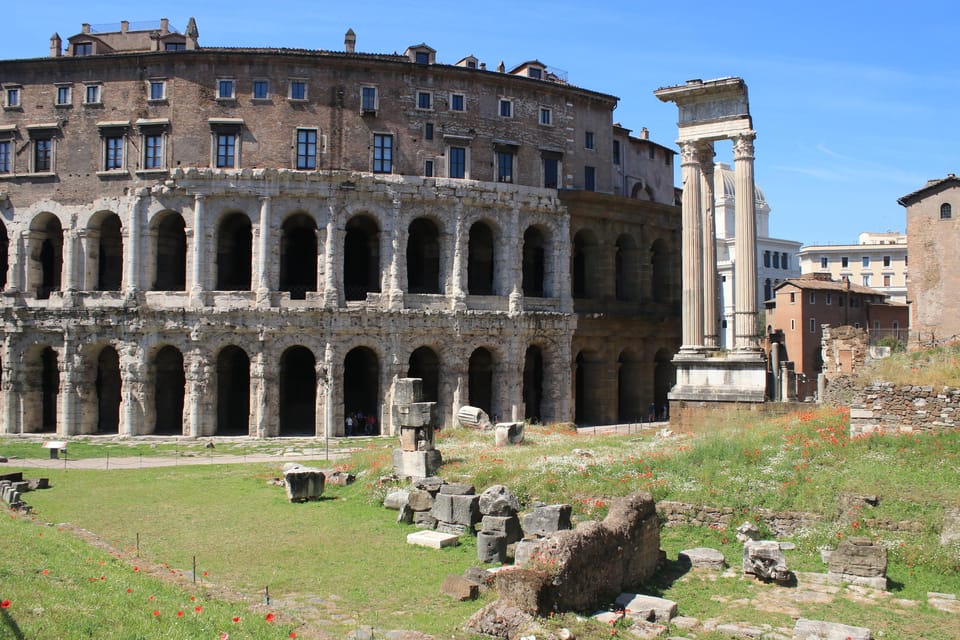
- Teatro di Marcello start point: meet right by Via del Foro Piscario, then head straight into the neighborhood’s layers.
- Piazza Mattei’s Fountain of Turtles: a memorable visual cue to help you remember the story.
- Portico d’Ottavia: one of Rome’s most historic monuments makes the Jewish-Roman connection feel real.
- Great Synagogue of Rome: you’ll learn what the landmark means for the city’s Jewish community (without assuming you can just go in).
- Isola Tiberina ending: a quieter finish at San Bartolomeo all’Isola Tiberina helps the tour land gently.
- Short but full: in about two hours you get major “anchor points,” plus time to walk the narrow streets.
From Teatro di Marcello into the Jewish Ghetto story
The tour begins near Teatro di Marcello at the intersection with Via del Foro Piscario, with your guide waiting right in front of the theater. From there, the walk focuses on getting you oriented quickly—where you are, why it matters, and how the pieces connect.
The route is designed for comprehension. You’re not just looking at buildings; you’re seeing how the Jewish presence in Rome shaped daily life and how Rome shaped the community in return. Even if you only remember a few facts, you’ll remember the sense of place.
You can also read our reviews of more guided tours in Rome
Piazza Mattei and the Fountain of Turtles
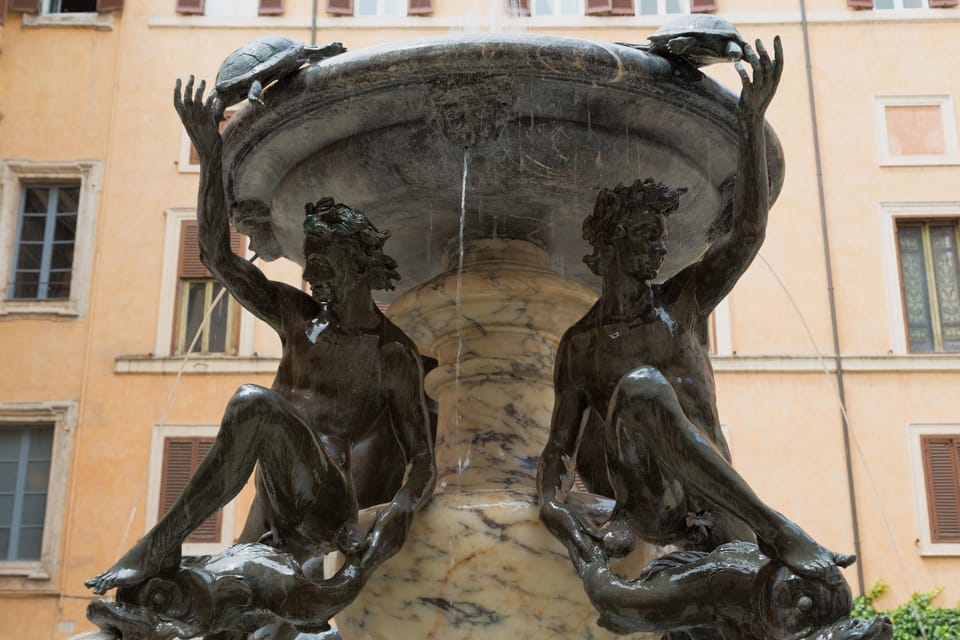
You’ll move to Piazza Mattei, one of the stops that makes this tour feel special right away. The star is the Fountain of Turtles, with its bronze turtles that turn a simple square into a storytelling moment.
What I like about this kind of stop is how it gives your eyes something concrete. When the guide explains symbolism and local meaning, it stops being abstract. Later, when you pass other historic spots, you’ll already have a “memory hook” from the turtles.
If you’re the type who enjoys small details, this stop is for you. It’s also a good pause point—standing in a square after narrow streets lets everything reset.
Portico d’Ottavia: Roman architecture with Jewish context
Next comes the Portico d’Ottavia, a classic Roman structure that you can’t fully appreciate from a distance. Walking under it changes your view. You feel the scale in a more personal way, and you can see the monument as part of the route, not a standalone photo.
This is where the tour does a smart thing: it links a Roman landmark to the Jewish story. You’re not learning history in a vacuum. You’re seeing how the same streets and structures held multiple layers of life over time.
One practical consideration: you’ll spend time walking and looking, so keep your head up and your pace steady. The guide is there to help you notice what you might otherwise skip.
Piazza Giudia and the walk through lived-in history
From the Portico area, the route continues toward Piazza Giudia. Even without reading every sign, this part of the walk helps you understand how the neighborhood’s identity shows up in place names and nearby landmarks.
The value here is the pacing. The tour doesn’t rush you straight between major sights. Instead, it strings the experience together, so the Jewish quarter feels like a real neighborhood with corners, rhythms, and meaning.
You’ll also get context about what life looked like in earlier times. The walk includes traditional Jewish community elements you’d likely want an expert to explain, including the presence of kosher food culture in the area.
The Great Synagogue of Rome: what the landmark represents
A key stop is the Great Synagogue of Rome. This isn’t just a “look at the building” moment. The guide helps you understand why this synagogue matters to the story of the city’s Jewish community.
Important for planning: the entrance to the Synagogue of Rome is not included. That means the tour experience around it may focus on what you can see and learn from outside or via the portion included in the walk, while entry (if available) would be separate.
Still, for many visitors, this stop is the turning point where the walk becomes emotional. Synagogues aren’t just architecture here—they’re reminders of continuity, resilience, and community life across centuries.
Ponte Fabricio and crossing the Tiber
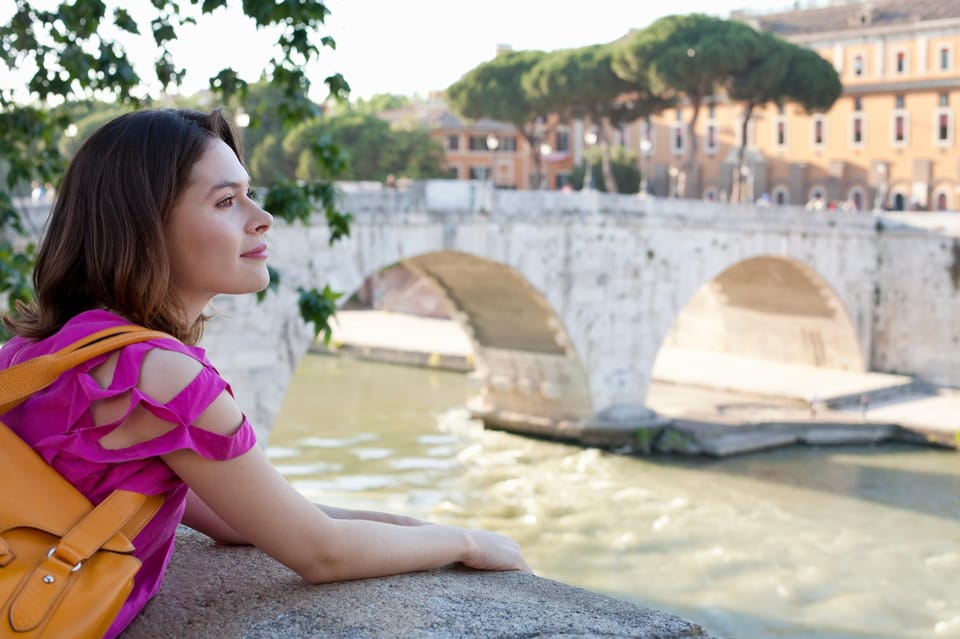
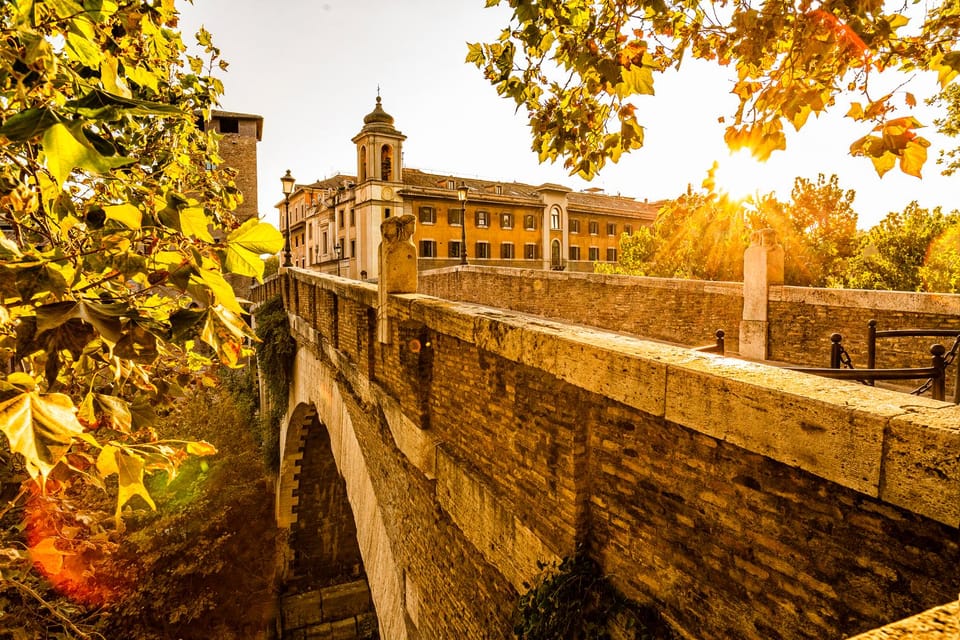
The route then heads to Pons Fabricius (Ponte Fabricio), one of Rome’s oldest bridges. This is a great bridge stop because it’s both visual and explanatory. You can literally see the connection between banks, and that makes the history feel less “museum-ish.”
Walking across a historic bridge gives you time to slow down. It also sets up the final phase on the Tiber Island, where the tour shifts tone from streets and monuments to something calmer.
If you’re trying to understand Rome as a city of layers, this bridge moment helps. It frames the Tiber not as a line on a map, but as a lived border and connector.
Isola Tiberina and San Bartolomeo all’Isola
Your final area is the Tiber Island (Isola Tiberina), described as one of Rome’s older and more peaceful islands. That change of atmosphere is a gift at the end of a topic-heavy tour.
You’ll visit San Bartolomeo all’Isola Tiberina, dedicated to St Bartholomew. The church houses relics of various martyrs, and the guide’s explanation helps you understand the significance of that detail rather than just hearing a name and moving on.
Just like the synagogue: the entrance to the Church of St Bartholomew on Tiber Island is not included. So you may need separate arrangements if you want to go inside. Either way, this stop closes the loop nicely by taking you from community landmarks to a sacred place on the island.
The tour finish point is at Basilica di San Bartolomeo all’Isola Tiberina—and the activity then ends back at the meeting point. That means you’re not left wandering alone at the end of a structured route.
Price and value: what $44.41 gets you
At $44.41 per person for a 2-hour guided experience, you’re paying mainly for the guide and the route planning. The price includes an expert guide, but it does not include synagogue or church entrance fees, nor food.
That mix is important. If you’re the kind of traveler who wants to see everything possible inside major sites, your total cost could be a bit higher after you add entry tickets. If you’re more about the story behind what you see while walking, the value is strong—you get context for major landmarks without spending the whole time stuck at entrances.
Also, the duration matters. Two hours is long enough to learn the shape of the neighborhood and hit key monuments, but short enough to fit into a busy Rome day. If your schedule is tight, this tour is a very workable “chapter” of the city.
Who this tour fits best (and who should skip it)
This guided walk is a good match if you like history that connects to real streets. You’ll be seeing major Jewish landmarks like the Great Synagogue, plus the route through Piazza Mattei and Portico d’Ottavia, and ending with San Bartolomeo on the island.
It’s less ideal if you need step-free routes. The tour is not suitable for people with mobility impairments, and it’s also not suitable for those who get motion sickness. If you’re sensitive to walking fatigue or movement, plan carefully.
Language is flexible: the guide speaks Italian and English, and they might be bilingual or monolingual depending on your group. If you care about language consistency, double-check at booking that your preferred language is available for your time slot.
One more practical note: bilingual or monolingual guides can vary. Either way, the guide’s job is to keep you moving along the story, so expect a conversational style with stops that explain what you’re seeing.
Final thought: should you book this Jewish Ghetto tour?
Yes, if you want a guided walk that makes Rome’s Jewish quarter feel legible fast—through major landmarks like Piazza Mattei, Portico d’Ottavia, the Great Synagogue, and the calm finish on Isola Tiberina. It’s a strong choice for anyone who values guidance that turns “sights” into “meaning,” especially in a compact 2-hour format.
If you know you’ll want to go inside both the synagogue and San Bartolomeo, budget for entrance costs since they’re not included. And if walking is tough for you, or motion sickness is an issue, it’s better to choose a different style of tour.
FAQ
How long is the Rome Jewish Ghetto guided tour?
It lasts 2 hours.
Where do I meet the guide?
Meet your guide at the intersection with Via del Foro Piscario, right in front of Teatro Marcello.
What is included in the price?
The price includes an expert guide.
Are entrances to the synagogue and San Bartolomeo included?
No. Entrances to the Synagogue of Rome and the Church of St Bartholomew on Tiber Island are not included.
What languages does the tour guide speak?
The tour is offered in Italian and English. The guide could be bilingual or monolingual depending on the group.
Is the tour suitable for everyone?
It is not suitable for people with mobility impairments, and it is also not suitable for people with motion sickness.