REVIEW · ROME
Rome Colosseum, Roman Forum & Palatine Hill Entry with AudioGuide
Book on Viator →Operated by Reliant Tours · Bookable on Viator
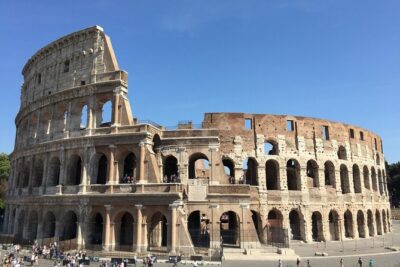
Three ruins, one timed ticket, no guide herding. This visit pairs a timed Colosseum entry with open access to the Roman Forum and Palatine Hill, so you can set your own pace. The downside: the audio guide is digital and delivered through WhatsApp, so you’ll want your phone charged and your own headset ready.
You start at Piazza del Colosseo, 1, and you’re back there when you’re done. Expect about 2 hours 30 minutes to 3 hours if you move at a steady, realistic sightseeing pace, not a sprint.
In This Review
- Quick hits (what matters most)
- Timed Colosseum Entry at Piazza del Colosseo: The smooth part
- Expect security, even if you skip a line
- Entering the Colosseum: What to look for without a guide
- First and second tiers: you’ll still get the Colosseum wow
- Self-guided inside: how to make it feel worth it
- Roman Forum open entrance: How to pace the political heart
- The highlights you can actually spot
- The drawback: it’s easy to get turned around
- Palatine Hill: Where “old Rome” turns into emperors’ real estate
- Why you’ll enjoy Palatine even without a guide
- The only caution: information can feel light
- The audio guide on WhatsApp: Useful tool or extra hassle?
- Two realistic scenarios
- Practical tip: prep before you arrive
- Price and logistics: Is $54.07 actually a good deal?
- The one “gotcha” is expectations
- Who should book this (and who should rethink it)
- Should you book this Colosseum, Forum & Palatine Hill entry?
- FAQ
- How long does the experience take?
- Is this a guided tour?
- What language is the audio guide?
- How do I receive the digital audio guide?
- Where do I meet for the tour?
- What areas are included at the Colosseum?
- Do I get access to the Roman Forum and Palatine Hill?
- Can I change the date or get a refund?
Quick hits (what matters most)
- Timed Colosseum entry for either morning or afternoon scheduling choices
- Self-guided inside the sites, so you’re not stuck listening to a group rhythm
- Roman Forum + Palatine Hill open entrance on the same day
- English digital audio guide via WhatsApp, delivered only if your phone supports it
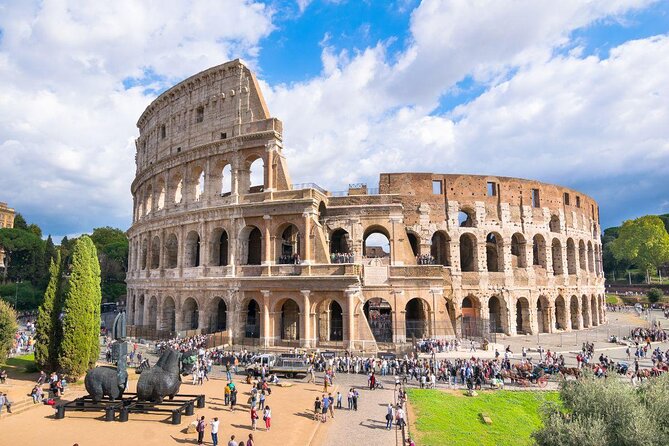
- First and second tiers at the Colosseum, plus access to temporary exhibitions
- Security is mandatory, even when you skip the ticket-office line
Timed Colosseum Entry at Piazza del Colosseo: The smooth part
The big win here is simple: you get a precise time slot for your Colosseum entry. That matters in Rome because the bottleneck is usually not the gate itself—it’s everything before you get through, including the crush around the ticket office area.
You’ll meet at Piazza del Colosseo, 1 (00184 Roma RM). Plan to arrive a bit early so your “I’m here” moment doesn’t turn into a stressful scramble, especially with security lines involved. A common strategy that works well is going a little earlier in the day—or even later in the afternoon—when the flow can feel less intense than peak midday.
You can also read our reviews of more tours and experiences in Rome.



Expect security, even if you skip a line
This ticket is designed to help you avoid the ticket-office queue, but it does not remove the need for mandatory security and identity checks. So if you’re expecting a magical bypass, you’ll be disappointed. The good news is that once you’re checked in, the rest is yours to explore at your pace.
Also, you’ll want comfortable shoes. The Colosseum area is flat-ish in spots, but Rome does not do “easy walks” without some stone-and-stairs energy.
Entering the Colosseum: What to look for without a guide
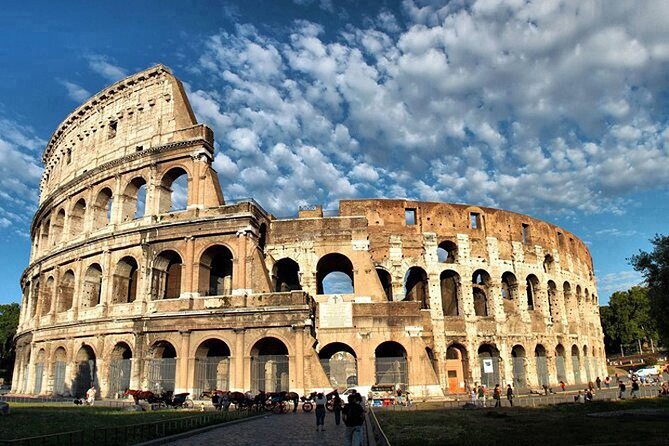
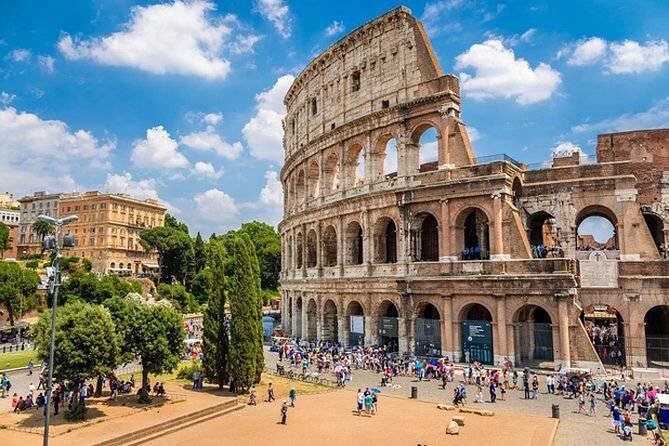
The Colosseum is the kind of place where just standing still teaches you something. It was built in the 1st century CE under the Flavian dynasty, and it was used for huge public spectacles—gladiatorial games, animal hunts, and other events that drew crowds for entertainment.
Even if you’re not focused on every architectural detail, the building’s layout helps you “read” it. You can notice the structured tiers, the way the space funnels people, and the fact that it was engineered for performance. The Colosseum wasn’t a simple bowl—it had complex spectator services and staging systems that let events run.
First and second tiers: you’ll still get the Colosseum wow
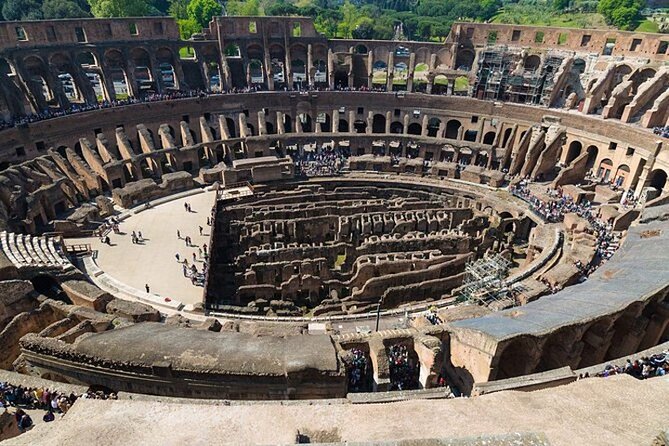
Your entry includes the first tier and second tier. That gives you lots of vantage points to see how the seating rises and how the arena space was framed.
If you’re hoping for special access that goes deeper than the tiers included here, you’d need a different ticket type. This one keeps things focused on the core areas, which is often the smartest choice if your main goal is getting the best views and photos without buying a more expensive add-on.
Self-guided inside: how to make it feel worth it
A big part of the value is that you’re not tied to a group’s stops. That’s great because the Colosseum has natural “pause points”: long lookouts from the seating areas, angles where you can frame the arches and stairways, and spots where you can get a feel for scale.
You can also slow down where your brain wants to slow down—then move on when it doesn’t. No guide calling out times. No group getting tugged along. Just you, the ruins, and a realistic route.
And yes, signage helps. Even when people find the audio guide less useful, the on-site explanations and interpretive text can carry the experience. You don’t have to rely on your phone to make the visit meaningful.






Roman Forum open entrance: How to pace the political heart
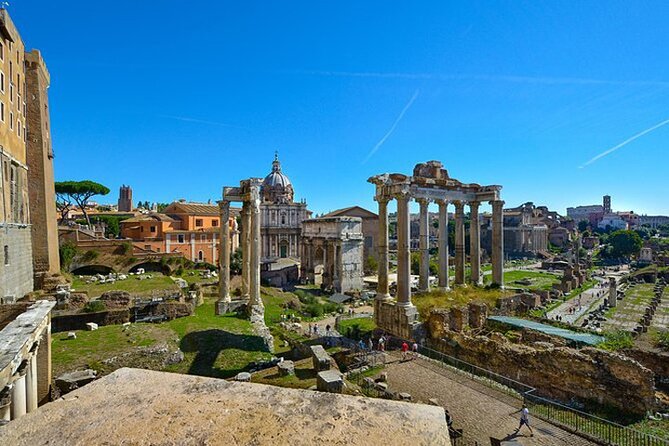
Next is the Roman Forum, and it’s one of those places where the best approach is to let it unfold in layers. The Forum began as land that was reclaimed in the late 7th century BCE, and it became the center of public life for over a thousand years.
What you’ll notice as you walk is that the Forum is not one monument—it’s a timeline. Early on, it hosted political, religious, and commercial activities. Later, the layout and major buildings evolved, including civil basilicas in the 2nd century CE used for judicial business.
The highlights you can actually spot
Emperors kept adding prestige monuments over the centuries. With a route at your own pace, you can look for major named features like:
- the Temple of Vespasian and Titus
- the Temple of Antoninus Pius and Faustina
- the Arch of Septimius Severus (built in 203 CE to celebrate victories over the Parthians)
You don’t need a lecturer to appreciate why these names keep showing up. They’re a map of how power expressed itself in stone.
The drawback: it’s easy to get turned around
The Forum is spread out, and without a guide, it can feel like you’re seeing “a lot of ruins” rather than a clear storyline. If you like structure, go in with a basic plan: spend your first chunk identifying the big monument zones, then fill in details as you go.
A smart pacing trick: move through quickly at first just to get the geography, then slow down for the areas that grab you. That keeps the visit from feeling like random wandering.
Palatine Hill: Where “old Rome” turns into emperors’ real estate
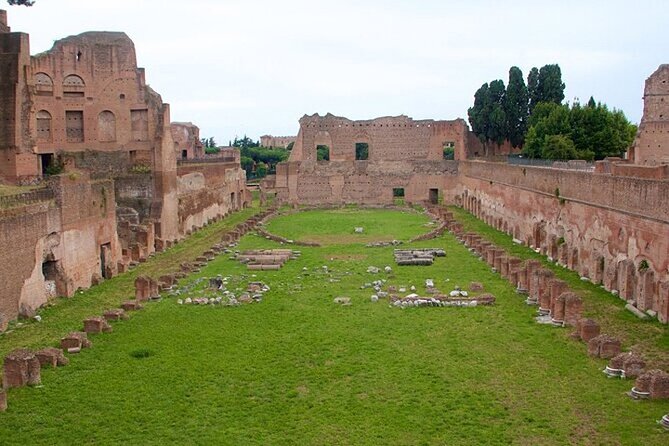
Palatine Hill is the third stop, and it’s not just a hill—it’s a whole story of Rome’s shift from beginnings to power.
The earliest part of the area connects to Iron Age settlements linked to Rome’s earliest core. Over time, Palatine Hill became home to important civic cults, including Magna Mater (Cybele). Then between the 2nd and 1st centuries BC, it became the residential district of the Roman aristocracy, with houses known for decorated interiors and preserved features like painted and paved elements (for example, the House of the Griffins).
Then the big transition: imperial residences. Augustus chose the hill for his own home, and later the imperial palaces developed through several phases, including the Domus Tiberiana, Domus Transitoria, Domus Aurea, and Domus Flavia (with public/private divisions, and the private part called the Domus Augustana).
Why you’ll enjoy Palatine even without a guide
Palatine Hill has two kinds of value. First, you’re looking at early Rome’s physical footprint. Second, you can feel the shift from civic life to “this is where the rulers live.”
And because it’s on a hill, your brain keeps getting cues that the view and elevation matter. Even a quick look outward helps you understand why this area became the center of ambition.
The only caution: information can feel light
Without a dedicated guide, Palatine can feel less “explained” than you might expect. If you’re the kind of traveler who likes having someone walk you through what you’re seeing, you might miss that structure.
That said, you can still get a lot from it if you focus on the big themes: early settlement clues, religious cult space, aristocratic homes, then the imperial palace progression.
The audio guide on WhatsApp: Useful tool or extra hassle?
This tour includes a digital audio guide in English, delivered by WhatsApp only. The key detail is that you’ll only get it if the phone number used for the booking is set up for WhatsApp.
You’ll use your own phone and your own headset. That means you should pack a small but crucial travel item: earbuds/headphones that work instantly on day one.
Two realistic scenarios
In a perfect world, the audio guide helps you connect names, dates, and building functions while you walk. It can be a nice companion when you want context without changing your pace.
In the real world, the audio may not feel essential. Some visitors find that the on-site signage does enough, and the phone experience is more of a distraction than a guide. If your goal is mostly photos and big-picture impressions, you might rely more on what’s posted on the walls and less on the audio.
Practical tip: prep before you arrive
If you’re the type who depends on the internet for everything, don’t. Save what you need early, keep your battery topped up, and try to be connected before you start wandering. Even when tickets are provided digitally, downloading and accessing files can go sideways if you’re stuck without Wi-Fi.
Price and logistics: Is $54.07 actually a good deal?
At about $54.07 per person, this is priced as a “value ticket” style experience: you’re paying for timed entry and the core access, plus the Roman Forum and Palatine Hill area.
Here’s what you’re effectively buying:
- a Colosseum reservation for a specific time
- Colosseum admission to the first and second tiers
- open entrance to the Roman Forum and Palatine Hill
- temporary exhibition admission
- on-site toilets
- a digital audio option (with the WhatsApp condition)
Where the value shows up is that you’re doing three major stops in one day without paying for a full guided group format. If you like moving at your own speed—and you can handle a phone-based audio guide—this is a solid way to spend your time.
The one “gotcha” is expectations
The most common frustration with any timed entry product is confusing what you’ll get. Some people expect no security line, or they expect entrance to areas not included in their ticket tier. This product clearly focuses on tiers and core areas, and security is still part of the system.
Also, the audio guide is not a provided headset and not delivered in a traditional app flow. It’s WhatsApp-based and depends on your setup.
Who should book this (and who should rethink it)
This works best for:
- travelers who want self-guided pacing and hate waiting on groups
- people who like seeing the big sights first, then reading details slowly
- anyone planning one solid day that combines the Colosseum with the Forum and Palatine Hill
It may be less satisfying for:
- travelers who want deep, guided explanations and a structured walkthrough
- anyone who struggles with phone-based ticket/audio delivery
- visitors who strongly dislike dealing with digital steps before arriving
If you’re going with kids, you’ll want to confirm child pricing rules separately where needed. Your best move is to double-check entry terms before you rely on assumptions.
Should you book this Colosseum, Forum & Palatine Hill entry?
If your goal is to hit the big Roman icons with timed Colosseum access and then explore the rest on your own, this is a strong buy. The self-guided setup is a real perk because you can spend more time where you’re curious and less time where you’re not.
I’d book it if you’re comfortable handling:
- a timed entry schedule
- a mandatory security check
- a digital audio guide delivered through WhatsApp
I’d think twice if you want a spoken, live guide throughout, or if your phone setup for WhatsApp and audio is unreliable. In that case, you may prefer a tour format that doesn’t depend on tech and doesn’t leave you piecing information together.
Overall, this is a practical way to make a limited day in Rome count—especially if you show up prepared and treat the Colosseum, Forum, and Palatine as three chapters, not one quick stop.
FAQ
How long does the experience take?
It’s approximately 2 hours 30 minutes to 3 hours.
Is this a guided tour?
No guide is included. You enter and explore on your own, with a digital audio guide option.
What language is the audio guide?
The audio guide is in English.
How do I receive the digital audio guide?
It’s sent via WhatsApp to the phone number tied to your booking. You use your own phone and headset to listen.
Where do I meet for the tour?
You start at Piazza del Colosseo, 1, 00184 Roma RM, Italy and the activity ends back there.
What areas are included at the Colosseum?
You get entry to the Colosseum first tier and second tier, with access included for temporary exhibitions.
Do I get access to the Roman Forum and Palatine Hill?
Yes. You have open entrance to the Roman Forum, Palatine Hill, and the Imperial Forum.
Can I change the date or get a refund?
This experience is non-refundable and cannot be changed for any reason.