REVIEW · ROME
Rome: Colosseum, Forum, and Palatine Hill 3 hr Tour
Book on Viator →Operated by Enjoy Rome · Bookable on Viator
Three hours, three ancient hits.
This guided route helps you handle the big one first: reserved entry into the Colosseum plus a smart follow-on walk through the Forum and Palatine Hill. Meeting near the Colosseo metro area means you get started quickly, and the audio headset keeps the story clear as you move from stop to stop. I like that the tour is built around the main sights in a way that feels efficient, not rushed, and the group stays small.
I especially like the guide-led approach. When the tour runs with a guide style like Daniela’s humor, Maria’s engaging pacing, Claudia’s energy, Amir’s architecture-and-history focus, or Olga’s patient storytelling, you’re not just looking at ruins, you’re connecting them to how Romans lived and what rulers wanted to project.
The main drawback to plan for is communication and pace. Some departures can feel hard to follow if the accent is strong or if the headset volume/quality isn’t great, and you will be doing real walking and stairs. Add in weather (rain can slow everything), and the experience can depend on how you manage expectations.
In This Review
- Key highlights you’ll feel right away
- Why this 3-hour route is a smart Rome choice
- Meeting near Via delle Terme di Tito: start easy, start early
- Entering the Colosseum: reserved entry and what to notice
- Roman Forum: turning ruins into an imperial city
- The Arch of Titus: a short stop with big story value
- Palatine Hill: climb for meaning, then look for your bearings
- Guide style and audio headsets: how to make it work for you
- Price and value: what $38.23 really buys you
- Weather, walking, and comfort: the real checklist
- Who should book this Colosseum–Forum–Palatine tour?
- Should you book this tour?
- FAQ
- How long is the Rome Colosseum, Forum, and Palatine Hill tour?
- What stops are included on the tour?
- Is admission included for the Colosseum, Roman Forum, and Palatine Hill?
- Does this tour include a guided explanation and audio?
- What is the maximum group size?
- Where does the tour meet?
- Do I need to bring ID?
- Are there restrictions on bags or items?
- What is the cancellation policy?
Key highlights you’ll feel right away
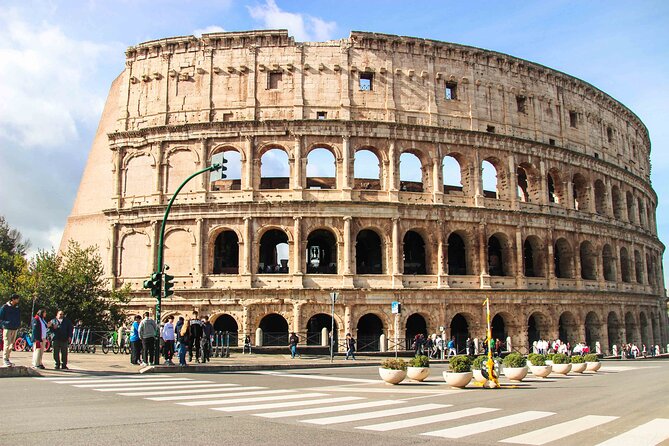
- Reserved Colosseum entry so you’re not stuck in the slowest lines outside.
- Audio headsets (audioset included), which help a lot around noisy crowds.
- Forum streets + imperial context, not just random stones.
- Arch of Titus stop, a quick detour that pays off in meaning and scale.
- Palatine Hill viewpoints, including sights toward the Colosseum and key landmarks.
Why this 3-hour route is a smart Rome choice
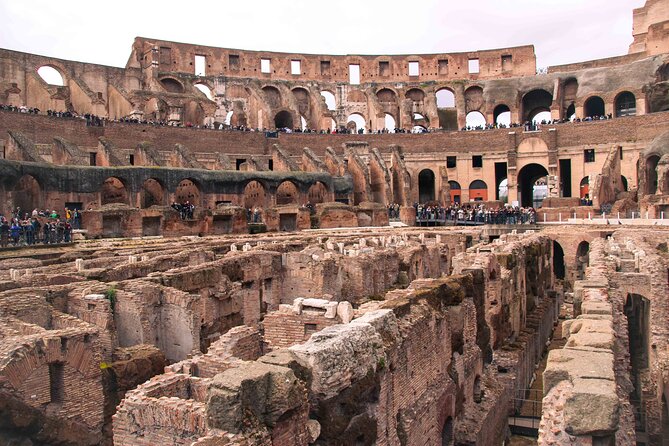
Rome has a way of turning “I’ll see that today” into “why am I still in line?” This tour is designed to fix that first headache with a Colosseum reservation. Instead of gambling on timing, you’re guided to enter and start absorbing the place while the daylight is still yours.
The other thing I like about the structure is that it makes the ancient world feel connected. You start inside the amphitheater where spectacle was the point. Then you walk out to the Roman Forum, the political and social nerve center. Finally, you climb Palatine Hill, tied to Rome’s origin stories and offering big, practical views to help you map where everything sits.
And yes, it’s only about 3 hours. That matters if you’re juggling heat, jet lag, or the fact that you still want time for gelato, a real meal, or just getting lost on purpose.
You can also read our reviews of more tours and experiences in Rome.



Meeting near Via delle Terme di Tito: start easy, start early
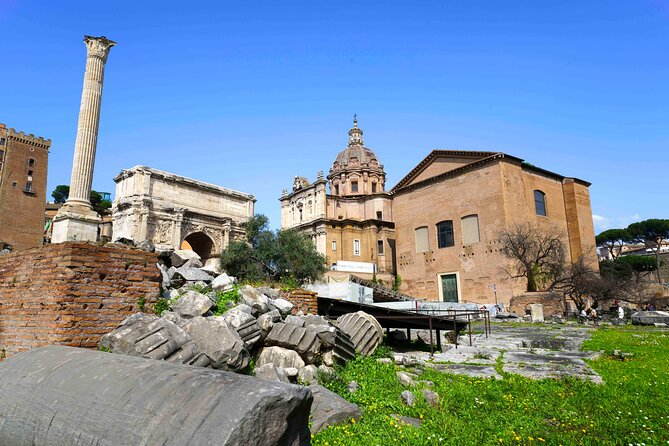
The tour meets at Via delle Terme di Tito, 93, 00184 Roma. That’s a practical meeting point because it’s near public transportation, and it keeps you from spending your best morning in a maze of wrong-address guesswork.
A detail that affects your entire experience: bring valid ID and make sure the name you booked with matches your passport or ID document. Access to the Colosseum and Roman Forum depends on it, and if names don’t match what the ticket office has, entry can be denied. When you’re traveling internationally, this is the difference between a smooth start and a stressful scramble.
Also plan for walking on uneven surfaces. Cobblestones and stairs are part of the deal here, so good shoes aren’t optional. I’d go with something that’s comfortable for hours, not just “fine for a quick walk.”
Entering the Colosseum: reserved entry and what to notice
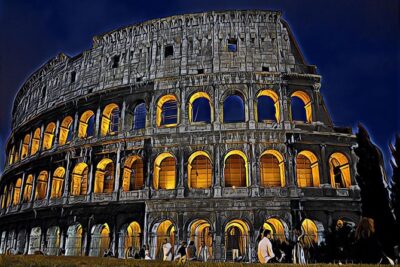
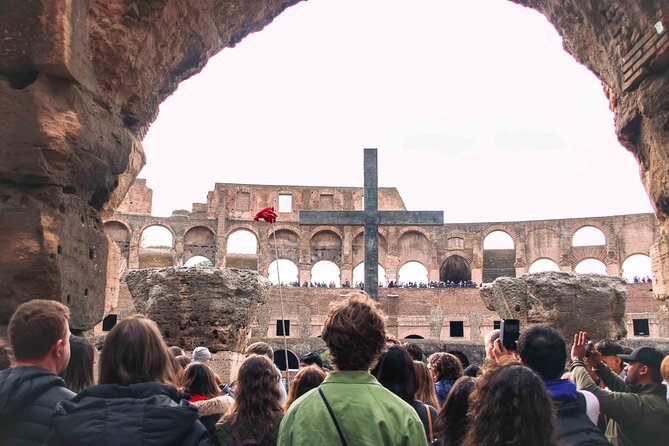
The Colosseum stop runs about 45 minutes, and the main value is getting you inside with a guide who knows how to pace the visit. You’re not just doing a self-guided sprint; you’re using that first time to orient yourself: where you are, what you’re looking at, and why it matters.
The amphitheater itself is nearly 2,000 years old, and it’s still impressive in a way that’s hard to photograph. Once you’re inside, look for the structure’s tiers and corridors—this is where the stories land. A good guide will connect the architecture to what audiences experienced, including gladiatorial contests and the kinds of spectacles staged there.
Two practical points that make your visit better:
- Expect stairs. Even if you’re not doing the longest climbs, moving between viewpoints and sections takes effort.
- Use your audio headset well. Stand close when your guide speaks, and don’t be shy about adjusting volume if it’s too low in a crowded area.
If you’re traveling as a couple or family, this is one of those stops where group size still matters. This tour caps at 30 travelers, which usually keeps things from feeling like a human stampede.
Roman Forum: turning ruins into an imperial city
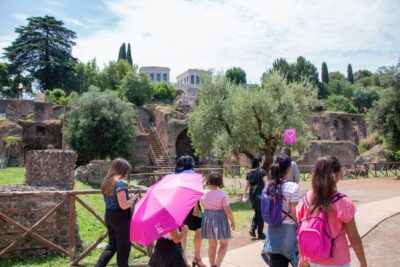
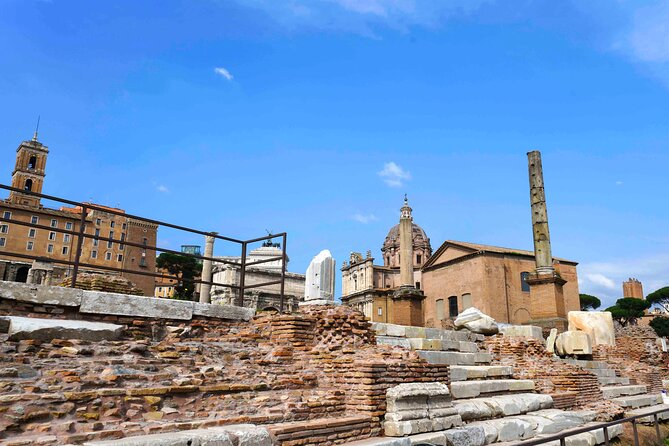
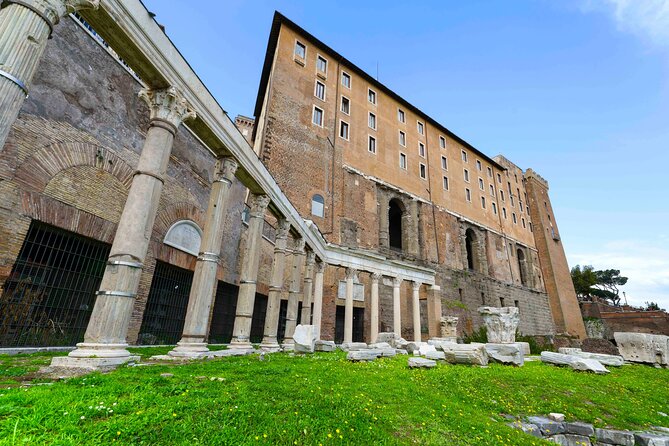
After the Colosseum, the tour heads to the Roman Forum for about 1 hour. This is where the “why should I care” question gets answered. The Forum isn’t one monument—it’s a whole landscape of power: temples, arches, and the spaces where politics, religion, and public life mixed.
This part of the tour works best if you let the guide’s explanations do the heavy lifting. The Forum can look like scattered ruins if you’re just reading signs. With a guide, you start imagining the movement of people across streets, markets, and ceremonial spaces—so the stone isn’t dead; it’s a stage.
You’ll also get to see impressive preservation. The Roman Forum is known for how much remains visible, and that makes it easier to understand scale. It helps you connect rulers and eras to specific corners of the site.
One thing to remember: you’ll be walking. Even if the Forum time is “only” an hour, the cobblestones and stop-and-go pacing add up.
The Arch of Titus: a short stop with big story value
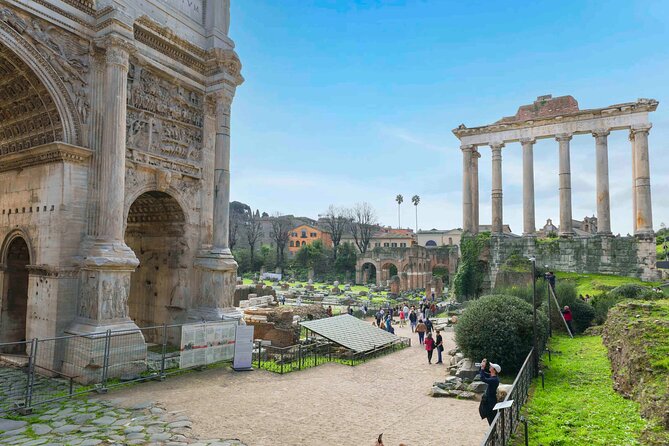
Along the way in the Forum area, there’s a focused stop for the Arch of Titus, built in the first century AD. This arch sits on a main street of the Roman Forum, and it was constructed to commemorate victories connected to Emperor Domitian’s family—Titus first, then Domitian later.
Why this stop is worth it: arches can feel like background in big sites, but this one is memorable because it’s both architectural and political. It’s a monument that says power was meant to be seen, not just held.
Plan to treat it like a “pause and look” moment. When you stand close and take in the design, the meaning becomes more than a quick fact. It’s a reminder that Rome built propaganda into public spaces.






Palatine Hill: climb for meaning, then look for your bearings
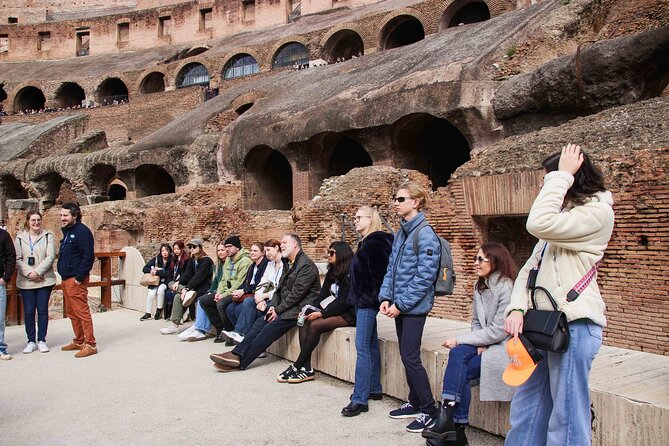
The final major stop is Palatine Hill for about 1 hour. Palatine is one of Rome’s famous seven hills, and it has a special place in origin stories—so it’s not just another viewpoint. The hill ties into the idea of where Rome began and how later elites wanted to connect themselves to those roots.
What you’ll notice first, after the effort of climbing: views. From Palatine Hill, you get sweeping sightlines that help you understand how the Colosseum and Circus Maximus fit into the city layout. The tour description specifically points you toward views including Piazza Venezia, Circus Maximus, and the Colosseum.
This is the stop that usually helps people feel like the visit “clicks.” After looking down and taking in the bigger picture, you can return to earlier structures in your mind and place them more accurately.
If you’re sensitive to heat, this is also the part where you should pace yourself. Bring water if you can (meals and drinks aren’t included), and take short pauses when your body asks for it.
Guide style and audio headsets: how to make it work for you
Most of the value in this tour comes from the guide and how well you can hear them. The tour includes a live guide and an audioset, which is great for outdoor history walks where wind and crowds make quiet listening tough.
From the feedback pattern around this kind of tour, the best outcomes happen when guides explain clearly and keep moving at a comfortable pace. Some people have found certain accents harder to understand or the headset quality could be improved. That doesn’t mean every departure is like that, but it does mean you should show up ready to work with the equipment.
Practical ways to protect your experience:
- Arrive with your ID and booking names correct so you’re not dealing with access stress mid-tour.
- Put attention into the first few minutes. If you’re struggling to hear, tell the guide early.
- If someone in your group is hard of hearing, positioning near the guide matters.
Also, be ready for variable group energy. One comment trend is that tours can slow down if the guide pauses a lot or if the group is large. You’ll still cover the main highlights, but your personal enjoyment depends on whether you like a story-first pace or a move-fast pace.
Price and value: what $38.23 really buys you
At $38.23 per person, this tour is priced like a “don’t-mess-around” way to see three top sites without DIY line management. The ticket math is part of the value story:
- The Colosseum admission ticket is valued around €18
- The Colosseum reservation fee is valued around €2
- Entrance fees for the Roman Forum and Palatine Hill are included
- Everything else in the price covers the guided experience, audio setup, and other tour services
That breakdown matters because the biggest pain point at the Colosseum is time. This tour pays to smooth that time. If you’re on a short trip and can’t afford to lose hours to queues, the reservation has real value.
What’s not included is also part of the equation. Meals and drinks aren’t included, and there are no transfers. You’ll want to plan lunch separately and get yourself to the meeting point. Once you do that, the tour feels like a fair deal for the sites you hit in a single run.
Weather, walking, and comfort: the real checklist
This tour is outdoors-heavy. That means weather can change your day fast. One traveler described getting caught in heavy rain for hours with little shelter nearby, which is a useful warning even if it doesn’t happen to everyone.
So, pack smart:
- Comfortable walking shoes are required for a reason.
- Bring water, especially in hot months.
- If rain is in the forecast, consider a compact rain layer.
- Avoid prohibited items like aerosols, sharp objects, and large backpacks.
The walking is not extreme by hiking standards, but it’s consistent. Expect stairs at the Colosseum and climbing at Palatine Hill, plus uneven surfaces in both areas.
Who should book this Colosseum–Forum–Palatine tour?
This tour is a strong fit if:
- You want a guided route through Rome’s top ancient sites and don’t want to figure out context on your own.
- You’d rather spend time learning stories and architecture than spending time stuck in lines.
- You like “connected Rome,” where spectacle, politics, and origin myths are put in order.
It’s also a decent choice for first-timers because the stops are the big three. But if you hate crowds, struggle with stairs, or you strongly prefer a quiet self-guided pace, you might feel less happy here.
Also consider language comfort. Some departures can involve accents that are harder to catch, even with headsets. If you’re sensitive to that, prioritize the headset and listen for early clarity.
Should you book this tour?
I’d book it if you want a time-managed way to see the Colosseum, Roman Forum, and Palatine Hill in about 3 hours with reserved entry and a guide who can connect the dots between buildings and Roman life. The price is easier to justify when you factor in included reservations and entrance fees.
I would think twice if you’re very weather-sensitive, hate walking on uneven ground, or you’ve previously struggled with audio clarity on guided tours. In that case, you may prefer a smaller group option or a self-guided plan with extra time.
If you’re flexible on pace, bring the right shoes, and show up with valid ID and matching names, this is one of the most practical ways to tackle Rome’s ancient core without losing your whole day to lines.
FAQ
How long is the Rome Colosseum, Forum, and Palatine Hill tour?
It lasts about 3 hours (approx.).
What stops are included on the tour?
The tour covers the Colosseum, the Roman Forum, the Arch of Titus area, and Palatine Hill.
Is admission included for the Colosseum, Roman Forum, and Palatine Hill?
Yes. Entrance fees for the Roman Forum and Palatine Hill are included, and the Colosseum entrance ticket plus a reservation fee are included as well.
Does this tour include a guided explanation and audio?
Yes. It includes a live guide and an audioset so you can listen while moving between stops.
What is the maximum group size?
The tour has a maximum of 30 travelers.
Where does the tour meet?
The meeting point is Via delle Terme di Tito, 93, 00184 Roma RM, Italy.
Do I need to bring ID?
Yes. Each participant must bring a valid passport or ID document, and it must match the name provided during booking.
Are there restrictions on bags or items?
Yes. Aerosols, sharp objects, and large backpacks are not allowed.
What is the cancellation policy?
You can cancel up to 3 days in advance for a full refund. If you cancel within 3 days of the experience start time, the amount paid is not refunded.