REVIEW · ROME
Rome: Colosseum Experience with Host and Audio Guide
Book on GetYourGuide →Operated by Tours About · Bookable on GetYourGuide
One look at the Colosseum and you get why Rome rules history. This experience pairs skip-the-line entry with an easy host check-in, then lets you move at your pace through the Colosseum, the Roman Forum, and up to Palatine Hill with a digital audio guide you can listen to while you walk.
I especially like that the host comes with you to the entrance line (so you are not guessing), and the audio guide is designed to make sense of what you are seeing without turning it into a rushed lecture. The main drawback to plan around: headphones are not included, and a few visitors found the audio setup can be tricky if your phone service is weak until you get the ticket/app details.
In This Review
- Key things to know before you go
- Meet the host near Via delle Terme di Tito 93, then go your own way
- Skip-the-line at the Colosseum: fast entry, still expect security
- The audio guide setup: phone, app, and the headphone reality check
- Colosseum inside: engineering, scale, and the best way to not get lost
- Roman Forum: walk the power corridors at your own pace
- Palatine Hill for panoramic views and elite living spaces
- Price ($26) and what you actually get for the money
- Timing, crowds, and what to bring (so your day feels smooth)
- Who this is best for—and who should choose differently
- Should you book this Colosseum, Forum, and Palatine Hill visit?
- FAQ
- How long is the Colosseum, Roman Forum, and Palatine Hill experience?
- What sites are included in the ticket?
- Is a live guide included during the visit?
- Is the audio guide included, and what languages are available?
- Do I need to bring headphones?
- Where do I meet the host?
- What do I need to bring with me?
- Is there a queue even with skip the line?
- Is this tour suitable for wheelchair users or people with mobility impairments?
- Are pets or large bags allowed?
Key things to know before you go
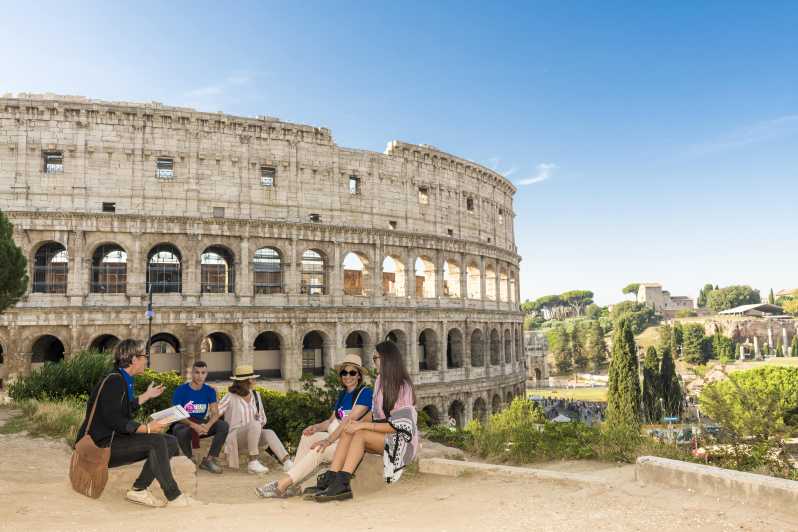
- Skip-the-line ticketing helps you get moving faster, though security checks can still create waiting.
- Host to the entrance line keeps the first step simple, then you explore on your own.
- Audio guide is digital and uses an app, so bring a charged phone and expect to use earbuds.
- Three stops in one block: Colosseum, Roman Forum walkways, then Palatine Hill viewpoints.
- You cannot rely on wheels: it is not suitable for wheelchair users or people with mobility impairments.
- Timing matters: your ticket is tied to a designated entrance time.
Meet the host near Via delle Terme di Tito 93, then go your own way
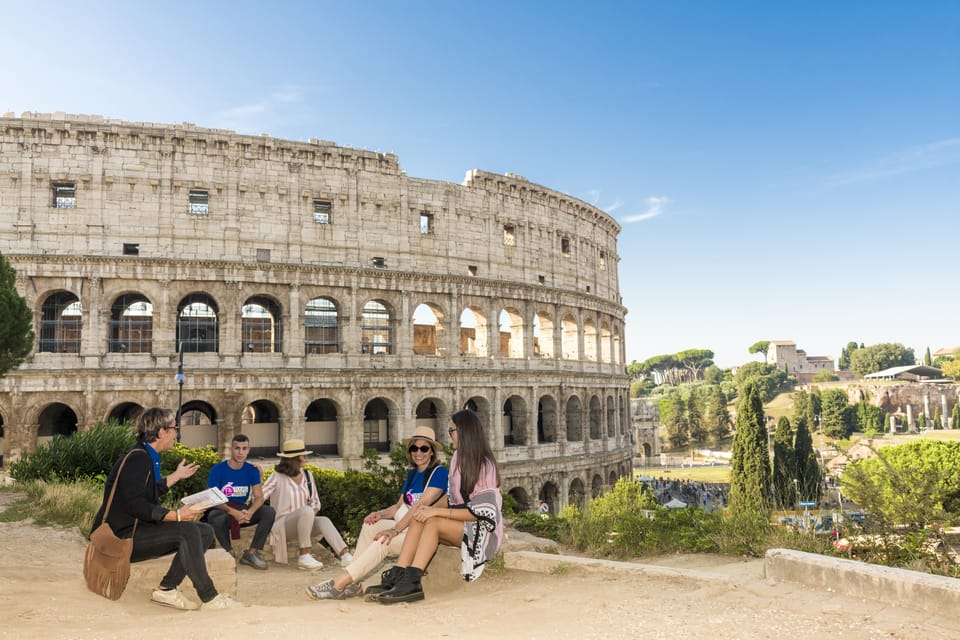
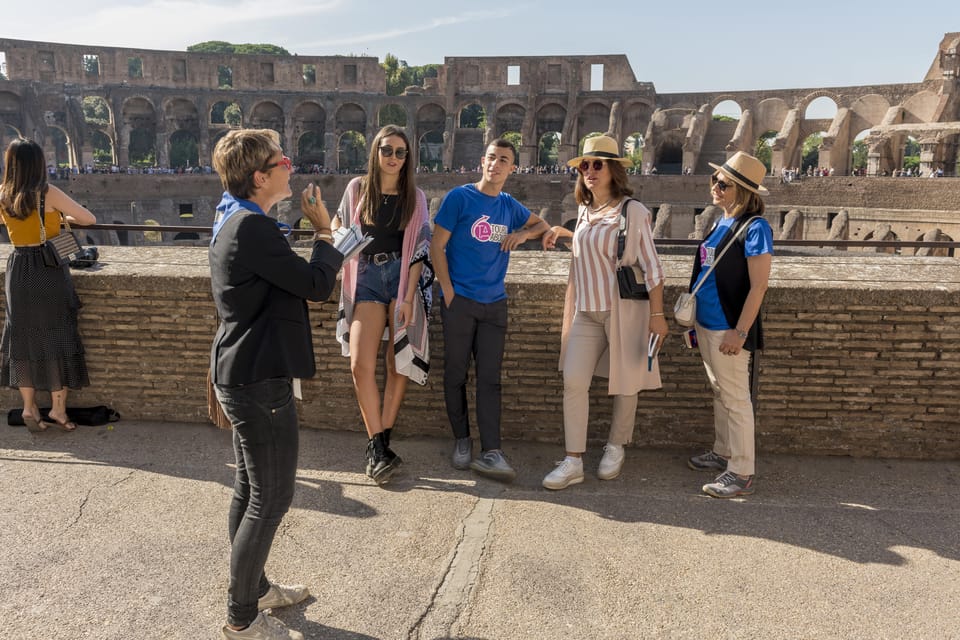
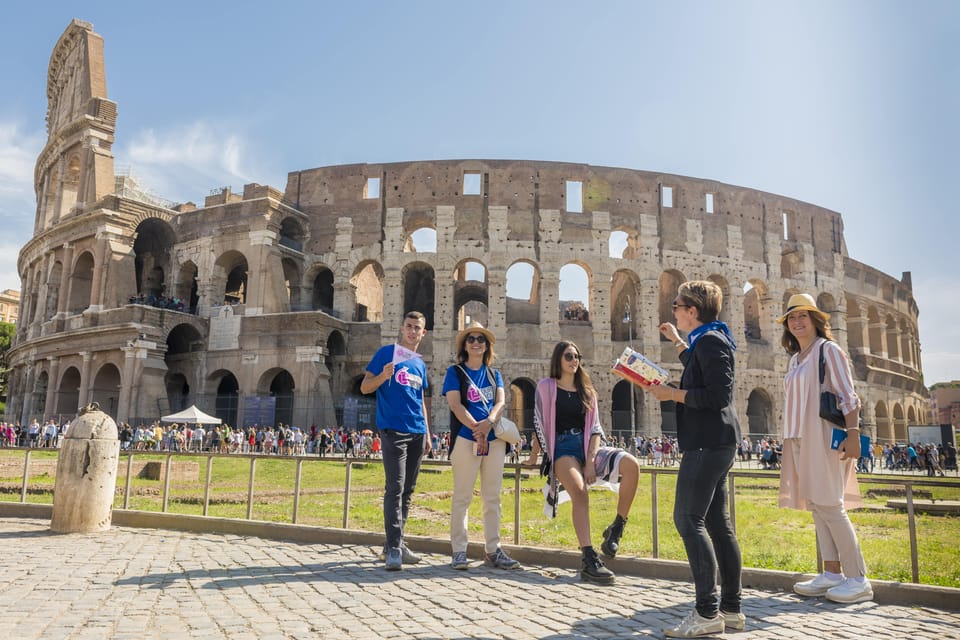
This is a “guided access, self-paced visit” setup. You meet the host at Via delle Terme di Tito 93, get the entry/ticket details and login info for the audio guide, and then you head with them to the entrance line. After that, you are basically on your own—on purpose.
That sounds small, but it matters. The Colosseum is not a place where you want to spend your first 20 minutes figuring out what line you are in and where your ticket is accepted. Having someone point you at the correct start reduces stress, especially if you are traveling with kids or you are on a tight schedule.
How to get there by metro: if you use the Colosseo metro station, go to the terrace above the station. Walk on Via Nicola Salvi about 100 meters, then turn left. Expect steps in this area, and bring comfortable shoes. One review even flagged the heat factor from having to climb up to the meeting area and then come back down later.
Good first-time Rome strategy: show up, get checked in, and then let your feet do the work.
You can also read our reviews of more guided tours in Rome



Skip-the-line at the Colosseum: fast entry, still expect security
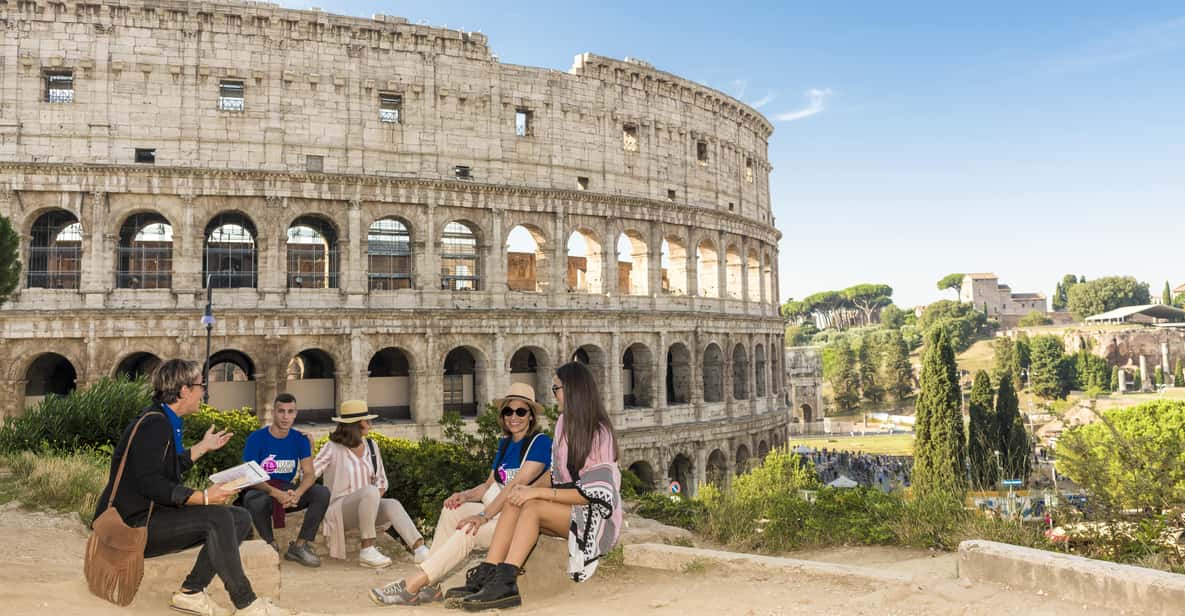
This ticket includes skip the ticket line, which is worth it when Rome is busy. Still, you should assume there can be a queue because the Colosseum uses security checks.
Here is how to think about it: skip-the-line usually helps with the big bottleneck (ticket verification/arrival processing), but it does not erase security. So your best move is the same one that works at every major site in Italy—arrive at the meeting point with a little buffer. If you are early, you will likely be happier once you’re inside.
Also keep in mind: the entry ticket is valid for a designated entrance time only. That means you should not plan to wander nearby for hours and then come back. Once your time slot is used, you’re out of luck.
The audio guide setup: phone, app, and the headphone reality check
The audio guide is included as a digital audio guide, and it is available in English, German, and Italian. But there are two practical catches that are easy to miss until you are standing there.
First: headphones are not included. The tour listing expects you to use your own. If you forget earbuds, you can still visit—but you’ll lose the main “guided-by-voice” part of the experience.
Second: the app experience can be dependent on setup timing. One visitor shared that the app download instructions can be clear, but the code needed to access the audio may only be given once you pick up your tickets. If you are relying on weak mobile data or no service in that moment, you might have trouble before the audio kicks in.
My advice:
- Charge your phone fully and bring a reliable pair of earbuds.
- Download the required app ahead of time if the instructions say so.
- Have a small plan B in case your audio setup hiccups—your eyes will still get plenty of value at every stop.
This is not a “live guide standing next to you the whole time” product. It’s more like: you get the right access, then you use audio prompts to shape your walk.
Colosseum inside: engineering, scale, and the best way to not get lost

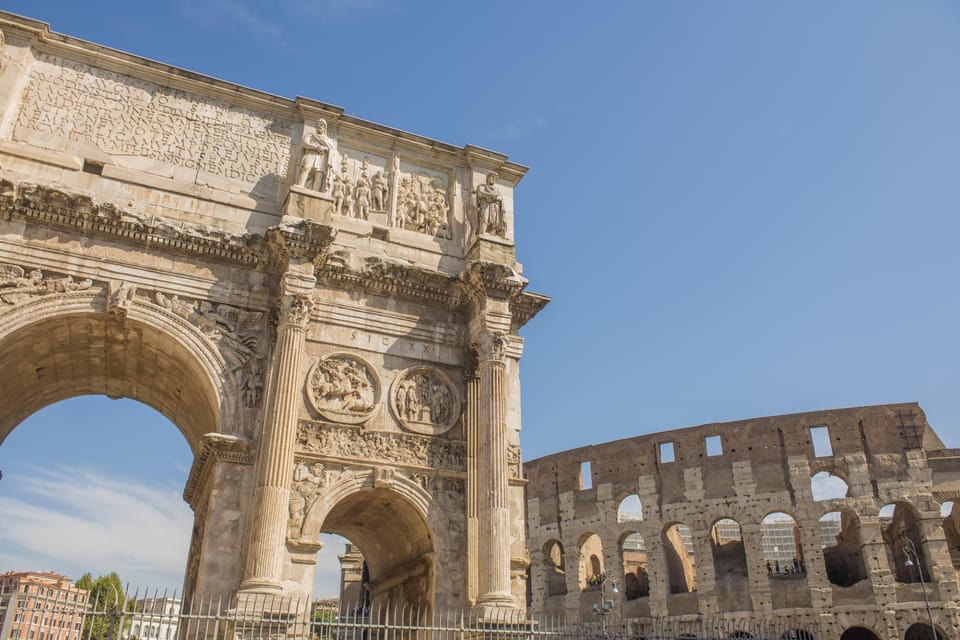
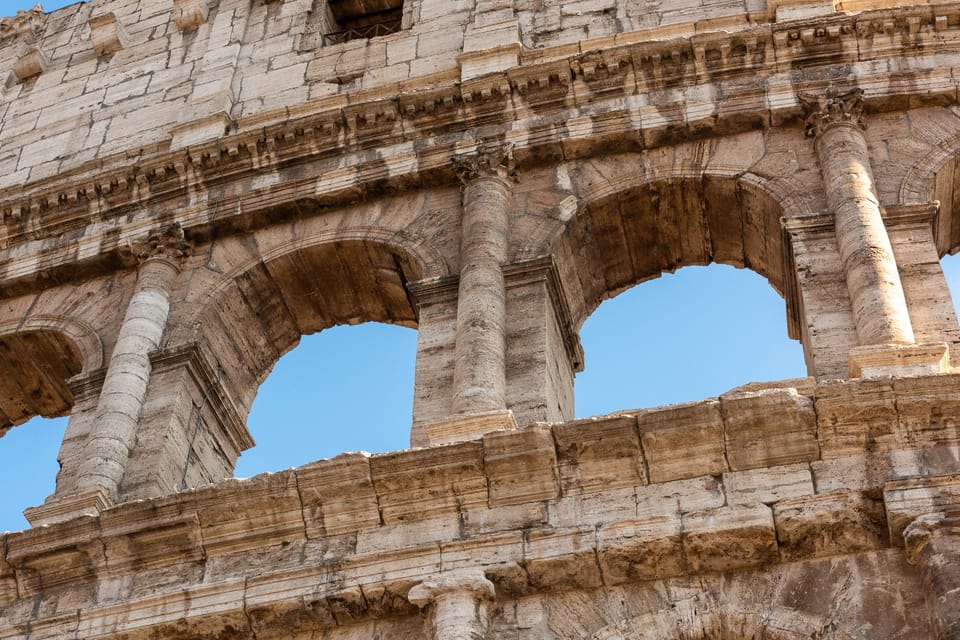
Once you are in, the Colosseum is the centerpiece. You stroll through the immense arena space while listening to an audio guide focused on the building and its past.
What I like about this approach is that the audio can give you structure without forcing you to keep up with a person. The Colosseum can be overwhelming when you are staring at walls and arches and wondering what matters most. Audio keeps you oriented: what you are looking at now, why it mattered, and how the site worked.
There’s also a practical benefit. When you have three stops in one visit block, you do not want to spend the entire time waiting for explanations. This setup lets you get moving, but still learn something meaningful while you walk.
Two crowd realities:
- You should expect busy corridors and packed viewpoints—especially in summer.
- Off-peak helps. One review basically spelled it out: high season means too many people, and you spend more time maneuvering than noticing details.
Plan to slow down where it counts: the big internal sightlines, the major levels/angles you can access, and the spots where your audio guide tells you to look.
Roman Forum: walk the power corridors at your own pace
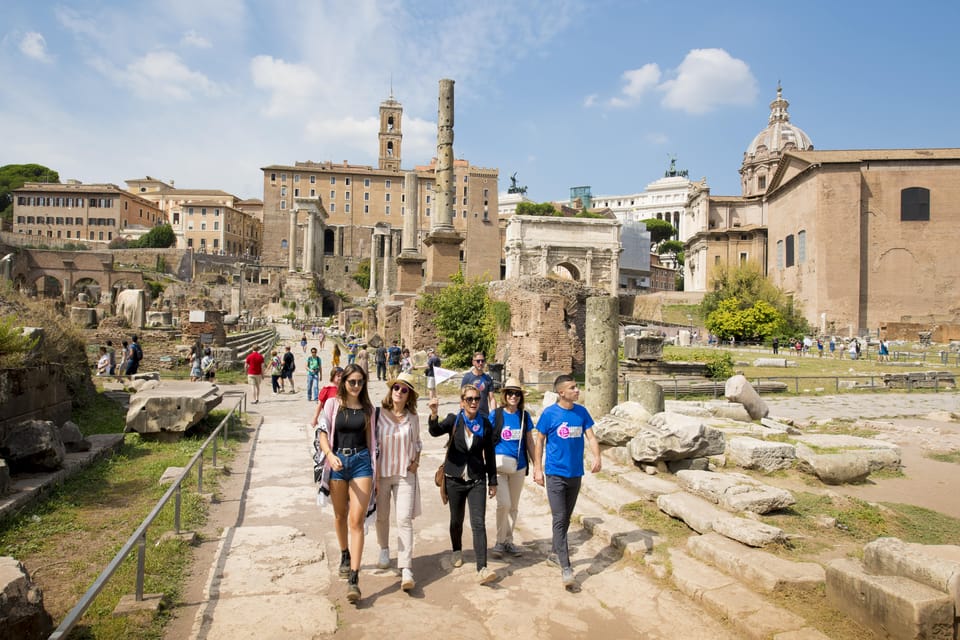
After the Colosseum, you head to the Roman Forum—the ruins that once acted like the political and social heart of ancient Rome.
This part is especially good for audio-guided walking because the Forum is not one single monument. It is many layers of stone remnants, each one connected to different people and events. The audio helps stitch those pieces together so you are not just sightseeing rubble.
A nice detail from the experience format: you are not locked into a group lecture. You stroll through walkways where names like Caesar and Cicero show up through the storytelling. Even if you do not know much Roman politics going in, the audio framing can help you feel why these places mattered.
One timing tip from reviews: you might be directed to a side entry or alternative way into parts of the Forum that saves you time compared with standing in the longest queue. That is not something you should count on, but it’s worth asking the host at the start if they mention a shortcut route.
And a caution: your ticket is time-based for the overall visit, and at least some visitors found it is not a make-and-break, pop-in-and-out type ticket. My advice is to treat the Forum portion like a continuous walk—plan to enter and finish the area within your session rather than stepping out and back in.
You can also read our reviews of more tours and experiences in Rome



Palatine Hill for panoramic views and elite living spaces
You finish at Palatine Hill, which is the payoff hill. Rome is a cluster of layers, and from the top you get a clearer mental map of how the city sits around these ancient centers.
What makes Palatine Hill a great wrap-up is the contrast with the Colosseum and Forum. The Forum is crowded ruins and political spaces; the Colosseum is big and imposing. Palatine Hill is more about vantage points plus the feel of elite residential areas, shaped by emperors’ reigns.
The audio guide framing here helps, too—so you are not just looking at viewpoints, but also getting a sense of how the upper classes might have lived and why the area became important.
Bring your patience for walking time. This is a “top of Rome” stop, and you are doing it after two other major sites. If you are the type who wants to stop every few minutes for photos, you will love it. If you have a strict schedule, you will need to move steadily.
Price ($26) and what you actually get for the money
At $26 per person for entrance to the Colosseum, Roman Forum, and Palatine Hill, plus a digital audio guide, this is strong value if:
- you want entry secured with minimal friction,
- you are comfortable exploring on your own, and
- you can handle the “use your phone + earbuds” audio setup.
Where the value gets diluted is when you expected a full live guide. Some people did not feel they got much more than ticket handoff and instructions. If you want a person pointing things out in real time, this is not designed to be that.
Also think about your hidden costs:
- Headphones/earbuds (not included)
- Phone battery and potentially data/app setup time
- Time spent waiting if you hit security peaks
Still, the core offer—three major ancient Rome sites under one ticket window—keeps the cost justified for many first-timers.
Timing, crowds, and what to bring (so your day feels smooth)
This visit is about 2.5 hours. In practice, you’ll likely adjust based on how long you spend inside each zone, and how busy it is. Since you are self-paced after the host gets you started, you can build your own rhythm—fast to see the big pieces, slower if you like to stop and listen.
What to bring:
- Passport or ID card (required)
- Comfortable clothes (you will be walking)
- A downloaded app for the audio guide
Not allowed on site:
- Pets
- Weapons or sharp objects
- Luggage or large bags
- Alcohol and drugs
- Glass objects
Weather note: in summer, shade disappears fast. One review suggested bringing sunblock and snacks and even flagged that a stroller can help for families. Not every family will need that, but it’s a practical reminder: plan your breaks, and hydrate.
Who this is best for—and who should choose differently
This format works best if you:
- want major sites in one visit without waiting for a full group tour script,
- like history told through audio while you walk,
- are okay with a host who helps you start, then steps back.
It may not be the best fit if you:
- want a continuous live guide throughout,
- struggle with phone-based audio (especially if your reception is unreliable),
- need wheelchair access or have mobility limitations (this visit is not suitable for wheelchair users).
If you are traveling as a couple or a small group and you all want freedom to move, you’ll probably enjoy this. If you are visiting with someone who needs step-by-step guidance at every stop, you might find the self-paced style leaves gaps.
Should you book this Colosseum, Forum, and Palatine Hill visit?
I’d book it if you want a practical Rome win: secured access to three of the biggest sites, a host to get you into the right start position, and an audio guide that helps you make sense of what you’re seeing without forcing you to keep pace with a group.
Skip it if you’re looking for a full “guide-with-a-pointer” experience, or if you already know you will forget earbuds and depend on a working app setup. In those cases, you may spend more time solving tech and logistics than experiencing the places.
One last tip before you decide: check your entrance time and plan your phone prep. When your audio is working and your timing is aligned, this turns into one of those Rome days that feels like you did more than you actually had time for.
FAQ
How long is the Colosseum, Roman Forum, and Palatine Hill experience?
It lasts about 2.5 hours, with starting times based on availability.
What sites are included in the ticket?
You get entrance to the Colosseum, Roman Forum, and Palatine Hill.
Is a live guide included during the visit?
No. A host greeter helps with check-in and accompanies you to the entrance line, but the visit itself is done on your own using the audio guide.
Is the audio guide included, and what languages are available?
Yes, there is a digital audio guide included, available in English, German, and Italian.
Do I need to bring headphones?
Yes. Headphones are not included, so you will need your own earbuds/headphones.
Where do I meet the host?
Meet at Via delle Terme di Tito 93. If arriving by metro, use the terrace above Colosseo metro station, walk about 100m on Via Nicola Salvi, then turn left.
What do I need to bring with me?
Bring a passport or ID card, wear comfortable clothes, and have the app downloaded for the audio guide.
Is there a queue even with skip the line?
Skip the ticket line helps, but there may still be a queue due to security checks.
Is this tour suitable for wheelchair users or people with mobility impairments?
No. It is not suitable for people with mobility impairments and wheelchair users.
Are pets or large bags allowed?
No. Pets are not allowed, and luggage or large bags are also not allowed. Glass objects, weapons/sharp objects, alcohol/drugs are not allowed either.