REVIEW · ROME
Rome Colosseum & Catacombs Underground Tours & Transfer
Book on Viator →Operated by Tour In Rome by Tour in the City · Bookable on Viator
Ancient Rome goes underground fast. This 5-hour small-group tour strings together the Colosseum, Roman Forum, Palatine Hill, and then drops you onto the Appia Antica catacombs trail with guided storytelling that actually helps the ruins make sense. I love the way it combines big-name sights with the less-visited underground world of the early Christians, and I also like that your tickets and catacombs transport are handled for you. One potential drawback: the pace is brisk, so if you prefer to linger and soak in every detail, you might feel a bit rushed.
On the plus side, I’ve seen reviews praising guides who bring the sites to life (including Daniel for the Colosseum portion) and a very smooth meeting-point setup led by Bijenn. On the downside, the Colosseum area can still get busy even with reservations, and the tour is not a good fit for people who struggle with walking.
In This Review
- Key things to know before you go
- The Rome “greatest hits” plan in just 5 hours
- Meeting point and getting into the Colosseum smoothly
- Entering the Colosseum: what the guide format gets right
- Roman Forum and Palatine Hill: Sacred Way to Augustus’ frescoes
- Appia Antica catacombs by minivan: San Callisto and changing visits
- Underground rules that actually matter (and why)
- Circus Maximus, Baths of Caracalla, and the Arch of Constantine in quick snapshots
- Price and value: what $227.58 buys you in Rome
- Who should book this tour (and who should pass)
- Final verdict: should you book the Colosseum and catacombs tour?
- FAQ
- How long is the tour?
- What is included in the price?
- Is food included?
- Do my booking names need to match my ID or passport?
- When do I need to meet the group?
- What should I wear for the catacombs?
- Can I take photos or videos inside the catacombs?
- Is the tour suitable for people with walking impairments?
Key things to know before you go
- Small-group format (max 25) keeps the Colosseum and Forum experience more manageable.
- Tickets are built in, including the Colosseum reservation fee and catacombs admission.
- Catacombs guide focus includes what you’re seeing down there, not just the walking part.
- Appia Antica is a real change of pace: green countryside above, tunnels below.
- Brisk timing helps you see a lot, but you won’t have endless free time at each stop.
- Underground temperatures run cool and damp (about 60°F), so pack for that.
The Rome “greatest hits” plan in just 5 hours
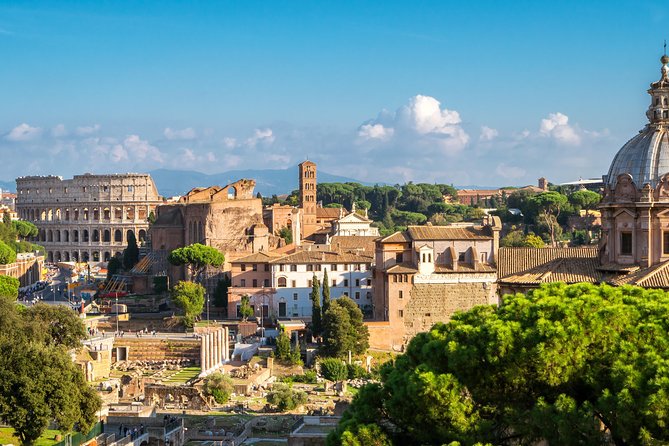
This tour is built for people who want a high-impact Rome day without spending hours coordinating buses, ticket lines, and separate guides. You’re covering four core ancient sites (Colosseum, Roman Forum, Palatine Hill, and Appia Antica) plus a catacombs visit underground. It’s a lot—but it’s arranged to keep you moving in a way that helps the story flow.
I like that it’s not only “look at ruins.” The guide approach is meant to connect sites to people and power—emperors, senators, triumphs, and the legends that cling to these places. And once you hit the catacombs, the experience becomes very different: tight, dim, and sharply human compared to the scale of the amphitheater above.
The timing is the real trade-off. You’ll get substantial time at each stop (for example, 1.5 hours at the Colosseum and about 45 minutes each for the Forum and Palatine Hill), but the tour is still designed to fit everything in. If you like slow travel, pick a different plan or adjust expectations.
You can also read our reviews of more tours and experiences in Rome


Meeting point and getting into the Colosseum smoothly
Your day starts with a mandatory meeting time 30 minutes before departure. That isn’t optional fluff—this group works because everyone shows up early enough for the security screening and the Colosseum entry check.
Bring the names on your booking seriously. You need valid passport or ID that matches the full names provided when booking, and if the voucher names don’t match what you present at the ticket office, entry can be denied. The tour operator also notes that the Colosseum may delay access even for pre-booked visitors because of the venue’s capacity rules (it can accommodate up to 3,000 people at once). So: arrive early, be patient, and don’t plan a tight connection right afterward.
Once inside, you’ll still go through security screening. There are restrictions on what you can bring (no bottles and glasses containers, no alcoholic beverages or aerosols, and no large backpacks or bulky bags). Medium and small backpacks can go in, but they’ll be X-rayed and may be visually inspected. In other words: pack lightly, and keep your day simple.
A big practical win: the group size stays small (maximum 25), and that helps the guide keep everyone moving without constant “where are you?” moments. Reviews also mention Bijenn at the meeting point as a key part of making the handoffs feel organized.
Entering the Colosseum: what the guide format gets right

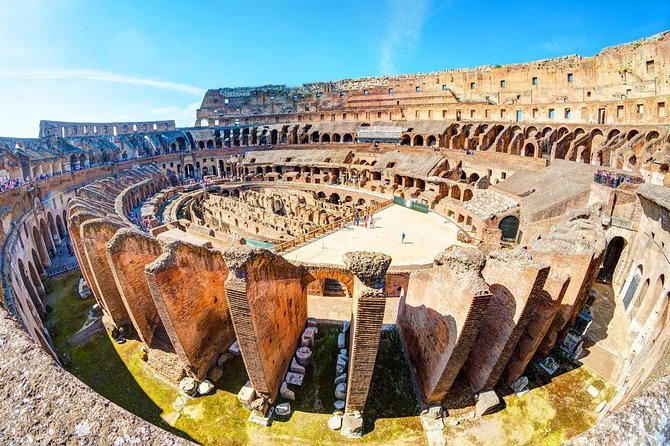
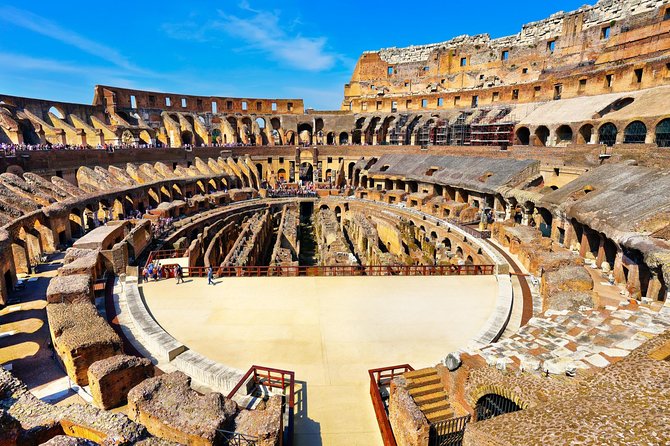
The Colosseum stop is about 1 hour 30 minutes with a guided visit. The tour description specifically frames the guide as having an art and archaeology background, and the reviews back up the impact: Daniel is praised for being informative and funny, and other guides are described as energetic and patient when questions came up.
Here’s what this kind of guide-led entry does for you. In a short window, you’re less likely to wander around wondering what you’re looking at. Instead, you get stories tied to the building’s purpose—how it functioned as a stage for power, spectacle, and Roman identity.
Now the honest caution: several reviews flag that the Colosseum portion can feel fast, with some people calling it an information overload. One review also notes they didn’t go onto the Colosseum floor. That’s a reminder that access can depend on how the day’s entry is managed, crowd flow, and site operations.
So if you’re the type who loves to linger and take photos slowly, you may leave wanting one extra hour. If you’re more “teach me quickly and I’ll remember it,” the Colosseum format fits well.
Roman Forum and Palatine Hill: Sacred Way to Augustus’ frescoes
After the Colosseum, you move to the Roman Forum for about 45 minutes, then on to Palatine Hill for another 45 minutes. This section is where the tour starts to feel like a guided timeline rather than a list of monuments.
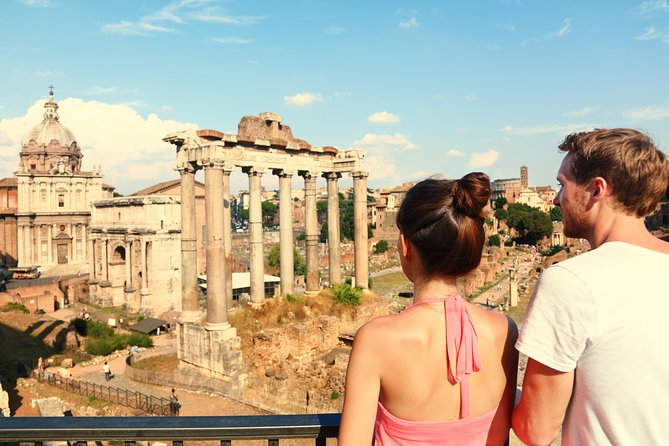
The Forum walk includes some of the best-known ruins and landmarks: the Temple of Julius Caesar, the Arch of Titus, the House of the Vestal Virgins, the Senate House, and the Basilica of Maxentius. You’ll also be shown the Sacred Way—the triumphal road tied to centurions returning from campaigns. That kind of detail matters because the Forum can look like scattered stones unless someone explains how the roads, buildings, and ceremonies connected.
On Palatine Hill, you’re exploring an earlier settlement footprint that stretches back centuries. You also get specific highlights tied to the palaces: the House of Augustus and the Hippodrome, an elliptical sunken garden from Domitian’s era. Plus you get a viewpoint over the Circus Maximus and toward the Roman Forum valley.
And yes, even legends show up. The tour includes the story of Romulus and Remus, raised by a wolf, and how that legend gets pulled into the politics of who claimed authority in Rome. It’s not just myth for myth’s sake—it helps explain why these sites felt important to Romans, not just visitors today.
One more timing point: after Palatine Hill, there’s a 1-hour break, then you return to the office in Via della Polveriera at 1:45 pm. That break can be useful. Use it to grab water, use the restroom, and reset your brain before you head underground.
Appia Antica catacombs by minivan: San Callisto and changing visits
Once you’re back near the tour agency area, you shift from “ruins and viewpoints” to “tunnels and tombs.” You’ll travel to the Appia Antica area on an air-conditioned vehicle with a professional driver. It’s a round-trip transfer to the catacombs zone, and the tour includes the catacombs admission.
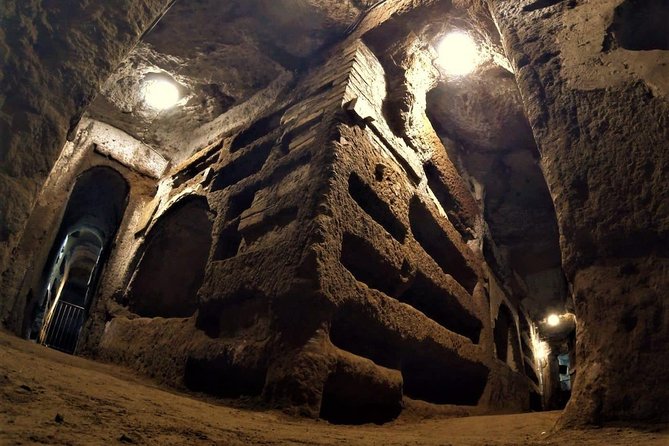
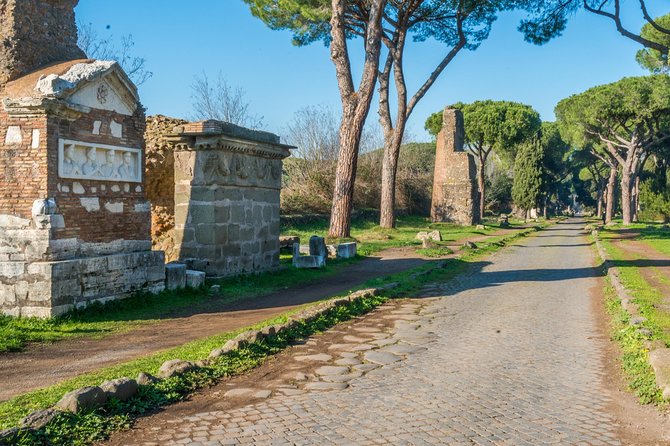
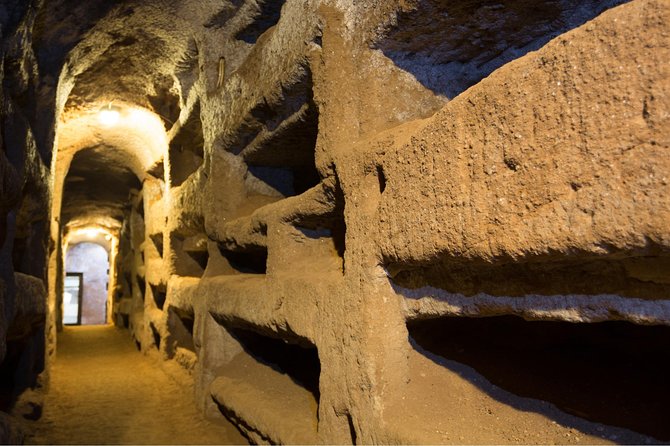
The Appia Antica setting is part of the appeal. You move past the Aurelian Walls and into a greener Roman countryside feel, which makes the underground visit hit harder. Then you descend into one of the catacombs complexes: underground tunnels spread across multiple levels (the tour notes an area of about 15 hectares and roughly 60 kilometers of tunnels).
Which catacombs you visit depends on the day: San Calisto, San Sebastiano, or Santa Domitilla. The tour still keeps the experience structured, so you’re not just “dropped off and wander.” Instead, you’re guided through the types of spaces that define catacomb archaeology: ancient frescoes, crypts with inscriptions carved into the walls, niches with skeletal remains (as described), small mausoleums, sarcophagi, tombs, and small chapels that still served religious rites long after burial.
A detail that stands out from the description: the visit can include associations with popes and martyrs, plus stories that (according to legends) connect the area to apostles. Whether you take the legends literally or treat them as part of the tradition, it gives meaning to what you’re looking at down there.
If you’re wondering about comfort: catacombs are cool and damp. The tour says the temperature is about 60°F with high moisture, so dress accordingly. Reviews also mention the catacombs felt cool but not so cold you’d need a sweater—still, I’d pack something light.






Underground rules that actually matter (and why)
The catacomb visit is guided, and the rules are strict for a reason: this isn’t a museum floor you can freestyle through. You can’t visit on your own, you can’t stray from your group route, and you shouldn’t cross gates that limit public paths.
You also can’t touch exhibits along the route, and it’s strictly forbidden to remove anything or move materials. Eating is not allowed inside monuments, though you can carry a water bottle.
Photo rules can catch people off guard. One review specifically says there are no photos or videos allowed in the catacombs. So if photography is a big part of how you travel, plan to make this one about your eyes, your guide’s explanations, and your memory.
This is also where the “pace” issue can show up. Underground spaces move people through in timed group slots, and if you’re stuck trying to read every inscription slowly, the schedule won’t pause. The upside: the catacombs portion can feel calmer than the Colosseum—one review notes the catacombs were not crowded.
If walking is a concern, take the warning seriously. The tour is not accessible for walker users and it’s not recommended for travelers with walking impairments. That’s partly about cobblestones and partly about the realities of navigating underground routes safely.
Circus Maximus, Baths of Caracalla, and the Arch of Constantine in quick snapshots
Even with a packed day, you’ll get a few “Rome reality checks” at the edges of the main route.
The tour includes Circus Maximus, the huge ancient chariot-racing stadium in the valley between the Aventine and Palatine hills. It’s now a public park. This stop helps you connect what you see from Palatine Hill’s viewpoint (the Circus Maximus area) to the scale of what Rome used for entertainment.
You also get the Baths of Caracalla (Terme di Caracalla). These were Rome’s second-largest public baths, built around AD 212–216/217, and they operated until the 530s. The baths are a tourist attraction now, and this quick stop gives you a sense of Roman engineering and civic life beyond arenas.
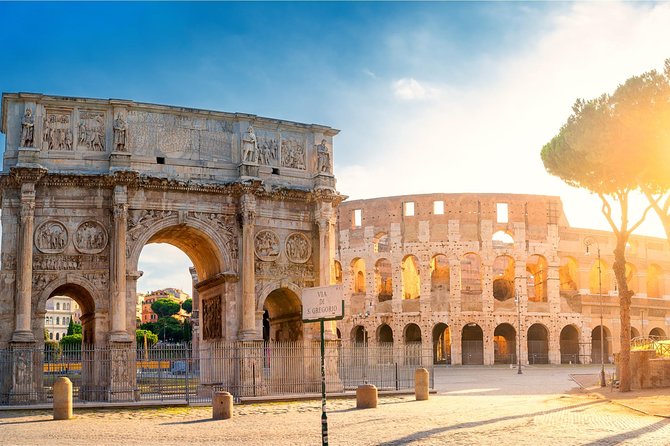
And there’s a brief pause at the Arch of Constantine (5 minutes, free entry). It’s a triumphal arch commemorating Constantine’s victory over Maxentius in AD 312, commissioned by the Roman Senate and dedicated in 315. It sits between the Colosseum and Palatine Hill along the Via Triumphalis—the route victorious leaders took during triumphal processions.
Because these are short stops, treat them as context. The heavy lifting is still Colosseum/Forum/Palatine above and catacombs below.
Price and value: what $227.58 buys you in Rome
At $227.58 per person for about 5 hours, this is not a budget tour. But it also isn’t just “a guide with a microphone.” The included components matter.
You’re getting:
- Colosseum entrance ticket (valued at €18 per person)
- Colosseum reservation fee (valued at €2 per person)
- Guided visits for Colosseum, Roman Forum, and Palatine Hill
- Catacombs small-group guided tour
- Round-trip transfer to the catacombs area by minivan
- Catacombs admission tickets included
So you’re paying for three things that usually cost time and stress when you DIY: access management, expert guiding, and transport. In high season, Colosseum logistics can turn into a waiting-game, even when you have tickets. This tour’s pre-booked structure helps reduce the guesswork.
What’s not included is also important: food and drinks. Also, you can’t eat inside the monuments. That means you should plan a snack outside the sites or use the break time before the catacombs portion. A water bottle is allowed, which helps.
If you’re the type who values time and hates lines, the price is easier to justify. If you’re a slow traveler who wants to move freely, you may feel like you’re paying for structure you don’t fully need.
Who should book this tour (and who should pass)
Book this if you:
- have limited time and want a serious hit list without extra planning
- like guided explanations that connect the stones to stories
- want the Colosseum and Roman Forum combined with an underground contrast (catacombs)
- appreciate a small-group approach, ideally with an energetic guide
Pass or consider alternatives if you:
- prefer slow, linger-at-each-spot travel (reviews mention the Colosseum can feel rushed)
- have walking limitations (the tour says it’s not accessible for walker users)
- get easily overwhelmed by lots of information in a short window
- strongly want personal time for photos (at least one review notes no photos/videos in the catacombs)
A practical timing tip from the reviews: if you can choose months, consider November through March to reduce crowd pressure. Even then, the Colosseum can still be managed with capacity rules, so no month is perfect.
Final verdict: should you book the Colosseum and catacombs tour?
I’d book this tour if you want a focused Roman history day that doesn’t leave you wrestling with entry logistics. The standout strengths are the guided format and the way the itinerary transitions from iconic monuments to the underground catacombs experience—plus the included tickets and transport that remove friction.
If you’re sensitive to pace, go in with the right mindset: this is a “see a lot, learn fast” plan. It’s also best as a guided experience rather than a slow wander. With the meeting-point organization led by Bijenn and a Colosseum guide like Daniel earning strong praise, the tour seems built to keep things moving in the right direction.
If you want, tell me your travel dates and whether you’re more into photography, architecture, or storytelling. I can help you decide if this pace matches your style or suggest a better fit.
FAQ
How long is the tour?
The duration is about 5 hours (approx.).
What is included in the price?
It includes the Colosseum, Roman Forum, and Palatine Hill small-group guided tour, the underground catacombs small-group guided tour, round-trip transfer to the catacombs by minivan, admission tickets for the catacombs, the Colosseum entrance ticket, and the Colosseum reservation fee.
Is food included?
No. Food and drinks are not included.
Do my booking names need to match my ID or passport?
Yes. You must present a valid passport or ID document that matches the name provided at booking for entry to the Colosseum and Roman Forum. The voucher must show all travelers’ full names.
When do I need to meet the group?
You have a mandatory meeting time set 30 minutes prior to the scheduled departure time.
What should I wear for the catacombs?
Plan for cool and damp conditions. The catacombs are about 60°F with high moisture content, so dress appropriately.
Can I take photos or videos inside the catacombs?
A reviewer noted that photos and videos are not allowed in the catacombs.
Is the tour suitable for people with walking impairments?
No. The tour is not accessible for walker users and it’s not recommended for travelers with walking impairments.