REVIEW · ROME
Rome: Borghese Gallery Guided Tour with Tickets
Book on GetYourGuide →Operated by Crown Tours · Bookable on GetYourGuide
Bernini up close changes your whole view; this Borghese Gallery tour uses skip-the-line tickets and an art historian guide. You get reserved entry so you can start looking right away, not waiting outside in Rome time.
I love the small-group feel that keeps the visit from turning into a moving crowd. I also love the way the tour spotlights Bernini sculpture drama and the Caravaggio rooms where light and shadow do the talking.
One possible drawback: the whole experience is tightly packed into 2 hours, so if you want to linger silently for long stretches, you may feel a bit rushed. A couple of people also noted occasional headset clarity issues, so bring reasonable expectations and lean in when needed.
In This Review
- Key points you’ll care about
- Why the Borghese Gallery tour is such good value
- Where you meet and how to get oriented outside Villa Borghese
- Ground-floor sculptures: the “walk-around” advantage with Bernini
- Main gallery rooms: Caravaggio’s drama and Raphael’s calm
- Back to the sculptures: mosaics, fresco details, and a different kind of wow
- What the guide does (and why your ears matter)
- Who should book this, and who might be disappointed
- Should you book this Borghese Gallery guided tour?
- FAQ
- What is the duration of the Borghese Gallery guided tour?
- Where do we meet for the tour?
- What’s included in the ticket price?
- What should I bring to enter?
- Are large bags allowed inside the gallery?
- Is this tour suitable for wheelchair users?
Key points you’ll care about
- Skip-the-line through express security so you reach the art fast
- Art historian guide + headsets/radios to keep explanations clear as you move
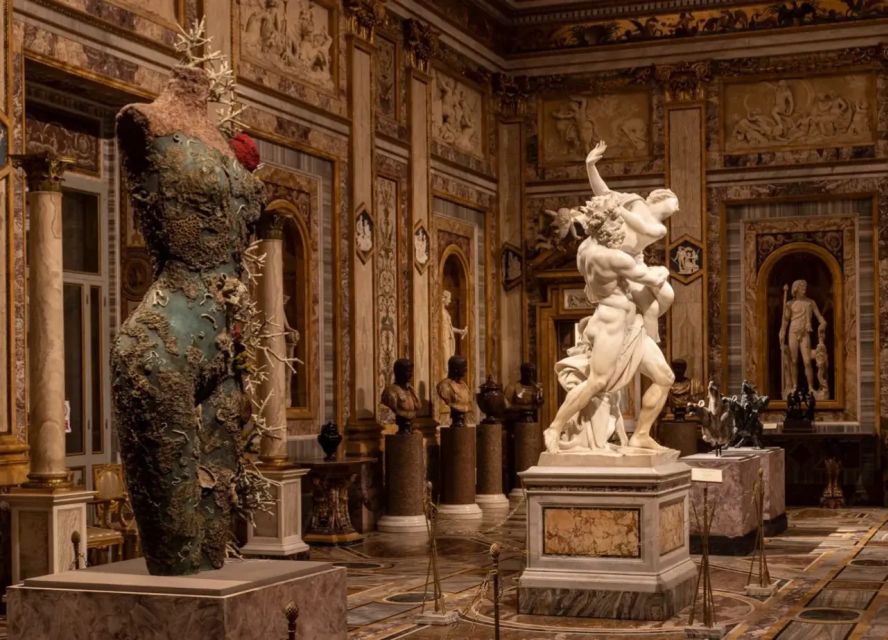
- Bernini’s big hits like Apollo and Daphne in a true, walk-around setting
- Caravaggio’s largest single collection of works in one place, including David with the Head of Goliath and Boy with a Basket of Fruit
- Roman floor mosaics and hand-painted frescoes add a second layer beyond paintings and statues
- Small groups and private options (when available) for a more personal pace
Why the Borghese Gallery tour is such good value
At $57 per person for a 2-hour guided visit, you’re paying for two things that matter in Rome: timed entry that reduces waiting and an art historian who tells you what to actually look for. The Galleria Borghese is famous enough that people can burn precious time just getting in and then catching up once they’re inside.
This tour also includes skip-the-line access plus an express security check, which is a big deal when you’re trying to make the most of a limited day. Instead of spending your best museum minutes staring at other people’s shoulders, you’re walking into rooms with context already set.
The other value piece is the set-up: you receive headsets and radios, so you can hear the guide clearly while you’re spread out around sculptures and paintings. One guest even praised how guides explained lighting and restoration details, which is exactly what turns famous works from poster-level admiration into real understanding.
If you’re price-sensitive, keep this balanced thought: you’re not only buying tickets. You’re buying time, clarity, and a guided route that aims to hit the museum’s core works without wasting hours.
You can also read our reviews of more tours and experiences in Rome

Where you meet and how to get oriented outside Villa Borghese
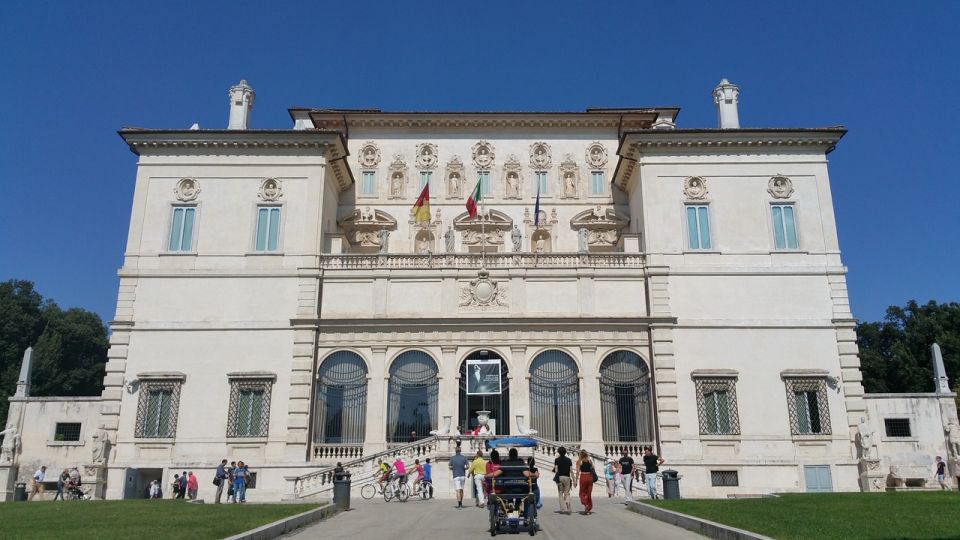
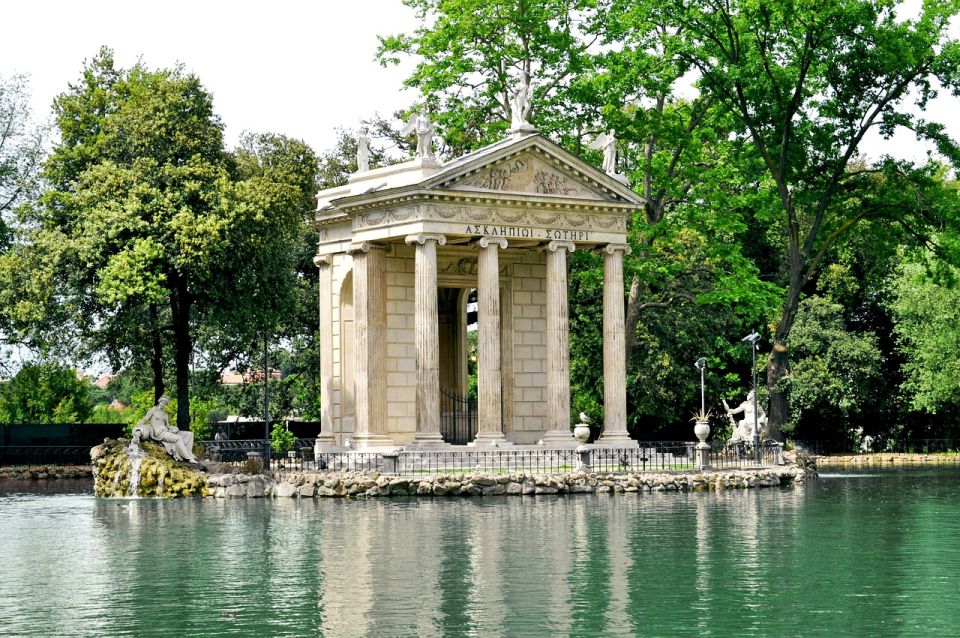
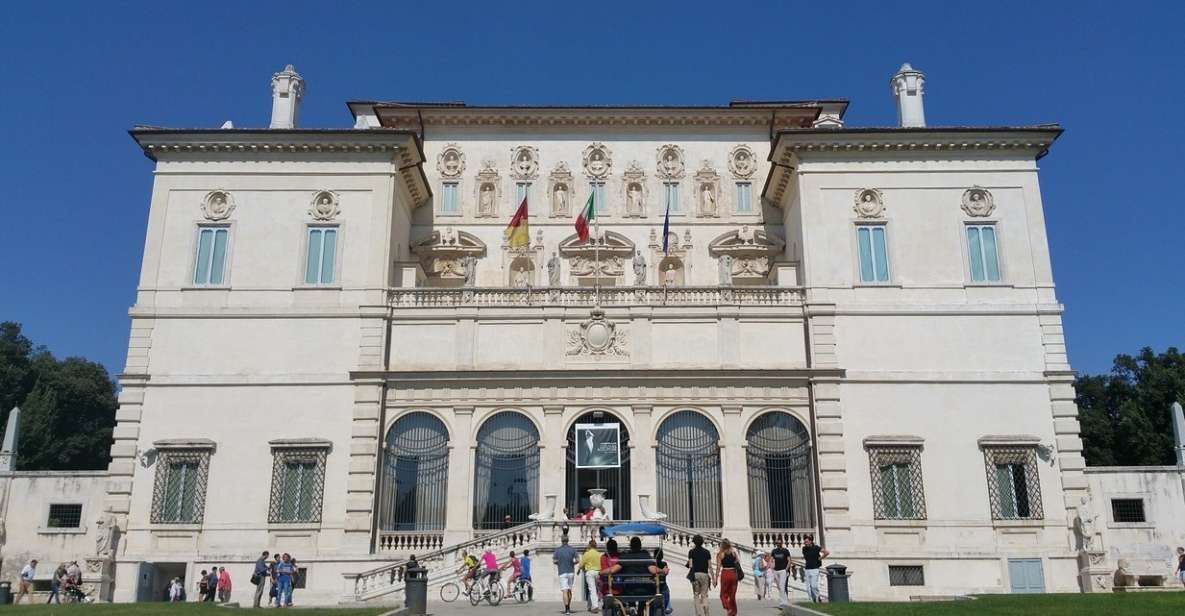
You’ll meet at one of two starting points, depending on what you booked: Fontana dei mascheroni or Piazzale del Museo Borghese. Either way, you’re starting outside the grand villa, which helps your brain switch modes from city-walking to museum-time.
From the start, the guide frames the collection in terms of Cardinal Scipione Borghese, the visionary behind this treasure-filled home. That short outside storytelling matters because inside, the art isn’t random. It’s arranged like a private argument for taste, power, and mythology.
Practical note: bring your passport or ID card. You’ll also want to keep your bag situation simple. Only small bags and purses are allowed inside, and if you arrive with something larger, there’s a free cloakroom at the entrance where you can store it.
Also note the restrictions that can affect your day: no pets, no weapons/sharp objects, no baby strollers, and no luggage or large bags. It’s a smooth museum visit once you’re prepared, but it’s not the place to improvise with a backpack the size of your carry-on.
Ground-floor sculptures: the “walk-around” advantage with Bernini
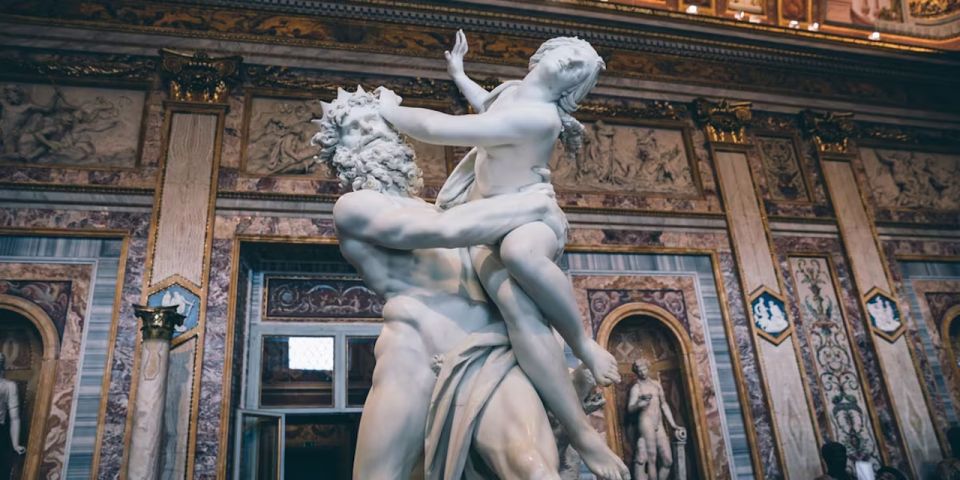
Your tour begins with a first Ground Floor Sculptures segment (about 50 minutes). This is a smart move. Before you jump into paintings, the guide sets the tone with sculpture, and Borghese’s sculpture rooms work best when you take them in three-dimensionally.
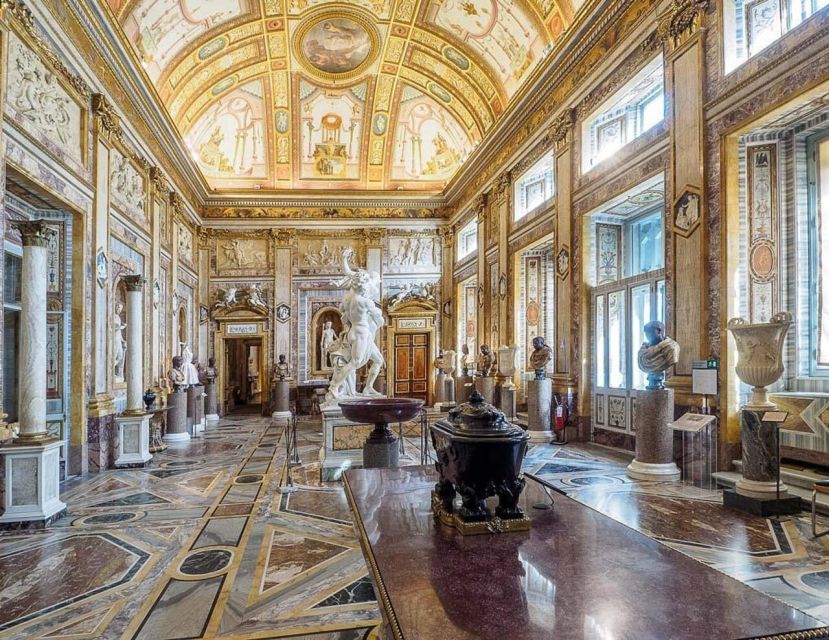
Bernini is the star here, and the tour highlights pieces like Apollo and Daphne. What I love about this structure is that you’re not just shown “a famous statue.” You’re guided to notice how marble is made to feel alive: torsos that twist, drapery that looks caught mid-breath, and expressions that look almost too human for stone.
The ground floor also helps you understand why the museum is so addictive. It doesn’t feel like a warehouse of art. It feels like a designed sequence, like you’re moving through someone’s very deliberate world.
A small-group format helps a lot at this stage. One participant described a group of just three where the guide could make the experience personal rather than scripted. Even if your group is larger, the combination of headsets and a tighter route makes it easier to ask questions without derailing the whole day.
Main gallery rooms: Caravaggio’s drama and Raphael’s calm
Next comes the heart of the show: the main Borghese Gallery segment (about 40 minutes). This is where the tour leans into contrast. You get Caravaggio intensity after the physical immediacy of Bernini, and then a shift toward more serenely composed works like Raphael.
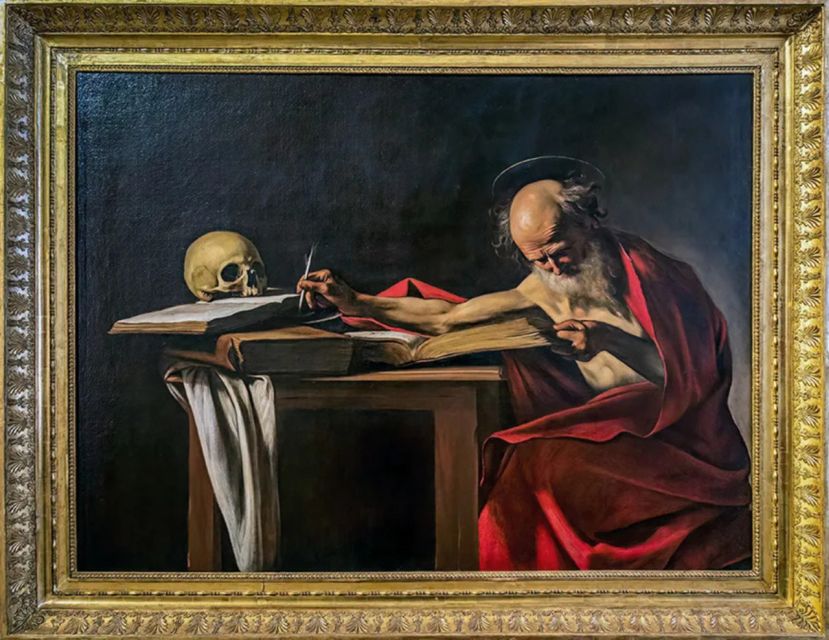
In the Caravaggio room, you’ll see paintings including David with the Head of Goliath and Boy with a Basket of Fruit. The guide’s job is to connect the drama you feel to what’s actually on the canvas. Expect explanations that focus on how Caravaggio uses light and shadow to push emotion to the front.
This is also the part of the museum where you’ll appreciate the guide most if you’re not a hardcore art scholar. Even if you’ve never studied Baroque painting, you’ll be given clear cues for what to notice first: the face, the hands, the direction of attention, and why the scene feels tense even when the composition is controlled.
The tour also points you toward other major names in the collection, including Raphael, and highlights artists such as Titian and Canova. Exact room order can vary if areas are closed for restoration, but you’ll still get the museum’s most famous “must-see” threads woven into the route.
One more practical thing: the main gallery segment is time-boxed, so come ready to look up close and then move on. This is not a museum where you’ll be able to read everything slowly. Instead, the tour aims to make your limited time count with the right context.
Back to the sculptures: mosaics, fresco details, and a different kind of wow
After the main gallery, you return to the Ground Floor Sculptures for a final segment (about 30 minutes). This second pass is useful because it lets you compare the sculpture rooms with what you just saw in the paintings.
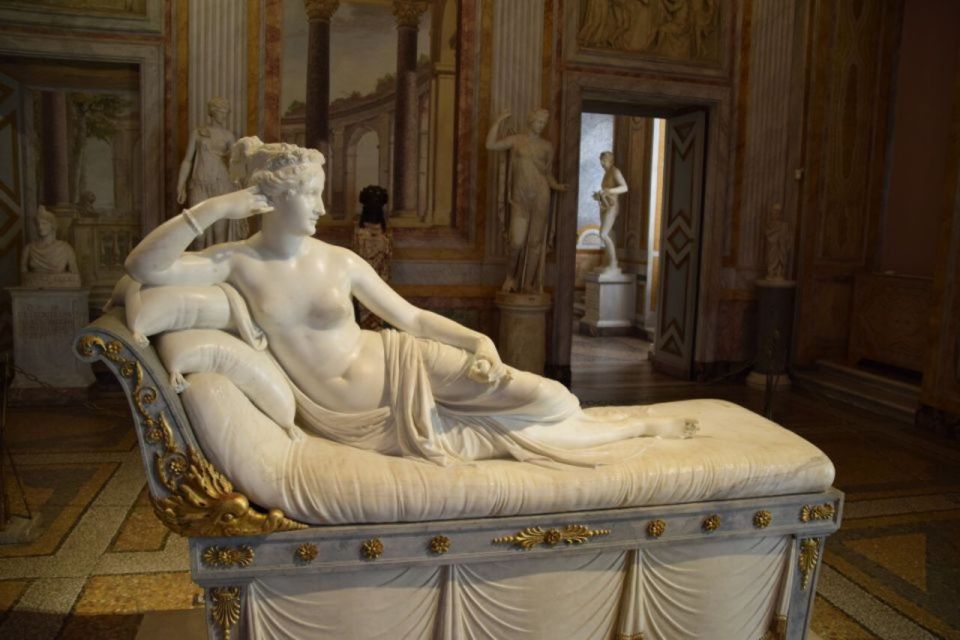
The Borghese experience isn’t only statues and oil paint. The highlights include Roman floor mosaics and detailed hand-painted frescoes, plus small decorative moments that many people miss when they’re rushing. With a guide, you learn how to look at these surfaces as part of the same story—ornament and illusion working together to create a total environment.
Why mosaics and frescoes matter here: they connect the Baroque setting to Roman craft and visual culture. Even if you’re mostly there for Bernini and Caravaggio, these decorative elements help explain why this place feels so theatrical. It’s not just art in rooms; it’s art shaping how the rooms behave.
Restoration closures can affect what you see. The tour notes that some areas may be closed for restoration and the route may vary based on current exhibitions. The bright side is that a guide can redirect you so you still hit the key works and keep the logic of the collection intact.
If you’ve got museum stamina issues, this structure helps. You’re not stuck in one kind of art for the whole time. You get a rhythm: sculpture, painting, then sculpture again, with decorative details along the way.
You can also read our reviews of more guided tours in Rome






What the guide does (and why your ears matter)
This isn’t a “watch and follow” walking tour. It’s a guided route built around an art historian who turns each stop into a story—about the Borghese family, the reasons certain works were acquired, and the techniques behind what you’re seeing.
From the names that came up in past bookings—like Henry, Enri, Gaga, Frederica, Irene, Matteo, and Victoria—the common thread is clear: people praised the way guides handle pacing, explain connections between rooms, and make the art feel alive instead of distant.
Headsets and radios help with two challenges: noise and distance. In a museum, you can easily end up hearing half a sentence if you’re off to the side. With the provided radios, you’re more likely to catch the key points while you’re focused on the artwork.
Still, keep one caution in mind. One guest mentioned the microphone placement could be hard to hear at times. If that happens in your group, ask the guide to repeat or reposition. In a small, guided setting, this is usually fixable fast.
Timing matters too. If you can choose among time slots, picking an earlier start can help you explore the villa grounds afterward. One person specifically recommended choosing an earlier time because there’s so much at Villa Borghese outside the museum route.
Finally, the guide’s pace is usually praised. Many people said the tour didn’t feel rushed, but a few mentioned the commentary can be a bit fast when there’s a lot to cover. That’s the nature of a 2-hour visit to a dense museum, so go with the mindset of high-impact highlights rather than a slow, study-hour.
Who should book this, and who might be disappointed
This is a great match if you want the classic Borghese “greatest hits” with context. If Bernini, Caravaggio, and major Renaissance names like Raphael are on your list, this tour is built for you.
It also works if you think you’re not an art person. One booking story said they went in without strong expectations and ended up blown away, mostly because the guide gave clear explanations that made the works click. That’s the real advantage of an art historian in a museum that can otherwise feel intimidating.
Who might not love it:
- If you need a wheelchair-friendly route, this tour isn’t suitable (it’s specifically noted as not suitable for wheelchair users).
- If you want to sit with one painting for a long time, 2 hours may feel like too much motion.
Also, if you’re traveling with kids or strollers, you’ll need to rethink logistics since baby strollers aren’t allowed.
If your goal is to see the most famous masterpieces efficiently and leave with a better understanding than you started with, you’re exactly the target audience.
Should you book this Borghese Gallery guided tour?
I’d book it if you care about three things: skip-the-line time saved, art historian context, and a focused route that hits sculpture and painting highlights in 2 hours. At $57 per person, the included guide and headsets are part of what makes it feel like good value rather than just a ticket add-on.
I’d think twice if your plan is to wander slowly and read everything in silence. This tour is designed for momentum and meaning, not for long, independent browsing.
If you can handle a tight schedule and want your museum visit to feel guided but not stiff, this is a strong pick. For many people, this ends up being the difference between seeing famous works and actually understanding why they caused such a stir.
FAQ
What is the duration of the Borghese Gallery guided tour?
The tour lasts about 2 hours.
Where do we meet for the tour?
The meeting point can vary depending on the option booked. Two listed options are Fontana dei mascheroni and Piazzale del Museo Borghese.
What’s included in the ticket price?
You get an art historian guide, skip-the-line entry tickets to the Borghese Gallery, and headsets/radios so you can hear the guide clearly.
What should I bring to enter?
Bring your passport or an ID card.
Are large bags allowed inside the gallery?
Only small bags and purses are allowed. If you bring a larger bag, there is a free cloakroom at the entrance where you can store it safely.
Is this tour suitable for wheelchair users?
No. The tour is not suitable for wheelchair users.