REVIEW · ROME
Rome: Basilica of St John Lateran & Holy Steps 1-Hour Tour
Book on GetYourGuide →Operated by Crucis Tours · Bookable on GetYourGuide
The Holy Steps hit with instant weight. This 1-hour tour pairs the Scala Sancta with the Arch-Basilica of St John Lateran, so you get both the sacred story and the serious church art in one focused visit.
What I like most is how the experience is guided with faith-and-history clarity, and guides such as Wen and Tom are praised for connecting the details of theology, symbolism, and sacred art. I also like the tight format: a small group limited to 5 means you’re not trapped in a crowd shuffle.
One possible drawback: the traditional knee-climb practice is not part of this tour because it takes about 45 minutes, and the site has a strict dress rule (no shorts, no short skirts), so plan accordingly.
In This Review
- Key things to know before you go
- Why this 1-hour pilgrimage feels bigger than it sounds
- Meeting at Scala Santa: how to find your group fast
- Scala Sancta stop: the chapel, the stairs, and the acheiropoieta
- What you actually do during your visit
- A small practical note on comfort
- St John Lateran (San Giovanni): Rome’s top-ranking basilica
- Relics and what you’ll venerate
- The architecture and symbolism angle
- You end with the facade
- Holy Doors and Jubilee 2025: the timing piece
- Price and what $65 buys you in real terms
- How to judge the value
- Radio headsets: when they matter
- Dress code, the knee-climb tradition, and how to plan respectfully
- How to get the most out of San Giovanni in a short time
- Who should book this tour (and who might want something slower)
- Should you book this 1-hour pilgrimage?
- FAQ
- How long is the Rome: Basilica of St John Lateran & Holy Steps 1-Hour Tour?
- Where do I meet my guide?
- What’s included in the price?
- Is the tour wheelchair accessible?
- Are the Holy Steps knee-climb practices included in the tour?
- What language is the guide?
- What should I wear?
- Can I cancel for a refund?
Key things to know before you go
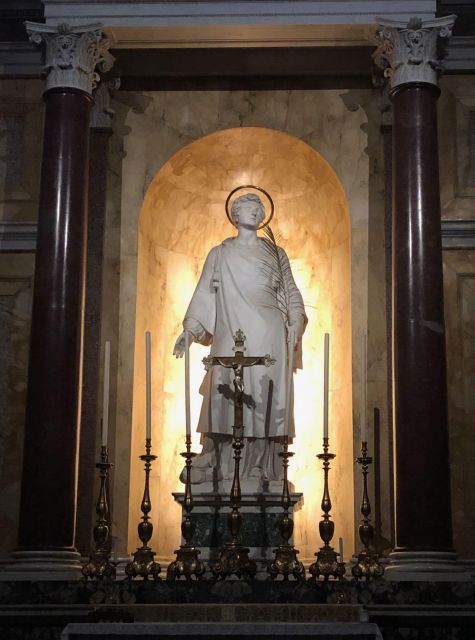
- Scala Sancta start: you begin at the Pontifical Sanctuary of the Holy Stairs and work through the story step by step.
- Sanctorium Sancta peek: you climb the ordinary stairs and get a look into the tiny chapel that was once restricted to the pope.
- Acheiropoieta tradition: you’ll hear about the miraculous acheiropoieta connected to Christ’s image, said to be begun by St Luke and finished by angels.
- San Giovanni relic focus: you venerate relics tied to Saints Peter and Paul, including skulls called out as part of the visit.
- Jubilee 2025 Holy Door timing: this basilica is one of the Holy Door sites associated with Jubilee Years.
- Short, guided, and structured: it’s built to fit into 1 hour, so you’ll get direction fast without getting lost in the maze.
Why this 1-hour pilgrimage feels bigger than it sounds
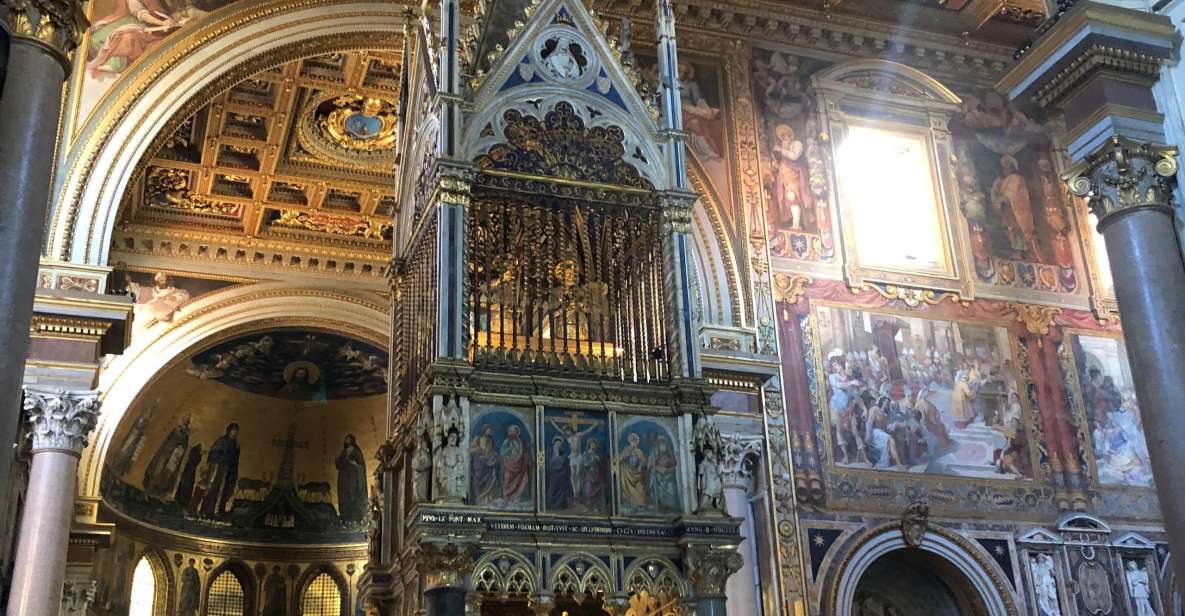
Rome is stuffed with major churches. But the Holy Steps and St John Lateran aren’t just famous buildings. They’re tied to the lived story of Christian Rome—relics, tradition, and church identity packed into a short walk and a clear path.
What makes this work so well for real life is the pacing. In 60 minutes you’ll get two things that usually take much longer to piece together: the place where a key Passion-related tradition is centered (Scala Sancta) and the main cathedral of Rome’s Catholic Church (San Giovanni). It’s the difference between knowing a name and understanding why it mattered.
You can also read our reviews of more tours and experiences in Rome


Meeting at Scala Santa: how to find your group fast
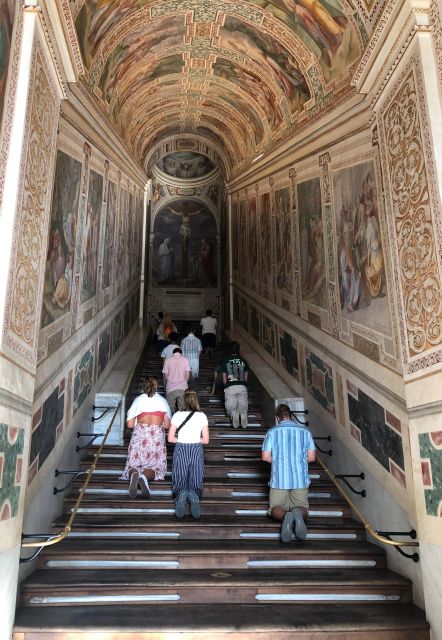
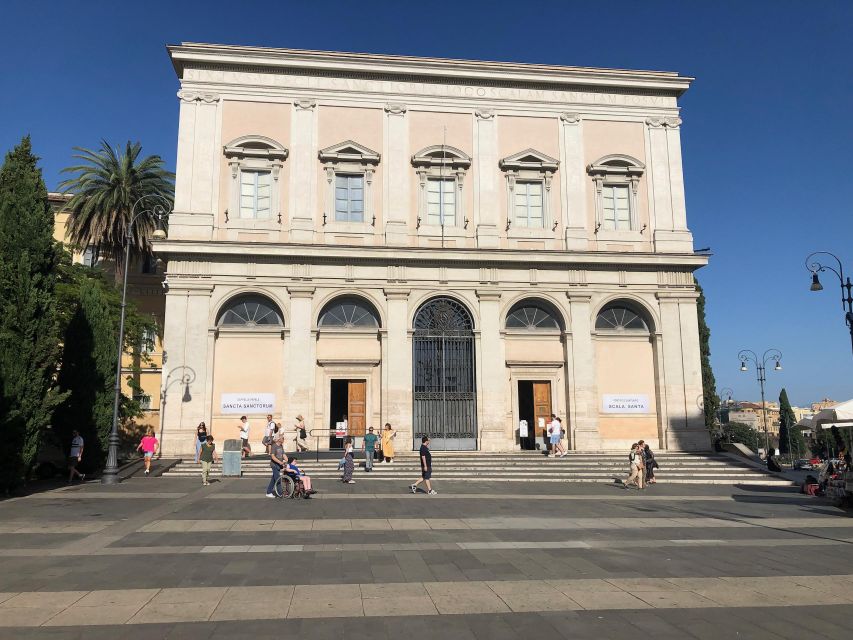
You meet at the bottom of the stairs to the left of the entrance of the Pontifical Sanctuary of the Holy Stairs (Scala Santa). That matters because this sanctuary layout can feel confusing on arrival, especially with people moving in different directions.
You’ll also want WhatsApp on your phone. The tour notes say the team uses WhatsApp for real-time communication if any issues come up. I’d treat that as a small but smart tool: check your reception before you head in, and keep the app ready so you’re not searching for the right contact while everyone waits.
Scala Sancta stop: the chapel, the stairs, and the acheiropoieta
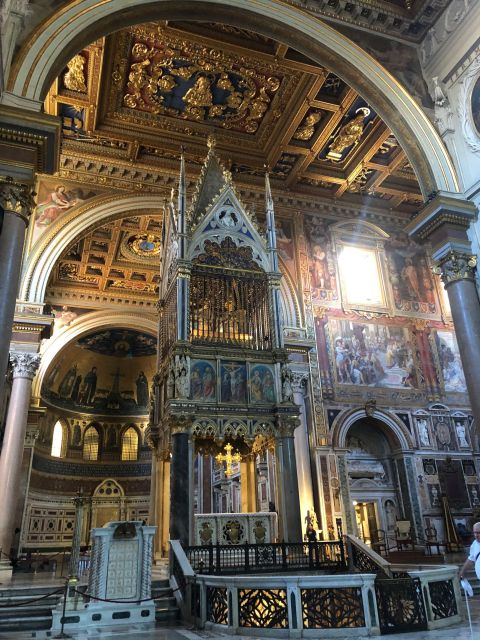
You start with a guided visit at Scala Sancta for about 20 minutes. The big idea here is that you’re not just looking at steps—you’re stepping into a tradition.
The tour begins at the sanctuary and focuses on the Sanctorium Sancta, often called the Holy of Holies in English. This is the tiny chapel where, historically, only the pope was permitted to enter. For most people, that historical detail is the hook: it signals that you’re not visiting a generic side chapel—you’re entering a space treated as unusually sacred.
What you actually do during your visit
You’ll climb the ordinary stairs and be able to peek into the chapel. You won’t spend time doing the full “on your knees” practice during the tour. That knee-climb tradition is deeply meaningful, but the tour is designed so you don’t get stuck in a 45-minute ritual that would stretch the schedule.
Inside, you’ll also hear about the miraculous acheiropoieta connected with Christ’s image, said to have been begun by St Luke and finished by angels. Whether you’re coming as a practicing Catholic, a Christian traveler, or a curious history lover, this is the kind of belief that explains how sacred objects and stories gain gravity over centuries.
A small practical note on comfort
If your knees are touchy, plan for stairs no matter what. Even with the ordinary stair climb, you’re still moving up and down in a sacred space that draws pilgrims. If you want the full tradition later, the tour mentions that pilgrims can arrange to do it on their own time, free of charge, after the guided portion ends.






St John Lateran (San Giovanni): Rome’s top-ranking basilica
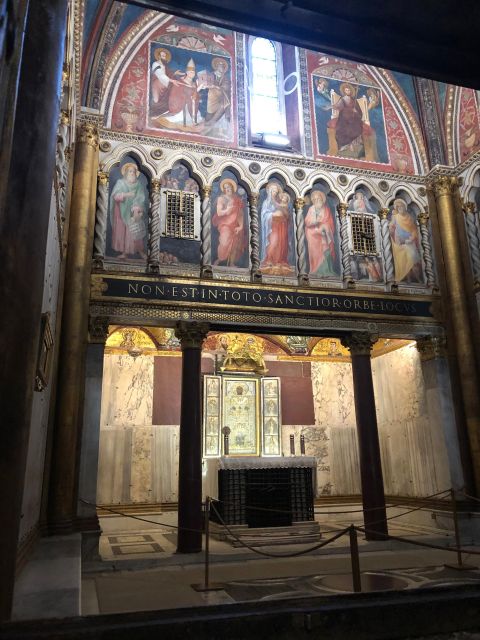
After Scala Sancta, you cross the road for the second act: Basilica di San Giovanni in Laterano. Expect about 40 minutes here, with guided time plus sightseeing.
This isn’t a “look at the facade and keep going” stop. The basilica is described as the highest-ranking church in all the world, and it functions as Rome’s cathedral—its role goes beyond being a postcard.
Relics and what you’ll venerate
One of the specific highlights called out for this tour is the chance to venerate the relics of Saints Peter and Paul, including the skulls associated with those saints. The description also calls Peter and Paul the pillars of the Church, so you’ll be guided to understand why these figures are treated as foundational.
This part of the visit works best if you go in with a simple mindset: don’t treat relics like museum objects. Here, they’re tied to devotion and continuity, and the guide’s job is to explain that meaning without making it feel preachy or confusing.
The architecture and symbolism angle
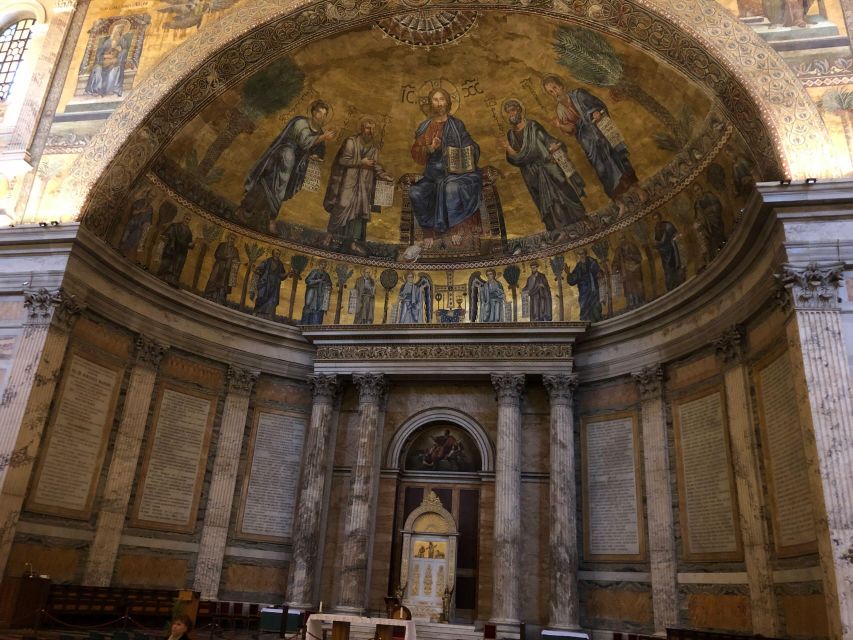
San Giovanni is also labeled as a UNESCO World Heritage site, and the tour emphasizes it as an architectural spectacle with works of priceless art and mosaics filled with symbolism. In plain terms: you’re seeing where church art isn’t decoration—it’s teaching.
Guides like Wen and Tom are particularly praised for explaining symbolism in a way that clicks fast. So even if you’re not a theology nerd, you’ll likely walk out able to point at details and say, okay, I get what that represents.
You end with the facade
The tour concludes with admiring the facade of the building, and the note about being near public transport, taxis, and the ancient Aurelian city walls is useful. In Rome, that kind of location advantage helps you turn a spiritual stop into a smooth next move.
Holy Doors and Jubilee 2025: the timing piece
The basilica is also a Holy Door site due to open during Jubilee Years. The highlight specifically mentions that one of the four Holy Doors will be due to open in 2025.
Here’s why that matters for you even if you’re not traveling for a Jubilee schedule. Holy Doors are about the rhythm of the church calendar—when pilgrims focus on particular thresholds and traditions. If you’re visiting in a Jubilee lead-up year, knowing the building’s role gives you an extra layer. You’re not just seeing a church; you’re seeing a church that’s designed to act as a pilgrimage magnet on certain years.
Price and what $65 buys you in real terms
At $65 per person for a 1-hour tour, you’re paying for three things: guided interpretation, a tight route, and a group size that stays small.
How to judge the value
This is not a budget “walk with a leaflet” tour. You’re paying for a guide who explains the meaning of the steps, the chapel, the relic veneration, and the basilica’s symbolism in a short window. That’s especially valuable at Scala Sancta, where traditions are intense and the timing is strict.
Also, the small group setup matters. Limited to 5 participants, it’s easier to ask questions and keep track of what you’re looking at. If you’re the kind of person who hates standing shoulder-to-shoulder in silence, this format will feel more humane.
Radio headsets: when they matter
The tour includes radio headsets for groups of 7 or more. Since the tour is limited to 5, that headset detail is a contingency. Still, it signals that the provider plans for clarity in busier scenarios. If you’re hard of hearing or just tired from a loud day in Rome, that’s a comfort factor.
Dress code, the knee-climb tradition, and how to plan respectfully
This is a religious site, so the rules are real: no shorts and no short skirts. If you want a low-stress visit, bring clothing that covers your legs. It’s not about fashion. It’s about entry.
The other key planning item is the knee-climb tradition. The tour explicitly notes that climbing the steps on your knees to gain an indulgence takes around 45 minutes, which is why it’s not part of the guided portion. What you can do instead is:
- Join the guided route that includes the Holy Steps area and a visit to the relevant chapel
- If you want the full knee tradition, do it on your own time after the tour ends, where it’s described as free of charge
If your knees can’t handle the full practice, one review mentions using adjacent options to see replicas atop. I’d take that as a sign to be flexible: you can still participate in the meaning without forcing your body into pain.
How to get the most out of San Giovanni in a short time
When you only have an hour, you don’t want to spend it mentally buffering. Here are a few ways to make the most of your limited time.
First, listen for the “why,” not just the “what.” The tour is set up to connect places to Catholic history—so when your guide explains why Peter and Paul are treated as pillars, or why the chapel’s restricted history matters, that’s the thread you want to follow.
Second, keep your expectations realistic. You are not getting every artwork and every mosaic panel in one hour. You’re getting direction to the key religious ideas tied to each space.
Third, save your questions for the moments your guide is standing still. In churches, movement is constant. If you ask while everyone’s walking, it’s hard for the guide to answer clearly. Ask right when you stop at the point of focus.
Who should book this tour (and who might want something slower)
This tour makes sense if you want a guided pilgrimage that doesn’t eat your whole day. It’s a great fit for:
- Practicing Catholics or Christian travelers who want context for the Holy Steps tradition
- People who like church art and symbolism, but don’t want a lecture that runs too long
- Anyone who values a structured visit with a small group limited to 5
If you’re looking for a long, quiet, self-led devotional climb, you might prefer a slower format. The knee-climb tradition is intentionally not part of the 1-hour guided segment, and the visit moves with a schedule.
Should you book this 1-hour pilgrimage?
If you want a high-impact Roman Catholic site visit without spending half your day getting oriented, I think this is an easy yes. You’re paying for someone to connect the dots between Scala Sancta, the Sanctorium Sancta chapel, and St John Lateran—plus the relic and symbolism pieces that are hard to grasp just by looking.
Book it especially if your goal is meaning with momentum: you want the sacred story explained, you want relic veneration highlighted, and you want to leave with a clear understanding of why this place matters. Just go in dressed appropriately, accept that the full knee-climb tradition isn’t included in the hour, and you’ll get a visit that feels both focused and satisfying.
FAQ
How long is the Rome: Basilica of St John Lateran & Holy Steps 1-Hour Tour?
It lasts 1 hour.
Where do I meet my guide?
Meet your Catholic guide at the bottom of the stairs to the left of the entrance of the Pontifical Sanctuary of the Holy Stairs (Scala Santa). WhatsApp is recommended for real-time communication.
What’s included in the price?
The price includes all taxes and fees, and radio headsets are included for groups of 7 or more. Guide tip is not included.
Is the tour wheelchair accessible?
Yes, it is wheelchair accessible.
Are the Holy Steps knee-climb practices included in the tour?
The tour notes that climbing the Holy Steps on your knees to gain an indulgence takes around 45 minutes and is unfortunately not part of the tour. Pilgrims can arrange to partake in the tradition on their own time after the tour ends.
What language is the guide?
The tour is offered with an English and Chinese live guide.
What should I wear?
Shorts and short skirts are not allowed.
Can I cancel for a refund?
Yes. Free cancellation is available up to 24 hours in advance for a full refund.