REVIEW · ROME
Roma: Colosseum, Forum, and Palatine Hill Local Guided Tour
Book on Viator →Operated by Tours and the City · Bookable on Viator
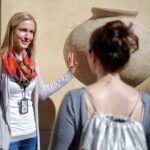
Rome’s biggest stones sound better with a guide. This small-group tour takes you through the Colosseum, Palatine Hill, and the Roman Forum with a licensed local guide and headset so you can actually follow the story inside the busiest parts. If you’ve ever stood in a crowd staring at ancient ruins and thought, What am I looking at, this is the fix.
I love that the route doesn’t waste time. You hit the Colosseum first, then head to Palatine Hill for Rome’s origin myths (yes, Romulus and Remus show up), and finish in the Roman Forum with the Via Sacra and the big-picture feel of everyday Roman life. The main drawback to plan for is walking and outdoor heat—even a short 2–3 hour visit can feel like a lot when the sun is on you.
In This Review
- Key things I’d book for
- Meeting at the Arch of Constantine and Staying With the Group
- Entering the Colosseum Like You Know Where to Look
- Palatine Hill: Where Rome Began, With Views Over the Forum
- The Roman Forum and Via Sacra: Turning Ruins Into Daily Life
- Why Headsets Make This Tour Worth the Money
- Price and Value: What Your $71.38 Actually Includes
- Guides I Noticed From Real People’s Experiences
- What Can Go Wrong (and How to Avoid It)
- Who This Tour Fits Best
- Should You Book This Colosseum, Forum, and Palatine Hill Tour?
- FAQ
- Where does the tour start?
- Where does the tour end?
- How long is the tour?
- What’s included in the price?
- Are tickets for all three sites included?
- What’s the group size?
- What languages are offered?
- Do I need an ID for entry?
- Do I get help hearing the guide in crowds?
- What should I bring for the day?
Key things I’d book for
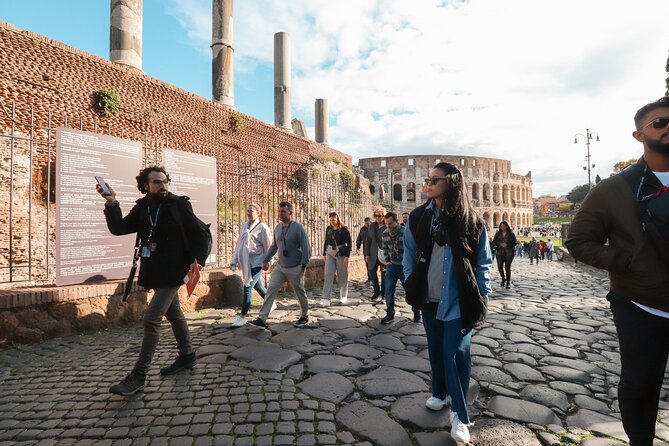
- Up to 25 people keeps the tour from turning into a stampede
- Headsets help you hear the guide in crowded zones
- Tickets for all three sites (Colosseum + Palatine Hill + Roman Forum) are built in
- Guides name-drop real places like the Via Sacra while you’re standing there
- A tight storyline links the Colosseum to the Forum to where Rome began on Palatine Hill
- Different start points may happen, depending on conditions
Meeting at the Arch of Constantine and Staying With the Group
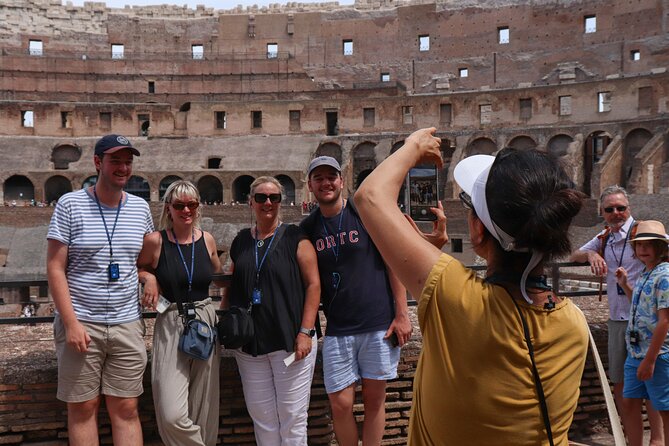
This tour starts at the Arch of Constantine, at Piazza del Colosseo (near the Colosseum). The meeting point is designed to be easy to find, and you’ll get confirmation details before you go. Do yourself a favor and check your WhatsApp, iMessage, or email the day before the tour—your updated start time and guide name come through there.
You should also know where you’ll end: the tour finishes near the main exit on Via dei Fori Imperiali. That matters because you can roll right into more exploring after you’re done, instead of backtracking to the Colosseum area.
One practical note: the tour can start at Colosseum or it can start at Palatine Hill and Roman Forum. If you’re trying to catch the Colosseum first for light or timing, watch the day-before message carefully.
You can also read our reviews of more guided tours in Rome



Entering the Colosseum Like You Know Where to Look
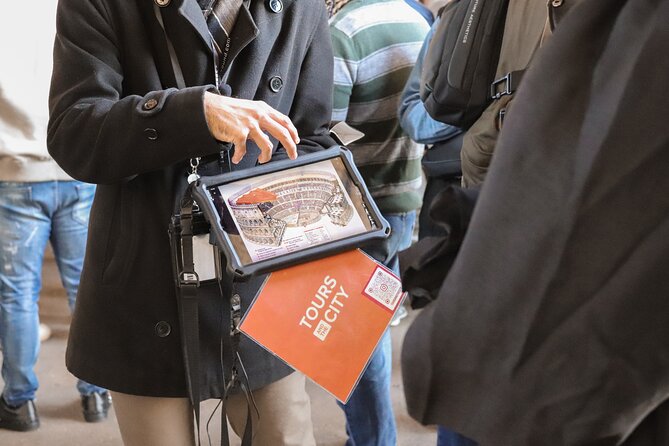
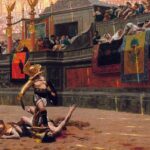
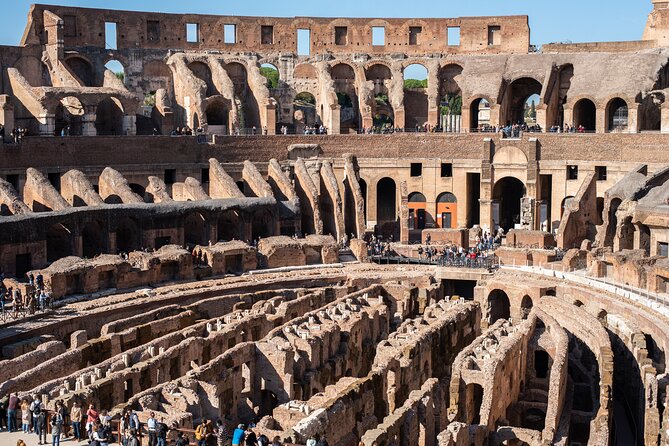
The Colosseum is the obvious star, but the value here is what you learn while you’re in it. With a guide leading your path, you’re not just touring an oval of stone. You’re listening to how the Romans used this place for power as much as entertainment—physical spectacle, yes, but also politics and public messaging.
Expect themes like:
- how the stories in modern movies line up (and don’t) with what the structure actually suggests
- how ancient engineering worked so the space could host events that feel hard to imagine today
- the idea that Romans even staged naval-battle style reenactments in this kind of setting (a detail that surprises first-timers)
Because the Colosseum is crowded, the headsets matter more than you’d think. Even with a small group, sound carries weirdly around stone. Headsets keep you synced to your guide’s pacing and stop points.
What to watch for: your group’s flow through security and tight corridors can affect how quickly you reach viewpoints inside. If you’re the kind of person who wants nonstop sightseeing without pauses, keep in mind that a guided storytelling route usually includes a few slower moments for context.
Palatine Hill: Where Rome Began, With Views Over the Forum
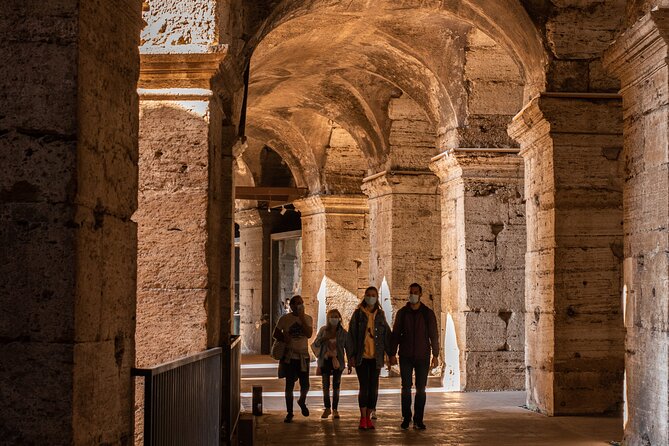
After the Colosseum, you head to Palatine Hill, the place people associate with Rome’s founding story. The big hook is the mythic origin—Romulus choosing the site and the tragedy involving Remus. Even if you’re not a mythology person, this stop is worth it because it gives you a mental map of why the Romans valued this ground.
Palatine Hill also gives you something practical: views over the Roman Forum. Stand there and the Forum stops being an abstract grid of ruins. You start connecting the dots—topography to politics, distance to daily movement, and why this area became the symbolic center of Roman life.
This stop is shorter than the Colosseum (about 50 minutes in the planned flow), but it’s paced well. You get the story without feeling like you’re trapped on a long uphill walk with no payoff.
The Roman Forum and Via Sacra: Turning Ruins Into Daily Life
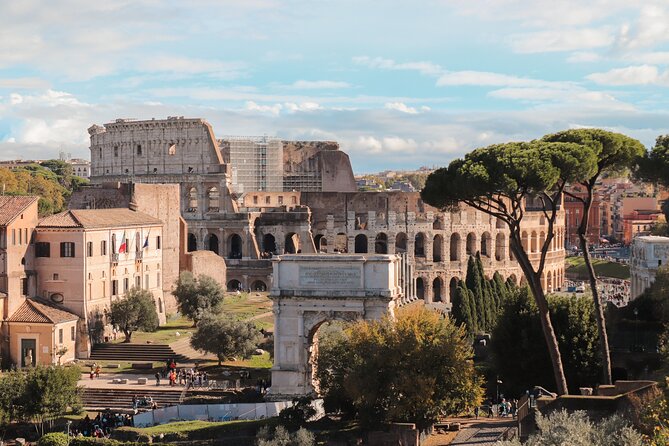
Next comes the Roman Forum and the Via Sacra (Sacred Way). This is where your guide’s storytelling pays off most, because the Forum isn’t one monument—you’re stepping into a whole landscape of roles: commerce, government, public ceremonies, military parades, and religious moments.
The point isn’t just to say these things existed. You’re learning how they fit together in real space:
- the Forum as the center of political life and public argument
- markets and trade in the same general zones as official ceremonies
- the religious side of Roman culture, including the Vestal Virgins and their place in sacred routines
And because you’re there with headsets, you can actually hear the explanation while you look around. One of the most common first-time frustrations at the Forum is standing in the middle of ruins and realizing you don’t know what you’re looking at. A guide turns that uncertainty into clear sightlines and understandable patterns.
Possible drawback: the Forum and its surroundings can feel information-heavy. That’s the tradeoff for doing it with a guide. If you prefer a more self-paced wandering style, you may feel like you want more time to roam on your own. (For most people, that quick structure is exactly what makes the Forum enjoyable.)
Why Headsets Make This Tour Worth the Money
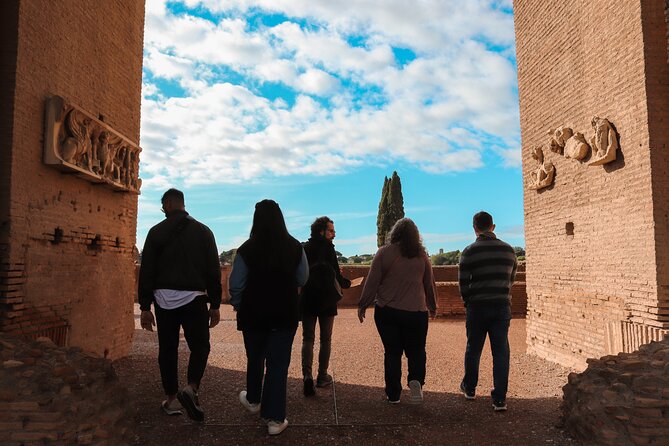
In theory, a guided tour sounds like a simple add-on. In practice, headsets are the difference between hearing the guide and trying to lip-read over crowds.
With headsets:
- you stay oriented even when the group compresses
- you can pause for a photo without losing the explanation entirely
- you don’t have to crowd the guide to keep up
This is especially helpful inside the Colosseum and around busy Forum pathways, where noise and distance can wreck normal group listening.
It also makes the experience feel less stressful. Rome is crowded. Ruins are loud. This tour’s design acknowledges that.





Price and Value: What Your $71.38 Actually Includes
At $71.38 per person (for an English-language group tour lasting roughly 2 to 3 hours), you’re paying for more than just a walk.
Included highlights that matter:
- Headsets
- a licensed local tour guide
- adult entry tickets valued at €18 each for the Colosseum, Palatine Hill, and Roman Forum
- a Colosseum reservation fee (listed as valued at €2 per person)
- group size capped at 25
So the value logic is simple: admission for these three sites is a big chunk of the total, and the remaining cost is what you’re really buying—someone who knows what to point out, how to connect the stories, and how to keep a group moving without getting swallowed by the site.
Also, this is one of those Rome experiences where DIY can feel like homework. If you want the historical context but don’t want to spend your vacation reading signs and guessing, this kind of guided structure is money well spent.
Guides I Noticed From Real People’s Experiences
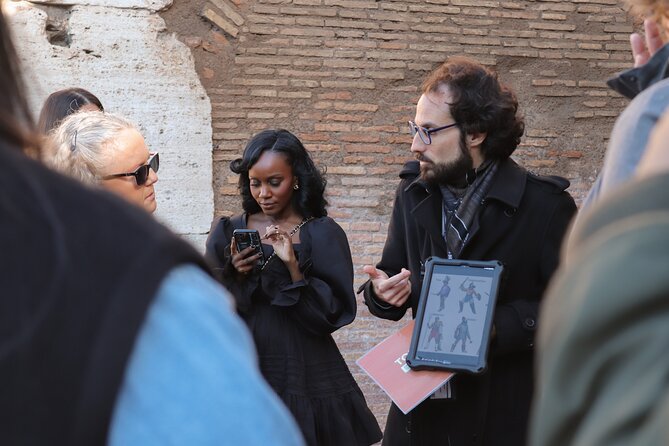
You’ll meet different guides depending on your date, but the consistent theme is strong presentation and pacing. I’ve seen names like Sylvia, Francesco, Ramona, David, Giordano, Mariann, Michela, and Lorena mentioned for clear explanations and a friendly, organized vibe.
A few practical strengths to look for in your guide style:
- clear, understandable commentary even with an accent (headsets help a lot)
- a pace that keeps up with the group while still giving you time to stop
- smart crowd management so you’re not fighting everyone else for the same photo spot
One example detail that’s worth noting: Giordano was singled out for giving a bathroom break when needed. That’s not something you always get on tight Rome schedules, so it can be a comfort if you plan ahead and still appreciate a little flexibility.
What Can Go Wrong (and How to Avoid It)
This tour runs on-site systems and strict ticket rules, so a few things are worth taking seriously:
- Bring the right ID. The entry tickets require the names and ages you provide at booking, and official ID is required. If the name doesn’t match exactly, entry can be refused.
- Be on time. The meeting point is specific, and if you’re late, you risk missing the group.
- Check for last-minute updates. You’ll get info via WhatsApp/iMessage/email a few hours before, including updated meeting time and guide details.
- Closures happen. Some areas can close due to events or holidays beyond anyone’s control, so your exact path might shift slightly.
And here’s the softer version of the only complaint pattern that really matters: a guided story can sometimes feel slower to people who expected purely visual sightseeing. If you’re the type who wants to sprint from view to view, consider whether you’ll enjoy explanations in between. The tour is designed for understanding, not just snapshots.
Who This Tour Fits Best
This is a strong match if you:
- want Roman history explained while you’re standing in the place
- prefer a structured route instead of map wandering at the Forum
- like small groups with headsets so you don’t lose the guide in crowds
- are visiting for a first time and want three major sites handled in one go
It can be less ideal if you:
- hate walking and sun (you’ll be outdoors for much of it)
- expect a mostly silent, self-guided ruin stroll
- need total control over pace and stops
My practical tip: bring comfortable walking shoes. If you’re going in warm months, also bring water and sun protection. People specifically recommend hat or umbrella and sunscreen for summer heat.
Should You Book This Colosseum, Forum, and Palatine Hill Tour?
I’d book it if you want the simplest path to understanding these sites without turning your day into logistics homework. The built-in tickets, the headsets, and the guided storytelling make it a high-value way to see three of Rome’s biggest “wow” locations in one organized run.
I’d think twice if you want a more independent style, or if you’re sensitive to slow pacing. This tour is designed to teach, not just transport. If that sounds like your cup of gelato, you’ll likely love it.
FAQ
Where does the tour start?
The tour starts at the Arch of Constantine, Piazza del Colosseo, 00184 Rome.
Where does the tour end?
It ends at Via dei Fori Imperiali near the main exit.
How long is the tour?
The tour is listed as about 2 to 3 hours.
What’s included in the price?
The price includes headsets, a licensed local tour guide, and adult entry tickets for the Colosseum, Palatine Hill, and Roman Forum.
Are tickets for all three sites included?
Yes. Adult entry tickets for the Colosseum, Palatine Hill, and Roman Forum are included, each listed at €18.
What’s the group size?
This is a group tour with a maximum of 25 travelers.
What languages are offered?
The tour is English only.
Do I need an ID for entry?
Yes. Official ID/driver’s license is required, and entry can be refused if details don’t match.
Do I get help hearing the guide in crowds?
Yes. Headsets are provided so you can hear the guide’s commentary inside busy sites.
What should I bring for the day?
Bring a moderate fitness mindset, since the tour involves walking. For warm conditions, people recommend water, sunscreen, and sun protection like a hat or umbrella.