REVIEW · ROME
Ostia Antica – We give emotions
Book on Viator →Operated by About Rome - Miglior visita guidata con Micaela · Bookable on Viator
Ostia Antica has a way of making you slow down. It sits about 30 minutes from Rome, yet it feels far from the crowds, with streets and ruins that kept going long after Pompeii ended. What I like most is how the place tells a continuous story of daily life in late antiquity, not just big monuments.
My second big win is the guiding style. On this walk, the guide keeps things moving with humor and points out details you won’t easily spot on your own. I also like that you focus on the main Roman layout, especially the Cardo and Decumano roads—so the city’s rhythm makes sense as you walk.
One consideration: this is a real walking experience on uneven ancient ground. It is not suitable for people with walking problems, and you’ll want truly comfortable shoes. Also, the key park admission isn’t included, so factor that into your total cost.
In This Review
- Key things to know before you go
- Why Ostia Antica feels different from Pompeii
- Getting there from Rome (and why the meeting point matters)
- Entering the archaeological site and learning the city’s street grid
- The guided walk through late antiquity: mosaics, baths, shops, and temples
- After the tour: museum, synagogue, or heading toward Ostia Lido
- Price and value: what $144.61 covers (and what to budget extra)
- What to bring and how to keep the day comfortable
- Who this tour is for (and who should skip it)
- Should you book Ostia Antica: We give emotions?
- FAQ
- How long is the guided tour?
- Where does the tour start and end?
- How much does the tour cost?
- What’s included in the price?
- What costs extra?
- Do I need to buy the admission ticket on my own?
- Is it suitable for people with walking problems?
- How big are the groups?
- What if the weather is bad?
- Can I cancel for a full refund?
Key things to know before you go
- Small group feel (up to 30 travelers) so the walk stays social without turning into a herd.
- Street-level structure: you’ll walk the city’s main axis along the Cardo and Decumano.
- More than the main road: mosaics, spas, shops and mills, plus public baths and temples show daily life patterns.
- A funny, story-forward guide who shares on-the-ground details beyond standard descriptions.
- You get options after the guided portion, including the museum, the ancient synagogue, or continuing toward Ostia Lido.
Why Ostia Antica feels different from Pompeii
People often compare Ostia Antica to Pompeii, and honestly, that comparison is useful if you’re trying to set expectations. Pompeii’s story ends abruptly under Vesuvius in 79 AD. Ostia’s story continues much longer, with prosperity that lasted into the fourth century. That difference matters when you’re standing in the ruins.
When you walk Ostia, the city doesn’t feel frozen at one moment. Instead, you get a sense of how neighborhoods and routines evolved over time. The experience is built around that feeling. You’ll be walking the main Roman roads—still laid out with ancient pavement—so your brain can map the city while your eyes catch the texture of the place.
I also like that the tour keeps it human. You’re not just looking at columns. You’re learning what people did day to day: where water-related spaces would fit into routine, how commercial life showed up, and how public buildings connected to everyday movement. The mood is quiet enough that even basic explanations land better.
And there’s a practical bonus: because this site is less visited than the famous ones, you can have a more relaxed pace. That doesn’t mean it’s empty, but it often means you can actually hear your guide and look closely without constant shoulder pressure.
You can also read our reviews of more tours and experiences in Rome.



Getting there from Rome (and why the meeting point matters)
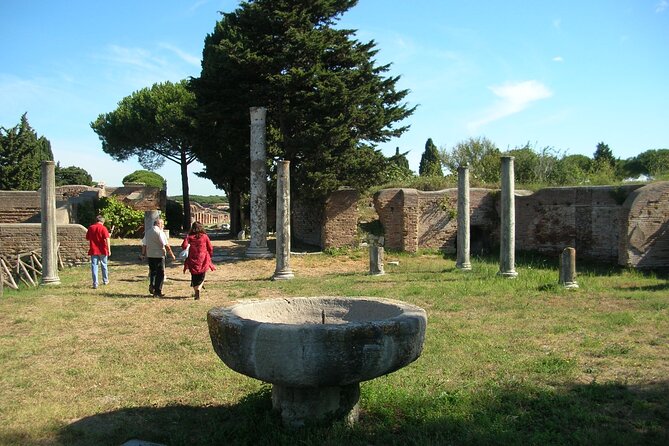
This tour is based at Ostia Antica, at Viale dei Romagnoli, 717, in Rome. The simplest plan is to use public transportation and arrive at the Ostia Antica area, then meet your group at the ticket-road access point by the archaeological site.
The time you’ll spend depends on how you travel in. The itinerary mentions a train ride to Ostia Antica of about 25 minutes. That’s a helpful benchmark: you’re not committing to a full day trip to reach the ruins, but you still feel like you’ve escaped the city noise.
Important detail for planning: the tour notes that if you want to start and finish from Rome, you can ask for that, with a small supplement of 30 € paid on the spot. That option can be a good choice if you don’t want to manage train timing yourself. If you’re already comfortable with Rome’s public transit, meeting at Ostia Antica usually keeps everything smoother.
Finally, remember the tour timing is tightly connected to the guided walking. The guided portion runs about 2 hours 30 minutes to 3 hours 20 minutes. Even if you build in extra time to wander on your own later, don’t schedule other major plans right after the tour ends. Ostia is the kind of place where you’ll naturally want to keep looking.
Entering the archaeological site and learning the city’s street grid
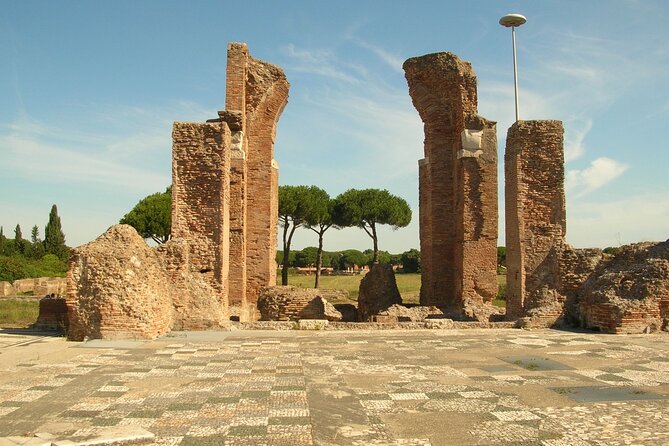
The tour begins at the Ostia Antica site with a quick transition from arriving by train to getting to the ticket office. Once you’re inside, you’ll start with the structure of the ancient city: the main roads that formed the backbone of movement and commerce.
You’ll walk along the Cardo and Decumano—the classic Roman north-south and east-west axes. Seeing these paved lines in real space does something simple but powerful: it helps you understand the scale of the city without needing a map on a screen. You’re not just reading about Rome; you’re moving through its planning logic.
This is where the guide’s humor earns its keep. When someone explains the city with energy, the walk becomes a story you can follow. Instead of stopping every few minutes, you move steadily, and the guide ties what you see to how people lived there. That pacing also helps if you’re visiting for the first time: you’re less likely to feel lost and more likely to remember what you saw later.
One more thing I value here is the tour framing. It emphasizes daily life and habits—things you’d miss if you only chase the biggest landmarks. That approach is especially useful at Ostia, where the power is in the layout and the everyday spaces as much as in any single feature.
Tip: expect to spend time absorbing context at each stop. If you rush, you’ll miss the small visual cues that make the guide’s explanations click.
The guided walk through late antiquity: mosaics, baths, shops, and temples
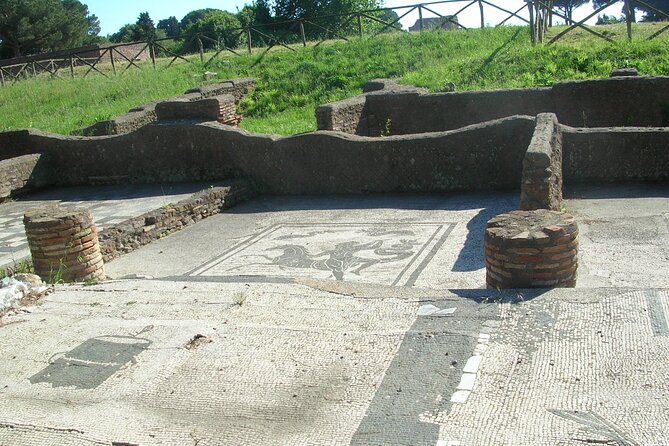
The core of the experience is the guided visit across the most suggestive and significant parts of Ostia Antica, not just one main street photo stop. You’ll explore beyond the headline roads and move through spaces tied to real routines: mosaics, baths, commercial areas, and religious sites.
A key part of the value here is variety. The tour is designed so you don’t get stuck in one type of ruin. You’ll see things like:
- mosaics that show decorative taste and craftsmanship
- spa and bathing-related spaces that hint at how people cared for daily hygiene and social time
- shops and mills that connect the city to work and food production
- public baths and temples that show how public life and worship fit into the same walkable world
If you enjoy archaeology, you’ll likely appreciate the way the guide connects these places. Even without “big ticket” moments, the combination builds a picture of how a functioning city worked. The ancient city isn’t presented as a static ruin; it feels like a grid of places where tasks happened, and people met, shopped, relaxed, and prayed.
I also want to highlight something mentioned in positive feedback: the site has seen increased access and restoration over the last 15 years. That matters for you. Better restoration and more areas open usually mean a clearer view and fewer dead-ends. You’re more likely to feel like the tour is showing you what’s actually meaningful today, not just what used to be visible.
The main drawback of this section is also the main trait of Ostia: it’s spread out. Even with a guide, you’ll be walking through a lot of outdoor space. If you’re sensitive to heat, plan your timing carefully and keep water handy.
After the tour: museum, synagogue, or heading toward Ostia Lido
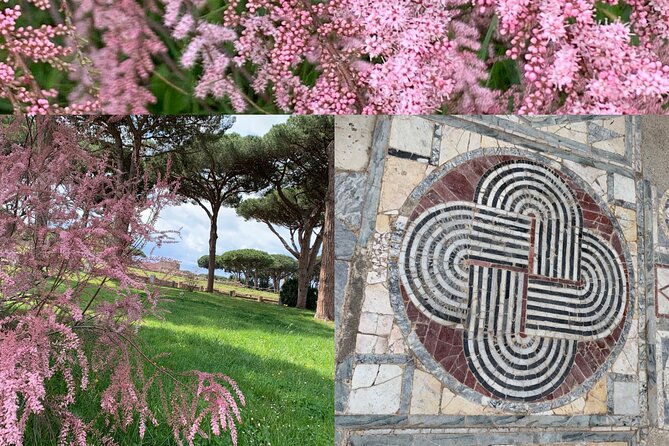
Once the guided portion ends, you get choices. This is a smart design because Ostia Antica isn’t just one kind of visit. You can extend it in the direction that matches your curiosity.
You can do any of the following:
- stay and visit the museum
- visit the ancient synagogue
- continue toward Ostia Lido, moving from ruins toward the coastal area
- or head back by train
I like this part because it lets you tailor the day. If you want to turn the guided walk into more context, the museum is the natural follow-up. If your interests lean toward cultural and religious history, the ancient synagogue option gives you a different angle on the community that lived here.
Going toward Ostia Lido can be a good mental shift too. After hours among stone and pavement, the idea of finishing near the beach helps you reset. It can turn the visit into a longer half-day with an easy ending rather than a rushed sprint back to Rome.
Do note: these are optional add-ons after the guide finishes. So don’t plan a strict departure immediately after the tour unless you’re sure about your own priorities.



Price and value: what $144.61 covers (and what to budget extra)

The price is listed at $144.61 per person. For that kind of money, I always ask: what’s the “extra” compared to wandering on your own?
In this case, the answer is the guide. The tour includes a guide who accompanies you through the sites, and that matters because Ostia’s best stories are in the details: how the city is laid out, what each space suggests about everyday routines, and what you’d likely miss without interpretation. A good guide can turn “I saw ruins” into “I understand what I’m looking at.”
But you should budget for the rest. The archaeological park entrance ticket is not included, and train tickets are not included either. Also, if the group exceeds 6 people, headphones are not included. That last point might matter if you’re sensitive to audio or if your group tends to be larger. If you’re someone who benefits from amplification, consider bringing your own headphones device if that’s allowed by your comfort level, or plan on leaning in and staying close to the guide.
So, what’s the value equation? If you’re the type of traveler who enjoys interpretation—who likes learning why things are where they are and what they meant—this price starts to feel fair. If you’re comfortable DIY touring with maps and guidebooks and only want the basics, you may find a self-guided approach cheaper.
The sweet spot for this tour is that it gives you a guided structure for the parts that are most worth seeing, plus a buffer for self-directed time afterward.
What to bring and how to keep the day comfortable

This is outdoors walking on an ancient surface. Even when the ground looks solid, it can be uneven. I’d plan like you’re touring a historic site, not a city center sidewalk.
Bring:
- comfortable shoes with good grip
- water, especially if you’re visiting in warm weather
- sun protection, since you’ll spend time outside
- a light layer if evenings cool off in your travel season
Also consider how you handle audio. The tour notes that headphones aren’t included if the group is over 6 people, so don’t assume you’ll have an easy-to-hear system. Staying near the front of your group, if possible, is your simplest workaround.
And one more comfort tip: the tour time window is roughly 2.5 to 3.5 hours, and then you may stay longer depending on your choices. Plan bathroom breaks as part of the overall pacing rather than trying to “save time.” It’s a better flow and makes the guided part feel less rushed.
Who this tour is for (and who should skip it)
This tour fits well if you want an authentic ancient-city walk that focuses on everyday life and city layout. It’s also a good match if you like a guide who uses humor to keep the experience lively.
It is not suitable for anyone with walking problems, because the visit depends on moderate physical fitness and involves real walking on site.
In terms of group energy, the maximum group size is 30. That keeps things manageable, and the tour is positioned as friendly for a range of ages. If you’re traveling as a couple, a family, or a group of friends, it can be a satisfying way to experience the site without needing to coordinate every stop yourself.
If you’re short on time in Rome, this is also a smart option. You get a full, meaningful look at a major ancient city in a few hours, rather than trading your whole day for transfers.
If you’re the kind of traveler who hates structure and prefers total freedom, you might find a guided walk a little limiting. But if you like your ruins with context, this is a solid use of your time.
Should you book Ostia Antica: We give emotions?
If you’re deciding between a guided tour and DIY wandering, I’d lean guided for Ostia Antica. This experience gives you a clear path through the site—especially the Cardo and Decumano streets—and it uses interpretation to make the spaces click. The guide’s humor and focus on daily life are the main reasons it feels worth paying for.
Book it if:
- you want a Roman-city experience, not just a monument checklist
- you enjoy explanations and street-level context
- you’re okay walking for a few hours outdoors
- you like the idea of adding time for the museum or the ancient synagogue afterward
Skip or reconsider if:
- you have walking limitations and can’t handle uneven historic ground
- you’d rather spend your time strictly on your own pace without any guided structure
- you don’t want to pay extra for the park entrance ticket
If you do book, take it for what it is: a guided walk that turns pavement and ruins into a story you can follow, then gives you options to extend the day your way.
FAQ
How long is the guided tour?
It runs approximately 2 hours 30 minutes to 3 hours 20 minutes, with additional time you can choose to spend after the guided portion.
Where does the tour start and end?
The meeting point is at Ostia Antica, Viale dei Romagnoli, 717, 00119 Roma RM, Italy. The tour ends at the exit of the archaeological site of Ostia Antica.
How much does the tour cost?
The price is listed at $144.61 per person.
What’s included in the price?
The guide is included.
What costs extra?
Train tickets, the entrance ticket to the Archaeological Park, and breakfast are not included. Headphones are also not included if the group exceeds 6 people.
Do I need to buy the admission ticket on my own?
Yes. The entrance ticket to the Archaeological Park is not included in the tour price.
Is it suitable for people with walking problems?
No. It requires moderate physical fitness and is not suitable for those with walking problems.
How big are the groups?
The tour has a maximum of 30 travelers.
What if the weather is bad?
This experience requires good weather. If it’s canceled due to poor weather, you’ll be offered a different date or a full refund.
Can I cancel for a full refund?
You can cancel up to 24 hours in advance for a full refund. If you cancel less than 24 hours before the start time, the amount paid isn’t refunded.