REVIEW · ROME
Magnificent tour of Gladiator Arena, Colosseum and Imperial Forum
Book on Viator →Operated by ROMA IN TOURS · Bookable on Viator
Rome’s most famous stage is literal here. Step into the Colosseum arena floor and then connect the story to the Imperial Forum and Roman power sites. I especially like the small-group size (max 15) and how the route strings monuments together so you understand how Rome worked, not just what it looked like. One thing to think about: if the arena section is closed for safety on your date, you’ll shift to other Colosseum levels and get a 10-euro refund per person instead of arena-floor access.
This is a 2-hour guided experience with entrance fees included for the Colosseum, Roman Forum, and Palatine Hill. You’ll also get the extra sights that usually live in separate tours: the Arch of Constantine, Via dei Fori Imperiali, and the Arch of Titus. If you hate crowds, you may still find the Forum areas busy, but the guide’s pacing helps you keep moving and seeing what matters.
In This Review
- Key things to know before you go
- Why this Colosseum + Forum route feels different
- Meeting at Via dei SS. Quattro and getting organized fast
- Entering the Colosseum arena floor (the part most people never see)
- Arch of Constantine: propaganda in stone
- Palatine Hill: Rome’s VIP hill and big views
- Via dei Fori Imperiali and the Forum valley: processions and power
- Arch of Titus: victory reliefs with moral weight
- Guides, radios, and small-group attention
- Price and what you really get for $237.31
- What the 2-hour timing means for you
- Who should book this tour, and who might skip it
- Should you book this Colosseum and Imperial Forum tour?
- FAQ
- How long is the tour?
- What entrance fees are included?
- Is the tour a small group?
- What do I need to enter the Colosseum and Roman Forum?
- What happens if the arena section is closed?
- Where is the meeting point?
Key things to know before you go
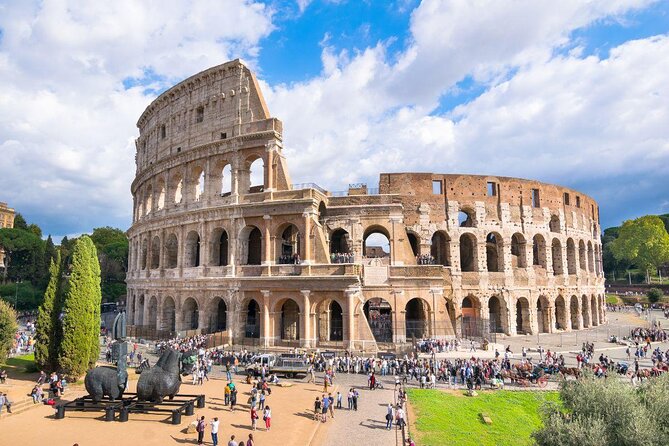
- Arena-floor access: you step onto the part of the Colosseum where gladiators stood
- Small group (max 15): easier questions, better photo moments, less waiting around
- Imperial power trail: Palatine Hill, Via Sacra, Roman Forum, Imperial Forums, and nearby triumphal arches
- Entrance fees included: Colosseum, Roman Forum, and Palatine Hill are covered
- Mobile ticket: your entry info arrives digitally so you don’t juggle paper
- Safety switch plan: if the arena floor closes, you still tour and you receive a 10-euro refund per person
Why this Colosseum + Forum route feels different
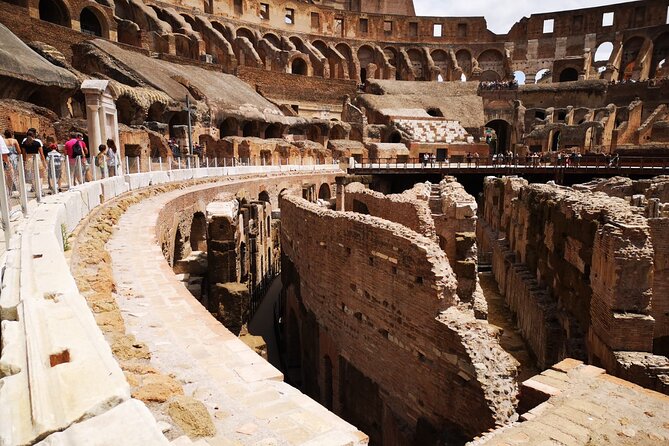
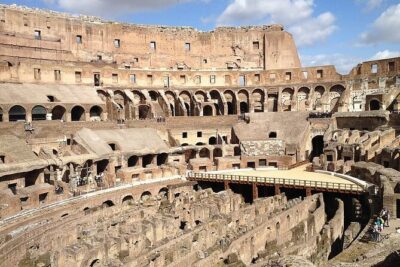
The Colosseum is famous enough to feel like wallpaper until you’re actually on the arena floor. This tour gives you that rare perspective: you don’t just look up at the seating, you understand where the action happened, and where the drama would have hit you in real life.
I also like that the rest of the route explains Rome’s “center of gravity.” After the Colosseum, you don’t wander randomly—you move through the spaces tied to government, processions, and triumphs. That turns architecture into story.
The route is tight—about 2 hours—so if you like a slow museum pace, you’ll want a separate self-guided afternoon later. But as an orientation to Rome’s core, it’s a strong use of time.
You can also read our reviews of more tours and experiences in Rome.



Meeting at Via dei SS. Quattro and getting organized fast
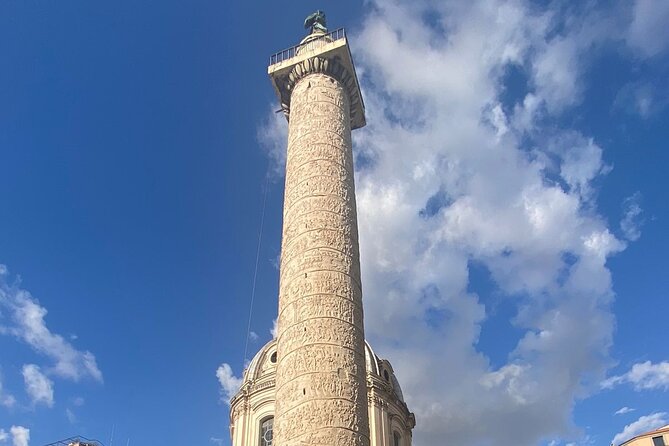
You meet at Via dei SS. Quattro, 81, 00184 Roma RM, Italy, and the tour ends back at the meeting point. That helps because you’re not scrambling across the city when the group finishes.
You’ll get boarding information online, plus online support around the time you check in. The ticket is mobile, which is convenient in Rome’s chaos—just keep your phone charged.
Two practical notes from the tour rules you should take seriously:
- You must provide full names when booking, and your ID/passport has to match those names exactly for entry to the Colosseum and Roman Forum.
- If the time you pick isn’t available, you may be moved to another time on the same day, and changes like that don’t come with refunds.
Entering the Colosseum arena floor (the part most people never see)
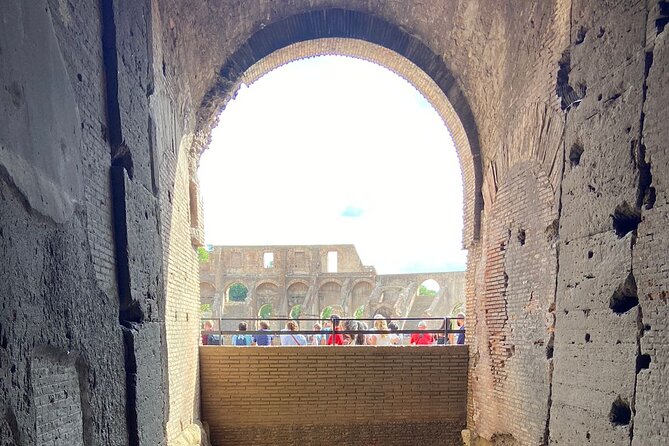
The Colosseum is the obvious headline, but the arena-floor access is the real value. This is limited seating and a restricted-feeling section, which means you get a more exclusive look at the site’s core.
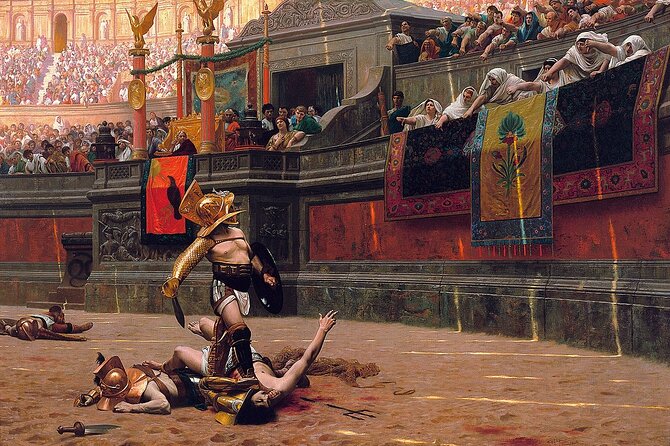
Plan for a slow, guided descent to the arena level, then a focused walk and explanation. You’ll hear how this space worked—what the gladiators did here, and how the building’s design supported spectacle. You’re standing where fighters would have waited and where the crowd would have pressed in.
What to watch for: this can be a photo-heavy moment. If you like pictures, you’ll probably want to bring a steady stance and be ready to move quickly when the guide calls you forward. If your camera battery is low, top it up before you arrive.
Arch of Constantine: propaganda in stone
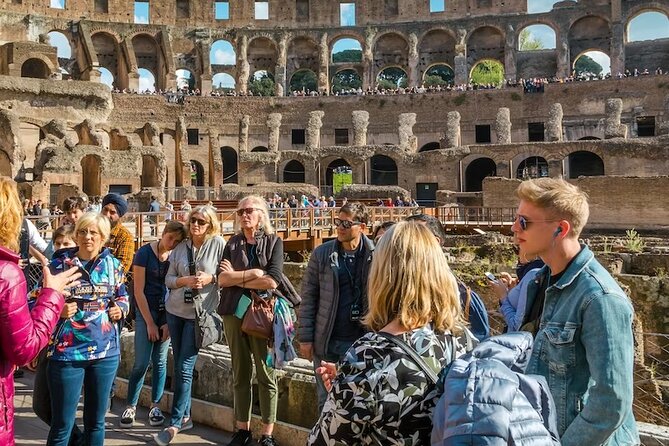
After the Colosseum, the tour shifts to the surrounding power landmarks. You’ll see the square dominated by the Arch of Constantine, one of the surviving triumphal arches in Rome.
This stop matters because it helps you read Roman art like messaging. The arch’s reliefs and statues show what Romans wanted people to remember, and how decoration supported authority. Even if you normally skip “boring details,” this is the kind of monument that rewards attention.
You’ll also get a quick sense of scale here: once you’re looking at Rome’s monuments from a street-level perspective, you understand why the city felt like a stage even outside the Colosseum.
Palatine Hill: Rome’s VIP hill and big views
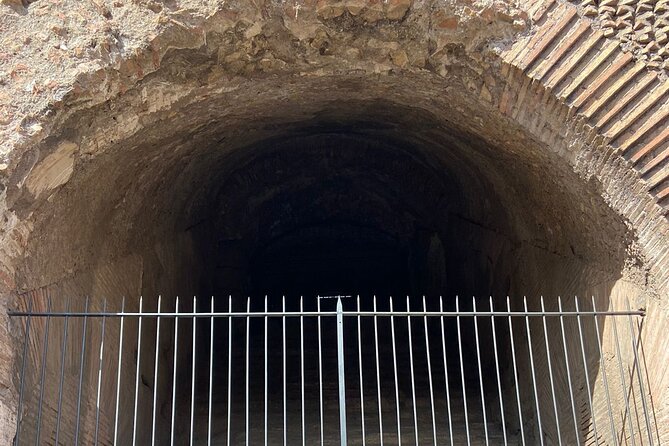
Next comes Palatine Hill, considered the most renowned of Rome’s seven hills. This hill isn’t just about scenery—it’s tied to the places where Rome’s elite story began.
The guide emphasis here is practical: you’ll learn what you’re standing on, and why it mattered. The tour also includes time near and around the upcoming Arch of Titus route, setting you up for the next key visual.
What you’ll likely notice on Palatine: the way the landscape frames the ancient city core. It’s easier to grasp the layout here than it is from a far-away viewpoint, and the guide should help you connect what you’re seeing with what you just learned at the Colosseum.





Via dei Fori Imperiali and the Forum valley: processions and power
Then you move into the “valley” of the ancient center—where the Roman Forum and the wider Imperial Forums formed Rome’s hub. This is where the tour earns its name as more than a Colosseum trip.
You’ll stroll along major paths tied to official life, including the Via Sacra, famous for processions and triumphs. Instead of dry dates, expect the kind of explanation that turns the street into a timeline: daily life, notable statesmen, and the legends that grew around these spaces.
Key buildings you’ll see or reference in this area include the Curia (the senate seat), the rostrums (where speeches would have echoed), and the triumphal arches that marked victories. Even if some details are hard to spot on your own, a guide helps you aim your attention at what matters.
A note on pace: the Forum area can get crowded, and Rome’s cobblestones are not gentle. If you wear uncomfortable shoes, this portion will feel longer than it should. Good walking shoes make the biggest difference here.
Arch of Titus: victory reliefs with moral weight
Your next major stop is the Arch of Titus. Built in AD 82, it commemorates Emperor Titus and key victories, including the conquest of Jerusalem in AD 70.
This is a strong finale because the arch is visual and direct. You’ll see intricate reliefs showing Roman soldiers carrying spoils of war, including the Menorah from the Jewish Temple. That detail gives the monument real emotional weight, not just artistic value.
The Arch of Titus also connects Rome’s political power to religious symbolism. The idea is simple: Rome didn’t just win wars—it staged meaning afterward so people would interpret the victory a certain way.
If you want a takeaway: this stop helps you understand how Rome used public monuments to define winners, vanquished, and legitimacy.
Guides, radios, and small-group attention
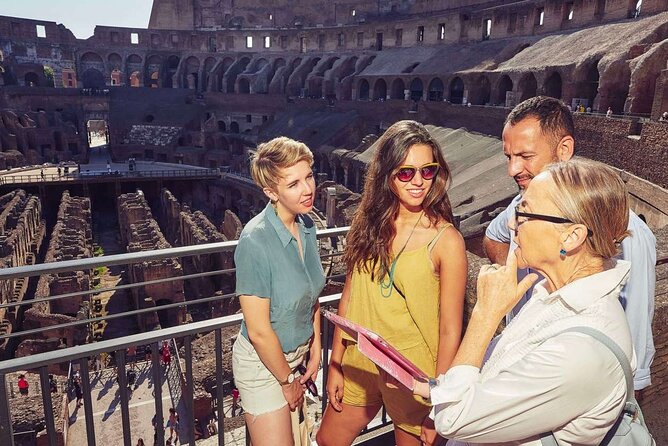
One of the most praised parts of this tour is the guide. The best guides here do two things at once: they explain, and they make the buildings feel like they belong to a lived-in world. In the positive feedback, people highlighted guides who were funny and caring, and who took time to help you visualize what you’re looking at and where to stand for photos.
This matters because Colosseum-to-Forum logistics can be confusing without help. You’re dealing with crowds, security lines, and monumental scale. A good guide keeps you oriented so you’re not guessing.
You may also get a radio to hear the guide over the noise. That kind of setup is useful here, since the spaces you visit are open-air and loud.
With a maximum of 15 travelers, you should feel more like a group you can ask questions of, not a sea of strangers. You’ll still be in Rome, so expect busy moments, but the smaller size helps.
Price and what you really get for $237.31
At $237.31 per person, this isn’t a bargain-basement ticket. But it’s also not just “stand next to a guide” pricing.
Here’s the value math based on what’s included:
- A certified guide
- Entrance fees included for the Colosseum, Roman Forum, and Palatine Hill
- A guided route that covers multiple core sites in a short time
- Mobile ticket delivery and online support before/at check-in
In other words, you’re paying for access + interpretation in one tight package. If you were to do these sights separately, you’d likely spend similar money once you factor in timed entry needs and guided context.
What to watch for: one negative report involved confusion around whether certain entry tickets were included and a claim about a promised refund not being processed. The provider’s response in that case pointed to the idea that skip-the-line access may not apply the way a guest expected, especially when collecting tickets on the day.
So here’s the practical advice: before your tour, double-check exactly what the “included” entrance covers for your specific date/time, and keep your confirmation details handy. When you’re spending this kind of money, it’s worth being a little strict.
What the 2-hour timing means for you
This tour runs for about 2 hours, which is ideal for people who want the essentials without turning the day into a long march. It also fits well if you plan to eat afterward or do another attraction later.
The route includes four core sightseeing segments, each with guided time:
- Colosseum (including arena-floor access)
- Arch of Constantine area, then Palatine Hill
- Via Sacra / Forum valley walking
- Arch of Titus to close
Because it’s time-limited, the guide focuses on the big “why” behind the big “what.” If you want to linger in a single location for 45 minutes, you’ll need to schedule that separately.
If the arena-floor portion is closed for public safety, the tour still happens with first and second floors of the Colosseum, plus Roman Forum and Imperial Forums; the arena will be an overview, and you receive a 10-euro refund per person. That contingency is helpful because your day isn’t ruined, even if the exact highlight changes.
Who should book this tour, and who might skip it
This tour is a great fit if you:
- Want Colosseum arena-floor access rather than a standard upper-level view
- Prefer a guided route that connects the Colosseum to the seat of Roman politics
- Like photo stops but don’t want the chaos of self-guiding through multiple sites
- Appreciate humor and storytelling from a guide, not just facts read from a screen
You might choose something else if you:
- Need a very slow pace and quiet time in each monument
- Plan to stack multiple timed tours tightly on the same day (this tour explicitly suggests not booking close-timed tours)
- Are sensitive to crowds and want fewer people around you
If you’re visiting Rome for the first time, I’d treat this as your “Rome core” primer. Then build your later day around what grabbed you most.
Should you book this Colosseum and Imperial Forum tour?
My take: book it if arena-floor access is on your must-do list and you want one guide to connect the Colosseum to the Forum and imperial monuments. The price feels more justified than you might expect because entrance fees are included for major stops and the time is compressed into a smart route.
Do book with eyes open. Read your confirmation carefully, make sure your name on your booking matches your passport/ID, and verify what’s covered for entry on your exact date. If you’re the type who hates surprises, bring those details into focus before you arrive.
If you want an unforgettable first look at Rome’s power—gladiators, triumphal arches, senate spaces, and the monuments of victory—this is a solid bet.
FAQ
How long is the tour?
The tour duration is about 2 hours.
What entrance fees are included?
Entrance fees are included for the Colosseum, Roman Forum, and Palatine Hill.
Is the tour a small group?
Yes. The group size is shared and capped at a maximum of 15 travelers.
What do I need to enter the Colosseum and Roman Forum?
You must present a valid passport or ID document that matches the full name provided at booking. For youth rates, photo ID showing age is required.
What happens if the arena section is closed?
If the arena section is closed for safety reasons, you’ll visit the first and second floors of the Colosseum with the Roman Forum and Imperial Forums, with the arena as an overview. You’ll receive a 10-euro refund per person via PayPal or bank account.
Where is the meeting point?
The meeting point is Via dei SS. Quattro, 81, 00184 Roma RM, Italy, and the tour ends back at the meeting point.