REVIEW · ROME
Imperial Rome and External Colosseum Tour
Book on Viator →Operated by RomaTourGratis · Bookable on Viator
Rome’s emperors still have a pulse. This Imperial Rome and External Colosseum tour strings together the big names—Julius Caesar, Augustus Octavio, Trajan—and shows how their power shaped what you see today. You start at the Colosseum (Flavio Antitheater), then move along the Imperial Forum Road, finishing at Capitoline Hill and Michelangelo’s Campidoglio with the famous she-wolf.
I love how the route gives you labels you can actually place in your head. You’ll connect Nerva Forum, Augusto Forum, Julio Cesar Forum, and Trajano Forum to real locations, not just vague dates. I also like the payoff at the end: the walk culminates at Campidoglio, where the city’s most iconic symbols sit under your feet.
One thing to consider: the Colosseum admission ticket isn’t included, and entry depends on your full name matching your ID exactly—so double-check before you go.
In This Review
- Key Highlights Worth Your Time
- A Smart Route Through “Imperial Rome,” Not Random Sights
- Entering the Colosseum Area (and the Ticket Reality)
- Forum Road: Nerva, Augustus, Julius Caesar, Trajan in One Walking Story
- Trajan’s Markets and the Column: More Than Just Roman Magnificence
- Venice Plaza, Vittorio Emanuele, and the Altar of the Homeland
- Campidoglio and the She-Wolf Finale by Michelangelo
- Price and Value for a 2.5-Hour Imperial Focus
- Who Should Book This Tour (and Who Might Skip It)
- Should You Book the Imperial Rome and External Colosseum Tour?
- FAQ
- What time does the tour start, and how long does it last?
- Is the Colosseum/Roman Forum admission ticket included?
- What ID or name requirements are needed for entry?
- How do I receive my ticket?
- How many people are in the group?
- Is this tour refundable if plans change?
Key Highlights Worth Your Time
- Imperial names mapped to street-level stops so you learn places, not just facts
- Small group size (max 15 people) for a smoother flow through crowded sights
- Forum Road built around major emperors: Nerva, Augustus Octavio, Julius Caesar, and Trajan
- Trajan’s Markets and Column highlighted as more than ruins
- Campidoglio finale with Michelangelo and the she-wolf imagery front and center
A Smart Route Through “Imperial Rome,” Not Random Sights
This tour works because it stays focused. Instead of hopping all over the city, you trace a clear line from the Colosseum to the Imperial Forums, then up to Capitoline Hill. It’s a compact way to get oriented fast, especially on a first trip.
You also get a strong theme: Roman power came with stories—politics, rivalry, and cruelty included. The tour frames the walk as a sequence of imperial eras, built around the names you’ll keep seeing across Rome. That makes the streets feel less like a maze and more like a timeline.
And yes, it’s “external” in the sense that the Colosseum experience starts from outside as part of the route plan. Still, you’re not doing a sightseeing stroll with no direction. You’re moving from landmark to landmark, learning what each one was for and why it mattered.
You can also read our reviews of more tours and experiences in Rome.



Entering the Colosseum Area (and the Ticket Reality)
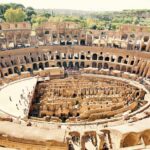
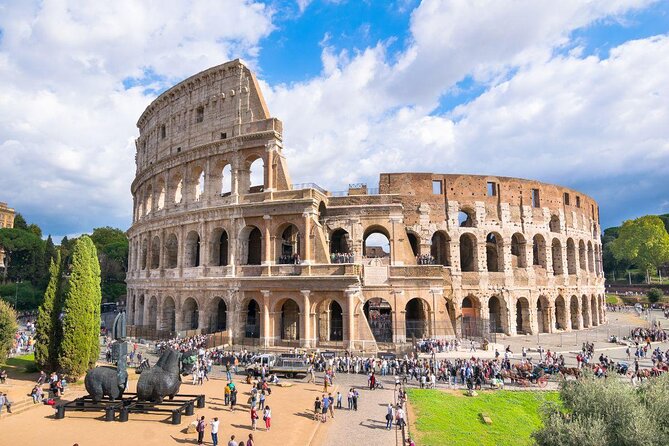
You start at the Colosseum area, at Colosseo 00184 Rome, with a 4:30 pm start. The first stop is about 10 minutes focused on the Colosseum and nearby imperial references.
Here’s the practical part that matters most: admission is not included for the Colosseum/Roman Forum portion. So you’ll want to plan on having the right ticket for entry if your tour includes time inside those areas.
This tour also sets a strict entry requirement. You must use the full names you provide when booking, and each person needs a valid passport or ID that matches that name. If the names don’t match, entry to the Colosseum/Roman Forum can be denied. That’s not a “maybe” issue. It’s the kind of rule that can turn a great plan into a wasted afternoon, so treat it like a checklist item.
When the group gathers at the Colosseum, you’re not just staring at a famous building. You’re being guided to notice the bigger structure of Roman ambition—how these spaces were designed to impress, control crowds, and reinforce legitimacy.
Forum Road: Nerva, Augustus, Julius Caesar, Trajan in One Walking Story
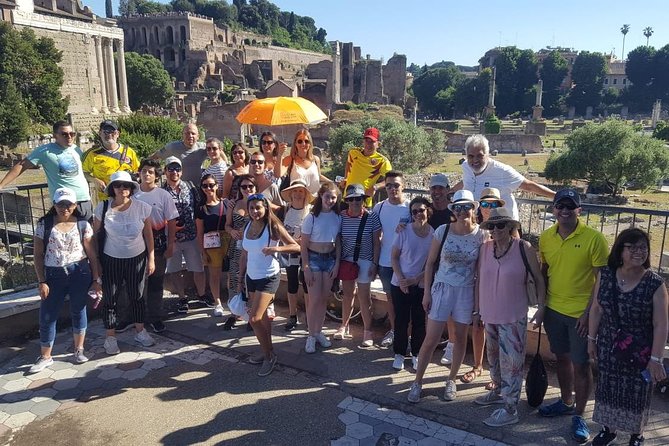
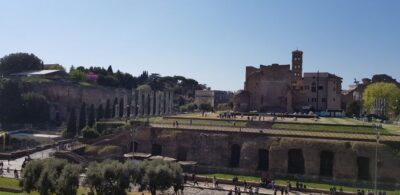
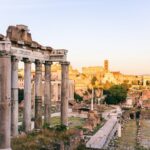
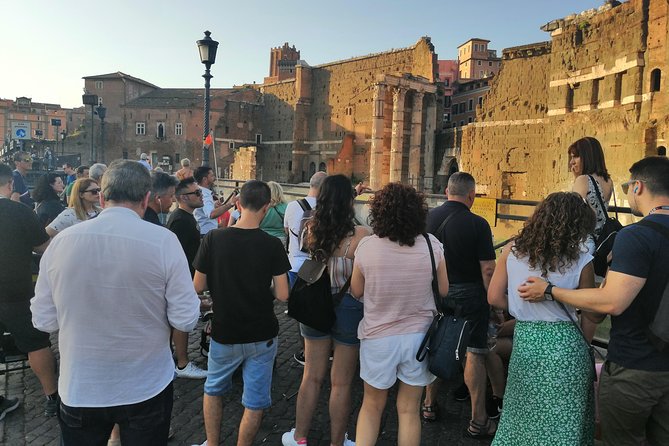
After the Colosseum, the route shifts into something I really like: the Imperial Forum Road logic. The forums aren’t presented like separate attractions. They’re treated like connected chapters, each tied to an emperor’s message.
You’ll pass through stops connected to:
- Nerva Forum
- Augusto Forum
- Julio Cesar Forum
- Trajano Forum
- plus Trajano Markets and the Trajano Column later in the flow
Why this matters for you: Rome can feel like a pile of ruins if you don’t have a thread. This tour gives you that thread. When you move from forum to forum, you can start asking the right questions: Who built this? What did they want people to believe? What kind of public life did the Romans stage here?
At Augusto Forum, you’re in the orbit of Augustus Octavio, whose era helped shape the imperial “brand.” At Julio Cesar Forum, the focus lands on Julius Caesar’s legacy and how Rome turned political dominance into public space. Then Trajano Forum brings you to the era that leaned hard into scale and permanence—especially in how Trajan’s projects framed power as something permanent and civic.
One small drawback: because you’re following a themed route with multiple forum stops, you’ll want comfortable shoes. Even if the schedule is tight, you’re walking between zones and standing for explanations in busy areas.
Trajan’s Markets and the Column: More Than Just Roman Magnificence
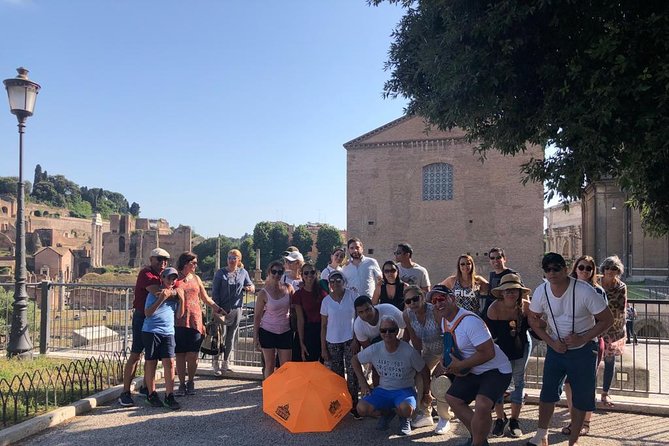
Once you’re in the Trajan cluster, the tour points you toward Trajano Markets and the Trajano Column. These are great stops because they show how Romans mixed function with showmanship.
The Trajano Markets are often overlooked when people focus only on the biggest-name ruins. But that’s exactly why this tour’s inclusion helps you. You get a chance to see Roman urban planning thinking—places where commerce and civic life could overlap, and where the design itself could signal authority.
Then you shift to the Trajano Column. Even if you’re not a hardcore art buff, columns like this matter because they turned history into a display. They’re not just decorative. They’re a way to control memory, track legitimacy, and tell a story that survives longer than any single speech.
If you like being able to name what you’re looking at, this part delivers. It gives you a set of anchors so you can later spot these structures again on your own.
Venice Plaza, Vittorio Emanuele, and the Altar of the Homeland
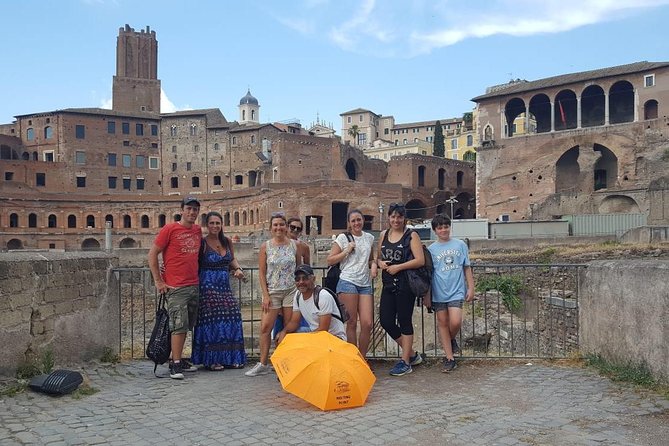
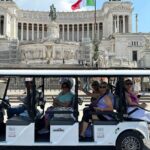
As the tour continues, you reach Venice Plaza. This stop is interesting for a reason that goes beyond architecture: the tour ties the square’s importance to Fascism, while also pointing you toward the monument to Vittorio Emanuele.
That blend of eras is part of what makes Rome feel real. The city doesn’t just preserve ancient power. It also shows how later regimes borrowed the language of grandeur. You get a way to look at monuments with context, not just “wow factor.”
From there, the route includes the AltAR of the Homeland. This is a strong visual moment because it changes your perspective—suddenly you’re thinking about national identity and civic symbolism, not only emperors and temples.
For your planning: this area can involve more open space and more foot traffic. The good news is that the tour keeps moving, so you don’t get stuck waiting around.



Campidoglio and the She-Wolf Finale by Michelangelo
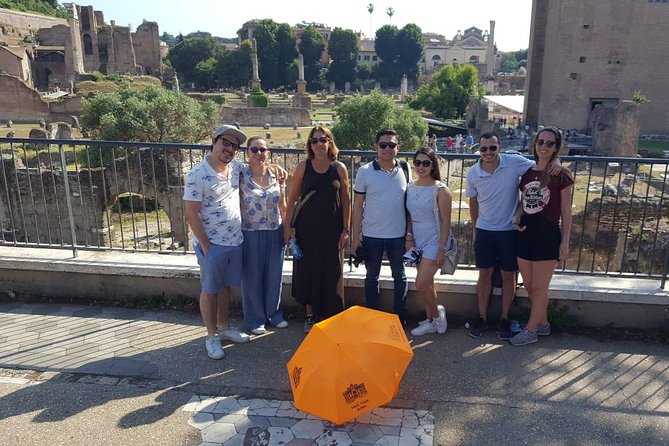
The tour culminates at Piazza del Campidoglio (Campidoglio). Your end point is listed as Piazza del Campidoglio, 00186 Roma, and the vibe here is very “Rome looking back at itself.”
This is where the tour becomes truly satisfying, because it connects two different kinds of Rome:
1) the ancient power axis you’ve just been walking
2) the later Renaissance artistry that reframed the city as an icon
The tour specifically calls out the plaza designed by Miguel Angel Buonarroti—and it doesn’t stop there. One of the most memorable elements is the famous Loba (she-wolf) feeding Romulo and Remo. That story sits at the edge of legend and identity, and it’s one of those images that makes the whole city feel mythic in a practical way.
I like finales like this because you can look back along the route and feel your brain click into place. You’ve just visited forums and imperial structures, and now you’re finishing on a platform of symbol-making. It’s a clean emotional wrap-up.
Price and Value for a 2.5-Hour Imperial Focus
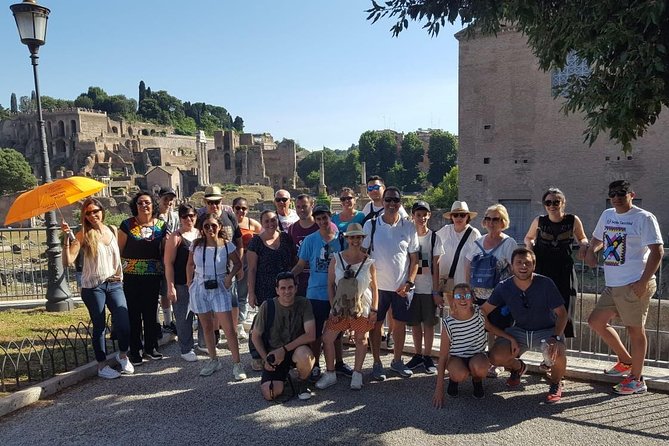
The tour price is $17.44 per person, with an average booking window of about 18 days in advance. That’s what makes this option feel like good value: you’re paying for structured orientation and a guided narrative across major zones.
The duration is about 2 hours 30 minutes, which is long enough to feel meaningful but short enough that you’re not sacrificing your whole evening. Since it starts at 4:30 pm, you also get a late-day rhythm that can fit nicely between other Rome plans.
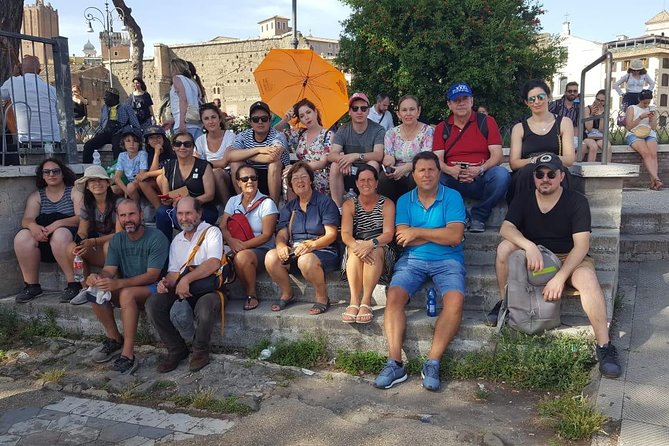
A big part of the value is the group size: maximum 15 people. Smaller groups often mean less chaos, and you can actually hear what’s being pointed out while moving between stops.
Just remember: you’re paying for the tour, not the entry ticket. Because admission for the Colosseum/Roman Forum isn’t included, your real total cost can be a bit higher once you add the necessary ticket. Still, even then, the overall plan can come out as a smart use of time because you’re covering a packed route without needing to assemble your own itinerary.
Who Should Book This Tour (and Who Might Skip It)
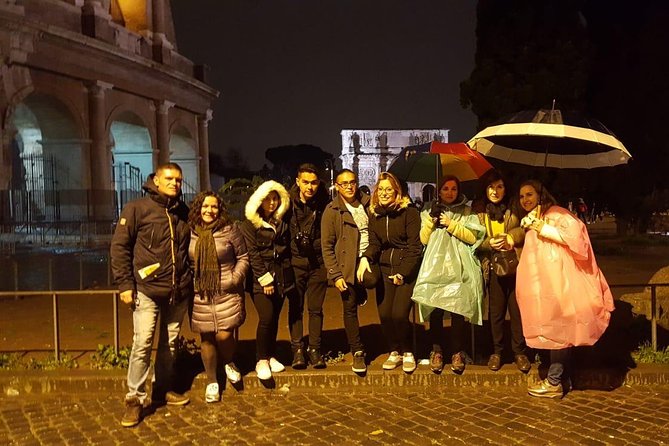
This tour is a great match if you:
- Want a first-pass orientation to imperial Rome
- Like learning through a walking route with named stops
- Prefer a small group format
- Want to connect ancient sites to later symbolism at the end
You might consider another plan if you:
- Need lots of free time to explore each site on your own inside out
- Don’t want the entry-ticket planning and strict name/ID matching requirements
In plain terms: this is a “get your bearings fast” tour that rewards people who like structure. If your travel style is random wandering only, you may feel a bit guided at every turn.
Should You Book the Imperial Rome and External Colosseum Tour?
I think it’s worth booking if you want a focused imperial storyline without spending hours piecing together routes. For the price, the route is efficient, and the ending at Campidoglio (with Michelangelo and the she-wolf) is a satisfying payoff.
Do book it if you can handle one key requirement: make sure your full names and IDs match perfectly, and plan for the Colosseum admission ticket not being included. If you treat that like a quick checklist, this tour can save you time and help you understand what you’re looking at instead of just collecting photos.
FAQ
What time does the tour start, and how long does it last?
The tour starts at 4:30 pm and runs for about 2 hours 30 minutes.
Is the Colosseum/Roman Forum admission ticket included?
No. Admission Ticket Not Included is listed for the Colosseum stop.
What ID or name requirements are needed for entry?
You must provide full names when booking, and the voucher must include all travelers’ full names. Entry requires a valid passport or ID that matches the name provided, or entry to the Colosseum and Roman Forum may be denied.
How do I receive my ticket?
This experience uses a mobile ticket.
How many people are in the group?
The tour has a maximum of 15 people.
Is this tour refundable if plans change?
No. The experience is non-refundable and cannot be changed for any reason.
If you tell me your travel dates (and whether you already plan to buy Colosseum/Roman Forum tickets), I can help you figure out the cleanest way to fit this into your day.