REVIEW · ROME
From Rome: Pompeii and Herculaneum by High-Speed Train
Book on GetYourGuide →Operated by Askos Tours · Bookable on GetYourGuide
Pompeii and Herculaneum in a single day sounds intense. This tour makes it work with high-speed train timing, included van transfers, and archaeologist-led walks through two different kinds of Roman ruins. You get the story, not just the photos.
I especially like that the Pompeii portion focuses on the details that turn disaster into real human life: plaster casts of victims and animals, plus key stops like the brothel and newly opened areas. I also like how Herculaneum feels different on purpose—smaller, preserved, and more intimate—so you understand why Vesuvius affected neighborhoods in very different ways.
One thing to consider: it’s a long day with real walking on uneven stone. You’re looking at about one mile in Pompeii and half a mile in Herculaneum, plus transfers, so it’s not the easiest option if you tire quickly.
In This Review
- Key things to know before you go
- Rome to Naples by high-speed train: making the day feel doable
- Pompeii with an archaeologist: plaster casts and the city behind the tragedy
- Pompeii free time: how to use 30 minutes well
- Transferring to Herculaneum: a different kind of ruin
- Herculaneum highlights: House of Neptune and Amphitrite and the preserved beach
- Pacing, transport, and group setup: what 8.5 hours really means
- Price and value: does $222.77 really make sense?
- Who should book this Pompeii and Herculaneum day trip
- Should you book: my practical take
- FAQ
- FAQ
- How long is the Pompeii and Herculaneum day trip from Rome?
- Do I need to buy train tickets from Rome to Naples?
- What is included in the guided portion at each site?
- Are meals included?
- Where do I meet the guide in Naples?
- How much walking is involved?
- What should I wear or bring?
- Is this tour wheelchair accessible?
- Does the tour run in bad weather?
Key things to know before you go
- Fast train, controlled pace: pre-booked Rome to Naples train tickets plus headsets keep the day moving.
- Archaeologist in the lead: guided tours at both sites, with English live narration.
- Pompeii highlights plus casts: you’ll see major buildings and the plaster casts tied to the eruption story.
- Herculaneum’s preserved streets: stop at the House of Neptune and Amphitrite and see the beach area where many skeletons were preserved.
- Free time is limited: the Pompeii break is short, so plan lunch or quick shopping fast.
- Wear real shoes: no sandals/flip-flops and no high heels, and there’s some uneven walking.
Rome to Naples by high-speed train: making the day feel doable
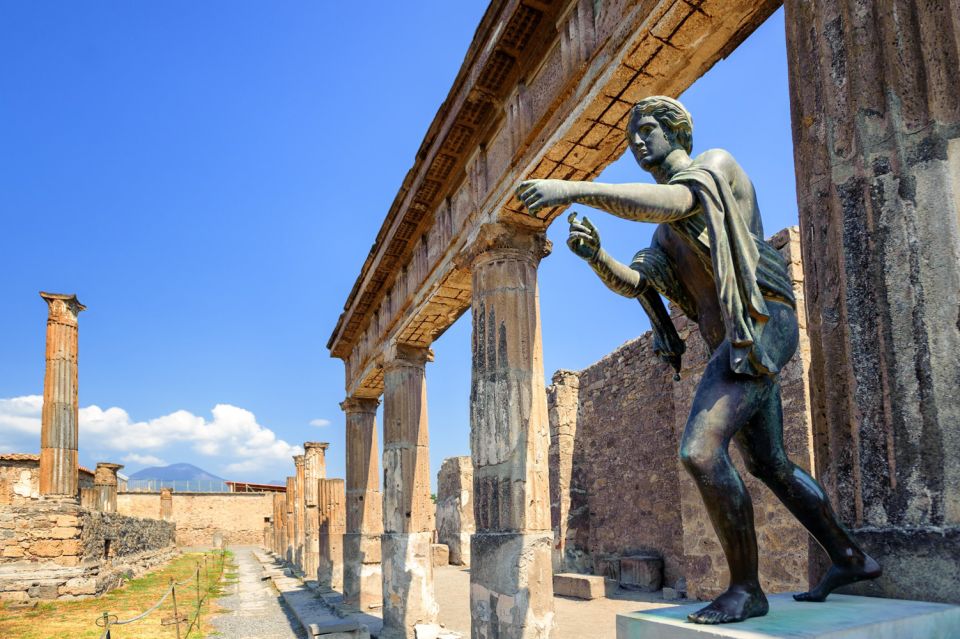
This is a day trip built around one simple idea: get you out of Rome fast, so you can actually spend time at the ruins. You start at Roma Termini, and you travel independently on the provided high-speed train tickets to Naples Central Station (about 70 minutes). When you arrive, you meet the tour team in front of the STARHOTEL TERMINUS entrance (opposite the station), looking for a guide holding an ASKOS TOURS sign.
What that does for you is big. Naples is busy, Termini can be confusing, and you don’t want to spend your precious hours figuring out trains and platforms. The operator handles the train portion, plus the moving-between-sites transfers.
Once in Naples, you switch from train mode to ground transport. The itinerary includes van or minibus time from Naples to Pompeii (about 30 minutes), then another transfer back (about 30 minutes from Herculaneum to Naples, plus the 70-minute train ride back to Rome). That’s the skeleton of the schedule. The rest is the work of seeing two archaeological sites properly.
You can also read our reviews of more tours and experiences in Rome.



Pompeii with an archaeologist: plaster casts and the city behind the tragedy
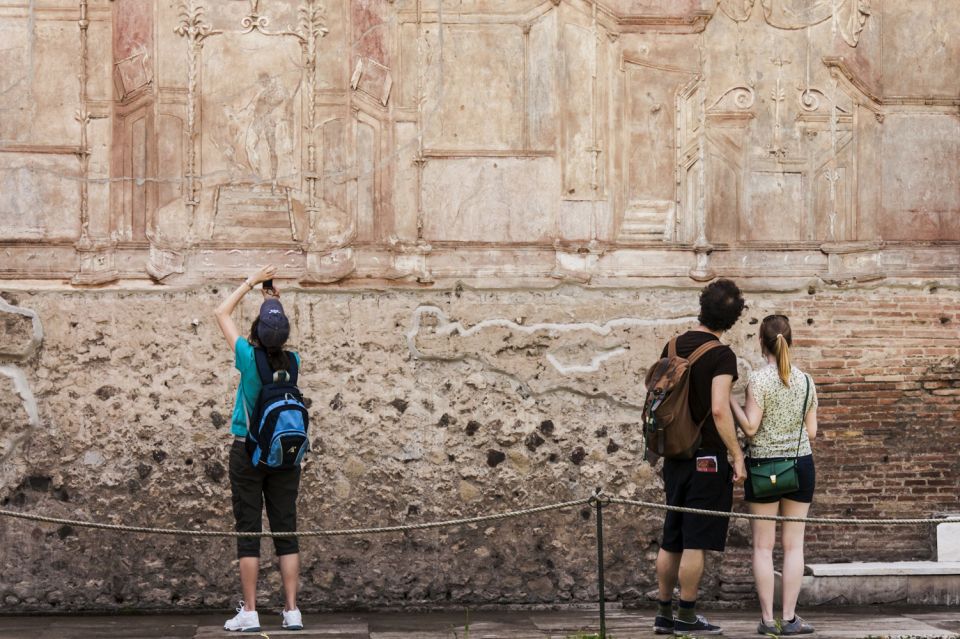
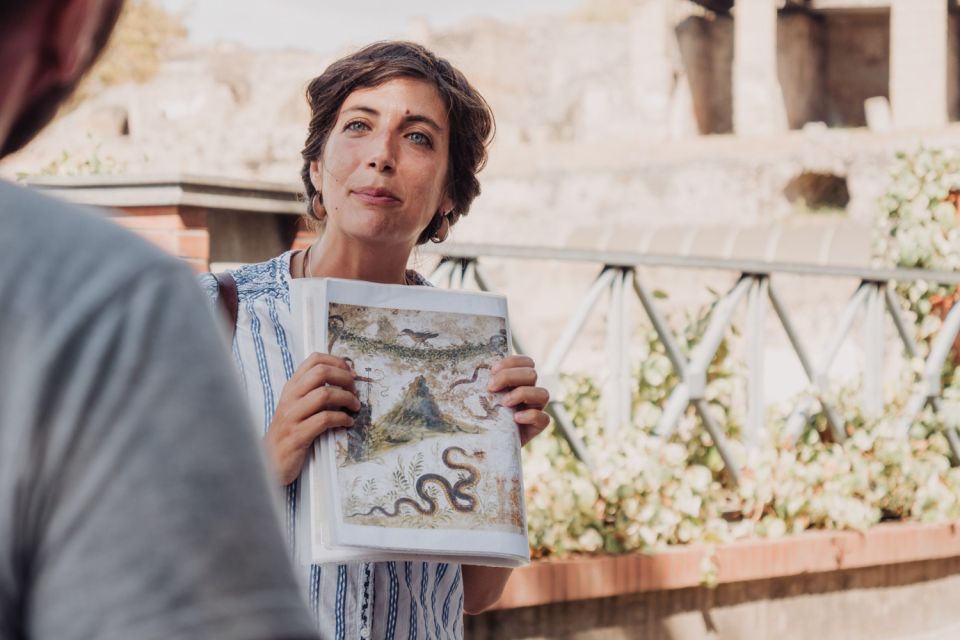
Pompeii is the famous name, but fame can flatten it. The value here is the way the guide ties the buildings to people and routine—so when you look at stone walls, you can also picture daily life.
Your Pompeii block is 2 hours guided, followed by about 30 minutes free time. You’ll focus on key areas of the site, including the newly opened houses highlighted in this experience. Those newer sections matter because they help you feel less like you’re repeating a postcard route. You still see the classics, but you’re more likely to catch the details that make Pompeii feel like a real city rather than a theme park.
Two Pompeii elements I’d treat as the heart of the tour:
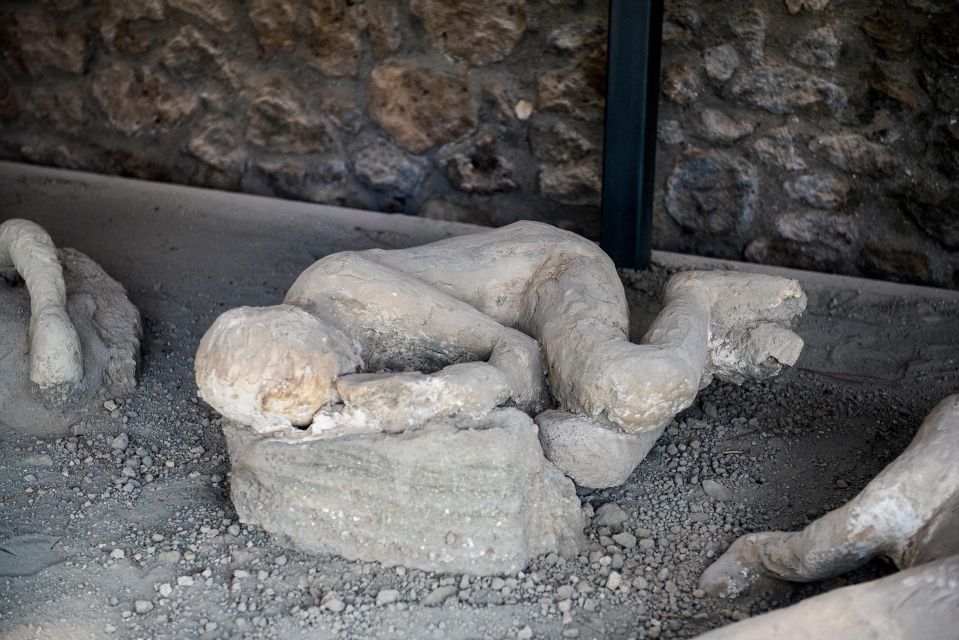
1) The plaster casts of victims (and animals).
One of Pompeii’s strangest lessons is physical: the remains that were left behind became part of how archaeologists understand the eruption. Seeing the plaster casts helps you grasp the scale and immediacy of what happened. Animals included is important too. It’s an extra reminder that this wasn’t only about famous statues or rulers—it was about whole households.
2) Major buildings that explain the city.
The itinerary specifically includes stops like the brothel, which is a blunt but effective reality check. Pompeii had entertainment, commerce, and social life—stuff you wouldn’t know from ruins alone. You also get the kind of interpretive guidance that helps you read the site: where people gathered, how spaces were used, and what changed during catastrophe.
Timing note: Pompeii is where you’ll do the most walking. The tour mentions about one mile on uneven stone streets. It’s manageable, but it’s not gentle. Bring good traction and expect to look down as much as you look forward.
Pompeii free time: how to use 30 minutes well
That 30-minute break is for shopping and lunch. In theory, that’s enough. In practice, it can feel tight—especially if you want a proper sit-down meal or you drift toward the Forum-area photo spots.
So here’s the practical approach I recommend:
- Treat it as a grab-and-go window. Pick a spot near the entrance area and commit.
- If you care about photos, set your priorities early in the guided portion. Pompeii photography goes faster when you already know what you’re looking for.
- If you want a longer lunch, you’ll likely wish you had more than 30 minutes. Plan to eat well back in Naples instead.
Transferring to Herculaneum: a different kind of ruin
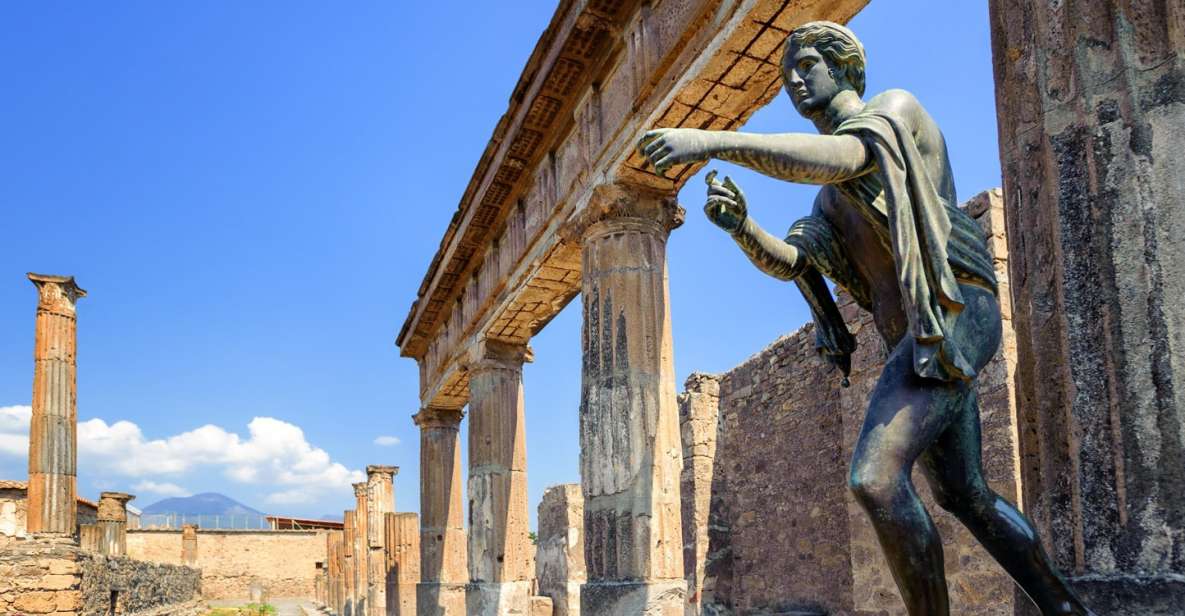
After Pompeii, you switch to Herculaneum by minibus (about 30 minutes). This is one of the smart parts of the schedule. Pompeii is bigger and louder in feel; Herculaneum is more compact, with streets and structures that are easier to walk in a focused way.
The Herculaneum visit is about 2 hours guided. That’s a good ratio: enough time to see major highlights without turning the experience into a sprint.
The guide’s interpretation matters here too. Herculaneum isn’t simply Pompeii again. It’s the same Vesuvius event, but a different neighborhood outcome. You’re going to notice the difference in scale and preservation as soon as you start moving.
Herculaneum highlights: House of Neptune and Amphitrite and the preserved beach
Herculaneum’s magic is the way it feels more human in size and texture. Instead of only seeing a city plan, you experience partial interiors and a street-level sense of how people moved.
The itinerary includes named highlights: the House of Neptune and Amphitrite and time at the beach area where hundreds of skeletons are preserved. Those aren’t random stops. They help you connect archaeology to emotion and movement—why people ended up where they did, and how the disaster unfolded in a coastal setting.
Here’s why I think these particular stops work:
- House of Neptune and Amphitrite gives you a recognizable, structured place to anchor your understanding of home life.
- The preserved skeleton beach brings the disaster down to a scene you can almost follow step-by-step.
If you’ve only ever read about Vesuvius, Herculaneum can feel like the missing chapter. Pompeii shows the city in a big freeze. Herculaneum can make you feel the closeness of spaces that were meant for everyday living.



Pacing, transport, and group setup: what 8.5 hours really means
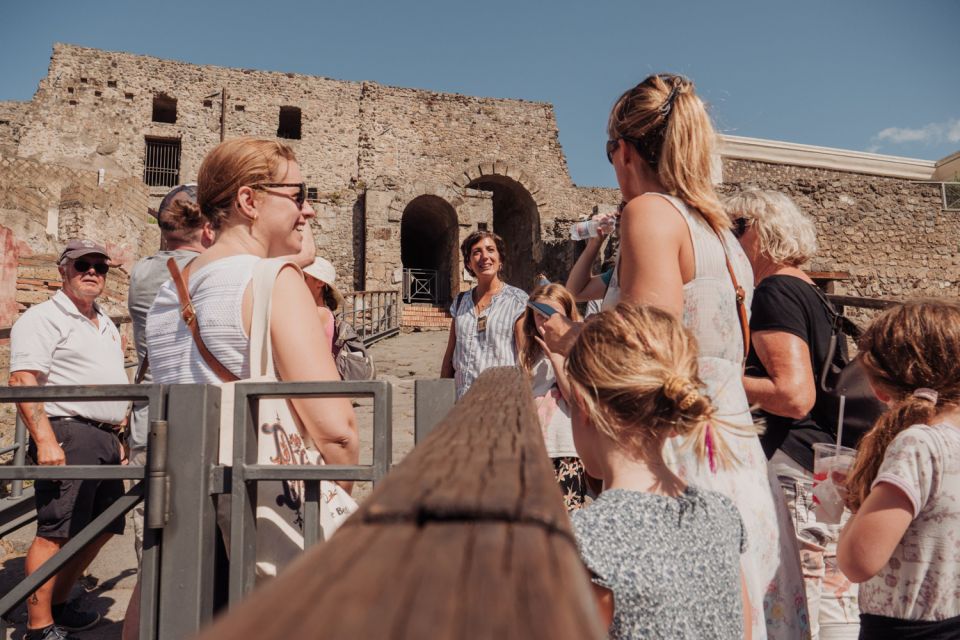
The total duration is about 8.5 hours. That doesn’t sound crazy until you add train time, transfers, walking in two sites, and the fact that both archaeological areas have their own crowd patterns.
This tour helps you stay sane in a few ways:
- Headsets included for everyone. You hear the guide clearly without craning your neck.
- Skip-the-ticket-line for the provided entry tickets.
- Small-group format paired with guided focus, so you’re not drifting while the clock runs.
That said, the overall pace is still fairly full. You’ll likely spend most of the day in one of three modes:
1) riding and meeting the next handoff (train/van),
2) guided walking at Pompeii,
3) guided walking at Herculaneum.
It’s a great format if you want one highly organized day. It can feel tiring if you’re the type who likes to linger silently and wander without structure.
Mobility consideration: the tour explicitly notes it’s not recommended for people with limited mobility and is not suitable for wheelchair users. If walking uneven stone sounds like a gamble, choose another option that offers more accessibility.
Price and value: does $222.77 really make sense?
At $222.77 per person, this isn’t the cheapest way to see Pompeii and Herculaneum. But it also isn’t just a ticket with a map. You’re paying for the glue that holds the day together.
Included items that add real value:
- Round-trip fast-train tickets Rome to Naples (about 70 minutes each way).
- Guided tours with an archaeologist at both sites.
- Transportation from Naples to Pompeii and back from Herculaneum to Naples.
- Pompeii entry tickets (including Pompeii Express) and Herculaneum entry tickets (listed as 16,00 euros each).
- Headsets for the group.
- Live English guide and managed timing between stops.
If you attempted this as a DIY day, you would still have costs: train tickets, separate transport to both sites, entry tickets, and time lost coordinating. The math gets closer than you might think, especially when you factor in that you also want interpretation from an archaeologist—not just audio.
Is it worth it? For most people who want to see both sites in one day without planning gymnastics, yes. If you’d rather move slowly, or you’re on a very tight schedule, this packaged structure is precisely what you’re buying.
Meals are not included, so you’ll handle lunch and any snacks yourself during the breaks.
Who should book this Pompeii and Herculaneum day trip
This works best if you fit one of these profiles:
- You want to see both sites in one day and you’d rather trust the pacing.
- You care about context: what Vesuvius did, what daily life looked like, and how archaeologists interpret the evidence.
- You like guided walks with headsets and clear meeting points.
It’s less ideal if:
- You need long rest breaks, or walking uneven surfaces will be hard.
- You want a relaxed, no-clock day with long meals and lots of free wandering.
- You’re bringing a lot of luggage. The tour says no luggage or large bags, and it prohibits sandals/flip-flops and high-heeled shoes.
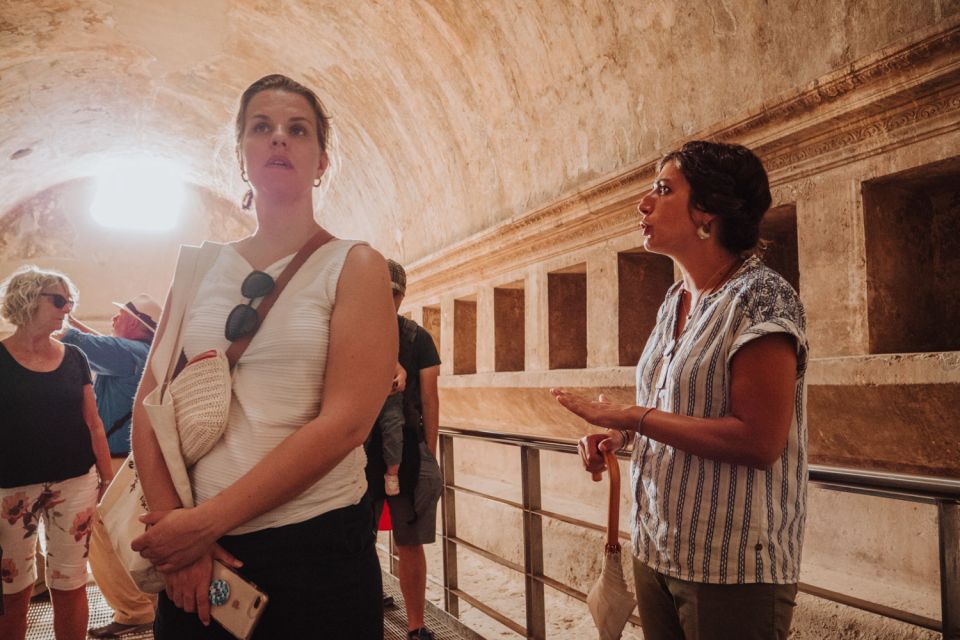
On the guide side, English narration is a constant. You may be led by archaeologist guides such as Michele, Raphael, Jasmi(n)i, Sergio, Diego, Julia, Paolo, or Gennaro, and the driving is handled by professional drivers in Naples traffic (names like Pasquale show up in past experiences). Those names matter because they signal the type of expertise you’re buying: archaeology plus storytelling, not just a list of ruins.
Should you book: my practical take
Book it if you want a structured day that covers both Pompeii and Herculaneum with real expert interpretation and included logistics. The train-and-transfer plan makes Rome-to-ruins timing far less stressful, and the combination of Pompeii’s plaster casts with Herculaneum’s preserved street feel gives you a fuller picture than choosing only one site.
Skip it if your priorities are rest and wandering over guided coverage, or if you know you can’t handle roughly 1.5 miles total of uneven walking plus transfers.
FAQ
FAQ
How long is the Pompeii and Herculaneum day trip from Rome?
The total duration is about 8.5 hours.
Do I need to buy train tickets from Rome to Naples?
No. Round-trip fast-train tickets from Roma Termini to Naples Central Station are included, with pre-booked tickets provided by the tour.
What is included in the guided portion at each site?
You get guided tours with an archaeologist at both Pompeii and Herculaneum, plus headsets for all participants.
Are meals included?
No. Meals are not included.
Where do I meet the guide in Naples?
After the train arrives, meet the team in front of the STARHOTEL TERMINUS entrance, opposite Naples Central Station, and look for a guide holding an ASKOS TOURS sign.
How much walking is involved?
You should expect about one mile of walking in Pompeii and about half a mile of walking in Herculaneum, on uneven surfaces.
What should I wear or bring?
Bring passport or ID card. Avoid sandals or flip-flops and high-heeled shoes. Plan on comfortable, sturdy footwear.
Is this tour wheelchair accessible?
No. It’s not suitable for wheelchair users and is not recommended for people with limited mobility.
Does the tour run in bad weather?
Yes. The tour runs rain or shine, so bring a raincoat if needed.