REVIEW · ROME
Fast Access Guided Tour of the Colosseum & Ancient Rome with a Roman Guide
Book on Viator →Operated by Accessible Italy Tours · Bookable on Viator
Big crowds are the norm in Rome. This private Colosseum tour is built for fast access and tight time, so you spend less effort stuck in lines and more time seeing how Ancient Rome actually worked.
I especially like two things here. First, the pre-booked Colosseum tickets plus reservation fees mean you can avoid the worst of the queue stress. Second, you get a real guide experience where names like Thomas and Francesco show up in feedback, with help that makes the ruins feel usable and understandable, not just impressive.
One consideration: at this price point, you’re paying for a private guide and streamlined entry. If you’re happy to wander on your own with a printed ticket and a guidebook, this may feel like a luxury you can’t justify.
In This Review
- Key Highlights You Should Care About
- Why This 3-Hour Private Colosseum Tour Works
- Meeting at Piazza del Colosseo: Getting Oriented Before You Hit the Ruins
- Entering the Colosseum: Scale You Can Feel, Not Just Read About
- A realistic drawback
- Stop 1 Deep Dive: Colosseum Tickets, Reservation Fees, and Why “Fast Access” Matters
- Roman Forum: Turning Ruins into a Map of Power
- What could feel hard here
- Palatine Hill and Capitoline Hill Finale: Views Plus Symbols
- What You Really Get from the Human Guide
- Price and Value: Is $345.89 Worth It?
- Small Practical Tips That Make This Tour Easier
- Who This Private Colosseum Tour Is Best For
- Should You Book This Colosseum Private Tour?
- FAQ
- How long is the Colosseum, Roman Forum, and Palatine Hill tour?
- What sites are included?
- Are admission tickets included?
- Is this tour private?
- Where do I meet the guide?
- What documents do I need for entry?
- Can I change or get a refund after booking?
Key Highlights You Should Care About
- Fast-access tickets to the Colosseum so you can get moving quickly
- Private, just-your-group format with your guide’s full attention
- Colosseum context beyond photos: entrances, scale, and arena design
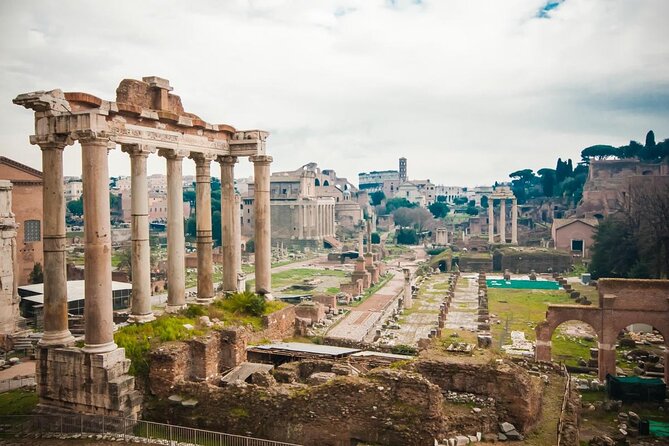
- Roman Forum stop that ties together major ruins like the Temple of Vesta and Caesar’s altar
- Palatine/Capitoline finale with Michelangelo’s piazza and the Marcus Aurelius statue
- Guides using reconstructions and visual aids to connect the dots
Why This 3-Hour Private Colosseum Tour Works
Rome’s “top sights” can be exhausting. The city tempts you into long walks plus long lines, and then you arrive at the place you wanted most… tired and rushed. This tour is designed to keep the day balanced: you get about three hours that focus on three big stops, with enough structure that you don’t feel like you’re guessing.
The private format matters more than people think. When you’re not sharing the experience with a large crowd, your guide can adjust pace and answer questions as they come up. That’s how the Colosseum stops being a landmark and starts becoming a lived-in space.
This tour also gives you a clear target: you’ll cover the Colosseum, walk to the Foro Romano (Roman Forum), and then finish up on the Palatine area and toward Capitoline Hill, depending on the flow of the visit. It’s Rome in compact form, but not a speedrun.
You can also read our reviews of more guided tours in Rome



Meeting at Piazza del Colosseo: Getting Oriented Before You Hit the Ruins
You meet at Piazza del Colosseo, 23. That’s convenient because it drops you right where the Colosseum experience begins, instead of making you start far away and play catch-up across the block.
You also get a practical edge: the tour notes it’s near public transportation, so if you’re combining this with other sights (or hopping in from a hotel area), you don’t need special logistics just to make the start time.
One small-but-important detail: you’ll be asked to provide full names for every participant at booking, and your ID or passport needs to match those names exactly. If names don’t line up, entry can be denied at the ticket office. This is not the time to wing it with a nickname or a typo. Do a quick name check right after you book.
Entering the Colosseum: Scale You Can Feel, Not Just Read About
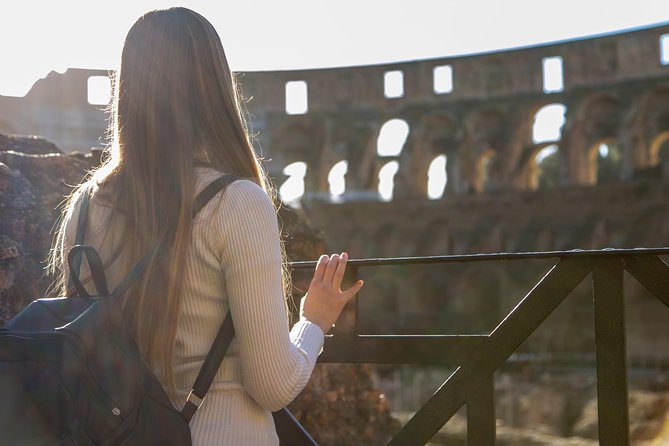
The Colosseum is the kind of place where first impressions are loud. But the best part of a guided visit isn’t the wow factor; it’s what you notice once someone helps you read the space.
You start at the entrance and spend about an hour inside the Colosseum. The tour frames it with details that actually change how you look around. For example, this was the Flavian Amphitheatre in its day, and it had 80 entrances and seating for more than 50,000. Those numbers aren’t just trivia. They help you understand why people moved the way they did and how the venue could handle massive crowds.
What I like about a guide-led approach here is that the Colosseum becomes a system. You’re not only seeing arches and stonework; you’re learning the logic of circulation and crowd flow—why certain areas feel designed for movement and why other parts feel built for viewing.
A realistic drawback
Even with fast access, the Colosseum is still the Colosseum: it’s busy and the stone is big. If you’re the type who needs constant quiet, you might find you’re doing some of your “quiet observing” in short bursts between louder groups.
Stop 1 Deep Dive: Colosseum Tickets, Reservation Fees, and Why “Fast Access” Matters
Let’s talk value, because “fast access” can mean anything from helpful to hype.
In this case, the tour includes the Colosseum entrance ticket and the Colosseum reservation fee (listed as €18 and €2 per person). That means you’re not juggling separate buys, and you’re not doing the mental math of what to purchase and when. The remaining cost covers the guide service and coordination.
That’s important if your Rome schedule is tight. When you’re planning multiple major sights in a few days, it’s easy to lose time twice: once on tickets, and again on entry logistics. A tour that pre-books entry cuts that friction and makes your sightseeing day feel less like an admin task.
Also, the tour notes a mobile ticket. In practice, that’s usually easier than managing paper vouchers on a device battery that’s already having a rough day with Rome heat and maps.






Roman Forum: Turning Ruins into a Map of Power
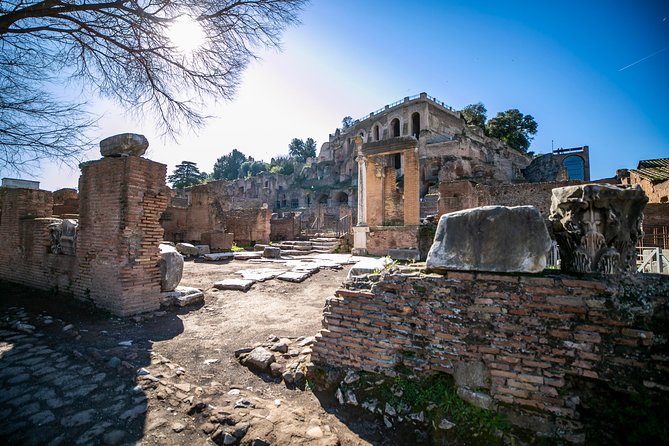
After the Colosseum, you take a short walk to the Roman Forum, described as once the center of city life. This is the stop where the right guide makes a noticeable difference, because the Forum can look like a jumble if you don’t know what to look for.
You’ll spend about an hour in the Foro Romano, with your guide pointing out major structures that would have shaped Roman politics and religion. The tour highlights ruins including:
- the remains around the Senate House
- the Temple of Vesta
- the Temple of Saturn
- the Altar of the Divine Julius Caesar
- the Temple of Gemini
- Basilica Emilia
- the Arch of Septimius Severus
Here’s the practical value: when you can name a place and understand its role, you stop “collecting ruins” and start building a mental map. You can stand in front of a wall fragment and picture what it likely functioned as, instead of guessing.
What could feel hard here
The Forum is outdoors and the ruins offer limited shelter. If you’re visiting in hot weather or during long daylight hours, you may want to pace yourself and keep water handy. The tour keeps a structured time block, but you’ll still be in Roman sun.
Palatine Hill and Capitoline Hill Finale: Views Plus Symbols
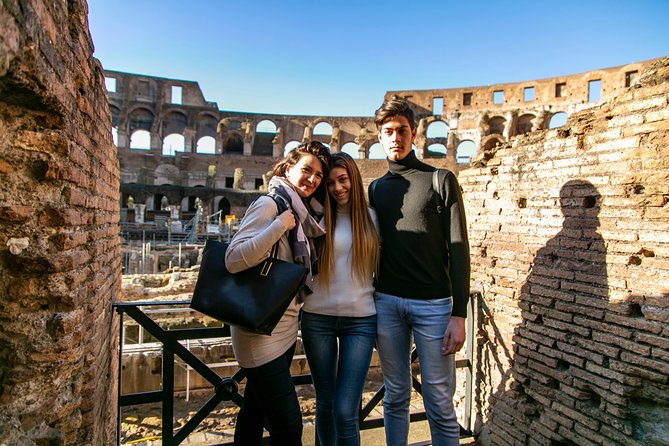
This tour ends by moving through the Palatine area and finishing on Capitoline Hill. The wording matters because it suggests you’re not only looking down from a single angle; you’re also touching the symbolic layers of power and religion.
The guide context here is strong: the sites are described as locations tied to the most significant Roman gods, and the finale includes:
- a beautiful piazza designed by Michelangelo
- the Statue of Marcus Aurelius
That combination is memorable for a simple reason. It links the ancient and the Renaissance without needing an extra museum ticket. You go from imagining old religious and political use of the hills to seeing a later layer of Rome that still honors the idea of civic space.
I also like that the tour mentions reconstructions and visual aids. In this part of Rome, where the ground is uneven and the originals are incomplete, those explanations can be the difference between “I saw ruins” and “I understood what those ruins were meant to communicate.”
What You Really Get from the Human Guide
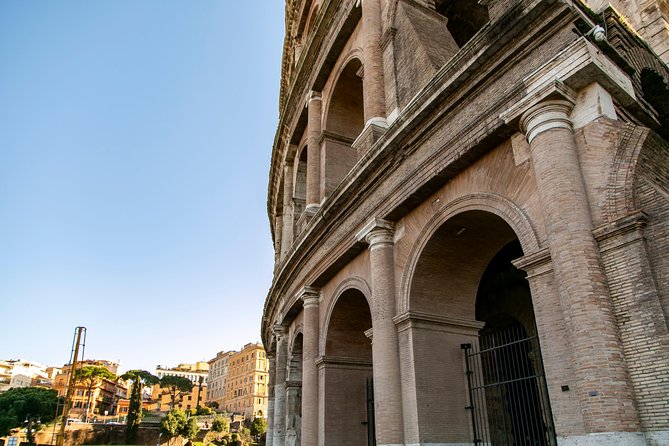
The best praise in the provided feedback centers on how the guide helps you visualize Rome. Thomas is called out as knowledgeable and friendly, and Francesco is described as excellent, fun, and able to connect the story in a way that stuck. There’s even mention of the tour helping people re-watch Gladiator afterward, which tells me the guide’s explanations didn’t just float by for an hour; they left an after-image.
That’s what you should look for when choosing a Colosseum tour: not someone who reads facts, but someone who connects the space to how people lived, watched, and moved.
So when the tour says it uses reconstructions of ancient structures and other visual aids, treat that as the core value. You’re paying for translation—turning stone and gaps into a coherent picture.
Price and Value: Is $345.89 Worth It?
At $345.89 per person, this is not a budget tour. You should expect that.
Here’s the value logic that makes sense: you’re paying for three things bundled together:
1) A private local guide for about three hours
2) Admission ticket and reservation fee for the Colosseum
3) The coordination that reduces time lost to entry hassle
If you were doing this on your own, you’d still need tickets, and you’d still need to figure out which ruins matter and why. That’s time, energy, and mental load. Even if you’re a confident independent traveler, most people don’t walk through the Forum and automatically feel like they’re reading a political map.
If your goal is to understand rather than just photograph, the price starts to look more reasonable. If your goal is only to say you were there, you can probably do cheaper. The key question is how much you want the visit to “click” while you’re standing in the ruins.
Small Practical Tips That Make This Tour Easier
A few things can make your day smoother, and they’re worth planning for.
- Check the name/ID match right away. Your entry depends on it.
- Wear shoes with grip. You’ll be walking between major sites and stepping around uneven stone.
- Plan for sun and endurance. Even though the stops are timed, you’ll be outside for parts of the experience.
- Bring a charged phone. A mobile ticket is mentioned, and you don’t want to be hunting for a login while standing near a line.
- Arrive with curiosity. If you’re asking why the Forum mattered and how the arena worked, a private guide can answer in a way a self-guided route usually can’t.
Who This Private Colosseum Tour Is Best For
This works especially well if:
- you want one focused guide instead of blending into a larger group
- you care about context and want help connecting structures to Roman life
- you’d rather pay for less stress than spend time figuring out pacing yourself
It might not be the best fit if:
- you’re traveling with a tight budget and don’t mind a self-guided visit
- you prefer to move silently, without stopping for explanations
The phrase “most travelers can participate” suggests it’s broadly doable for many visitors, but your comfort level will still depend on walking and the outdoor segments.
Should You Book This Colosseum Private Tour?
If you want a Rome highlight that feels readable and not just photogenic, I think this is a smart choice. The combination of fast-access Colosseum entry and a private guide focused on what you’re seeing is exactly what turns iconic ruins into an experience you remember.
Book it when your schedule is tight and you want someone to help you “see the story” while you’re there. Skip it if you’re only chasing the stamp of the Colosseum and you’re comfortable doing the heavy lifting of interpretation on your own.
FAQ
How long is the Colosseum, Roman Forum, and Palatine Hill tour?
The tour lasts about 3 hours.
What sites are included?
You’ll visit the Colosseum, the Roman Forum (Foro Romano), and the Palatine Hill area, finishing on Capitoline Hill.
Are admission tickets included?
The Colosseum entrance ticket and the Colosseum reservation fee are included.
Is this tour private?
Yes. It’s a private tour/activity with only your group.
Where do I meet the guide?
You meet at Piazza del Colosseo, 23, 00184 Roma RM, Italy.
What documents do I need for entry?
You must present a valid passport or ID that matches the full names provided at booking.
Can I change or get a refund after booking?
No. The experience is non-refundable and cannot be changed for any reason.