REVIEW · ROME
Colosseum Tour with a Licenced Guide
Book on Viator →Operated by ZaLia · Bookable on Viator
Rome’s ruins make sense with the right guide. This Colosseum tour knits together the Roman Forum, Palatine Hill, and the Colosseum in about three hours, led by a licensed English-speaking guide for groups capped at 10. I especially like how Lia turns big marble and broken columns into real people and real decisions, while the mobile ticket approach helps you spend less time sorting and more time seeing.
The only real drawback is walking. You’ll cover a lot of ground on uneven paths, and if your day is busy and hot (the tour can run on free first-Sunday dates), the crowds can make the pace feel more like a workout than a stroll.
In This Review
- Key things to know before you go
- A short tour through Rome’s power center
- Meeting at Marcus Aurelius and how the timing feels
- Roman Forum: families, power, and why it feels personal
- Palatine Hill: views first, then the origin story
- Inside the Colosseum: quizzes, crowd rhythm, and gladiator energy
- Price and value: what you really pay for
- Who this tour suits best (and who might want a different plan)
- What I’d do to make your day smoother
- Should you book this Colosseum tour with a licensed guide?
- FAQ
- Is the tour in English?
- How long is the tour?
- What’s the maximum group size?
- Are entrance tickets included in the price?
- Where do we meet and where does the tour end?
- What documents do I need for entry?
- Is the tour suitable for most people?
- What if weather is poor?
Key things to know before you go
- Small group (max 10): easier questions, a human pace, and better navigation through crowd flow.
- Lia’s teaching style: clear explanations with humor and patience, even when kids ask a hundred questions.
- Roman Forum first, then Palatine Hill: you get the context before you face the Colosseum.
- Colosseum time is structured: a quiz/prizes style game keeps the visit from turning into random wandering.
- Entry tickets may cost extra: the €18 per person entrance fee is listed as not included.
- Document names matter: bring a valid passport or ID that matches the booking name.
A short tour through Rome’s power center
If you only have a few hours and you want the Colosseum area to click, this tour is built for that. You don’t start at the biggest headline monument first. Instead, you work your way from the Roman Forum’s social world to the Palatine Hill views and origin story, then into the Colosseum arena setting.
What makes it feel worth it is the way the guide keeps the story anchored. The Roman Forum isn’t treated like a pile of ruins. It’s framed as everyday public life: roles for men and women in Roman society, military campaigns, personal contracts, and the kind of complicated relationships that power always creates. That context matters, because the Colosseum hits harder when you understand what Romans were doing outside the arena.
Also, the vibe is practical. With a group of up to 10, you’re not stuck in a long line of people trying to read the same sign at the same moment. You get a plan for where to look and what to notice, rather than just a general description you can’t hold onto.
You can also read our reviews of more guided tours in Rome



Meeting at Marcus Aurelius and how the timing feels
You meet at the Equestrian Statue of Marcus Aurelius, Piazza del Campidoglio 1 (near a major landmark at the Capitoline Hill area). The tour ends at Piazza del Colosseo 3, at the Colosseum exit point—helpful because you’re not getting pushed back into the busiest interior access lanes at the end.
Timing is about 3 hours, give or take. That’s a smart length for this part of Rome. Any shorter and you’d rush the Forum and Palatine setup. Much longer and you’re likely to burn out on heat, stairs, and crowd movement. With the pacing here, you can absorb a lot without feeling like you’re sprinting.
You’ll also want to go in ready for the logistics of the Colosseum complex. The tour uses a mobile ticket, and you’ll need your passport or ID to match the names you provided when booking. That last part matters more than people expect. If your ID name doesn’t line up, you can hit entry problems even if everything else is correct.
Roman Forum: families, power, and why it feels personal
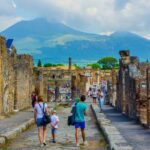
The Roman Forum segment is where the tour earns its keep. The guide doesn’t just point out ruins. You get the social meaning of the spaces: how civic life worked, what mattered in public, and how daily decisions were tied to power and status.
One of the most interesting angles is the attention to roles—especially the contrast between men and women in Roman society. You’ll hear how social standing and public expectations shaped choices, including the legal and personal side of relationships. If you’ve ever looked at ancient sites and felt nothing but “big stones,” this is where you start reading the stones like a living system.
It’s also where the military angle comes in. Roman power wasn’t just speeches and ceremonies. It was campaigns and results, and those outcomes rippled through families, politics, and contracts. The Forum becomes less like a history lecture and more like an explanation of how a society ran.
Practical takeaway: this is the best stop to use your best attention span. Even if the Colosseum steals the photos, the Forum helps you understand what Romans were defending, building, and competing over.
Palatine Hill: views first, then the origin story
After the Forum, you move up toward Palatine Hill—a place known for towering pine trees, striking ruins, and some of the most memorable viewpoints in the area. The Palatine is often described as the birthplace vibe of Rome, and the guide uses that idea to help you connect “where Rome started” with what you’re seeing in front of you.
This stop is shorter, around 35 minutes, which is perfect. Palatine Hill can tempt you to linger because the views are gorgeous and the atmosphere feels old-world in a way photos can’t fully copy. But the tour keeps you moving so you’re not late for your main Colosseum time.
What you get here is a shift in perspective. The Forum helped you understand public life. Palatine Hill gives you context through height and vantage—literally showing how Romans could look down on the city they controlled. That makes the Colosseum feel less like a random amphitheater and more like part of a larger system of power, spectacle, and urban planning.
Inside the Colosseum: quizzes, crowd rhythm, and gladiator energy
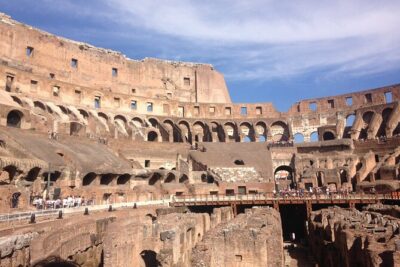
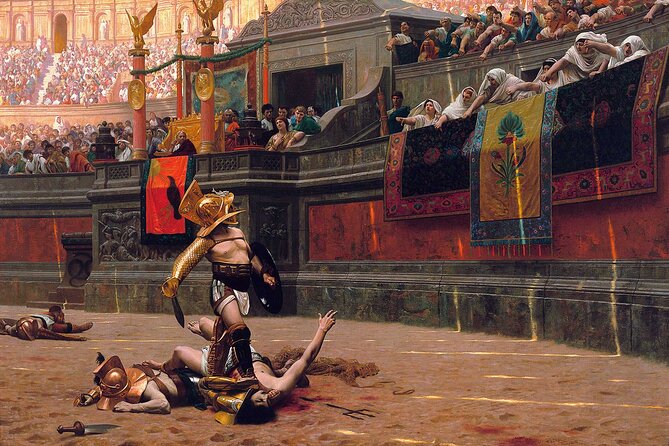
The Colosseum portion is about 45 minutes, and it’s handled with structure. Instead of turning the arena into a silent walk-through, you get a quiz/prizes game element that helps you keep track of what you’re seeing. There’s also a gladiator-themed segment—so the stop feels like you’re participating in the story, not just listening from the outside.
That “game” approach matters in the Colosseum because it’s easy to get overwhelmed. You’re surrounded by scale, and your brain can go into photo mode. The guide’s job here is to reset your attention: look at the right sections, connect the architecture to Roman spectacle, and keep the flow moving.
One more benefit is that your group size stays small. In a huge crowd, the Colosseum can feel like you’re always being pushed along. With a max of 10 people, the guide can steer the pacing, keep everyone together, and still give you enough time to actually read what’s in front of you.
Bring a realistic expectation: you’ll be in the most iconic space in the complex, but you won’t have all day. If you come thinking this is a slow, museum-style visit, you’ll be happier if you treat it like a guided “show-and-explain” with enough time to make it memorable.





Price and value: what you really pay for
The tour price is listed at $138.47 per person for about three hours, and it’s often booked around two months in advance. That booking pace is a sign it’s popular, so don’t wait until the last week if you can help it.
Here’s the key value math: the €18 per person entrance fee is listed as not included. So your total is likely the tour price plus that local entry cost. It’s still a decent deal when you compare what you’re getting: a licensed English-speaking guide, a plan that connects Forum → Palatine → Colosseum, and a pacing strategy that keeps you from wandering in circles.
If you’re the type who likes to ask questions, this is where your money shows up. The small group format means you can get answers that fit your interest instead of hearing a generic script aimed at everyone. And the quiz/prizes format isn’t just cute—it helps you retain what the guide is explaining.
Who this tour suits best (and who might want a different plan)
This is a strong match for first-timers who want the Colosseum complex to feel understandable. It’s also a good choice for families, because the guide is set up to handle different needs. Lia has been described as patient with children, including answering questions from a young kid and keeping the group comfortable even when terrain isn’t stroller-friendly.
You’ll also appreciate this tour if you want English explanations with energy. Lia’s style is not dry. She’s described as fun, upbeat, and focused on keeping the group moving while still being attentive.
The main “not for everyone” factor is effort level. If you know you can’t handle stairs and uneven ground, you may find the route tough. The tour is said to be possible for most travelers, but that doesn’t mean it’s effortless. Wear solid shoes and bring water, especially in hot months.
What I’d do to make your day smoother
Here’s how to get the most out of your three hours:
- Start with comfortable walking shoes. The Forum and Palatine terrain can be uneven.
- Plan to arrive a few minutes early at Piazza del Campidoglio so you don’t miss the start time.
- Keep your passport or ID ready and matched to your booking names.
- If you’re visiting on a first-Sunday type date, expect big crowds and more heat than usual. The guide can manage it, but your body still has to deal with it.
One more practical tip: because the meeting point and end point are different (Capitoline area to the Colosseum exit), you’ll likely find it easier to line up your next stop with that flow rather than trying to backtrack.
Should you book this Colosseum tour with a licensed guide?
Book it if you want a guided, story-driven visit that connects the Roman Forum, Palatine Hill, and the Colosseum without wasting your limited time in Rome. The small group cap, English delivery, and Lia’s patient, engaging approach are exactly what you want when you’re trying to turn famous ruins into something you actually understand.
Skip (or consider a different style) if your top priority is maximum freedom to roam slowly at your own pace, or if you need a low-walking experience. The tour is structured and active, not a relaxed open-ended stroll.
If you can handle a few hours of walking and you want your questions answered in real time, this is a solid way to make the Colosseum area feel meaningful fast.
FAQ
Is the tour in English?
Yes, it’s offered in English.
How long is the tour?
It runs for about 3 hours.
What’s the maximum group size?
The group is limited to a maximum of 10 travelers.
Are entrance tickets included in the price?
Entrance tickets are listed as €18 per person and are not included in the tour price.
Where do we meet and where does the tour end?
You meet at the Equestrian Statue of Marcus Aurelius, Piazza del Campidoglio, 1, 00186 Rome. The tour ends at P.za del Colosseo, 3, 00184 Rome (Colosseum exit point).
What documents do I need for entry?
You must present a valid passport or ID document that matches the name provided at booking.
Is the tour suitable for most people?
The tour notes that most travelers can participate.
What if weather is poor?
The experience requires good weather. If it’s canceled due to poor weather, you’ll be offered a different date or a full refund.