REVIEW · ROME
Colosseum Arena Floor Guided Group Tour with Roman Forum and Palatine Hill
Book on Viator →Operated by Rome Walkers · Bookable on Viator
Your best seat is on the arena floor. This Colosseum tour is built for first-timers who feel overwhelmed by central Rome, and it adds something most people skip: arena floor access plus a guided walkthrough across the Roman Forum and Palatine Hill. I love that you enter through a dedicated group route and go straight to the floor, where you can really picture the games in the place they happened. The one drawback to plan for is the real-world stuff: you still have to pass metal detector security, and it can add wait time, so arriving early matters.
What really sells the experience for me is the human factor. With an official guide and headsets, you get clear narration even in a crowded archaeological zone, and the pacing stays friendly instead of sprint-and-hope. It also helps that groups are capped at 25 travelers, which means you spend more time listening and less time trying to squeeze past shoulders.
In This Review
- Quick hits before you go
- A 2.5-hour “Rome center” game plan that actually works
- Entering the Colosseum and stepping onto the Arena Floor
- Why the Forum stop feels like the city’s “real engine”
- Palatine Hill: the origin story plus imperial comfort
- Price and logistics: what $55 is really buying you
- What makes the guide matter on these specific stops
- How to make the most of your 3-stop route
- Who this tour is best for
- Should you book this Colosseum-Arena-Forum-Palatine tour?
- FAQ
- What’s included in the $55 price?
- How long is the tour?
- Where do I meet the guide?
- What time does the tour start?
- Do I need to bring ID for entry?
- Do I get access to the Colosseum arena floor?
- What security rules should I expect at the Colosseum?
Quick hits before you go
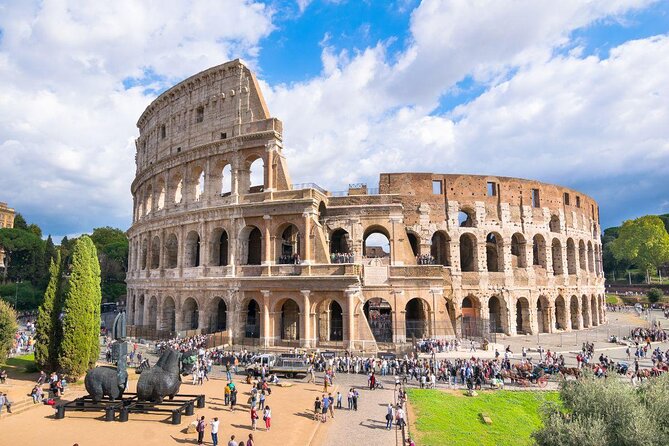
- Arena floor access: stand where gladiators once fought and get a 360° view while your guide explains what you’re seeing
- Three-site flow: Colosseum, Roman Forum, Palatine Hill in about 2.5 hours, without bouncing all over town
- Headsets included: you can hear the guide clearly in dense crowds
- Official guide + small group size (up to 25): better questions, better control of the pace
- Real context as you walk: temples, courts, markets, and imperial residences connected in one story
- Guides with personality: from funny and entertaining narrators to guides who answer questions on the spot
A 2.5-hour “Rome center” game plan that actually works
Central Rome can feel like information overload fast. You look up, you look left, you look right, and suddenly you’re not sure what you’re looking at—or why it mattered.
This tour is designed to fix that. In roughly 2 hours 30 minutes, you cover three of the most important ancient areas in one tight circuit. You’re not just ticking off landmarks. You’re getting guided connections: what the Colosseum was built to do, how public life ran in the Forum, and why emperors treated Palatine Hill like their power base.
And because you have an official guide and scheduled entry with a reservation fee included, you spend less time guessing and more time learning. The tone is practical too: the narration is meant to help you keep your bearings while you’re walking among serious crowds.
You can also read our reviews of more guided tours in Rome



Entering the Colosseum and stepping onto the Arena Floor
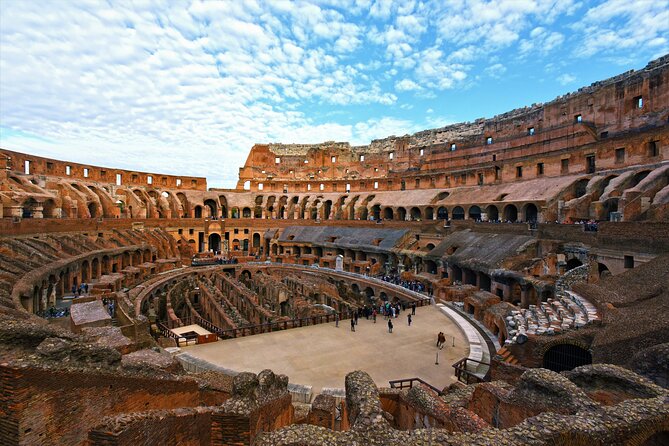
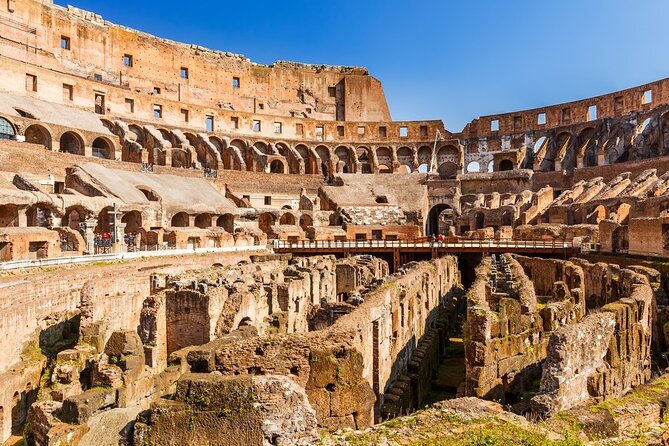
The Colosseum is famous for a reason, but the first time you’re actually inside, it can also feel like a big stone shell. That’s why the arena floor access is the centerpiece here.
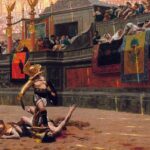
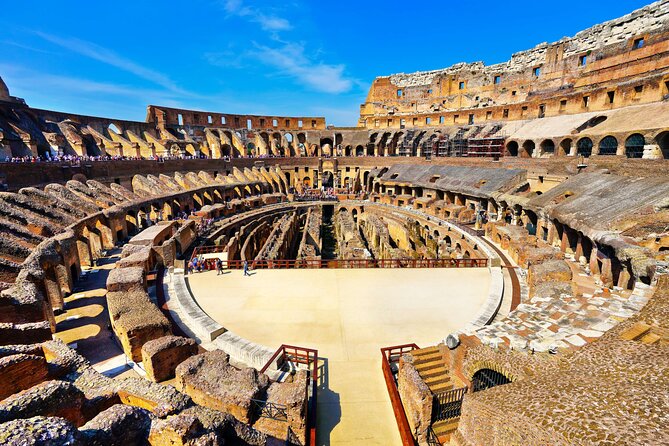
You enter through a dedicated group entrance and move directly toward the action area. Then, instead of just looking at the building from the outside, you stand on the floor itself—where the games played out, where the crowd’s roar would’ve echoed, and where you can finally connect the diagrams in guidebooks to real dimensions.
One of the best parts is that you get a 360° view from the arena. That viewpoint does something simple and powerful: it forces your brain to map the structure. Your guide points out what you’d otherwise miss—how the space shaped the spectacle, and how the design supported the kind of events that drew Rome’s attention.
If you’ve got kids or teens, this stop is usually where the energy clicks. In past tour experiences, guides like Tiziana have brought the sites to life with humor and storytelling, and the group stays engaged rather than turning into a long lecture.
Quick consideration: this is archaeology with crowds. Even with the best route, you should expect some shuffling—especially around security. Wear shoes you can stand in. Bring a light layer; you’ll be outside before you’re fully settled.
Why the Forum stop feels like the city’s “real engine”
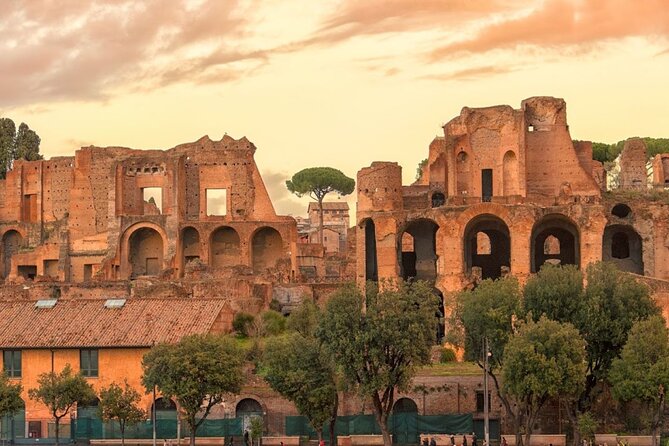
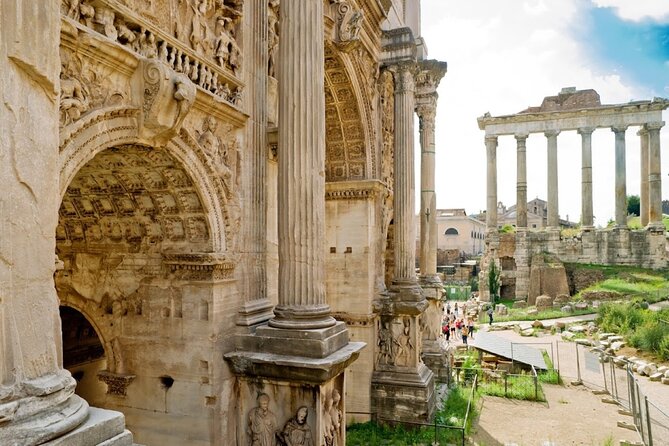
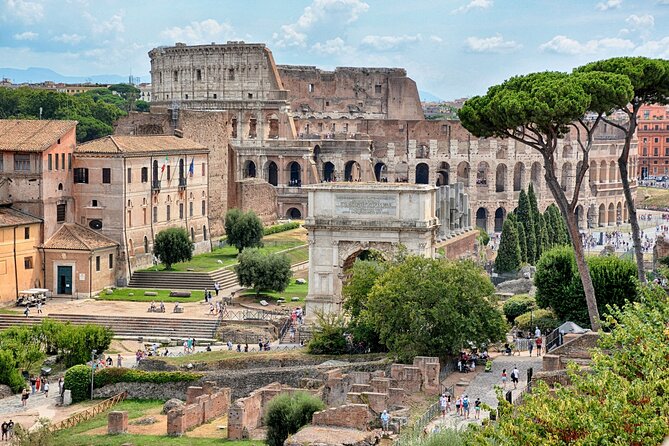
Once you leave the Colosseum, you don’t go to a random ruin. You head to the Roman Forum, often described as the public-life core of Ancient Rome, and the tour treats it that way.
This portion is about systems, not just scenery. You’ll walk through an area tied to daily civic power: markets, courts, and temples. It’s the kind of stop where you start to feel the difference between an entertainment venue (Colosseum) and a governance hub (Forum).
The guided format really helps here. The Forum can be confusing on your own because everything is so close together and so similar at a glance. With a guide, you get a storyline: who used these spaces, what public events looked like, and how religious sites blended into law and politics.
You’ll typically have about 45 minutes for this stop, which is enough time to see the main highlights without turning it into a marathon. And because you’re already in the historic zone, you’re not wasting energy on transit.
Small planning tip: this is also where you’ll likely feel the tightest walking. Rome’s ancient paths don’t always behave like modern sidewalks. If you’re prone to rushing when crowds get dense, this is where the group structure helps keep momentum.
Palatine Hill: the origin story plus imperial comfort
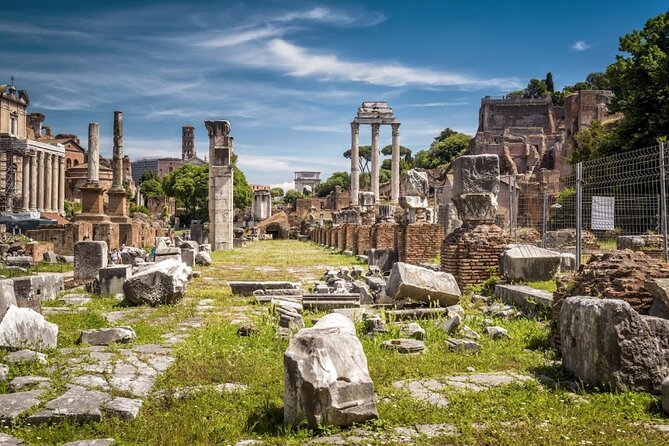
After the Forum, you move to Palatine Hill, often called the place where it all began. Your guide will share the legend behind Rome’s foundation and connect that mythology to the physical remains you’re standing on.
Then the tour shifts from origin story to power story. Palatine Hill is where emperors built residences, and the ruins you see today are the leftovers of that long, upscale reign. This stop is satisfying because it changes the tone. You go from public buildings and civic spaces to elite living and political control.
The pace is again about 45 minutes, which works well. Palatine can be temptingly easy to linger in because the views and ruins make you pause. But if you linger too long, you lose the structured “flow” that makes this tour efficient. With a guide, you get the key points without getting stuck in decision fatigue.
In some guided experiences, narrators like Alessandra have been praised for making the sites feel alive and memorable, not just informative. That matters on Palatine Hill, where the stones can look quiet at first glance. Good guiding turns quiet ruins into a sense of place.
Price and logistics: what $55 is really buying you
At about $55 for roughly 2 hours 30 minutes, this tour can feel like a bargain—especially because the ticketing isn’t just bundled, it’s baked into the experience.
Here’s how the value stacks up based on what’s included:
- Official tour guide
- Headsets (so you hear the narration)
- Colosseum entrance ticket with arena access
- A Colosseum reservation fee
The tour information also lists the Colosseum ticket with arena access as valued at €24 per person, plus a €2 reservation fee. That’s the big-ticket part, and it’s the reason this tour can feel good value compared with booking tickets separately and then trying to line up a guide.
Does that mean you get zero lines? Not exactly. You still have to pass security screening. The savings here is more about access and coordination than about magically skipping every step of the process.
Logistics you should know:
- Start time is 11:00 am
- You should arrive at the meeting point 20 minutes early
- The itinerary order can change (you might visit the Forum before the Colosseum)
- Group size is capped at 25 travelers
And yes, you’ll need to match names to documents. The tour requires full names at booking, and you must present a valid passport or ID matching the booking name. If the paperwork doesn’t match, entry can be denied.





What makes the guide matter on these specific stops
On a tour like this, the guide isn’t a bonus. They’re the difference between seeing ruins and understanding them.
From actual guide experiences described in feedback, the strongest themes are:
- Clear audio: headsets make it possible to hear well even in busy areas
- Personality: guides can be funny and entertaining, not just factual
- Question-ready teaching: guides answer follow-ups and keep the energy moving
- Visual teaching tools: some guides bring simple reference materials, helping you picture what you’re looking at compared with earlier forms
If you end up with a guide like Raul, for example, you’ll likely get that mix of crisp explanations and engaging delivery. People have also noted guides who brought visual aids to show how places looked in earlier times—useful in the Colosseum, where your brain wants to reconstruct the missing pieces.
So when you’re choosing among Rome tours, don’t just look at the itinerary. Look at who you might get as a guide and whether they focus on clarity.
How to make the most of your 3-stop route
A few practical habits make this tour smoother:
- Start with comfortable shoes. You’ll stand and walk more than you expect in an ancient complex.
- Go light on bags. Security rules prohibit items like luggage or large bags, and there’s a list of restricted items (glass objects, alcohol/drugs, sunscreen, weapons/sharp objects, spray, selfie sticks).
- Expect slight timing changes. The departure time can shift a bit, and you’ll be called in advance if that happens.
- Have your IDs ready. Matching names and documents is part of how entry happens.
Also: the Colosseum area can have partial or total closures due to extraordinary events. If that occurs, you’ll be contacted as soon as possible. It’s rare, but it’s part of why you shouldn’t book this as a last-minute “maybe.”
Who this tour is best for
This is a strong fit for:
- First-time visitors who want the biggest “Rome hits” without planning a route all day
- Families who need a guided structure to keep kids engaged
- People who care about context, not just photos
- Anyone who wants the arena floor experience without trying to solve ticket timing and timing chaos alone
It’s also a good choice if you don’t want to spend your whole vacation reading plaques. You’ll get the narrative while you walk.
If you’re the type who loves long self-guided wandering and doesn’t want a schedule, you might feel slightly constrained by a tour’s timing. But for most people, that controlled pace is the point.
Should you book this Colosseum-Arena-Forum-Palatine tour?
I’d book it if you want the fastest path to understanding the center of Ancient Rome—especially because the highlight isn’t just the Colosseum sign. It’s the chance to stand on the arena floor, hear the story with headsets, and then move on while the lesson is still in your head.
Book it even more confidently if you care about guide quality and clear explanations. Past experiences with guides like Tiziana, Raul, and Alessandra point to the same thing: personality plus solid knowledge, with the kind of guiding that makes ruins feel like real places.
I’d think twice only if you’re very sensitive to security lines or you hate group pacing. If that’s you, plan extra buffer time and keep your expectations realistic: you’re entering a major historic site with strict screening.
If you’re aiming to see the best of central Rome in one tight, guided package, this one earns its place on your list.
FAQ
What’s included in the $55 price?
The tour includes an official tour guide, headsets, a Colosseum entrance ticket with arena access, and the Colosseum reservation fee. The remaining cost covers other services related to the experience.
How long is the tour?
The duration is about 2 hours 30 minutes.
Where do I meet the guide?
The meeting point is L.go Gaetana Agnesi, 5, 00184 Roma RM, Italy.
What time does the tour start?
The start time is 11:00 am.
Do I need to bring ID for entry?
Yes. Each traveler must present a valid passport or ID document that matches the name provided at booking for successful entry to the Colosseum and Roman Forum.
Do I get access to the Colosseum arena floor?
Yes. The Colosseum ticket included in this tour has arena access, and you go directly onto the Arena Floor during the Colosseum stop.
What security rules should I expect at the Colosseum?
You must pass a metal detector security check. There may be some wait time. The tour information lists prohibited items such as luggage or large bags, glass objects, alcohol and drugs, sunscreen, weapons or sharp objects, spray, and selfie sticks.