REVIEW · VATICAN CITY
Vatican and Sistine Chapel Afternoon tour
Book on Viator →Operated by Real Barcelona Tours · Bookable on Viator
An afternoon tour here feels like controlled chaos, but this one helps you get the best of it with skip-the-line entry and a guided walkthrough of the Vatican Museums and Sistine Chapel. You’ll move through the must-see rooms without treating every hall like a homework assignment, and you get a clear narrative for what you’re looking at.
Two things I especially like: the small group (max 10) keeps you from disappearing into a sea of shoulders, and the headsets help you track the guide’s commentary even when the crowds swell. Names mentioned in past groups include Simone, Renata, Marcius, Azzura Mancini, Azzurri, Iffi, and Alessandra.
One possible drawback to plan around: in some busy moments, crowd noise can make the headset audio harder to catch, so you may need to lean in and stay attentive.
In This Review
- Key things you should know before you go
- Why this Vatican afternoon tour works
- Getting set up: meeting point, start time, and first hurdles
- Priority entry: what it saves you (and what it can’t)
- Vatican Museums loop: what you will see and why it matters
- Belvedere to the Galleries: how the art connects as you walk
- Sistine Chapel timing: frescos, rules, and crowd reality
- St. Peter’s Basilica stop and the Michelangelo Pietà
- Guides, headsets, and group management: what made it better
- Price and value: is $103 a fair deal?
- Practical tips: what to wear, bring, and avoid
- Who should book this tour, and who might skip it
- Final verdict: should you book this Vatican and Sistine Chapel afternoon tour?
- FAQ
- How long is the Vatican and Sistine Chapel afternoon tour?
- Is skip-the-line entry included?
- What is the meeting point and start time?
- How large is the group?
- What should I wear for the Vatican?
- Are headsets provided?
Key things you should know before you go
- Priority entry matters here: you trade long entrance lines for more time inside the galleries
- Max 10 people: the group size is small enough for the guide to manage the flow
- Headsets are included: you follow the story without craning your neck nonstop
- You see big-ticket works in one loop: Apollo and Laocoon, Maps, Tapestries, then Sistine Chapel
- Dress rules are real: no shorts above the knees, no sleeveless tops, and no big backpacks
Why this Vatican afternoon tour works
The Vatican is not just famous. It is famous and efficient about crowd control. If you show up unguided, you can spend a good chunk of your afternoon simply figuring out where to stand and where to go next.
This tour’s main value is how it respects your time. You get skip-the-line tickets for priority entry to the museums, which helps you get past the worst of the waiting. And because it’s a guided format, you’re not wandering room-to-room wondering what matters most.
Also, I like the format because it fits the way the Vatican actually feels. The Museums are a maze of galleries and courtyards with masterpieces hiding in plain sight. A good guide helps you make sense of the connections, like why certain rooms are arranged the way they are, and what the most famous sculptures and frescoes meant to the people who commissioned them.
The tone matters too. In past experiences connected to this tour, guides like Simone were praised for storytelling, and Renata was noted for making the time feel like it flew by. That’s the difference between seeing art and understanding what you’re seeing for a couple of hours.
You can also read our reviews of more tours and experiences in Vatican City.

Getting set up: meeting point, start time, and first hurdles
You’ll start at Via Vespasiano, 28, 00192 Roma RM, with a 2:45 pm start time. The meeting point is near public transportation, which is handy because Rome days can run on footpower and last-minute timing.
Plan to arrive early, even though the tour includes priority entry. Why? Because Vatican entry involves mandatory security checks, and those checks can’t be skipped by any ticket type. In other words, you may still feel some waiting, just not the crushing entrance line.
Attire is not a suggestion. The Vatican museums require proper coverage: no shorts above the knees and no sleeveless t-shirts. You’ll also want to leave the big backpack at home. The tour info also flags restrictions like no big umbrellas and no pointed objects, so keep your bag minimal.
Comfort matters for a different reason than you might think. This is still a walking experience. Even when the route is planned, you’ll be on your feet in busy spaces, so bring comfortable shoes and consider a refillable water bottle so you can stay steady during the long afternoon run.
Priority entry: what it saves you (and what it can’t)
I love skip-the-line tickets in places like this because waiting absorbs your energy. The Vatican Museums can eat your morning, your patience, and your motivation if you arrive after a peak rush.
But here’s the honest trade-off: priority entry doesn’t remove every delay. Security checks still exist, and the Vatican is one of the most visited attractions on earth. Even with a timed slot, the flow of people can create bottlenecks.
There’s another small caution worth noting from real-world experiences: on rare occasions, a group can experience confusion when the meeting moment slips. One account described a major wait to find their English-speaking guide and leaving to tour on their own. That’s not typical, but it’s the kind of risk you should keep in mind when your day has other plans.
What you can do to protect yourself is simple: arrive early, keep your phone ready for messages, and be flexible with time buffers. If you’re also seeing other Vatican sites later in the week, avoid scheduling them back-to-back with a packed timeline.
Vatican Museums loop: what you will see and why it matters
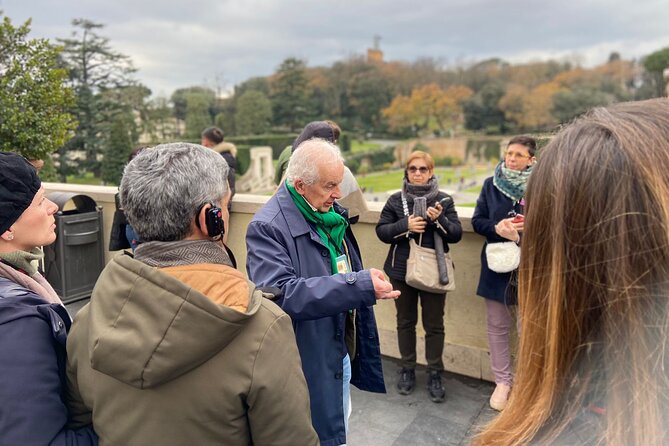
Your Vatican Museums portion runs about 2.5 hours and is designed like a highlights circuit. The tour focuses on recognizable masterpieces while also guiding you through the logic of the collection.
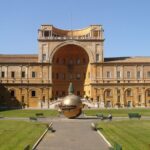
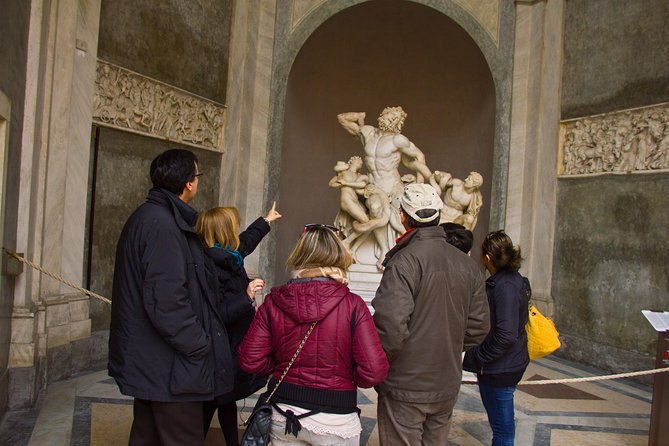
One early stop is the Belvedere Courtyard, home to major sculptures including the Apollo and the Laocoon. This courtyard is where you get hit with scale fast. The guide helps you look beyond the obvious and notice how Renaissance and classical ideas blend together.
Then you move toward the Room of the Muses, including the Torso of the Belvedere. The Torso is famous partly because it is incomplete. Standing in front of it, I think it’s easier to understand why artists obsessed over fragments: the pose, the anatomy, and the feeling of movement still read clearly.
Next up is the Round Room with Nero’s Bathtub. It sounds like a quirky detour, but this kind of room helps you see the range of what the Vatican collected and displayed. Even if your first instinct is to chase frescoes and paintings, architecture and sculpture set the stage for how the Vatican became a museum-shaped world.
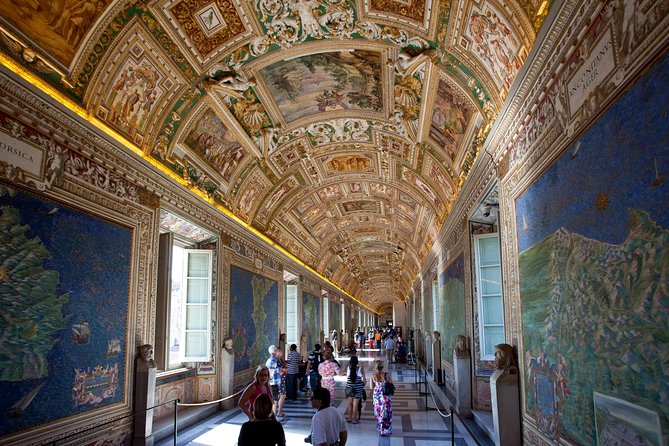
From there, you’ll continue through the Gallery of the Candelabra, the Gallery of the Maps, and the Gallery of the Tapestries. These spaces are not just pretty backgrounds. They show how the Vatican used art and decoration to communicate ideas about power, geography, and craftsmanship.
And yes, you’ll end in the Sistine Chapel area, where the tone shifts from museum gallery excitement to a stricter, focused reverence.
Belvedere to the Galleries: how the art connects as you walk
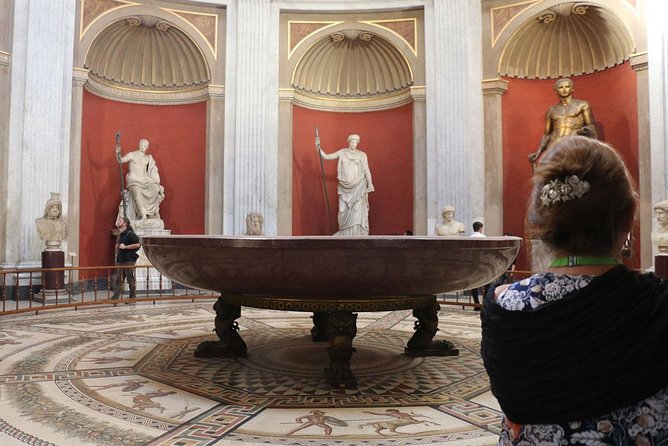
The Vatican Museums can feel like a greatest-hits album if you have context. Without it, it’s more like listening to a playlist while reading a map at the same time.
This tour tries to connect the dots. You start with dramatic sculpture in courtyards, then move into rooms where visitors traditionally slow down. The Torso stop works well here because it encourages you to notice details like proportion and the sense of motion, not just the overall fame.
As you reach the galleries, you’ll start seeing different types of storytelling. The Gallery of the Maps is especially useful if you like seeing how people understood the world before modern borders. The maps show geographic imagination at work, and they also reveal how art can serve as visual instruction.
The Gallery of the Tapestries gives you another kind of education: craft as storytelling. If you’ve never stood in front of a tapestry-like display, it’s easy to assume textiles are just decorative. But from this kind of room, you start to grasp their role as prestige objects and educational tools.
This is where small-group touring helps most. With a group capped at 10, you can actually pause where it counts. You’re not stuck sprinting ahead to keep up with a wave of strangers.
Sistine Chapel timing: frescos, rules, and crowd reality
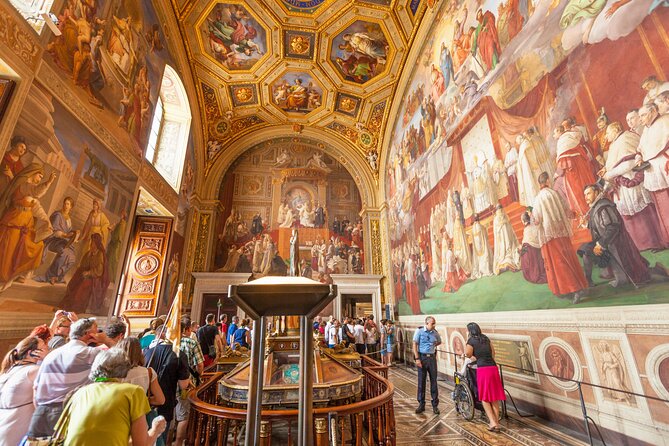
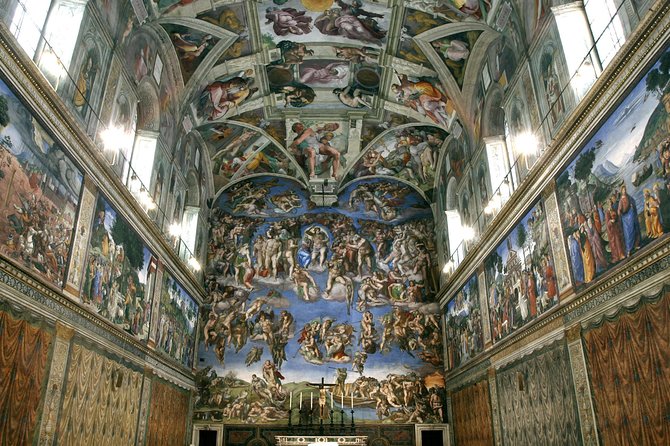
The Sistine Chapel is the moment most people come for. It’s also the moment where everyone’s expectations collide with reality, because the space is crowded and the rules are strict.
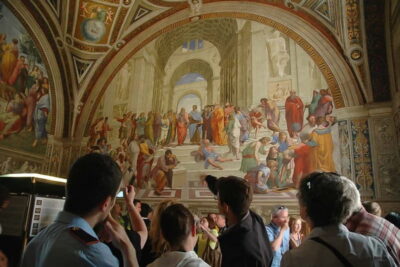
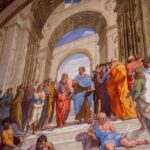
Your tour includes the Sistine Chapel with Michelangelo’s frescoes. The guide’s job is crucial here: you need help knowing what you’re looking at, and which details are worth your attention in a space where you can only see and photograph with limits (and where you’ll feel pressure to rush).
The headset feature is great in theory, but here’s the practical twist. Some people found that crowd noise made it harder to hear through the earphones, so it helps to stay positioned where you can see and listen at the same time. If you’re sensitive to noise, this is the segment where you’ll want to be mentally ready for it.
Also, keep your focus tight. The Chapel rewards slower looking, but your tour schedule is designed for a moving audience. I’d treat it like this: don’t try to see everything perfectly. Instead, pick a few key fresco elements the guide points out and let those be your anchor.
That approach makes the Chapel feel less like a checklist and more like a scene you can stand inside for a moment.
St. Peter’s Basilica stop and the Michelangelo Pietà
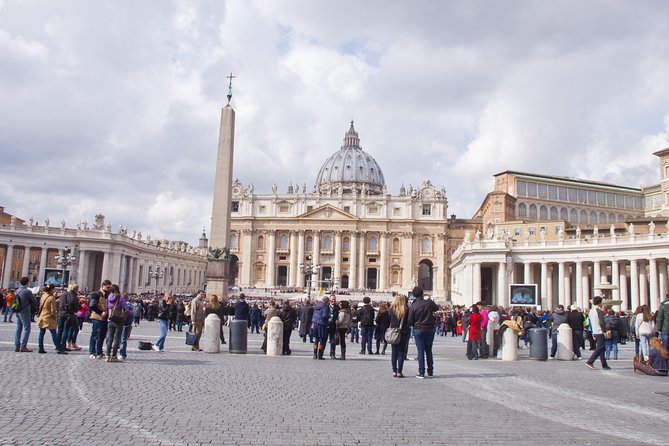
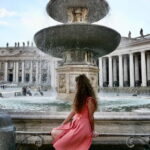
The tour description also includes a stop at St. Peter’s Basilica to see Michelangelo’s Pietà. Even if you’ve seen pictures, this is one of those works that changes when you face it in person.
This stop also balances the afternoon. After the intensity of the Sistine Chapel, St. Peter’s can feel like a different kind of experience: more architectural, more expansive, and in a way more grounded in everyday scale.
The guide’s commentary matters here too, because the Pietà is not just a sculpture. It connects to religious themes, patronage, and the way Michelangelo handled emotion through form. When someone explains what to notice, you stop looking for the obvious and start sensing the intention.
And again, the small group size helps. In a large crowd, you can end up behind shoulders and lose the work to human architecture. In a max-10 setting, you’re more likely to get a view that works for more than a quick glance.
Guides, headsets, and group management: what made it better
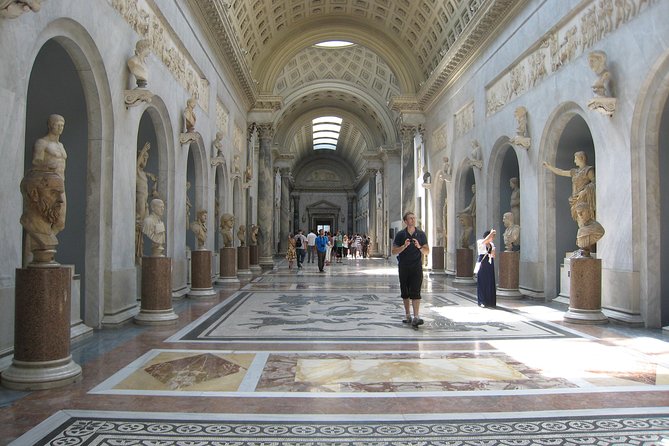
The biggest praise across guides is not about facts. It’s about delivery.
Simone received praise for storytelling and for making sure people could hear and see sights even in extremely crowded conditions. Renata was described as amazing and made the experience feel fast, with a 3-hour plan stretching into extra time felt naturally. Marcius was singled out as especially strong for Vatican history, with the added detail that the group felt like they saw almost everything the Vatican had to offer in the time given.
On the other hand, I also saw a downside theme: one guide was reported as hard to understand, with too much information delivered too rapidly. That can happen when a group is moving quickly or when the pace isn’t tuned for the room. So if you’re sensitive to fast talking or accent differences, just keep that in mind.
Another repeated note: earphones can struggle with background noise in the Chapel and other packed areas. That doesn’t mean the system fails. It means you should adjust your expectations and your position, and listen actively instead of assuming perfect audio.
Overall, I think the tour’s headset and small-group structure are the real performance levers. They can’t change how crowded the Vatican is, but they can help you process it without losing the plot.
Price and value: is $103 a fair deal?
$103 for an afternoon tour that runs about 2.5 hours with skip-the-line tickets, a licensed guide, and included headsets can be a solid value if you care about more than just checking boxes.
Here’s why. The Vatican Museums are huge. If you do it solo, you spend time managing entry, route planning, and figuring out what’s worth your limited energy. A guided loop compresses all of that. You’re paying for time-saving and interpretation.
The included ticket and priority entry are especially meaningful. In this setting, saving even an hour can turn a frantic afternoon into a calmer one, and it gives you more breathing room for stops like the Gallery of the Maps and Gallery of the Tapestries.
But I’d be honest about risk. One account mentioned the tour day aligning with a Vatican closure for a holiday, and the experience fell short. That kind of scenario is rare, but it’s a reason to avoid booking only one museum day if your schedule is fragile.
Also, this isn’t a luxury transport-and-refreshment experience. Meals, transportation, and tips are not included. If you’re budgeting, plan for your own snack and water management.
If you want maximum value, go with the mindset that you’ll use the guide to decide what to focus on. If you treat it like a sightseeing slideshow, the price can feel heavier than it needs to.
Practical tips: what to wear, bring, and avoid
The outfit rules are the easiest thing to mess up, so I’ll highlight the practical version. Wear clothes that keep you covered. No shorts above the knees and no sleeveless tops. If you’re traveling with a light jacket, bring it, because the Vatican’s rules can be stricter than you expect.
Bring comfortable shoes. You’ll stand and walk through a lot of floor space, and the Vatican’s crowd density can slow you down in ways that make normal walking shoes feel suddenly inadequate.
Bring a refillable water bottle. It’s not listed as included, and a long afternoon can get tiring fast.
Keep bags small. No big backpacks are allowed, and large items like big umbrellas also don’t work well in crowds and security lines. If you have a day bag, think compact and keep valuables easy to access.
And keep your schedule flexible. Even with priority entry, security is mandatory and crowds can shift.
A final small trick: keep your expectations tuned to the experience. The goal isn’t to memorize every fresco. The goal is to leave understanding what you saw and why it mattered, without spending your entire afternoon in logistical limbo.
Who should book this tour, and who might skip it
This tour is a great match if you:
- want to cover the big Vatican highlights in a tight afternoon window
- enjoy art and want context as you walk
- like small-group pacing with headsets
- prefer a guide to handle the flow through museums
You might want to reconsider if you:
- dislike crowds or struggle with noise, since headset clarity can be challenged in packed areas
- are extremely sensitive to pace and speech speed, because one experience reported rapid information delivery
- have a very strict schedule with no backup plan, since delays or closures can happen and can affect timing
If your main goal is purely self-guided wandering, you might feel you could do it on your own. But if you want interpretation and efficient routing, this format is the type that tends to pay off.
Final verdict: should you book this Vatican and Sistine Chapel afternoon tour?
My take: this is a good deal if you want structure and you’re okay with crowd conditions. The skip-the-line priority plus a small group and included headsets are the three ingredients that turn the Vatican from overwhelming to manageable.
I’d book it if you care about getting more out of Michelangelo’s frescoes and the Vatican Museums beyond the surface level. The route covers the works most people come for, from Apollo and Laocoon to the Gallery of Maps, then into the Sistine Chapel and St. Peter’s Basilica for the Pietà.
I’d think twice if you need flawless timing no matter what. One reported experience included a significant wait for a guide, and another mentioned a closure due to a holiday. If your plan is tight, build in buffers and keep the rest of your day flexible.
If you do book, wear the right clothes, bring comfortable shoes and water, and show up early. Do those basics, and you’ll give yourself the best shot at a confident, meaningful Vatican afternoon.
FAQ
How long is the Vatican and Sistine Chapel afternoon tour?
It runs about 2 hours 30 minutes.
Is skip-the-line entry included?
Yes. Skip-the-line priority entry tickets are included, along with museum admission ticket coverage.
What is the meeting point and start time?
The meeting point is Via Vespasiano, 28, 00192 Roma RM, Italy, and the start time is 2:45 pm.
How large is the group?
The tour maximum is 10 travelers.
What should I wear for the Vatican?
You should wear proper attire: no shorts above the knees and no sleeveless t-shirts. The tour also advises against big backpacks and big umbrellas.
Are headsets provided?
Yes. Headsets are included so you can follow the licensed guide’s commentary.