REVIEW · VATICAN CITY
Private Tours: A Journey through the Ancient Rome
Book on Viator →Operated by Cab Rome · Bookable on Viator
A half-day Rome drive beats rushing on foot. This private route stitches Vatican City and classic Roman streets together, hitting big-name stops like Piazza Navona, St Peter’s Square, the Pantheon, Trevi, the Spanish Steps, and more, with a professional driver behind the wheel.
I love how much you pack into a 4-hour window without dealing with buses, parking, or shoe-leather fatigue. I also like the built-in freedom: you get time at the sights to see things at your own pace, since the tour time is more about getting you there than rushing you through.
One thing to consider: it’s not a full guided, ticketed experience. A tour guide isn’t included, and the price doesn’t include attraction tickets—so you’ll want to plan how you’ll handle explanations and any paid entries (especially the big-ticket sites).
In This Review
- Key Highlights You’ll Feel Immediately
- Private Driving Through Vatican City and Ancient Rome
- Price and What You Actually Get for $145.18
- Morning Logistics From Civitavecchia (and Pickup)
- Piazza Navona: Baroque Rome in a Perfect Walking Pause
- Trevi Fountain: The Aqueduct Story Behind the Photo
- St Peter’s Square: Scale, Art, and a Big Breath of Vatican Calm
- Piazza del Popolo: A Roman Gate With a Modern City Beat
- Pantheon: Why a Simple Walk-In Feels Like a Time Machine
- Spanish Steps: Baroque Water, Keats, and a Surprisingly Cozy Corner
- Colosseum: Included in the Promise, Plan for How You’ll See It
- Foro Romano: Where Ancient Rome Happened, Not Just Where It Sat
- Ticket and Timing Reality Check (So You Don’t Get Frustrated)
- Driver Quality: The One Variable You Can’t Ignore
- Who This Tour Suits Best
- Should You Book This Private Driving Tour?
- FAQ
- FAQ
- How long is the tour?
- Where does the tour start?
- What time does the tour start?
- What is the price per person?
- What’s included in the tour price?
- Are attraction tickets included?
- Is a tour guide included?
- Do I need a paper ticket?
- Is this tour private or shared?
- What’s the cancellation policy?
Key Highlights You’ll Feel Immediately
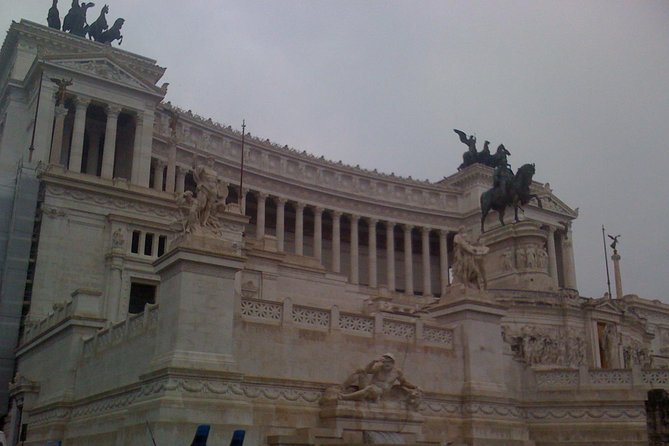
- Private, air-conditioned transport that makes Rome traffic less painful
- Half-day timing that works well if you want major sights without a full-day commitment
- Multiple iconic stops across Vatican City and central Rome, with short on-foot breaks
- Free-admission time blocks at several key places (as listed), so you’re not paying at every stop
- Your own wandering time at each stop—use it for photos, quick museum moments, or just people-watching
- Driver experience can make or break the trip, since there’s no tour guide included
Private Driving Through Vatican City and Ancient Rome
This is the kind of Rome day that feels practical right from the start. You’re not trying to win a sprint across half the city. Instead, you’re riding in an air-conditioned vehicle while your driver handles the getting-there part, and you get timed breaks to actually enjoy the sights.
The big win here is mix-and-match Rome in one go. You start in the Vatican world with St Peter’s Square, then slip into the Baroque-and-classics core with places like Piazza Navona and Trevi. You also end up in the layers of ancient Rome with the Roman Forum area, which helps the whole day feel connected rather than random.
Because a tour guide isn’t included, the experience leans more toward convenience than deep narration. That’s not a bad thing. It just means you should be ready to read a little on your phone, bring a short audio guide, or accept that you’re experiencing the places more than their full backstory.
You can also read our reviews of more private tours in Vatican City
Price and What You Actually Get for $145.18
At $145.18 per person for about 4 hours, this tour is trying to solve a real problem: seeing top sights efficiently without the hassle of public transport and without the cost of a high-end, fully guided private program.
Here’s what’s included: private transport in an air-conditioned minivan or coach, fuel surcharge, and hotel pickup and drop-off, plus a mobile ticket. You’re also getting a private setup, meaning only your group participates.
What’s not included is the stuff that can quietly change the final cost: tickets/entrance fees for attractions, and a tour guide. That means your spending depends on what you choose to do with the time breaks. Some of the specific stops are listed with free admission time blocks, but if you decide you want paid entry into a major site, you’ll need to budget for it separately.
In other words: you’re paying mainly for comfort and routing, not for a ticket bundle or guided access.
Morning Logistics From Civitavecchia (and Pickup)
The tour is set to start at 9:00 am at the Port of Civitavecchia. That’s a big deal if you’re arriving by cruise. It’s also paired with hotel pickup and drop-off, so if you’re not in the cruise zone, you may be able to arrange pickup depending on your location.
Transfers are approximate, and Rome traffic is… Rome traffic. Plan for the fact that your arrival times at each stop may shift slightly. This is where a private driver helps. You’re not just hoping the city cooperates—you’ve got one vehicle and one plan.
Also, keep your mobile ticket handy. It’s listed as part of the experience, so don’t treat it like a nice-to-have.
Piazza Navona: Baroque Rome in a Perfect Walking Pause
Your first stop is Piazza Navona, one of Rome’s most instantly satisfying squares. It was reshaped from an earlier market area in the late 15th century, then became a major showcase for Baroque art during the pontificate of Pope Innocent X (1644 to 1655). The square is framed by the dramatic work of Roman architecture, plus churches and palaces that give it that “Rome postcard” feeling—without needing a ticket.
The centerpiece is the Fontana dei Quattro Fiumi (Fountain of the Four Rivers), designed by Gian Lorenzo Bernini in 1651. It’s topped by the Obelisk of Domitian, brought in pieces from the Circus of Maxentius. Even if you only have a short break, you’ll get the visual payoff immediately.
What to do in the allotted time:
- Walk the perimeter and look up at the church façade details.
- Use the fountains as your orientation point for the rest of your day.
- If you want photos, go wide first, then come back for close details.
Potential drawback: the square can be lively, and you only have about 30 minutes here. So don’t plan on deep resting. Think of it as a quick “set the tone” stop.
Trevi Fountain: The Aqueduct Story Behind the Photo
Next up is Fontana di Trevi, your classic Rome must-see. What makes this fountain more interesting than a simple photo spot is its connection to water systems that powered ancient Rome.
The fountain marks a junction of three roads (tre vie), and it’s tied to the “revived” Acqua Vergine (Aqua Virgo). The story says that in 19 BC, technicians found a source of pure water about 13 km away, with help described in legend. The aqueduct’s full route ended up longer—about 22 km—and the water supplied key places like the Baths of Agrippa for centuries.
In practical terms, here’s the deal: your tour time is about 30 minutes, and the fountain is always busy. Use that time strategically:
- Give yourself 5 minutes to find a good viewing position.
- Spend the rest watching how people interact with the space (it’s part theater, part landmark).
- If you’re here for more than the famous shot, look beyond the center and notice how the surrounding façade frames the fountain.
One more note: even though the stop is listed with free admission for your time slot, your overall day still may involve paid attractions later. Keep flexibility.

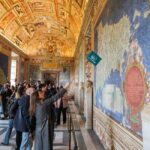
St Peter’s Square: Scale, Art, and a Big Breath of Vatican Calm
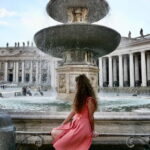
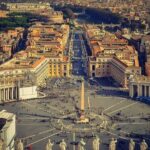
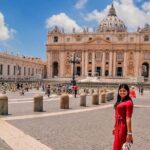
You get the longest stop here: St Peter’s Square, with about 1 hour on-site.
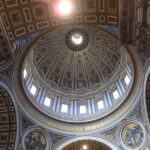
This is Vatican City’s public face—an enormous space tied to the Papacy and to the Basilica of St Peter. The basilica itself is Renaissance in style and described as the largest church in the world. It’s associated with major names: Donato Bramante, Michelangelo, Carlo Maderno, and Gian Lorenzo Bernini.
Even if you’re not going inside the basilica, the square gives you something worth slowing down for: you can feel the geometry and the planning. It’s the kind of place where photos don’t fully explain what you’re seeing, but they still help you understand the scale once you’re there.
How to use your hour well:
- Start by walking the edges of the square so you understand the space.
- If the lines for any paid entry or closer access are relevant to your day, decide quickly and don’t lose time.
- Save a few minutes for simple observation—this stop is about breathing Rome’s spiritual gravity, not sprinting to the next thing.
Your tour lists this stop as free for the time you’re there, but again, paid access may come into play depending on what you choose to do.
Piazza del Popolo: A Roman Gate With a Modern City Beat
Then you head to Piazza del Popolo for about 20 minutes.
The name means People’s Square, but the historical reference is tied to poplars (pioppo in Italian). The piazza sits inside the northern gate of the Aurelian Walls, at what was once the Porta Flaminia—also known as the Porta del Popolo.
This matters because it’s not just a pretty square. It sits where Via Flaminia began, the road to Ariminum (modern Rimini) and a key northbound route in Roman times. Before railroads, this was one of the first major visual arrivals into Rome for travelers.
There’s also a darker note in the piazza’s past: it was used for public executions for centuries, with the last one recorded in 1826. That contrast is part of why this stop can feel more real than some purely decorative squares.
With only 20 minutes, your best plan is to:
- Get quick orientation from the open space.
- Walk to Santa Maria del Popolo if you’re interested in quick architectural viewing.
- Take photos with the city gate context, not just the buildings.
Pantheon: Why a Simple Walk-In Feels Like a Time Machine
The tour includes the Pantheon for about 20 minutes.
This building is a former Roman temple now used as a church, standing on the site of an earlier temple commissioned by Marcus Agrippa during Augustus’ reign. It was completed by Emperor Hadrian, likely dedicated around 126 AD, with the final inscription choice tied to Hadrian keeping the earlier Agrippa inscription after an earlier fire.
Architecturally, the Pantheon is famous for being cylindrical with a large portico of granite Corinthian columns and a rotunda beneath the dome. Even if you only step inside briefly, the interior space tends to reset your sense of what “old” means.
How to make your 20 minutes count:
- Enter, look up immediately, and let your eyes adjust.
- Don’t spend the whole time reading. Instead, pick one detail and really look.
- If you’re planning a longer visit later, treat this as a taste-and-orientation stop.
Because tickets aren’t included in the tour price, confirm what’s actually required for the experience you want at the Pantheon. The tour’s listed time block shows free admission, but paid access rules can vary by area and type of entry.
Spanish Steps: Baroque Water, Keats, and a Surprisingly Cozy Corner
Next is the Spanish Steps area with about 20 minutes.
At the center of the square is the Fontana della Barcaccia, part of the early Baroque period. It’s sculpted by Pietro Bernini and his son, Gian Lorenzo Bernini.
On one side you have the house of English poet John Keats, who lived there until his death in 1821. Today that house is a museum dedicated to Keats and his friend Percy Bysshe Shelley, connected to English Romanticism. On the other side, you’ll find Babington’s tea room, founded in 1893—a detail that makes this stop feel more lived-in than just scenic.
This stop works well in a private driving format because you can do small loops around the steps without worrying about meeting points for a group. Use your time to:
- Get a view from above the steps if you can.
- Look for the small museum signs if you’re curious.
- Grab a quick break, but don’t overstay if the rest of your route depends on timing.
Colosseum: Included in the Promise, Plan for How You’ll See It
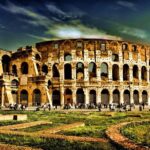
The experience is billed as a journey through ancient Rome, including the Colosseum. What’s not spelled out in the details you have is exactly how long you’ll be near the Colosseum itself versus seeing it from the road.
So here’s my practical advice: treat the Colosseum as a route highlight and plan for either a photo moment or an optional extension. If you care about going inside, budget for tickets and consider adding that decision early so you don’t end up with a rushed timing problem.
This is one of the biggest reasons a private vehicle can still be useful even if you’re adding paid entry later: it helps you position yourself where you want to be, quickly.
Foro Romano: Where Ancient Rome Happened, Not Just Where It Sat
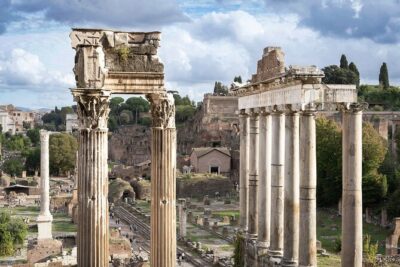
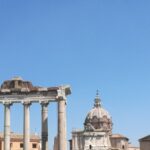
You finish at Foro Romano (Roman Forum) for about 45 minutes.
This is the rectangular forum surrounded by ruins of ancient government buildings, and it was the center of day-to-day civic life. Citizens referred to it as the Forum Magnum, and it’s described as the nucleus of commercial affairs, but also the place for speeches, criminal trials, triumphal processions, and gladiatorial matches. It’s the kind of site where you can feel the past moving even when you’re only standing among stones.
You also get enough time here—45 minutes is a meaningful chunk—so you don’t need to sprint. Use it to connect dots:
- Pause at major viewpoints and read what you can from your phone.
- Look for the idea of the forum as a stage for politics and public life.
- Think of it as a “heart” stop that makes the earlier landmarks feel less random.
Even though the stop is listed as free admission in the tour time blocks, tickets and access rules can still differ depending on what you choose to do. If you want a deeper Forum experience, you’ll likely need to plan tickets separately.
Ticket and Timing Reality Check (So You Don’t Get Frustrated)
Because the tour is not a ticketed guided package, your day can go two ways.
Best case: the free-admission time blocks let you enjoy key landmarks without extra purchases, and you use the short visits for photos and orientation.
Other case: you decide you want more, like interior access or deeper entry at the major headline sites, and then you need to manage tickets on your own.
My strong suggestion is simple: decide what level you want.
- If you want a highlights-and-walk mindset, this format fits.
- If you want ticketed, inside-only experiences, you’ll need advance planning so you don’t lose momentum when paid entry matters.
Also, the tour includes a professional driver, but it doesn’t include a tour guide. If you want narrative context at every stop, bring a lightweight substitute: phone notes, an audio app, or even just a guidebook you can read in short bursts at each location.
Driver Quality: The One Variable You Can’t Ignore
Here’s the honest part. This tour’s success depends a lot on the driver, since you’re not getting a separate guide.
There’s one positive sign in the information you have: some experiences included drivers who were helpful and well informed, going beyond the basics to make the day feel special. That’s what you want—someone who understands your route and keeps the timing smooth.
But there’s also a risk factor you should plan around. Communication can fail in rare cases, and language support may vary. If you rely on explanations in English, don’t assume it’s guaranteed. I’d plan to use a translation app for quick questions like where to stand, how long you have, and where the pickup point is.
Who This Tour Suits Best
This private driving format is a great match if you:
- Want the big Rome hits in one half-day without standing in lines all morning
- Prefer comfort while moving between distant sights
- Are traveling as a small group and like the idea of private pacing
- Are arriving from Civitavecchia and want a direct, time-efficient Rome introduction
It may not be ideal if you:
- Want a full guided history lesson with museum-level detail
- Are counting on guaranteed English narration from the driver
- Plan to spend most of the day inside ticketed attractions without doing any prior planning
Should You Book This Private Driving Tour?
Book it if your goal is a practical “Rome greatest hits” day—Vatican Square, iconic fountains and squares, plus a real ancient anchor at the Roman Forum—and you’re fine managing your own tickets and context.
Skip it or think twice if you know you need deep guided interpretation at every stop, or if you’re aiming for a tight schedule that depends on inside access at multiple major ticketed sites. In that case, you may want a more explicitly guided option, or be prepared to add tickets and planning yourself early.
If you do book, my best advice is to come with a small plan: decide which paid entry items you care about most, keep your mobile ticket ready, and be ready to rely on your own reading/audio for the story while your driver handles the route.
FAQ
FAQ
How long is the tour?
It’s listed as approximately 4 hours.
Where does the tour start?
The start point is the Port of Civitavecchia.
What time does the tour start?
The start time is 9:00 am.
What is the price per person?
The price is $145.18 per person.
What’s included in the tour price?
It includes a private tour, fuel surcharge, hotel pickup and drop-off, and transport in an air-conditioned minivan or coach.
Are attraction tickets included?
No. Tickets or entrance fees for attractions are not included in the price.
Is a tour guide included?
No. A tour guide is not included in the price.
Do I need a paper ticket?
No. A mobile ticket is provided.
Is this tour private or shared?
It’s private. Only your group participates.
What’s the cancellation policy?
You can cancel for free up to 24 hours in advance for a full refund.