REVIEW · ROME
Rome: Colosseum with Access to Arena Floor and Ancient Rome
Book on GetYourGuide →Operated by C.I.S. Tours. · Bookable on GetYourGuide
The arena floor changes everything. I like how this pass gets you into the Colosseum Arena and through the same-style access the gladiators used, so you can look up at the stands from below. I also love that it bundles the Roman Forum area next, walking you onto the Via Sacra and past the ruins of the Temple of Julius Caesar.
One possible drawback: this is not a full live guided tour. You’ll rely heavily on the app audio guide and venue signage, and the audio map can require phone access (including Wi‑Fi), so plan for a smooth tech setup and bring your own headphones.
In This Review
- Key things I’d bet on
- Gladiator-Style Arena Access: What You’ll Really Get From the Floor
- Your 3-Hour Route: Colosseum to the Forum to Palatine
- Meeting Point at Colosseo Metro: How to Find the Staff Fast
- Security Checks and Crowd Reality Inside the Colosseum
- Arena Floor Access and the View From Below
- Inside the Colosseum: Understanding the Seating Logic on the 1st Level
- Roman Forum After the Colosseum: Via Sacra and Julius Caesar’s Temple Ruins
- Palatine Hill Access: Central to Rome’s Founding, Easy to Misread Signage
- App Audio Guide Tips: Making the Map Work and Why Headphones Matter
- Price and Value: Is $28 Worth It for Arena + Forum + Palatine?
- Who Should Book This and Who Should Skip It?
- Should You Book This Colosseum Arena Floor and Forum Pass?
- FAQ
- Where is the meeting point for this experience?
- What does the price include?
- Is a guided tour included?
- Do I need to bring headphones?
- What ID do I need?
- Can I bring luggage, pets, or other items?
- What are the Roman Forum and Palatine opening hours during the year?
Key things I’d bet on
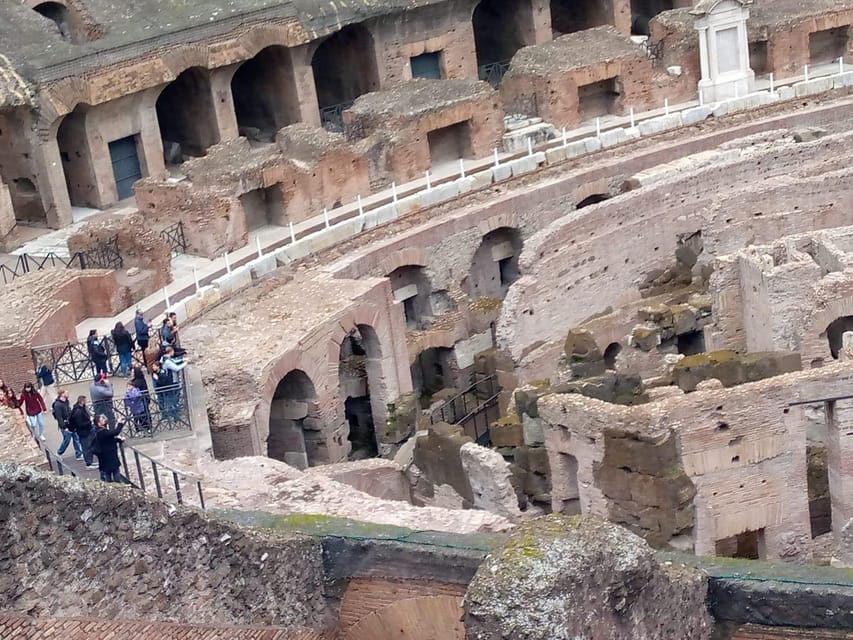
- Arena floor access through gladiator-style entry, so you’re not just staring at the Colosseum from above
- Roman Forum + Via Sacra + Julius Caesar Temple ruins in the same 3-hour experience window
- 1st level access that helps you understand the Colosseum’s strict seating logic
- Small group timing, with a real focus on getting you into the right doors quickly
- App audio guide workflow that works best when you have headphones and phone connectivity
Gladiator-Style Arena Access: What You’ll Really Get From the Floor
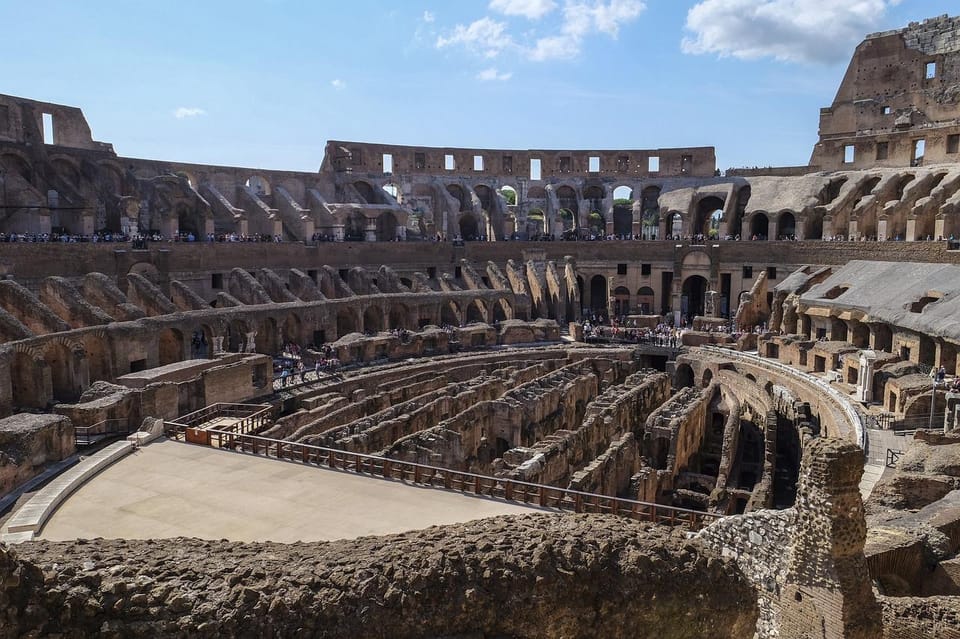
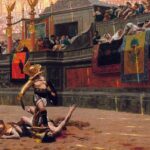
This is the heart of the experience: you’re allowed down onto the Colosseum Arena floor and routed toward entry that mirrors how gladiators would have moved through the site. Even if you think you know the Colosseum from photos, the scale hits different when you’re at ground level. The stands feel like walls around you, and the whole building becomes a machine built for spectacle.
What I like here is the perspective shift. From the lower rim, you’re used to viewing the structure like a landmark. On the arena floor, you’re inside the stage set. Then you’ll move back up toward the 1st level, where you can connect what you see with how Romans organized people by rank and rules. That’s the part that makes it feel more than a quick sight.
Do note one practical reality: timing for the arena area can feel tight when the site is crowded. The best way to handle it is simple—go for arena moments first, then come back for the slower viewing around the Colosseum levels and the Forum afterward. If you try to linger too early, you can end up feeling rushed later.
You can also read our reviews of more tours and experiences in Rome.



Your 3-Hour Route: Colosseum to the Forum to Palatine
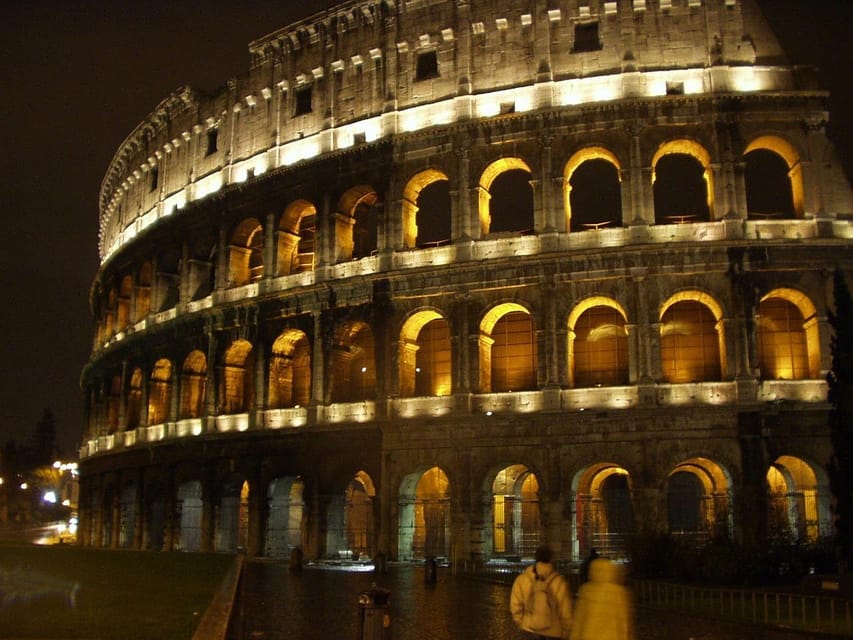
The full experience is scheduled for about 3 hours, and it’s designed as a tight, logical loop: Colosseum first, then the Roman Forum area, with Palatine Hill access tied in as your next stop. That sequencing matters because the Colosseum is the visual shock, and the Forum is where the story becomes political.
Here’s the flow you should expect:
1) Enter the Colosseum and go down to the arena experience
2) See the structure from below, then visit the 1st level viewing area
3) Move on to the Roman Forum, focusing on the Via Sacra and Julius Caesar’s temple ruins
4) Continue to Palatine Hill, which was central to Rome’s founding and home to major emperors
If you want one takeaway: this route gives you both the entertainment space and the governance/public-life space in one chunk. It’s a strong combo if you don’t want to spend the whole day bouncing between separate tours and ticket lines.
Meeting Point at Colosseo Metro: How to Find the Staff Fast
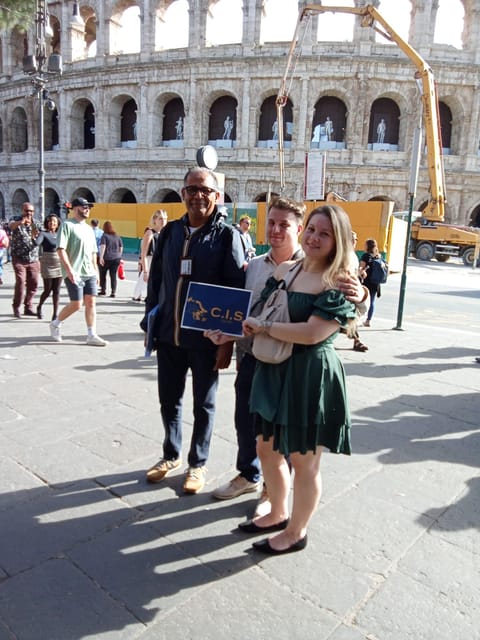
Your starting point is straightforward but easy to miss if you’re distracted by the big building in the distance. Meet in front of the Colosseo metro station, on the lower floor/ground level, near the green kiosk. Look for staff holding a c.i.s tours sign.
This is also where you’ll exchange for your actual entry setup. People have found the reps helpful and quick at getting tickets sorted and pointing you toward the correct entry doors. On at least some days, staff can also help you get your phones ready—one reported example is free Wi‑Fi use so they could send tickets and walk you to the right entrance.
Practical tip: take two minutes before you leave the meeting area to confirm you’ve got your ID ready and your phone charged. The rest of the experience goes much smoother once you’re not scrambling in a line with your screen at 5%.
Security Checks and Crowd Reality Inside the Colosseum
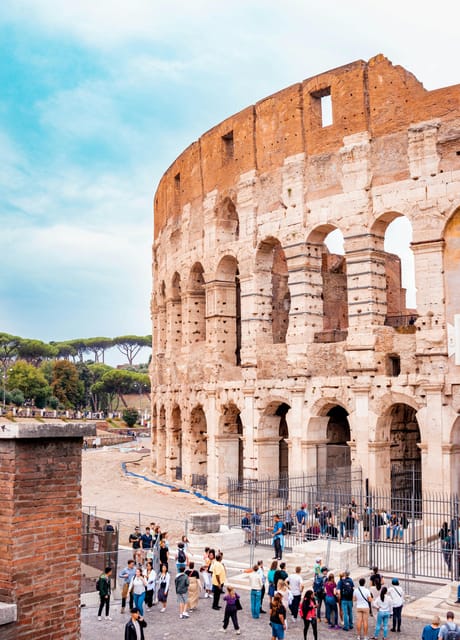
Expect a metal detector security check when entering the Colosseum. That’s not optional, and when the venue is busy there can be a waiting period before you reach the gates. This is normal for Rome’s top sites, but it’s especially important here because part of your value is being able to access the arena area efficiently.
Plan around a few site rules too. You can’t bring pets, weapons/sharp objects, oversize luggage or large bags, alcohol or drugs, sprays/aerosols, glass objects, unaccompanied minors, or explosive substances. If you’re traveling light, you’ll save time and stress.
What I’d do in your shoes: arrive ready to move, travel with minimal carry-on, and accept that the arena portion has a time rhythm. If you’re the type who needs zero pressure, give yourself extra buffer for security.
Arena Floor Access and the View From Below
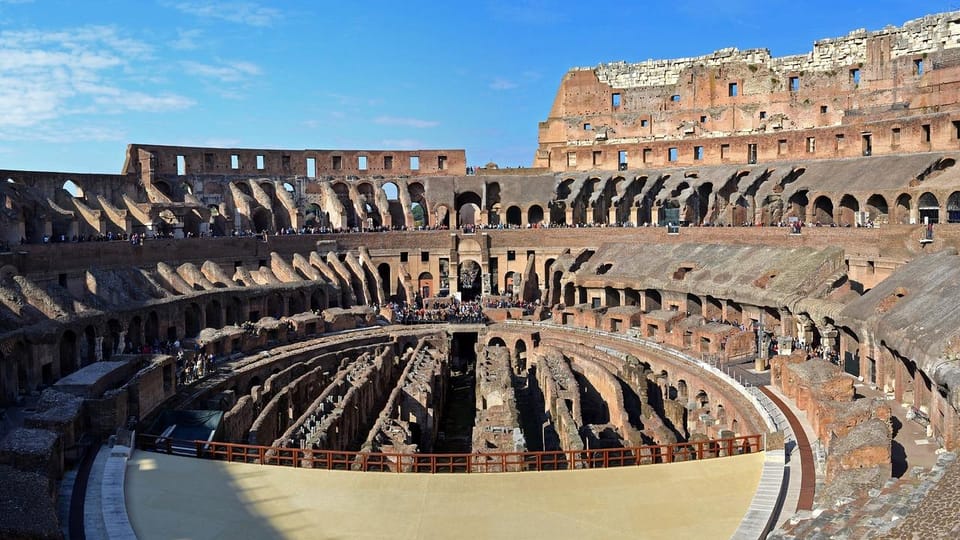
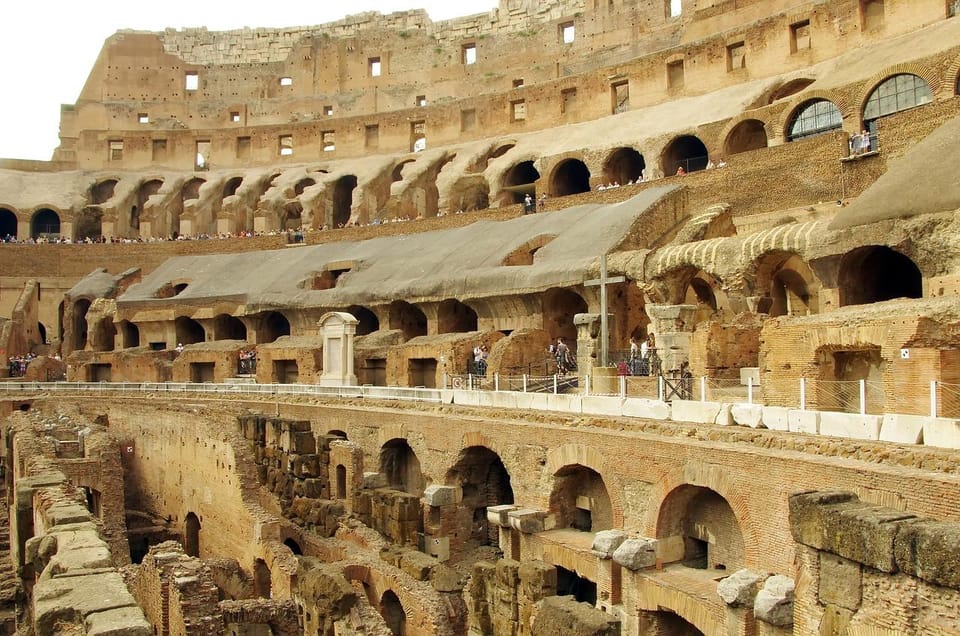
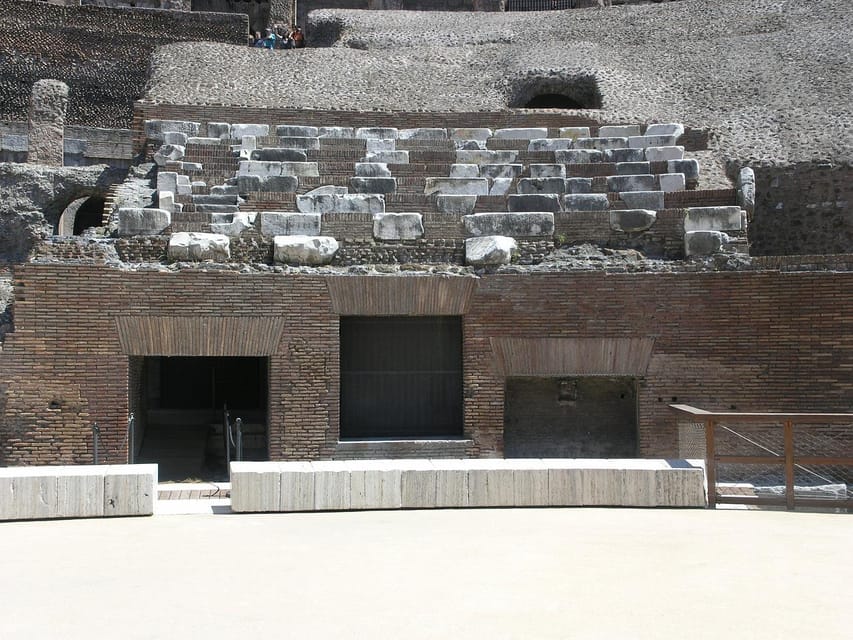
Once you’re on the arena-level experience, you’ll get the kind of perspective that can’t be replicated from postcards. You’ll be able to see the stands from below, looking up at the tiers that once held spectators. It’s one of the best ways to understand how the building “stages” the action.
Then you’ll shift to the Colosseum’s interior levels so you can examine the 1st level where famous combat took place. This is where the tour concept really lands: the design isn’t just architectural drama. The seating arrangement is severe and structured, and it gives you a visual clue about how rigid Roman social rules could feel in everyday life.
If you like history that you can actually see, this part works. You’re not just hearing about hierarchy; you’re watching how the structure channels sightlines and positions people.






Inside the Colosseum: Understanding the Seating Logic on the 1st Level
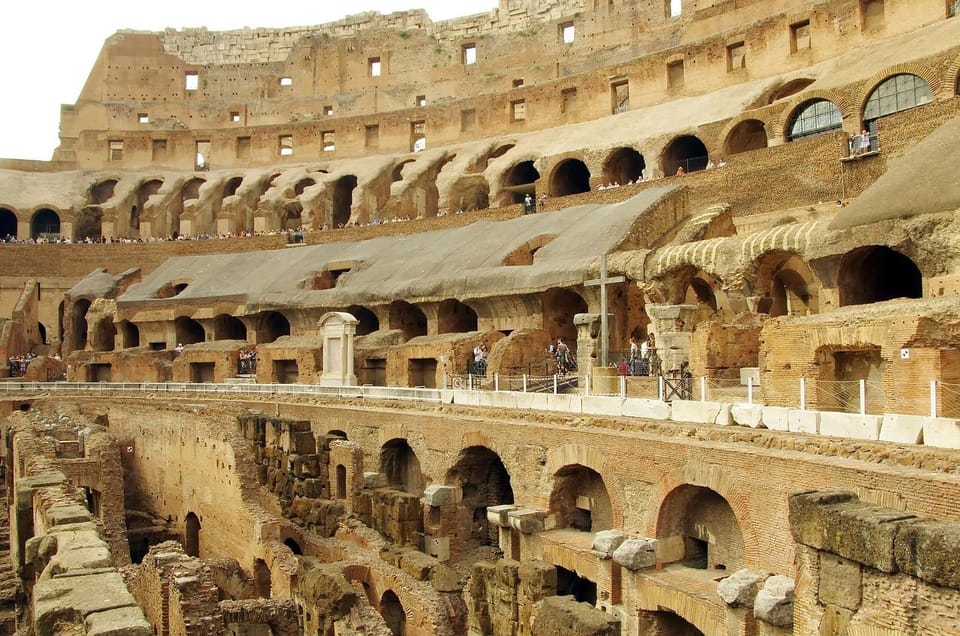
A big reason to include the 1st level is that it turns the Colosseum from a single photo spot into a readable system. From this level, you get a clearer sense of how space was divided and how the arrangement kept the whole event orderly—even if the events themselves were brutal.
This tour’s pacing nudges you to observe rather than rush. The experience is built so you can first grasp scale from the arena, then step into a vantage point that makes the layout easier to follow. When you do that in the right order, the building makes more sense.
One thing to keep in mind: you’ll be navigating through a busy, high-traffic venue. If you’re someone who gets turned around easily, focus on using the audio guide map as early as you can, so you’re not trying to figure out numbering and signage while the crowd tightens.
Roman Forum After the Colosseum: Via Sacra and Julius Caesar’s Temple Ruins
After the Colosseum, you move into the Roman Forum, and that’s a smart switch. The Forum is where you see what the Colosseum was feeding into: public life, politics, and the mythmaking that stitched Rome together.
You’ll stop on the Via Sacra, the famous route associated with major ceremonial moments. The value here is in learning how citizens once lived and moved through this space—not just where emperors stood, but how the city functioned around the political center.
Then you’ll reach the Temple of Julius Caesar ruins. Even in fragments, these remains help you understand the Forum as the center of Roman government and public life. It’s not as dramatic as the arena, but it’s more grounding. The Forum explains the worldview behind the spectacle.
Practical note: this is also where phone connectivity matters. The audio guide map can require Wi‑Fi in both the Colosseum and the Forum so the on-screen positioning works smoothly.
Palatine Hill Access: Central to Rome’s Founding, Easy to Misread Signage
Palatine Hill is included after your Forum time, and it’s a fitting final stop because it represents Rome’s “origin zone.” This hill was central to the city’s founding and later became home to major imperial residences, which helps connect the people in power with the geography of power.
Here’s the catch: entrance points and signage in the hill area can be confusing. That doesn’t mean you’ll fail to find it, but you should expect a bit of navigation effort, especially if you’re using the audio guide for instructions.
What works best is planning your pace. If you arrive with time pressure still in your head from the arena portion, Palatine can feel harder than it needs to be. Slow down, use your map early, and give yourself a clear moment to reorient before you start exploring deeper areas.
Also, this experience isn’t set up for wheelchair users, based on the activity’s suitability rules. If accessibility is a key factor for you, you’ll want to choose a different format.
App Audio Guide Tips: Making the Map Work and Why Headphones Matter
This is a self-guided experience with an app audio guide, not a narrated live guide. That’s fine—if you prep for it. The biggest difference is that you’ll control your pace, but you’ll also do your own wayfinding.
Two very practical tips:
- Bring headphones. You’re told to bring them for the telephone, and without them the audio part of the experience won’t be comfortable or usable.
- Keep an eye on Wi‑Fi needs. One common frustration is that the audio map can require internet access to function correctly. Some meet reps can provide free Wi‑Fi so you can get tickets and get the audio guide running.
Also, if the audio app’s labels feel off compared with venue signage, don’t panic. Use the physical signs as your anchor and let the audio guide act as your story layer.
If you want the experience to feel richer, don’t multitask. Pause, listen to one stop at a time, then move. The Forum and Palatine can be easy to rush through because it’s not as visually concentrated as the arena.
Price and Value: Is $28 Worth It for Arena + Forum + Palatine?
At $28 per person for a 3-hour experience, the value is strongest for travelers who want access and independence more than a full speaking tour guide. You’re paying for entry access across major sites and for a structured route that avoids you spending your day fighting ticket confusion.
Here’s what’s included:
- Colosseum access
- Arena access
- Roman Forum access
- Palatine Hill access
- App audio guide
- All taxes and fees
What’s not included:
- Guided tour (you’re not getting a live guide walking you point-by-point)
- Headphones
- Food and drink
So the real question is how you like to travel. If you want a teacher standing next to you the whole time, this may feel too independent. But if you enjoy exploring at your own speed while still having a guided narrative layer, the price looks more than fair—especially given that the Colosseum itself is the main event and the Forum/Palatine add major context.
One more value note: this kind of ticket setup can be used strategically for longer exploration if your entry terms allow it. If your schedule is flexible, check your ticket details so you don’t miss a chance to return later.
Who Should Book This and Who Should Skip It?
This experience is a strong fit if you:
- Want Arena floor access and the rare feel of standing where gladiators entered
- Like the idea of a self-guided route using an audio guide
- Plan to visit the Roman Forum and Palatine Hill as part of the same block of time
- Prefer a small group meetup rather than a huge tour herd
It may not be ideal if you:
- Need a fully guided, live commentary tour (this is not what’s included)
- Don’t want to deal with a phone app experience, especially where Wi‑Fi can be needed for the audio map
- Are counting on wheelchair-friendly routing (it’s not suitable for wheelchair users)
Should You Book This Colosseum Arena Floor and Forum Pass?
I’d book it if your priority is the arena-floor experience plus Forum context in a short, efficient window. The mix of arena perspective and Via Sacra/Temple of Julius Caesar ruins gives you more meaning than a Colosseum-only ticket.
Skip it—or at least think twice—if you want a traditional guided walk-through with deep narration. Here, the “guide” is the app, and your success depends on using it well: bring headphones, aim for reliable phone connectivity, and use signage as your backbone when the map gets confusing.
If you’re ready for that style of travel, this is a great use of time in Rome.
FAQ
Where is the meeting point for this experience?
Meet in front of the Colosseo metro station (lower floor/ground level) near the green kiosk, and look for staff with the c.i.s tours sign.
What does the price include?
The price includes Colosseum access, arena access, Roman Forum access, Palatine Hill access, and an app audio guide, plus all taxes and fees.
Is a guided tour included?
No. This experience includes an app audio guide, but a guided tour is not included.
Do I need to bring headphones?
Yes. You must bring headphones for the telephone so you can use the audio guide.
What ID do I need?
Bring a passport or ID card. Children also need a passport or ID card.
Can I bring luggage, pets, or other items?
No. Pets, weapons/sharp objects, oversize luggage/large bags, and items like glass objects, alcohol/drugs, and sprays/aerosols are not allowed.
What are the Roman Forum and Palatine opening hours during the year?
Hours vary by season. For example, Jan 1 to Feb 29 is 09:00–16:30, Mar 1 to Mar 30 is 09:00–17:30, Mar 31 to Sep 30 is 09:00–19:15, Oct 1 to Oct 26 is 09:00–18:30, and Oct 27 to Dec 31 is 09:00–16:30.