REVIEW · ROME
Rome: City Golf Cart at Night Tour
Book on GetYourGuide →Operated by Luxurbe · Bookable on GetYourGuide
Rome at night has a special rhythm. This electric golf cart tour lets you glide between major sights when the crowds thin out and the monuments glow. I like the minimal walking part most, and I also love how the route strings together classic viewpoints that feel different after sunset. One consideration: because you’re moving through traffic and sometimes around closures, the exact timing can shift and the tour can feel a bit shorter on very light traffic nights.
You start in the lively center—Piazza di Spagna and Trevi Fountain—then roll up to elevated views over the city. The vibe stays relaxed: short guided stops, quick photo breaks, and smooth transfers in between. The electric cart makes it easy to see a lot without wearing yourself out, but if you’re sensitive to riding backwards or you sit in the back, you might want to choose your seat carefully.
In This Review
- Key things I’d plan around
- Price and what you actually get for $59
- Meeting point: Piazza del Popolo 11, no confusion zone
- Piazza di Spagna: Rome’s postcard glow up close
- Trevi Fountain: when the light does the talking
- Rolling to the Pincio Promenade: city lights and an easier pace
- Piazza del Popolo: the night gateway to Rome’s big moments
- Castel Sant’Angelo: romance with river-side drama
- Aventine Keyhole: the quick bucket-list win
- Piazza del Campidoglio: the control center viewpoint
- Piazza Navona: architecture, atmosphere, and easy photos
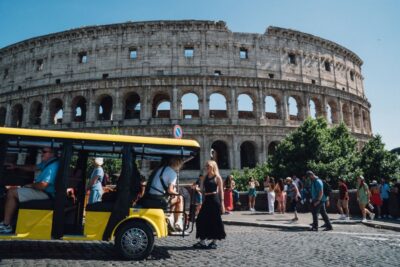
- Colosseum at night: the lit finale without the museum hours
- The guide makes the night (and you can feel it fast)
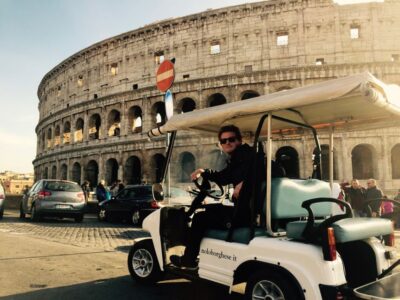
- How “electric cart” changes your Rome evening
- Who this tour fits best
- Should you book the Rome City Golf Cart at Night Tour?
- FAQ
- How long is the Rome city golf cart night tour?
- Where is the meeting point?
- What’s included in the price?
- Are entrance tickets included?
- Does the tour run in light rain?
- Is it wheelchair-friendly?
Key things I’d plan around
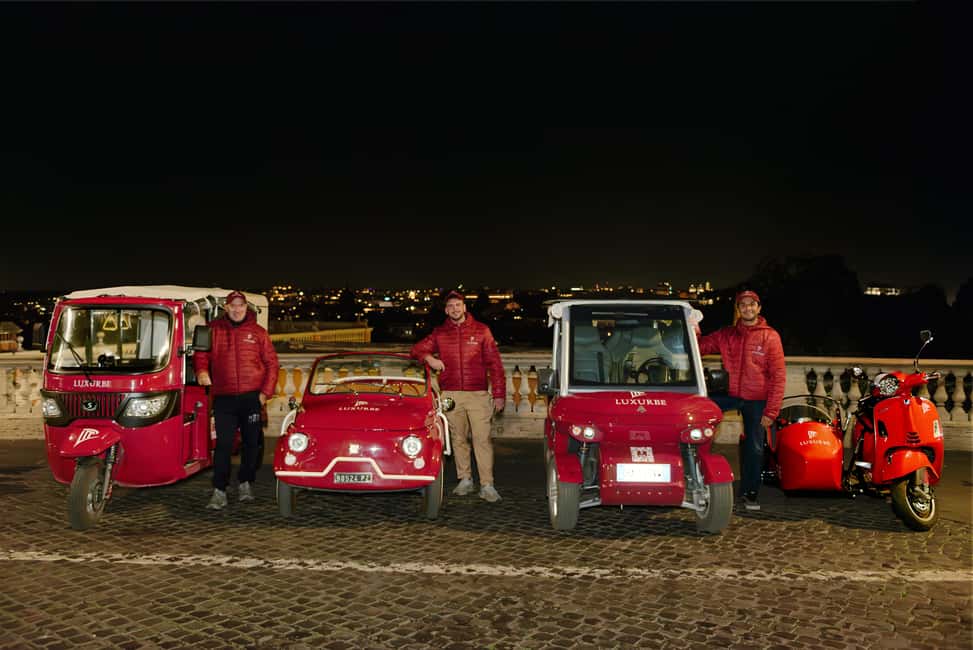
- Illuminated landmarks: Trevi, Piazza Navona, Castel Sant’Angelo, and a lit Colosseum shot from the outside
- Scenic viewpoints: the Pincio promenade for a skyline view, plus the Aventine Hill area for the famous keyhole
- Less stress, fewer steps: you get close to sights that would be a slog on foot
- Photo-friendly pacing: short stops designed for pictures, not long museum marathons
- Guide-led storytelling: many guides (like Manu, Alessandro, Ernesto, Paolo, Vito, and Matt) are praised for making the sights feel connected, not memorized
- Route may adapt: weather, traffic, road closures, and city events can affect what’s possible that night
Price and what you actually get for $59
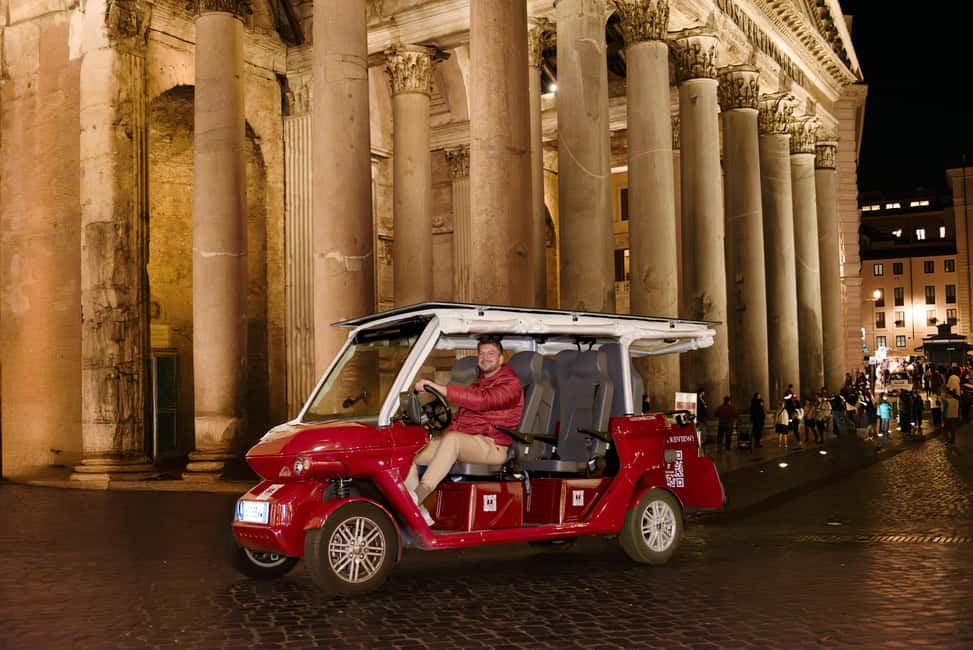
At $59 per person for a 3-hour guided night ride, the value is mostly about convenience and timing. You’re paying for a smart way to cover big name locations without spending half your evening in transit or crossing the city on foot. Rome’s famous sights are easier to enjoy at night, too: lines tend to be calmer and streets feel less chaotic.
You’re also buying access to the right order. Instead of randomly hopping between neighborhoods, the route is built around how Rome looks after dark: central squares first, then viewpoints, then the long, dramatic finale toward the Colosseum area. The result is a “see the city in one evening” flow that doesn’t feel rushed the way some bus tours can.
What’s not included matters. You won’t have entrance tickets to museums or major attractions, and you shouldn’t expect guided time inside monuments. Think of this as an outside-and-perspective tour: great for photos, viewpoints, and context.
You can also read our reviews of more city tours in Rome


Meeting point: Piazza del Popolo 11, no confusion zone
The tour meets at Piazza del Popolo 11, in front of the Leonardo da Vinci Museum. The instruction is clear: wait outside the entrance and don’t go in. There’s also no obvious big sign to follow, so look for the cart/vehicle itself—there’s no Luxurbe sign, and the driver will be easy to recognize.
Plan for up to 10 minutes of waiting. If you’re early, that’s fine. If you’re late, it can turn into a no-show situation after the allowed grace period.
This matters because night tours depend on clean timing. Rome can run late on the best days, and you want to settle in before the cart starts rolling.
Piazza di Spagna: Rome’s postcard glow up close
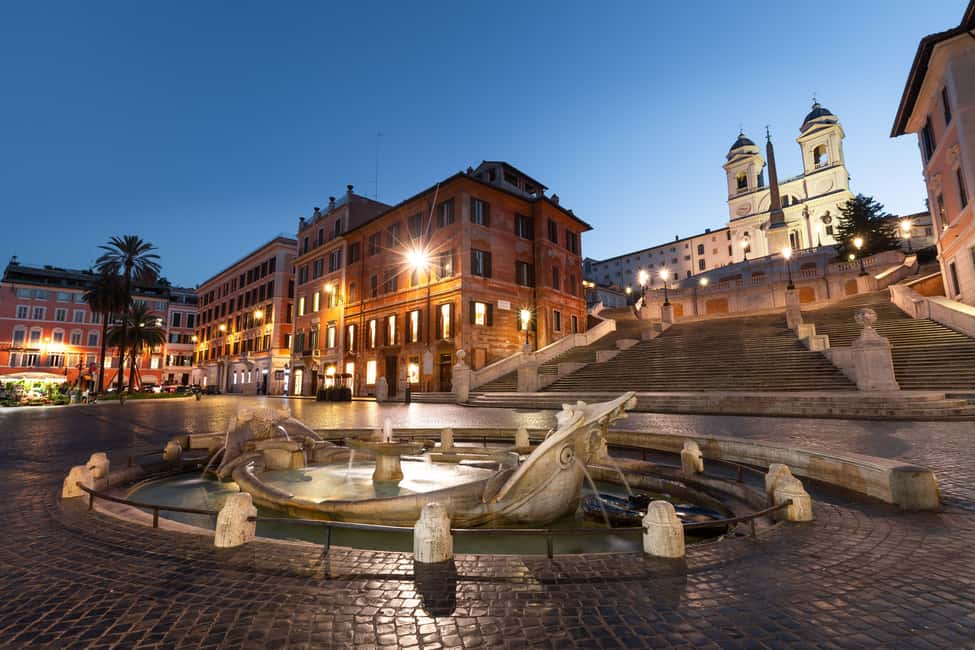
Your evening begins near Piazza di Spagna, which is where Rome starts to feel cinematic. Even if you’ve seen this area in daylight, night changes the mood fast. The square and surrounding streets look softer under lights, and the crowds can be more manageable.
Expect a short guided stop—enough time to get your bearings and take photos without dragging out the evening. If you’re the type who likes to understand what you’re photographing, this first moment helps: your guide sets the tone for what you’ll see next and explains why these places matter.
Possible drawback: this area can still be busy depending on the night. The cart keeps you moving, but you’ll still want patience if pedestrians pack the sidewalks.
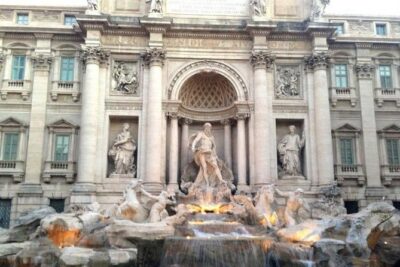
Trevi Fountain: when the light does the talking
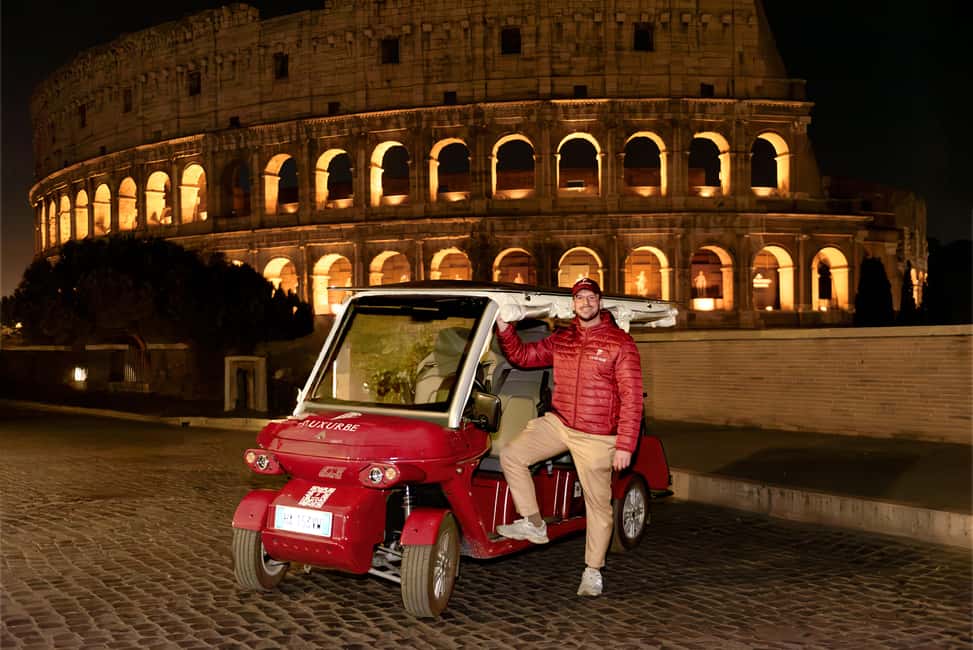
Next comes Trevi Fountain—another place that looks completely different after dark. The guided stop here is designed for quick clarity: you’ll get context, a chance to photograph the fountain with the city as a backdrop, and then you’re off again before the night turns into a long wait.
I like that this is handled early. It’s common to arrive later in the evening and find the streets have shifted. Here, you get a prime lighting moment and then you transition to quieter viewing.
Photo tip: aim for a few different angles during your short stop. Trevi is wide, and your best shot can depend on where the street opens up behind you.
Rolling to the Pincio Promenade: city lights and an easier pace
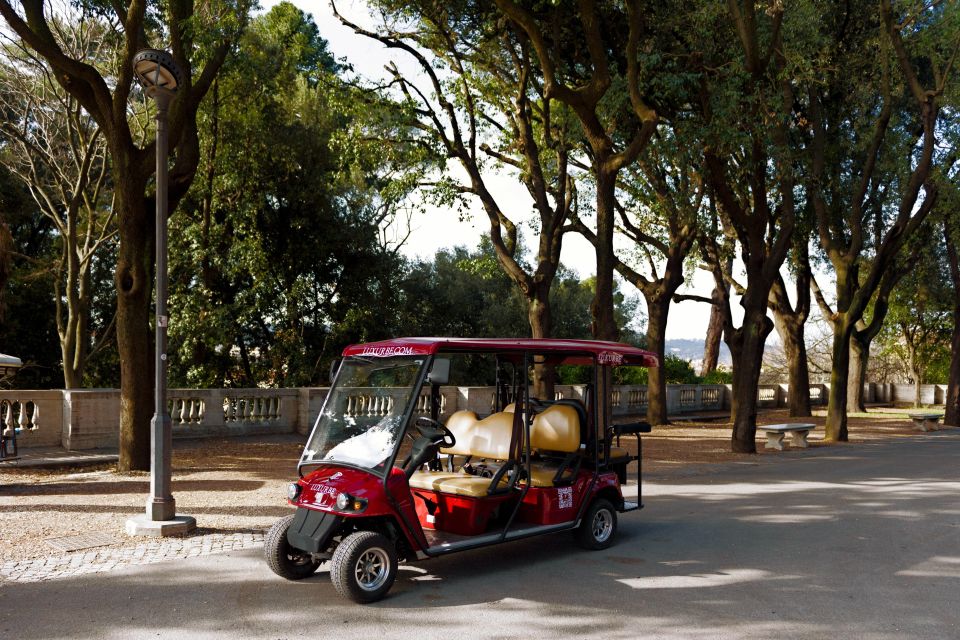
Then the cart becomes the real star. Those quick transfers matter because they let you keep your energy for the viewpoints instead of burning it on stairs and crosswalks.
At the Pincio Promenade, you’re in the zone for sweeping city views. This is where Rome becomes a landscape of rooftops and lit landmarks, all stacked in layers. The guided time here is long enough to enjoy the view rather than just snap one picture and race away.
Why this stop works: it balances the photo glamour with a breath of calm. You’re not just looking at one monument—you’re seeing how the city spreads out.
Practical note: it can feel cooler on elevated areas. Comfortable clothing helps.
You can also read our reviews of more evening experiences in Rome
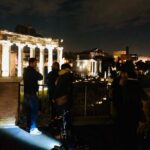
Piazza del Popolo: the night gateway to Rome’s big moments
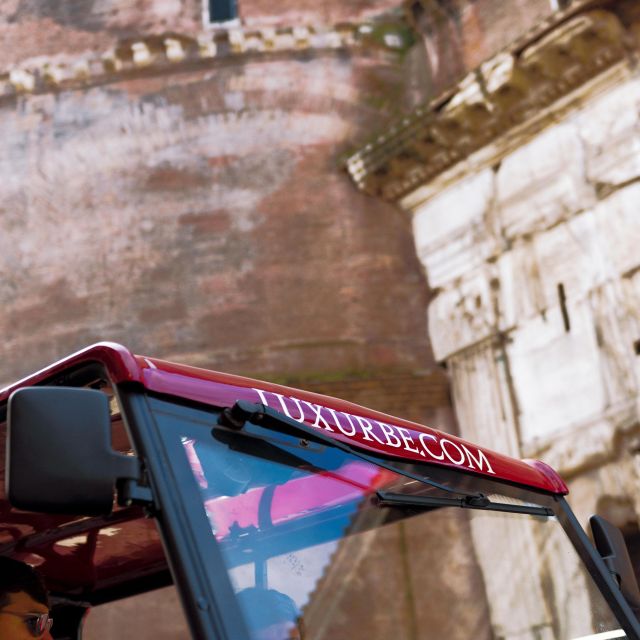
You circle through Piazza del Popolo, which works like a hub for the rest of the evening. This stop is part orientation, part atmosphere. Under nighttime lighting, the square feels grand without demanding your attention every second, and that makes it a good transition point.
You’ll likely get just enough guided context to understand what direction the evening is heading, especially as you move toward the river-adjacent sights and the Roman “overlook” points.
If you’re the type who likes to map Rome in your head, this stop is useful. It helps you connect what you’ve already seen with what’s coming next.
Castel Sant’Angelo: romance with river-side drama
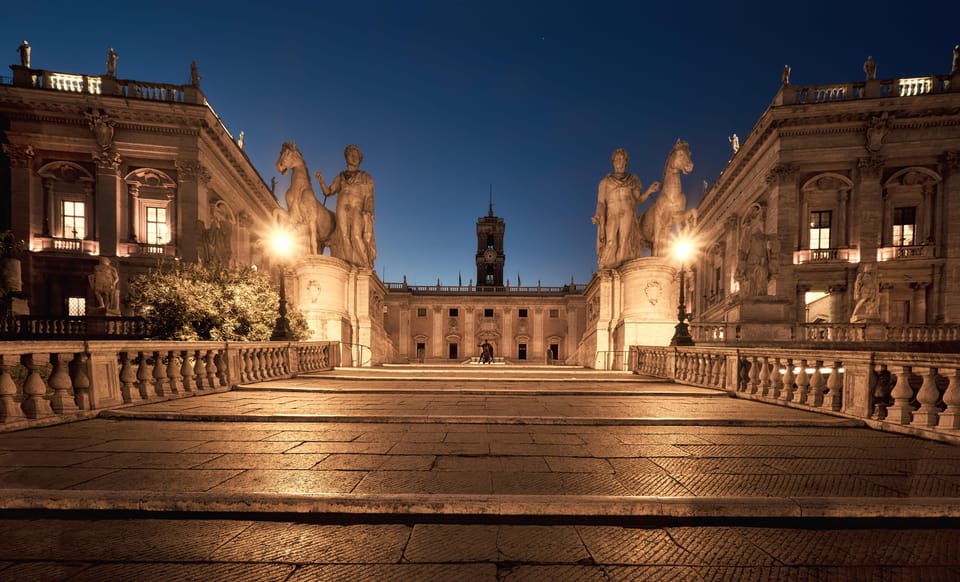
After the square, the tour reaches Castel Sant’Angelo. This is one of those Roman landmarks that looks like it belongs in a movie at night. The guided stop centers on what you’re seeing and why it stands where it does—more than just, there’s a castle, take a photo.
What I appreciate here is the pacing. You’re not stuck in a long queue, and you’re not standing in the middle of a crowded walkway forever. The cart helps you stay close while still giving you time to breathe.
Possible drawback: like many major sights, the exact vibe can depend on foot traffic. The cart can get you near the action, but you’ll still share space with other visitors.
Aventine Keyhole: the quick bucket-list win
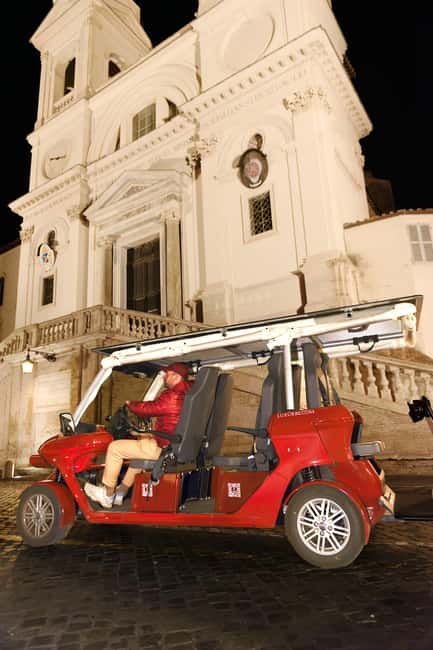
One of the most memorable stops is the Aventine Keyhole area. It’s small, iconic, and very “only in Rome.” The guided stop is timed so you don’t waste your night hunting down the spot and standing around.
This stop works best if you’re traveling with at least a little curiosity about Roman oddities and local quirks. Even if you’ve seen photos, it’s the on-the-ground atmosphere that lands.
Timing note: your view time here is short by design. Don’t plan to turn this into a long, slow sightseeing detour.
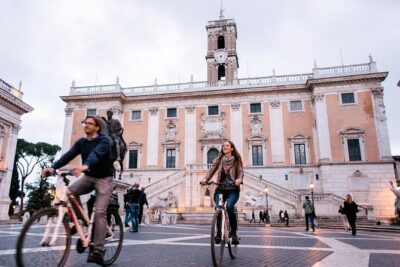
Piazza del Campidoglio: the control center viewpoint
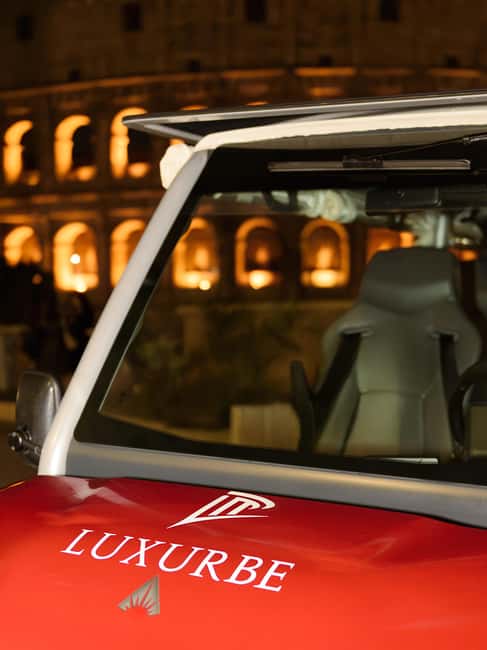
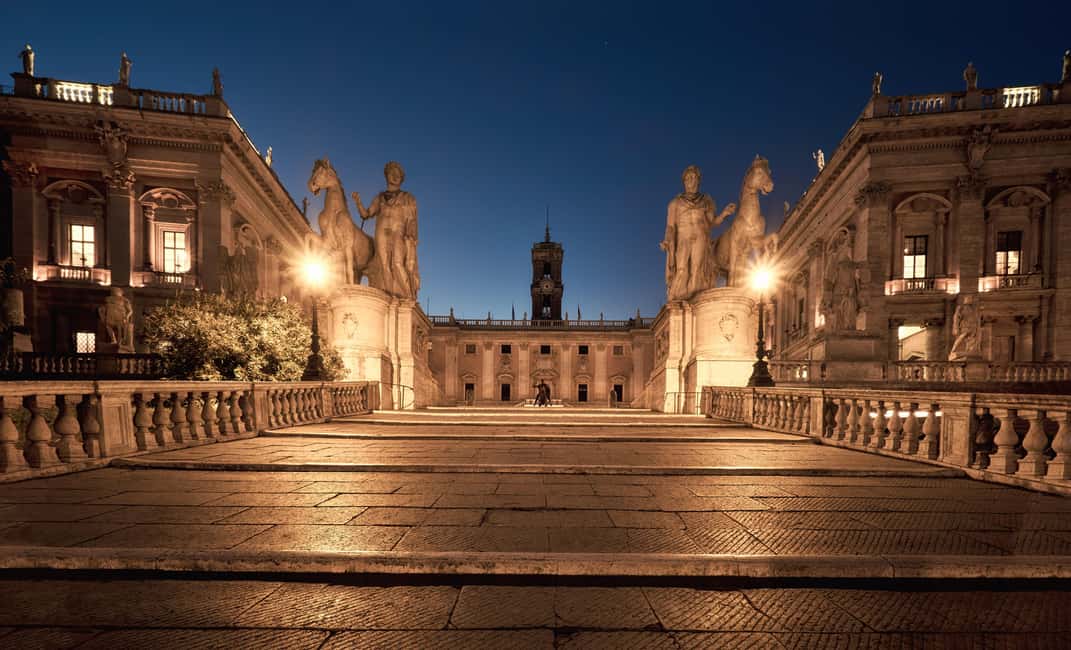
Next is Piazza del Campidoglio. This is a great place to understand Rome’s planning and how viewpoints shape what you feel when you look out. Night lighting adds a cleaner look to stone and geometry.
The guided time is long enough to appreciate the feel of the space without forcing you through a checklist. This is where the tour starts to feel like more than a ride—it starts to connect the city as a system.
Practical consideration: surfaces can be uneven and streets can be busy. Comfortable shoes still help, because you’ll be getting in and out of the cart.
Piazza Navona: architecture, atmosphere, and easy photos
Then you glide to Piazza Navona. This is one of the most atmospheric central squares at night. The guided stop gives you context while you enjoy the lighting and the open space around you.
I like this stop because it’s lively enough to feel fun but structured enough that you’re not wandering aimlessly. You get a set amount of time, then you move on while the magic is still fresh.
Photo tip: Piazza Navona is all about composition. Try stepping a few steps back and change your angle—your pictures will look more “Rome” and less like generic fountain shots.
Colosseum at night: the lit finale without the museum hours
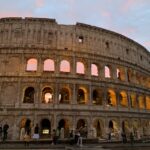
The evening ends with night views of the Colosseum, illuminated and—on many nights—less crowded than daytime. The guided stop is focused on seeing it well from the outside and learning the story behind why it looks the way it does in lighting.
This is exactly where the cart format pays off. You get the dramatic payoff with a viewpoint experience, and you’re not stuck spending hours inside. If your goal is to hit the big hits efficiently, this is a strong ending.
Possible drawback: the closer you want to get, the more you’ll depend on local conditions. Your guide may need to work around pedestrian flow and any road closures.
The guide makes the night (and you can feel it fast)
One of the most praised parts of this experience is the human factor: guides who don’t just recite facts, but connect places into a story. People specifically mention guides like Manu, Alessandro, Ernesto, Paolo, Vito, Matt, Robin, and others as standouts.
What that usually looks like in practice: better explanations at each stop, smoother handling of crowds, and flexibility when you have questions. You’ll also notice guides who help you with photo moments—where to stand, how to angle your shot, and how to avoid getting boxed in.
Just be aware of a couple small issues that have come up: the sound system sometimes doesn’t work perfectly for everyone, and seat choice can matter. If you’re sensitive to riding backwards, aim for a seat that feels stable for you.
How “electric cart” changes your Rome evening
The cart is not just a novelty. It changes what you can enjoy.
- You cover more ground without tiring your legs.
- You can stop quickly for photos without turning your night into a long walking loop.
- You get access to areas that may be too tight for larger vehicles.
- The night air and softer lighting make the trip feel gentler than daytime sightseeing.
Also, the cart is open enough to feel like you’re part of the city, not trapped inside. If the weather is chilly, some carts have sides that help keep the wind off. It’s still Rome, though—bring weather-appropriate clothing.
Who this tour fits best
This is a strong fit if you want:
- A high-impact first night in Rome
- A break from heat and crowd stress
- A “major sites without exhaustion” plan
- Time for photos at multiple landmarks
It’s also a good call if you’re traveling with someone who doesn’t want a lot of stairs. The tour is designed for minimal walking between stops.
Where it may not be perfect:
- If you want inside-the-attraction tickets and long museum time
- If you’re very sensitive to motion or specific seat directions
- If your must-see list includes things that require entry tickets
Should you book the Rome City Golf Cart at Night Tour?
I’d book it if your main goal is to see Rome’s biggest sights in one smooth, evening-friendly plan. For $59 and 3 hours, you’re buying efficiency and atmosphere: illuminated landmarks, viewpoint moments, and a guided route that saves time and walking.
I would hesitate only if you need museum entrances or you’re the type who gets very picky about audio quality or seat positioning. In that case, choose your seat thoughtfully and expect occasional timing changes due to traffic and city events.
If you want a calm, photo-ready way to experience the Eternal City after dark, this one earns its high rating.
FAQ
How long is the Rome city golf cart night tour?
The duration is 3 hours.
Where is the meeting point?
Meet at Piazza del Popolo 11, in front of the Leonardo da Vinci Museum. Wait outside the entrance and do not enter. There is no Luxurbe sign.
What’s included in the price?
Included are a guided sightseeing tour by electric golf cart, an English-speaking driver/guide, photo stops at main landmarks, and audio guides if available (English, Italian, Spanish). Hotel pickup and drop-off are included only if you select that option.
Are entrance tickets included?
No. Entrance tickets to monuments and attractions are not included.
Does the tour run in light rain?
Yes. The tour operates even in light rain.
Is it wheelchair-friendly?
The info includes wheelchair accessibility and says wheelchairs are allowed if notified at booking, but it also lists the tour as not suitable for wheelchair users. I’d confirm directly with the operator before booking to be safe.