Rome changes when you go underground. This small-group catacomb tour lets you walk the hidden layers of the city, starting at the Basilica of San Clemente and dropping down multiple levels to see how Rome kept building, burying, and worshipping beneath your feet. I like that it’s built for close guide attention, and I also like how the route pairs one iconic complex (San Clemente) with a major burial site (Domitilla).
One thing to consider: you won’t get the classic skeleton-photo moment. No photography is allowed in both locations, and what you see underground is more about tomb spaces, niches, and artwork than loose bones.
In This Review
- Key things that make this tour worth your time
- San Clemente first: the smart way to understand underground Rome
- Basilica of San Clemente: five underground floors in about 30 minutes
- The taxi transfers: why the pacing can feel efficient
- Catacombe di Domitilla: tunnels, tomb niches, and expectation-setting
- What the guides do that you’ll actually feel during the tour
- No photos + dress code: how to prepare without stressing
- Price and value: is $240.76 worth it?
- Who this tour fits best (and who should look elsewhere)
- Should you book this tour?
- FAQ
- Is this tour a small group?
- How long does the experience take?
- What stops are included?
- Are tickets included?
- Is there photography allowed?
- What should I wear?
- Can I cancel for a refund?
Key things that make this tour worth your time
- San Clemente’s “layers” in one stop: you descend over five stories underground and connect Roman, medieval, and early Christian uses of the same space.
- A guide-led story at human scale: semi-private group size (max 6) means more time for questions at San Clemente.
- Domitilla catacombs with an official guide: the catacombs portion runs in a larger group with one of the site’s guides, so pacing can feel faster.
- Taxi transfers keep the focus underground: less time figuring out logistics, more time looking at what’s actually under Rome.
- Strict dress code + no photos: plan for shoulders-and-knees coverage and leave your phone for the surface.
San Clemente first: the smart way to understand underground Rome
If Rome has a theme, it’s reuse. People build, move on, bury, and build again. What makes this tour special is that it teaches you that idea early—at San Clemente—so the catacombs later won’t feel like random tunnels.
Your day begins at Via di S. Giovanni in Laterano, 112, near the action. From there, the tour drops you into San Clemente, where you don’t just see a church. You experience how one spot became a vertical timeline. When a guide points out what’s 2nd-century and what’s later, suddenly underground Rome makes sense.
The group size also matters. Even though the overall experience can include up to 15 travelers, the San Clemente portion is run as semi-private for up to 6. That smaller number is the difference between hearing the story and just hearing noise.
You can also read our reviews of more tours and experiences in Rome.



Basilica of San Clemente: five underground floors in about 30 minutes
San Clemente is the headliner for the “hidden layers” concept. The tour description promises you descend over five stories underground, and that’s exactly where the wow comes from: you’re moving through eras without changing locations.
Here’s what you can expect as you go down:
- You’ll see artistic work spanning from early periods through later centuries. One guide style you may hear (for example, Massimo has compared the layered buildings to an architectural lasagna) helps you remember that the site isn’t one snapshot—it’s layers piled on layers.
- You’ll learn how medieval popes and earlier religious communities used the same space across centuries.
- The stop also includes references to pagan rituals connected to older layers, plus the way those layers were repurposed for later worship.
One practical plus: underground space is cooler than street level. Several guides have emphasized that it can feel like a relief on hot days, and that alone can be worth factoring into your itinerary. You’re not just sightseeing; you’re changing environment.
Possible drawback at this stop: the content can be emotionally intense. If you’re sensitive to the idea of human remains shown in religious or historical contexts, San Clemente’s underground storytelling may feel uncomfortable. You should know that going in, so it doesn’t surprise you.
Also plan your visit around the rules. Places of worship require shoulders and knees covered. That means no tank tops, no short dresses. If you forget something, you might be able to buy a small fabric cover on-site (one visitor noted it was about €1), but don’t count on that being your backup plan.
The taxi transfers: why the pacing can feel efficient
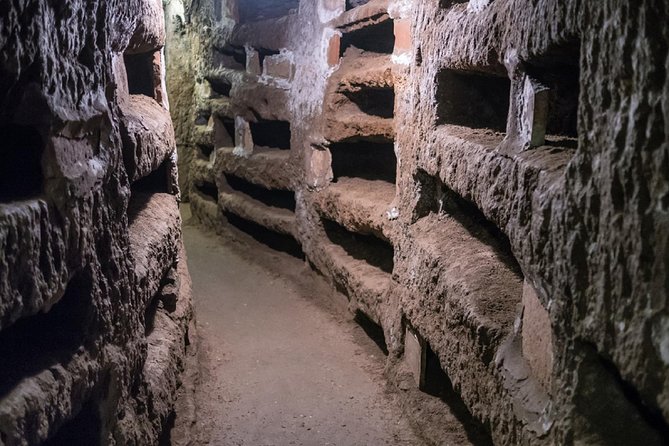
Between stops, you’ll take pre-booked taxi transfers. The structure is simple: you move from San Clemente to the catacombs, then back toward the starting area.
Those transfers are not just convenience. They solve two real Rome problems:
1) time lost waiting and figuring out transit, and
2) energy spent navigating while you should be watching details underground.
The schedule is also tight enough that you’ll feel the tour’s momentum. That’s great when you want an efficient, guided “systems tour” of Rome’s underground. It can feel less great if you’re the type who likes to linger.
In particular, keep an eye on the catacombs timing, because the second half isn’t necessarily paced the same way as the first.
Catacombe di Domitilla: tunnels, tomb niches, and expectation-setting
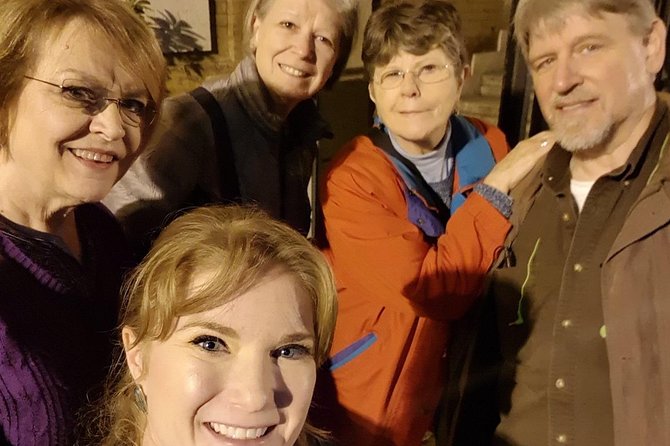
Domitilla catacombs are one of the best-known burial sites in Italy, and this tour brings you there efficiently. The catacombs portion runs about 1 hour, and tickets are included.
When you arrive, you’ll head underground and explore narrow tunnels and burial areas. The tour description says you’ll see “narrow tunnels filled with empty graves,” and that phrasing is important. What you’re really looking at are lots of sealed or prepared burial spaces, usually in structured areas tied to families and communities.
Here’s what I’d tell you to expect visually:
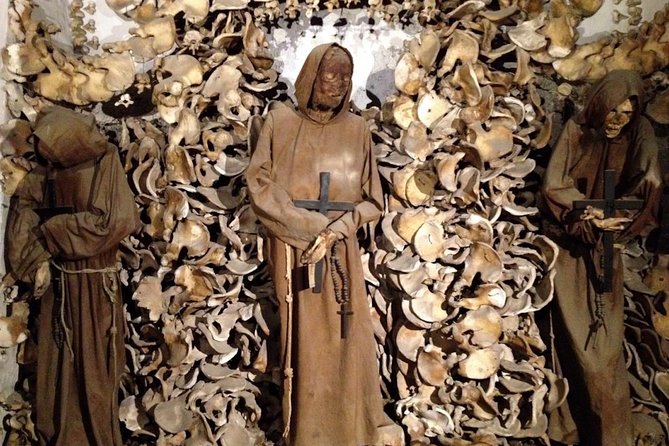
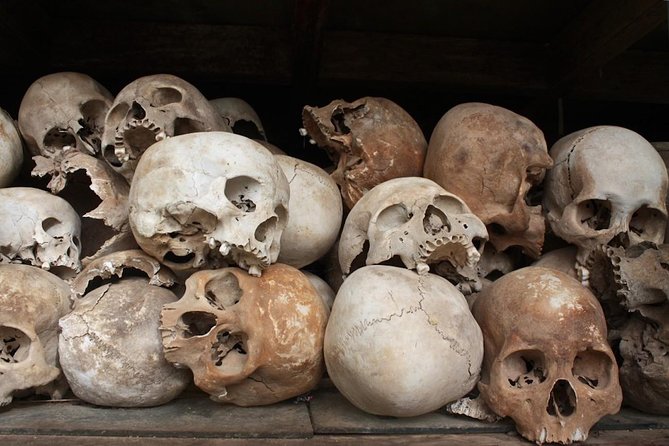
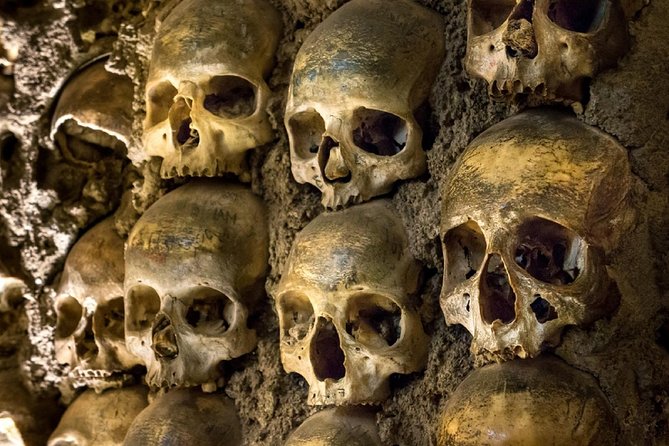
- More wall-and-niche burial than loose remains. Some guides (and some disappointed visitors) have pointed out that you won’t be seeing the exact skull-and-bones imagery people sometimes expect from ads.
- You may notice elements used back then, such as old oil lamps, and you’ll hear explanations that connect class and burial styles to how people were interred.
- You might also find frescoes or painted details in certain areas, depending on the section you’re guided through.
If you’re going specifically because you want to see actual loose bones, build in caution. The tour is set up as a guided historical visit, and the experience is more about what survives and what’s documented than about dramatic skeleton staging.
Another expectation note: the catacombs visit is in a larger group led by an official guide. Even if you start the day with a close, small-group guide, the catacombs part can feel quicker and louder, and the guide may move the group at a site-typical pace. One visitor even described it as starting before their full group arrived and being hard to hear.
That doesn’t mean it’s bad. It means you should treat the Domitilla hour as a focused “see the main story fast” segment—not a slow, intimate ramble.
What the guides do that you’ll actually feel during the tour
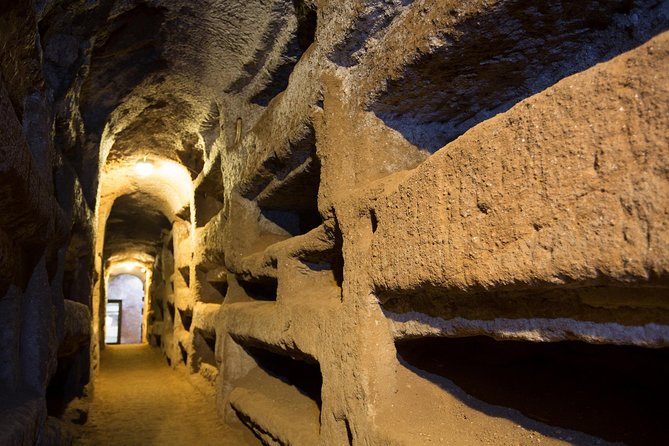
The guides aren’t just reading facts. The best ones make you picture what the space was doing—worship, memorial, ritual, community identity—while you’re standing there.
You may hear strong personalities and high energy. Several guide names have shown up in real-world feedback, including Kira, Massimo, Andy, Marco, Cristiano, Sean, Sabrina, Marta, Ariana, and Pamen. The common thread is clear: they connect details so you’re not just walking through dark corridors with no anchor.
Look for what your guide does during the San Clemente portion:
- They translate the physical “layers” into a timeline you can hold in your head.
- They explain the difference between how the space functioned in earlier centuries versus later ones.
- They point out things that help you orient yourself underground.
That’s also why small-group size matters. With more people, it’s harder for the guide to adjust their pace and answer questions. With fewer people, you can actually use the “why is this here” moments.






No photos + dress code: how to prepare without stressing
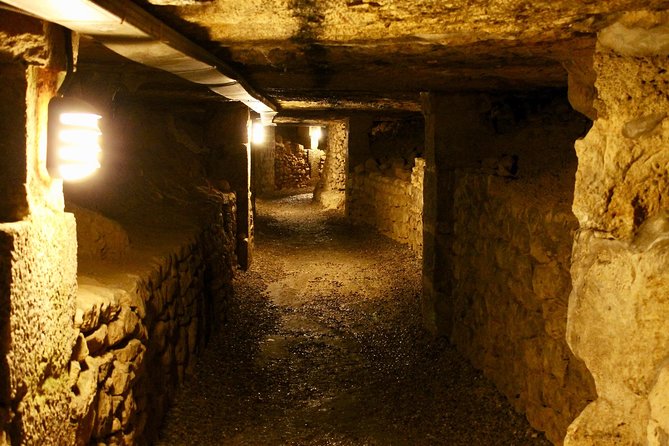
This tour makes two rules very clear: no photography in both sites, and strict dress code.
To make the day easier:
- Wear clothing that covers shoulders and knees. Think light long sleeves or a cover layer you’re comfortable in.
- Put on grippy shoes. Underground surfaces can be uneven, and you’ll be walking during transfers within the sites.
- Bring water for the surface portions. Underground is cooler, but Rome at street level can be hot and draining.
Photography limits are worth mentioning because they affect how you remember the day. You’ll rely on what the guide shows and explains, plus what you notice in the moment. If you like to build a photo archive, this isn’t that kind of tour.
Price and value: is $240.76 worth it?
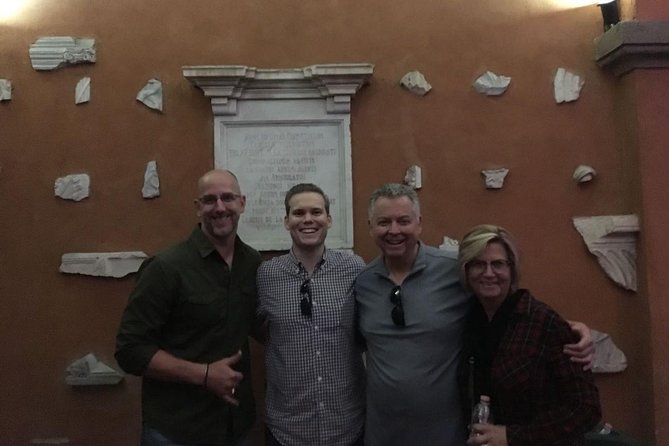
At $240.76 per person for about 2 hours 30 minutes, this isn’t the cheapest way to see Rome underground. But value isn’t just cost—it’s what you avoid and what you gain.
Here’s where you’re paying for real things:
- Tickets included for San Clemente and the catacombs.
- Expert English-speaking guide for the semi-private portion.
- Taxis between sites, which is a big deal in Rome where transport can eat time.
- A capped group size on at least one key segment (San Clemente).
So, who should see this as good value? You should consider it if you want a guided, structured experience and you don’t want to spend half the day coordinating entry times, routes, and walking distances.
Who might not love it? If your goal is purely visual shock value (especially expecting visible skulls or loose bones), some parts may feel like less than what the ads imply. The catacombs hour is still historic and moving, but it’s not a skeleton display.
Who this tour fits best (and who should look elsewhere)
This experience works well if you:
- want a guided explanation of Rome’s underground layers, not just a look around,
- enjoy history that connects different time periods in the same physical space,
- appreciate small-group attention for the main story (San Clemente),
- like visiting catacombs in a way that’s organized and ticketed.
It may not fit as well if you:
- are very sensitive to the topic of human remains in religious-historical settings,
- want lots of photo opportunities (because there’s no photography allowed),
- expect the catacombs to look like the most graphic promotional images.
Should you book this tour?
I’d book it if you want the best kind of Rome underground day: structured, ticketed, with guided context in a place that actually teaches you how the city grew downward and sideways.
I’d think twice if your main goal is to see loose bones or skulls on display. This tour is about the site, the burial system, and the layered story—sometimes in a way that can disappoint people whose expectations were shaped by images online.
If you do book, go in with two mindset shifts:
1) Expect tomb spaces, not skeleton stage props.
2) Treat it as a guided history lesson you can feel in your feet and in your sense of time.
FAQ
Is this tour a small group?
Yes. It’s described as a semi-private group with a maximum of 6 people, and it’s also capped at a maximum of 15 travelers overall. The catacombs portion will be in a larger group with an official catacombs guide.
How long does the experience take?
It runs for about 2 hours 30 minutes.
What stops are included?
The tour includes a visit to the Basilica of San Clemente and then a catacomb visit to Catacombe di Domitilla, with taxi transfers between sites.
Are tickets included?
Yes. Tickets for St Clement/San Clemente and for the catacombs visit are included.
Is there photography allowed?
No. There is no photography allowed in both sites visited on this tour.
What should I wear?
You need to cover shoulders and knees to enter the places of worship. The tour notes strict dress code requirements.
Can I cancel for a refund?
Yes. You can cancel up to 24 hours in advance for a full refund. If you cancel less than 24 hours before the start time, the amount paid is not refunded.