REVIEW · ROME
10 Wonders of Rome in 3 hrs
Book on Viator →Operated by Lock Your Tour · Bookable on Viator
One great way to kick off Rome fast. This 10 Wonders of Rome in 3 hrs tour strings together major icons on foot, with photo stops and story-time that helps the city feel less random. You’ll also get a flexible morning or afternoon option, so you can match it to your sightseeing rhythm without losing a whole day.
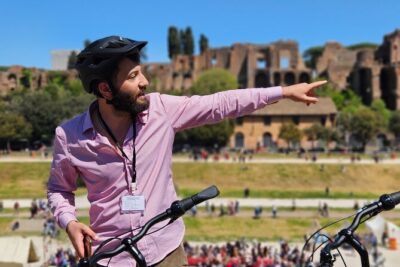
What I like most is the pacing: it’s short (about 3 hours), and every stop gives you time to look closely and take photos without getting stuck in long lines—especially since there’s no monument entry. I also love the human touch from guides like Joseph, Drita, and Isuf, who keep things funny and engaging (yes, even with quizzes) and make practical Rome questions feel easy.
One thing to consider: this is a walking tour with moderate fitness needed, and the ending includes stairs for some people to climb. If you hate hills or stairs, you’ll feel it.
In This Review
- Key highlights you’ll actually care about
- Three Hours on Foot: What the Tour Feels Like
- Colosseum Start: Seeing the Amphitheater Without the Ticket Stress
- Mussolini’s Via Dei Fori Imperiali and the Vittoriano Photo Moment
- Pantheon Time: Church in Action Plus an Espresso Break
- Pontifical Gregorian University: A Quick Stop With a Big Context
- Trevi Fountain: The Water-and-Stone Icon That Lives for Photos
- Spanish Steps and the Temple of Hadrian: Romance Meets Roman Power
- Villa Borghese Park Finish: The Panoramic View That Closes the Loop
- Guide Energy Matters: From Drita to Isuf to Joseph
- Price and Value: Is $48.39 Worth It?
- Who This Tour Is Best For (and Who Should Skip It)
- Should You Book This 10 Wonders of Rome Walk?
- FAQ
- How long is the tour?
- What does the tour include?
- Are we entering the monuments?
- Which stops have free admission versus tickets not included?
- How big is the group?
- Where do we meet and where does the tour end?
- What ages can participate?
Key highlights you’ll actually care about
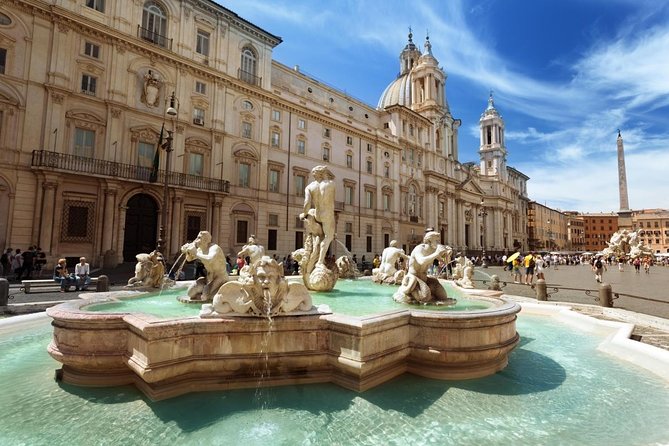
- Small group (max 12) for more guide attention and better photo timing
- No inside-entry: you see the icons up close without waiting at ticket lines
- Real photo stops at Trevi Fountain, Vittoriano, and the Roman viewpoints
- Pantheon break with espresso (the guide calls it a treat)
- Practical orientation to Rome plus tips you can use the rest of your trip
Three Hours on Foot: What the Tour Feels Like
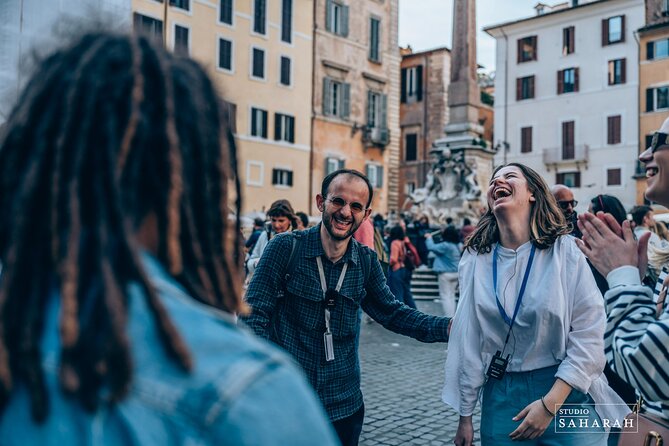
This tour is designed for the “I have limited time” problem. You cover a lot of Rome’s center in about 3 hours, and you do it on foot with an official guide plus Wi‑Fi in the mix. The small group size (up to 12 people) matters more than it sounds—when the plan is tight, having fewer people makes photo stops workable and keeps the group from turning into a slow-moving blob.
The route focuses on exterior views and big-picture history. That means you won’t enter the monuments, and you also won’t waste energy on queues. You’ll get a sequence of standout landmarks—Colosseum, Pantheon, Trevi Fountain, Spanish Steps—then a couple of Roman-world details that most first-timers miss unless someone points them out.
Logistically, you start at Via del Monte Oppio, 3 (00184 Rome) and finish at Viale del Belvedere (00187 Rome). The end point is in the city center area, but it’s still an “end of a walk” rather than a loop. Plan your next activity with that in mind.
Fitness-wise, expect walking and street crossings. The tour info calls for moderate physical fitness, and the reviews add a quick reality check: the final stretch includes stairs. If you’re traveling with anyone who has trouble with steps, it’s worth taking that seriously.
You can also read our reviews of more tours and experiences in Rome.



Colosseum Start: Seeing the Amphitheater Without the Ticket Stress

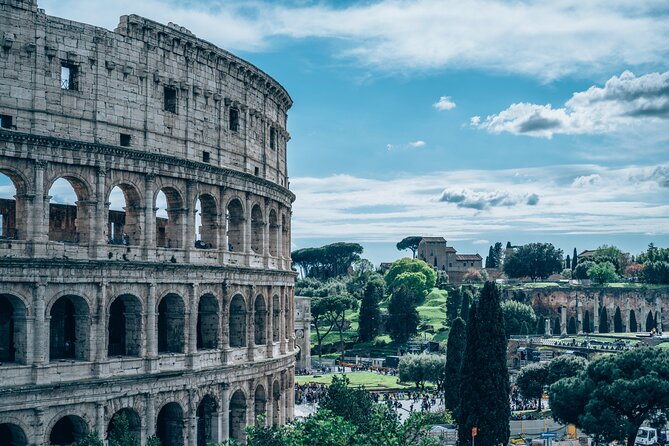
You begin in front of the Colosseum. The time you get here is short—about 15 minutes—but that’s enough to orient yourself. Since the tour doesn’t include entry, you don’t need to plan around timed tickets or long security waits. Instead, you’ll focus on what you can see from the outside and what it meant in its heyday.
Outside looks can be tricky if you don’t know what you’re staring at. That’s where a good guide earns their pay: you’re not just taking photos of a famous ruin, you’re learning how to read it—where the main structure sits in relation to the surrounding streets, and what makes it such a symbol of Roman power.
If you’re the type who likes to understand before you go, this first stop works well. You’re standing in front of Rome’s most recognizable stage, and then the tour moves you outward into the rest of the city.
Mussolini’s Via Dei Fori Imperiali and the Vittoriano Photo Moment
Next comes the walk through Mussolini’s grand Via dei Fori Imperiali. Even if you’ve never studied 20th-century Italian politics, this stretch is worth your attention because it shows how Rome keeps layering eras on top of each other. Big street, big angles, big contrast.
You then reach Venezia Square, where you’ll take photos facing the Vittoriano (also known as the Altar of the Fatherland). This stop is set up for pictures—about 10 minutes—and that’s a smart move. The monument’s scale is hard to capture casually, and the guide helps you find positions that look good in photos without spending your whole time wandering.
The value here is more than aesthetics. You get a sense of how modern Rome frames national memory with monumental architecture, and you learn to spot it fast when you see it again later on your own.
Pantheon Time: Church in Action Plus an Espresso Break
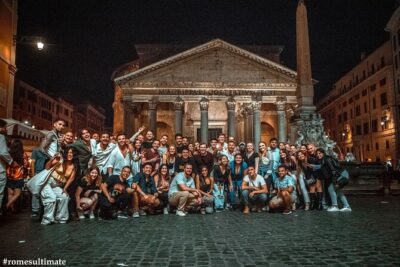
The Pantheon stop is about 15 minutes and it’s one of the tour’s best “walk-up and feel it” moments. The Pantheon still functions as a church, so you’re not just viewing an ancient site—you’re seeing a living space. Even if you’re not going inside on this tour, standing nearby gives you that unmistakable dome-and-portico silhouette that defines the building.
The itinerary also builds in a real break: after the Pantheon, you can get Italian espresso—the guide says it’s their treat. Near the Pantheon, there’s a well-known gelateria called Gelateria Fiocco Di Neve, and if you’re an ice-cream person, that’s a convenient pointer for later.
Why I like this stop for first-time visitors: it feels like Rome’s “present day” and “ancient day” are happening at the same time. One minute you’re looking at a masterpiece of Roman engineering; the next, you’re doing a quick coffee reset and taking photos without rushing.
Pontifical Gregorian University: A Quick Stop With a Big Context
Then you pass by the Pontifical Gregorian University, described in the tour plan as the first university founded by Jesuits. The stop here is short—about 10 minutes—and it’s more of a “you’ll understand what you’re seeing next time” kind of moment.
This is where the tour helps you connect dots. Rome can feel like a collage of eras, and your own self-guided wandering gets easier when you know which institutions shaped education and scholarship here. Even without a deep building visit, you get a landmark reference point you can carry with you.
If you like your history in digestible pieces, this stop hits that sweet spot.






Trevi Fountain: The Water-and-Stone Icon That Lives for Photos
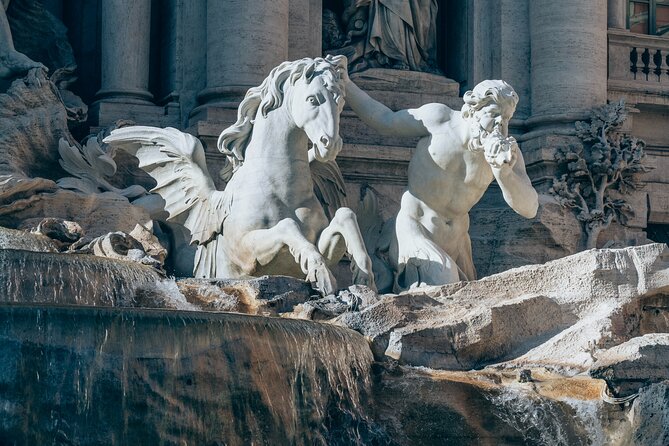
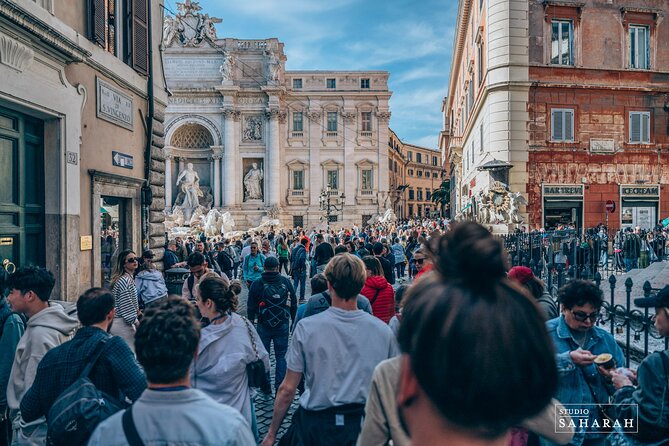
The tour then lands at Trevi Fountain, with about 15 minutes at the stop. The plan labels admission as free, and in this format you’re focusing on the exterior view and photo moments rather than entering anything.
Trevi is famous for a reason: it’s a visual crowd-pleaser. The fountain’s mix of stone, water, and dramatic detail makes it one of those Rome locations where your instinct is right—take your photos and then look again. A good guide will help you with viewpoint timing and where to stand so the composition works better than the first spot you pick.
This stop also tends to be memorable because it’s photo-first. If you want one “I was really there” image that looks like Rome, this is usually it.
Spanish Steps and the Temple of Hadrian: Romance Meets Roman Power
After Trevi, you head toward the Spanish Steps for about 10 minutes. The itinerary notes admission as free, so you’re there for the exterior experience and the atmosphere. The Spanish Steps are famous for elegance and their romantic feel, and even on a brisk group tour, they deliver that mood quickly.
From there, you get two shorter, story-based stops:
- Tempio di Adriano (about 5 minutes): the guide talks about the Temple of Hadrian.
- Column of Marcus Aurelius (about 4 minutes): the guide talks about this impressive artwork.
These micro-stops are sneaky-good. They’re the kind of detail that turns a highlight walk into something you can remember with meaning later. You don’t just see a pretty street corner—you learn what you’re looking at, including the Roman obsession with emperors and monuments meant to last.
Villa Borghese Park Finish: The Panoramic View That Closes the Loop
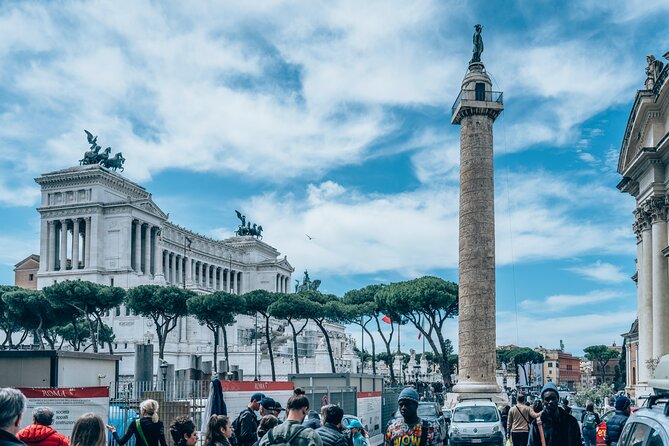
The final leg takes you past Villa Borghese Park and toward a “secret” panoramic view, the tour’s last destination. This is one of those finishing touches that makes the whole experience feel complete—Rome changes as you look out, and a viewpoint helps you understand the city’s scale.
This is also where the stairs come in. The tour info calls for moderate fitness, and the reviews add a practical note: at the end, you may need to climb stairs to reach the view. If stairs are an issue for you, plan accordingly—comfortable shoes help, and it’s smart to pace yourself on the final approach.
Still, if you can manage the steps, the payoff is worth it. A panoramic view is the easiest way to store the “shape” of Rome in your memory.
Guide Energy Matters: From Drita to Isuf to Joseph
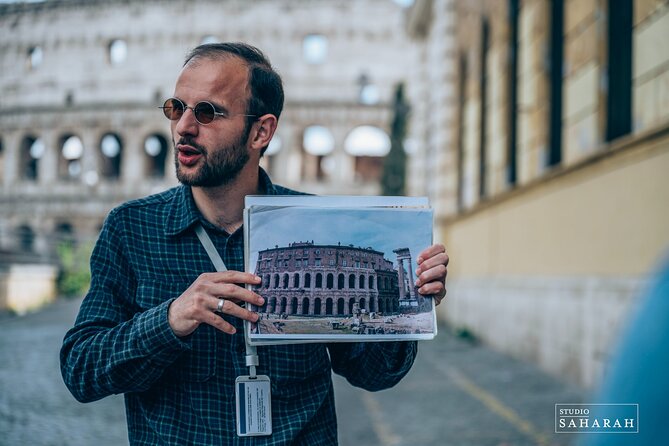
The strongest repeat theme in the tour experience is the guide style. The tour is led by an official tour guide, and the vibe you’ll likely get is fun-but-focused. Guides such as Joseph, Drita, and Isuf show up again and again in the feedback, and they share a pattern: they keep it light, they tell stories, and they make sure you’re not just collecting photos—you’re collecting context.
I also appreciate how guides handle the practical stuff. One of the biggest wins is that you come away with actual pointers for being in Rome, like how to navigate the subway and how to handle day-to-day questions. When your tour guide can explain logistics without turning it into a lecture, you relax. Then you enjoy the walk instead of worrying about what to do next.
Wi‑Fi is included, which can help if you’re trying to quickly check directions or save memories without draining your phone data. And because it’s a walking tour with a small group, it’s easier to stay together.
Price and Value: Is $48.39 Worth It?
At $48.39 per person, this tour isn’t trying to be cheap. But it also isn’t charging you for monument admissions you aren’t using. The main “product” here is an official guide plus a structured route across major highlights in a very short window.
You’re paying for:
- time savings (a tight route with smart stopping points)
- reduced decision fatigue (you don’t have to figure out the order)
- interpretation (you get the why behind what you’re seeing)
- a small-group feel (up to 12 people, so it’s not chaos)
The no-entry format helps value too. You avoid the cost and delays of entry tickets, and you get a high-impact overview you can build on later. If you want the big Roman icons plus orientation, this tends to be a strong first-days choice.
If you’re the type who already knows Rome’s timeline and wants deep museum time, you might prefer a different kind of tour. But for most people—especially if you want to see a lot quickly—this is good value for a focused, guided orientation.
Who This Tour Is Best For (and Who Should Skip It)
This tour makes the most sense if you fit one of these profiles:
- You’re short on time and want a fast introduction to Rome’s center.
- You like walking tours but want help with the “what am I looking at?” part.
- You care about photo stops and want guidance on where to stand.
- You want a first-day plan so your remaining days feel easier.
It’s less ideal if:
- You hate walking or stairs. The ending includes stairs, and the tour calls for moderate fitness.
- You need guaranteed monument entry. This tour explicitly does not enter the monuments.
- You want long, quiet downtime at one location. Each stop is brief by design.
Also, the age info matters. It’s 11 years and up, and babies under 2 are free. If you’re traveling with kids, the small group format can be a plus, but you’ll still be on your feet.
Should You Book This 10 Wonders of Rome Walk?
I think you should book it if you want the simplest possible way to see Rome’s biggest hits in a half-morning/half-afternoon-sized window. This is the kind of tour that helps you get your bearings fast—Colosseum first, then the Pantheon, then Trevi and the Spanish Steps, ending with a viewpoint that ties it together.
Before you click confirm, be honest about two things: you’ll walk a lot, and you’ll likely deal with stairs at the end. If that’s manageable, the payoff is strong—especially because the guides (I’ve seen names like Joseph, Drita, and Isuf) are built for storytelling, humor, and practical tips, not just reading facts off a sign.
Quick reality check: the experience is listed as non-refundable and changes aren’t allowed if you cancel or amend. So make sure the day and your legs are both ready.
FAQ
How long is the tour?
It runs for about 3 hours (approx.).
What does the tour include?
You get Wi‑Fi and a walking tour with an official tour guide.
Are we entering the monuments?
No. The tour states that you won’t enter inside the monuments.
Which stops have free admission versus tickets not included?
The itinerary notes Trevi Fountain and the Spanish Steps as admission free, while several other stops list admission ticket not included.
How big is the group?
The tour has a maximum of 12 travelers.
Where do we meet and where does the tour end?
You meet at Via del Monte Oppio, 3, 00184 Roma RM and the tour ends at Viale del Belvedere, 00187 Roma RM.
What ages can participate?
The tour is for 11 and old and up, and babies under 2 are free.