REVIEW · ROME
Vatican Museums, Sistine Chapel & Basilica
Book on GetYourGuide →Operated by Groupstudio srl · Bookable on GetYourGuide
Vatican crowds can feel endless. This early morning semi-private tour gives you skip-the-line entry to St. Peter’s Basilica and a guided run through the Vatican Museums and the Sistine Chapel in about 2.5 hours. I like that it’s built for focus: you get a licensed guide and headsets so you’re not straining to hear in a noisy museum. The one thing to keep in mind is that you’ll need to follow strict security and dress rules, so plan your outfit and pack smart.
What makes this outing especially practical is the flow. You start with the art and collections that most people never quite structure themselves, then you end at the chapel frescoes you came for—before moving on to St. Peter’s Basilica via a guided route that’s not the usual public grind.
In This Review
- Key Things You’ll Notice On This Vatican Tour
- Why This Early Start Changes Everything
- Vatican Museums: From Pio-Clementine Classics to the Maps Gallery
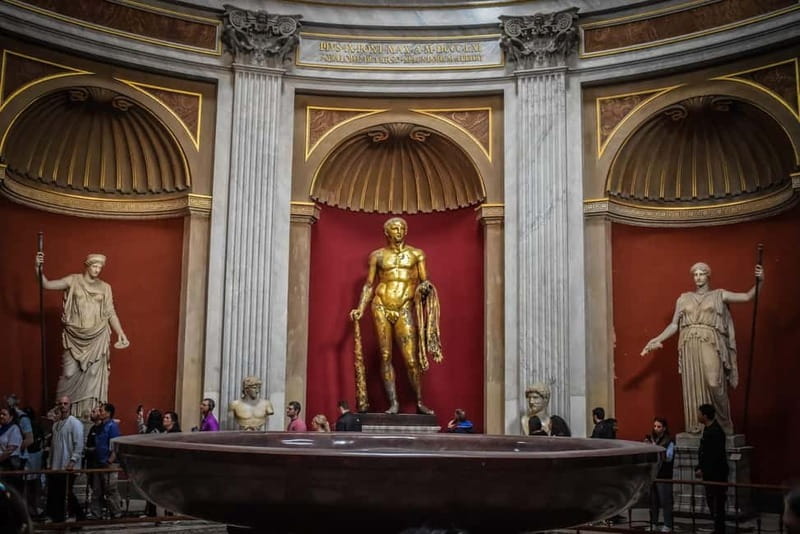
- Pio-Clementine Museums and the sculptor’s greatest hits
- Gallery of Tapestries: art that works like a time machine
- Gallery of Maps: a 16th-century view of the world
- What to consider
- Raphael Rooms and Borgia Apartments: When the Vatican Shows Its Political Brain
- Raphael Rooms: art as a way to explain ideas
- Borgia apartments: a different mood
- Practical note
- Sistine Chapel Time: Short, Focused, Worth It
- How to make that time count
- The one consideration
- Getting Into St. Peter’s Basilica Without the Usual Waiting
- Why skip-the-line matters here
- Dress and security reminders (read this before you go)
- Group Size, Headsets, and English Comfort
- Price: Is $101.96 Good Value for What You Get?
- Who This Tour Suits Best (and Who Might Prefer Something Else)
- Should You Book This Vatican Museums, Sistine Chapel & Basilica Tour?
- FAQ
- How long is the tour?
- What’s included in the price?
- Is St. Peter’s Basilica included with the tour?
- What do I need to bring?
- Are food and drinks included?
- What should I avoid wearing or bringing?
- Can I cancel for a refund?
Key Things You’ll Notice On This Vatican Tour
- Early morning timing: start when the Vatican is less chaotic and your guide can keep momentum.
- Small group setup: easier pace, fewer bottlenecks, and more back-and-forth.
- Headsets included: you hear the guide clearly without crowding close.
- Pio-Clementine Museums highlights: including the Laocoon group and Belvedere torso.
- Structured end at the Sistine Chapel: you get a short, focused time in the chapel to take it in.
- Skip-the-line access to St. Peter’s Basilica: separate entrance logic means less waiting.
Why This Early Start Changes Everything
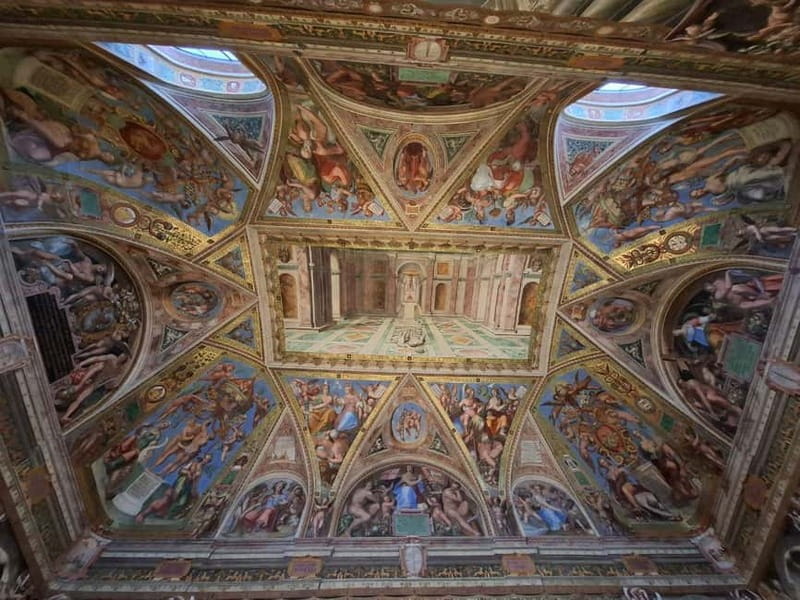
The Vatican is famous for two things: world-class art and long lines. Doing this with an early morning start is the difference between rushing and actually seeing. When you begin early, you’re more likely to get through the busiest pinch points without spending the whole trip standing still.
This tour is also described as semi-private and small-group. That matters more than it sounds. A big group tends to turn the visit into a conveyor belt. A smaller group usually means the guide can slow down when something is genuinely worth your time—like explaining what you’re looking at instead of sending you past it.
At about 2.5 hours, this is not a slow, lingering day tour. It’s a smart hit list. If you want to spend half a day staring at one painting, you may feel rushed. If you want the main sights organized and efficient, you’ll like the format.
You can also read our reviews of more museum experiences in Rome


Vatican Museums: From Pio-Clementine Classics to the Maps Gallery
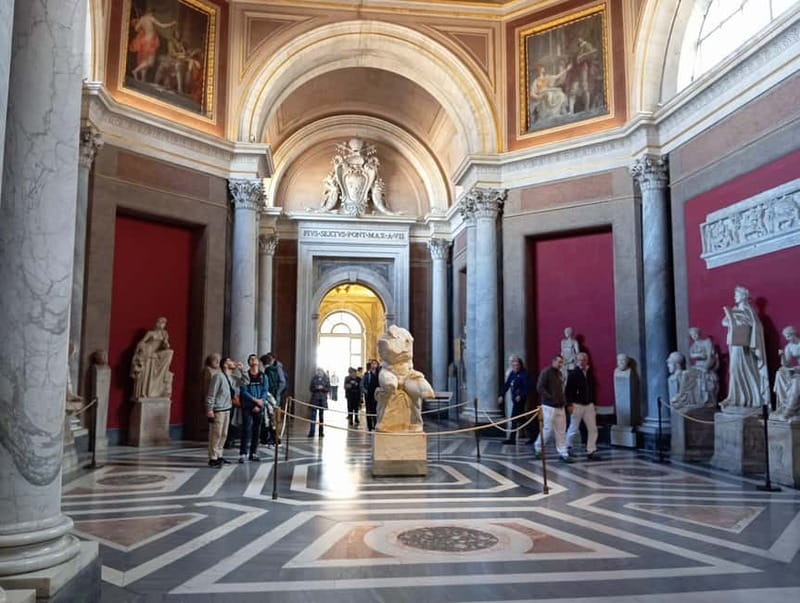
Your route through the Vatican Museums is built like a guided story: start with sculpture and famous masterpieces, then widen to galleries that show how the Vatican collected knowledge, power, and art.
Pio-Clementine Museums and the sculptor’s greatest hits
You’ll visit the Pio-Clementine Museums, which is where the tour aims you at some of the most famous ancient sculpture. This is a great stop if you’re not an archaeology specialist, because the guide’s job is to translate what matters visually—pose, form, myth, and why these pieces became reference points for later art.
Two standout items included on this route are:
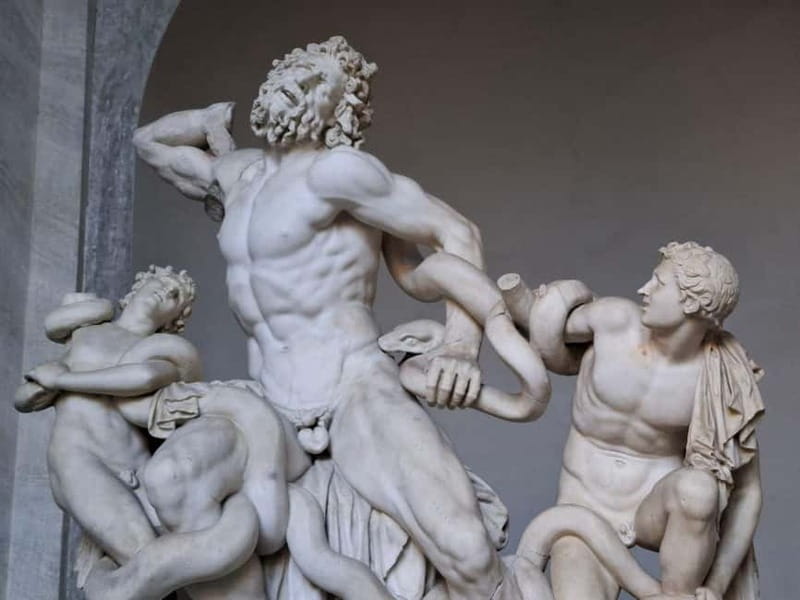
- Laocoon group: a dramatic, emotionally charged ancient sculpture set up to be read through expression and movement.
- Belvedere torso: the tour spotlights it as one of the most famous statues, often admired for how the figure’s form still communicates power even without the full body detail.
Even if you’ve seen photos before, seeing these objects in person changes the feel. Real scale matters. The lighting and placement matter too. In a museum, it’s easy to think you understand something from an image. The guide’s interpretation helps you notice what you would otherwise miss.
Gallery of Tapestries: art that works like a time machine
Next comes the Gallery of the Tapestries. This isn’t just about admiring something pretty. Tapestries are storytelling tools—big images designed to be viewed, discussed, and understood. If you’re the kind of visitor who likes learning how art served real life in the past, this room fits that taste.
If you’re thinking, I came for Michelangelo, don’t worry. The tapestry stop works as a bridge. It helps you reset your eyes from sculpture to wall-sized imagery before you move into the Raphael-era rooms.
Gallery of Maps: a 16th-century view of the world
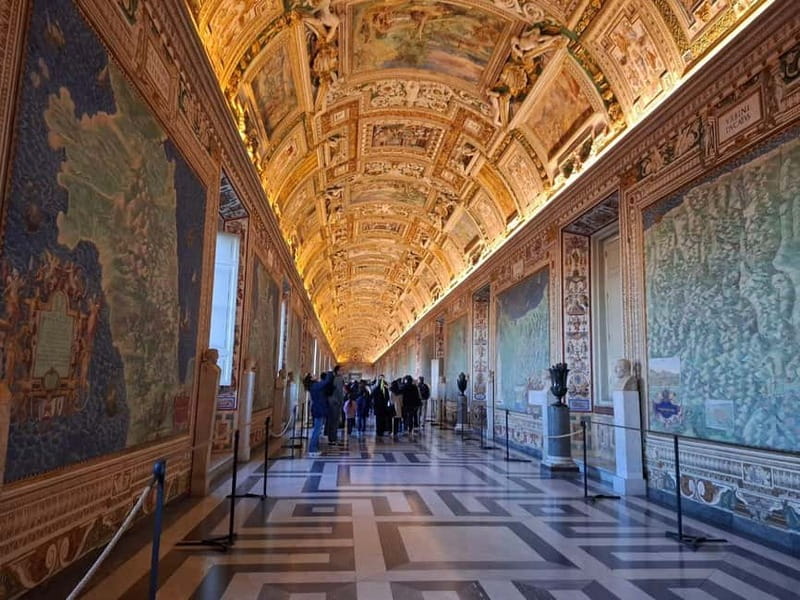
Then you’ll see the Gallery of Maps, painted in the 16th century. The value here is perspective. It’s a reminder that people built a visual sense of geography in their own time, with their own priorities and knowledge limits.
This gallery can be a surprisingly fun stop if you let it be. Instead of trying to read every label like a homework assignment, look at how the world was pictured—coasts, borders, and the sheer effort of turning knowledge into something you could walk past and study.




What to consider
The museums are large. You’re moving through a lot in a short time. That’s not a flaw—it’s the point. Just don’t plan to treat this as a deep, solo museum wandering experience. Come ready to take guided notes mentally, snap a few photos where allowed, and trust the structure.
Raphael Rooms and Borgia Apartments: When the Vatican Shows Its Political Brain
After the main museum galleries, you enter the former Papal apartments—Raphael Rooms and Borgia apartments.
This is one of the most important transitions of the whole tour. The Vatican isn’t only a place of religious devotion. It’s also a place where art was used to communicate authority, ideology, and the story the Church wanted the public to believe.
Raphael Rooms: art as a way to explain ideas
The Raphael Rooms are a major draw for visitors who like composition, storytelling, and visual messaging. Since you’re with a licensed guide, you’re not just staring at frescoes. You’re getting the context that makes the scenes click.
If you’ve ever looked at a chapel painting and wondered, So what am I supposed to notice? this is where the guide’s explanations do the heavy lifting.
Borgia apartments: a different mood
Then you move into the Borgia apartments. These spaces tend to feel distinct from the Raphael rooms, and the tour’s pacing helps you reset your eyes as you go. Again, the value is not just the images. It’s how the guide connects what you’re seeing to the people and periods behind it.
Practical note
You’ll likely spend most of your time indoors in a controlled museum environment. That’s good for comfort, but it also means you should prepare for a lot of standing and moving. Wear shoes you can handle for a couple of hours.
Sistine Chapel Time: Short, Focused, Worth It
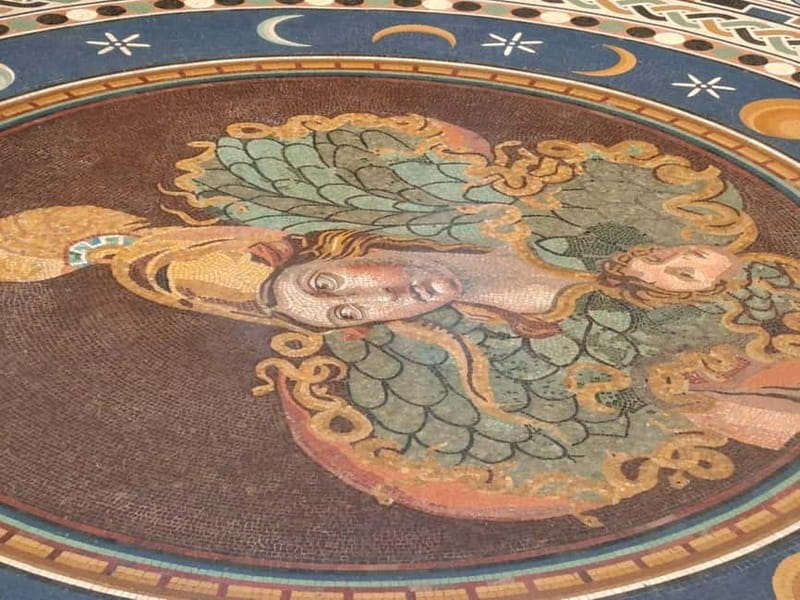
The tour ends the museum run in the Sistine Chapel, named after Pope Sixtus IV. This is the moment most people imagine—Michelangelo’s ceiling and the frescoes that made the chapel a cultural obsession.
You’ll spend a little time there to take in the frescoes made by Michelangelo Buonarotti, including the ceiling work and the Last Judgment. The tour approach here is key: you’re not just shoved through. You get enough time to look up, absorb what you’re seeing, and understand why the chapel is still such a big deal.
How to make that time count
Once you’re inside, keep your expectations simple:
- Look up slowly.
- Don’t try to memorize everything.
- Let the guide’s cues steer where your eyes should go first.
If you’re the type who likes a plan, you can use the guide’s explanations to pick one or two focal points. Then you’ll actually remember something when you leave.
The one consideration
This part is still a chapel environment with rules and crowd flow. You’re not in a private room. That’s normal for the Sistine Chapel experience. If you prefer silence and long contemplation, you might feel the time window is tight—but for most visitors, it’s the right amount when your tour also includes St. Peter’s Basilica.
Getting Into St. Peter’s Basilica Without the Usual Waiting
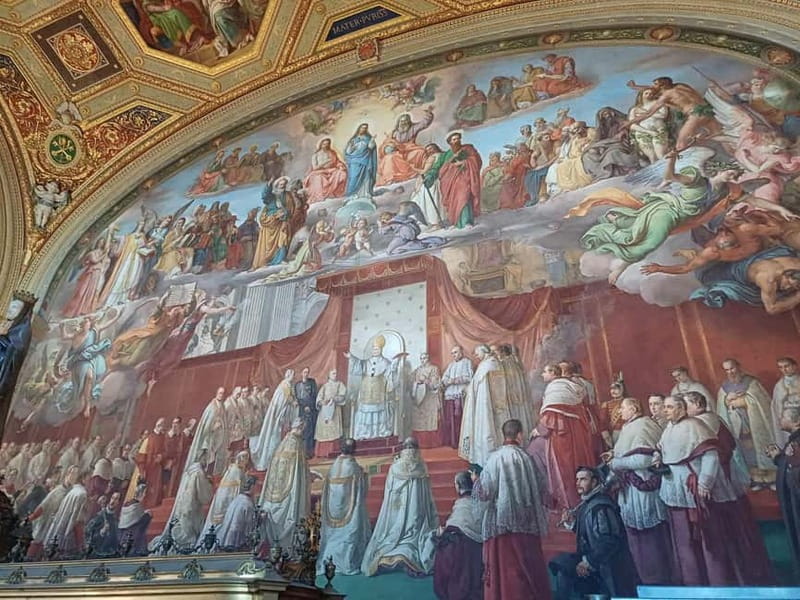
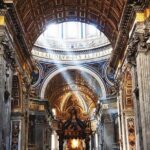
After the Sistine Chapel, you exit via a guided tour route that’s not open for general public, heading toward St. Peter’s Basilica. The big included win here is skip-the-line access through a separate entrance, plus a licensed guide who keeps you oriented.
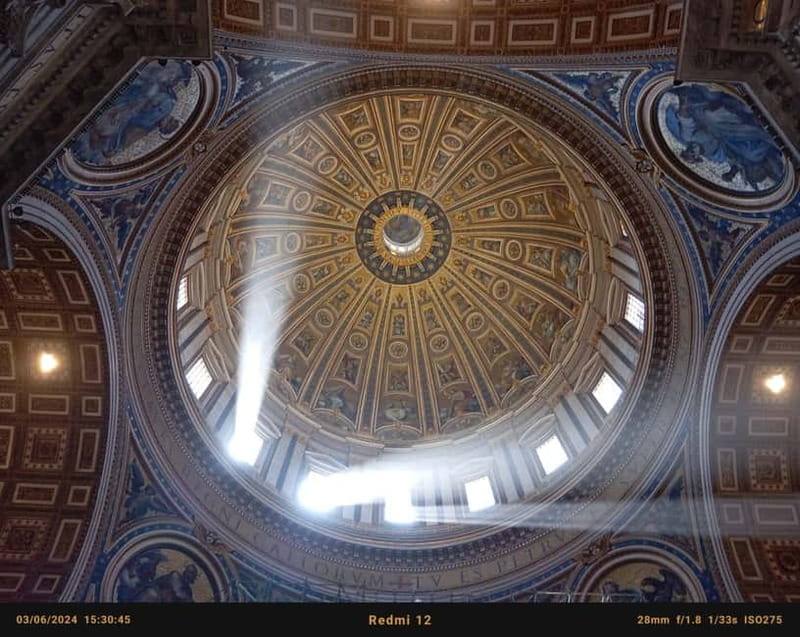
Basilica time is where your Vatican day turns from art museum to spiritual monument. You’ll feel it in the scale right away. The guide’s job is to help you see the right things in the right order so you don’t spend your first minutes lost in a huge space.
Why skip-the-line matters here
Waiting in transit lines inside Vatican areas can eat up your energy fast. Skip-the-line isn’t only about saving time. It also helps you arrive to the basilica with enough attention left to appreciate it instead of feeling wiped out before you even start looking.
Dress and security reminders (read this before you go)
This tour has clear restrictions. Plan ahead:
- Bring your passport or ID card.
- Avoid short skirts and sleeveless shirts.
- Expect no weapons or sharp objects.
- Drones, tripods, and touching exhibits are not allowed.
- The list also flags loose clothing and bare feet as not permitted.
If you show up in the wrong outfit, you may get turned back at security or forced to improvise at the last second. That’s the kind of hassle that turns a great tour into a stressful one. Aim to comply from the start.
Group Size, Headsets, and English Comfort
The tour includes headsets, which is quietly one of the best features in a place like the Vatican. You’re walking through different rooms where audio carries differently, and with headsets you can stay at a comfortable distance without losing the guide’s explanation.
The experience is described as English live tour guide. And there’s a practical plus noted: the guide stays patient and communicative even when not everyone in the group speaks English. With headsets, you’re not stuck guessing what’s happening when the group gets mixed.
Price: Is $101.96 Good Value for What You Get?
At $101.96 per person for about 2.5 hours, this tour isn’t “cheap,” but it also isn’t trying to be. The value comes from the combination:
- Entry ticket included for the museum experience.
- Licensed guide.
- Headsets to keep the tour readable.
- Skip-the-line access to St. Peter’s Basilica through a separate entrance.
If you tried to stitch together museum entry plus an efficient basilica visit on your own, you’d likely spend a lot of time figuring out routes, rejoining lines, and losing the guided structure that tells you what to prioritize. In other words, you’re paying for saved time and a clean flow.
The only real downside in the price logic is that some people prefer slower museum drifting. If that’s your style, you might feel shortchanged by the 2.5-hour format. If you want a strong plan with minimal dead time, the cost starts to make sense fast.
Food and drinks are not included, so budget for a quick bite before or after.
Who This Tour Suits Best (and Who Might Prefer Something Else)
You’ll likely love this tour if:
- You want the big Vatican highlights organized into one visit.
- You don’t want to spend most of your time in lines.
- You value a guide’s context for sculpture, frescoes, and the meaning behind the rooms.
You might skip it (or pair it with extra time) if:
- You plan to linger for hours in one room.
- You’re sensitive to indoor crowds and constant movement.
- You’re not comfortable following dress/security rules and want a no-stress day.
This is also a solid pick for first-time Vatican visitors who want a clear map of where to look and what to care about.
Should You Book This Vatican Museums, Sistine Chapel & Basilica Tour?
If you’re trying to fit the Vatican’s major “must-sees” into a single morning without burning hours in queues, this is an easy yes. The early start, small-group feel, headsets, and skip-the-line basilica access add up to a trip that’s efficient without feeling like a race.
I’d book it if your goal is to see the key collections (including the Pio-Clementine sculpture highlights), spend time in the Sistine Chapel, and still leave with a sense of meaning—not just a checklist of photos.
Just do two things first: confirm your start time based on availability, and dress for the rules. When you get those right, the tour runs like it was designed to.
FAQ
How long is the tour?
The tour duration is about 2.5 hours. Starting times depend on availability.
What’s included in the price?
You get an entry ticket to the museum, headsets, a licensed live tour guide, and skip-the-line access into St. Peter’s Basilica.
Is St. Peter’s Basilica included with the tour?
Yes. The tour includes access into St. Peter’s Basilica and uses skip-the-line access through a separate entrance.
What do I need to bring?
You need your passport or ID card.
Are food and drinks included?
No. Food and drinks are not included.
What should I avoid wearing or bringing?
You should not wear short skirts or sleeveless shirts. You also can’t bring drones or tripods, and weapons or sharp objects aren’t allowed. Touching exhibits is not allowed either.
Can I cancel for a refund?
Yes. You can cancel up to 24 hours in advance for a full refund.