REVIEW · ROME
The Treasures of Rome
Book on Viator →Operated by Greenline Tours · Bookable on Viator
Small time, big Rome energy. This smart morning tour stacks the city’s headline sights, then drops you at the Vatican. I especially like the Pantheon stop (ancient Rome at its best) and the Trevi Fountain moment, plus you’ll get a guided route through the maze of cobblestones without trying to map it all yourself. One heads-up: there’s a lot of walking, and the pace can feel intense on hot days or for anyone with limited mobility.
You’ll start in central Rome with a local guide, then bounce between the most photo-ready stops in the historical core. It’s also a compact group experience (max 20 travelers) with an air-conditioned vehicle break when you need it. The possible drawback is that you can’t always count on extra time inside St. Peter’s Basilica on every day, depending on conditions like Sundays and religious events.
In This Review
- Key things that make The Treasures of Rome worth your time
- Piazza Barberini and the route into Rome’s historic core
- Trevi Fountain in limited time: how to make it count
- Pantheon: ancient architecture, Renaissance names, and the best payoff
- Piazza Navona: why Bernini-style fountains feel different in person
- Riding to the Vatican: St. Peter’s Square and the basilica dress rules
- Pace and comfort: the part that can make or break the morning
- Value for $49.26: what you’re really paying for
- Who should book this tour (and who should skip it)
- Should you book The Treasures of Rome?
- FAQ
- How long is The Treasures of Rome tour?
- What time does the tour start?
- Where do I meet for the tour?
- Where does the tour end?
- What’s included in the price?
- Is St. Peter’s Basilica included?
- What dress code do I need for churches?
- Is there a cancellation window for a full refund?
Key things that make The Treasures of Rome worth your time
- Pantheon + Raphael’s tomb: you’ll see the building and learn what’s behind the famous names inside
- Bernini’s touch at Piazza Barberini: Triton Fountain (1643) and the Barberini Bees are quick but memorable
- Real Roman squares, not just street corners: Trevi, Piazza Navona, and St. Peter’s Square are all different flavors
- Small group (up to 20): easier to hear your guide and keep your place
- End at St. Peter’s Square: you get time to keep exploring on your own after the tour finishes
- Dress code is strict in churches: plan for covered knees and shoulders, or you’ll be turned away
Piazza Barberini and the route into Rome’s historic core
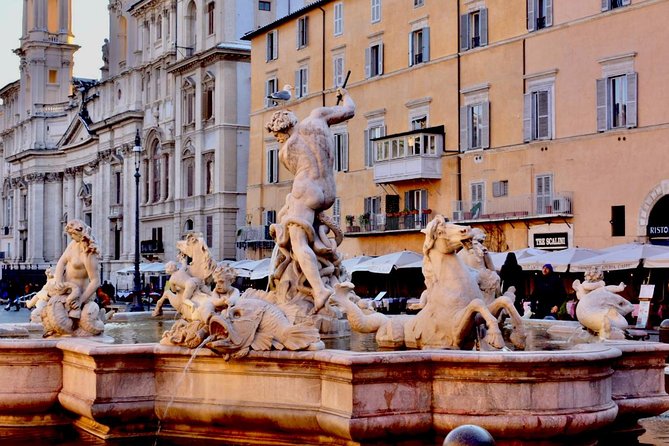
This is a classic morning-format highlights tour. You meet in central Rome at Via Giovanni Amendola, 32, then head toward the historic center on a route designed to get you seeing Rome fast. Since it’s a 3-hour experience, it works best as a first or second-day plan—when you want an orientation tour that points you toward what you’ll want to return to later.
The first stop is Piazza Barberini, a small square with big art credentials. In the center is the Triton Fountain, created by Gian Lorenzo Bernini in 1643, made of travertine, with Barberini family coats of arms among the sculptural details. On a corner near Via Veneto you’ll also spot the Fountain of the Bees, tied to the Barberini insect symbol. It’s not the most famous spot in Rome, which is exactly why it’s useful: you see the city’s layers without spending the entire morning fighting for position at the top three crowd magnets.
If you prefer a slower start, be aware this tour moves quickly. You’ll likely be standing, turning, and walking through dense streets that are uneven and cobbled. Come with comfortable shoes and a plan for wind-down breaks if you need them.
You can also read our reviews of more tours and experiences in Rome.



Trevi Fountain in limited time: how to make it count
Next up is Trevi Fountain (Fontana di Trevi). You get about 20 minutes here, which is enough time to see it from different angles if you’re deliberate about where you stand. I like this stop on a guided tour because you’re not wandering for 45 minutes just to find the best sightline.
Two practical tips help you get more out of this short window. First, decide what your goal is before you arrive: a classic front photo, a side view, or a coin-throw moment. Second, be ready for tight sidewalks around the fountain—Rome loves a crowd, especially at Trevi—so keep your camera strap tight and your group together.
One fun tradition you can do if you want: tossing a coin into the water. Even if you don’t, the best part is the fountain itself—how it looks like architecture and water fused into one scene. The tour includes time for you to actually take it in, not just pass by.
Pantheon: ancient architecture, Renaissance names, and the best payoff
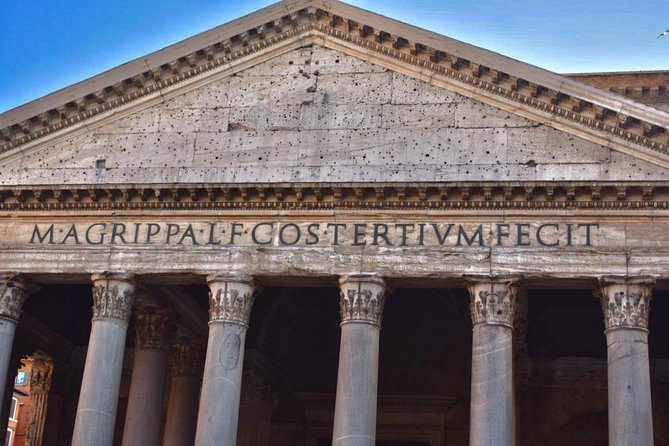
The Pantheon stop is the heart of the tour for many people, and it’s easy to see why. The visit is scheduled for about 30 minutes, and you’re stepping into one of the best-preserved buildings from ancient Rome. That means you’re not just looking at ruins—you’re seeing a functioning masterpiece that people still use today.
Here’s what makes it special beyond the postcard dome. The Pantheon began as a temple commissioned by Marcus Agrippa during Augustus’s reign, then it was completed under Emperor Hadrian. Since the 7th century, it has been used as a church dedicated to St. Mary and the Martyrs. In other words, you’re watching a building that survived by changing roles, not by staying frozen in time.
The tour also points out a major draw: inside, you’ll see the tomb of Renaissance artist Raphael. You’ll also encounter the tomb of King Umberto I, among others. That matters because it turns your visit from architecture appreciation into a quick lesson on how Rome layers centuries—ancient structure, medieval worship, Renaissance memory, and modern-day visitors all under the same roof.
The practical side: you’ll want to pace yourself. Thirty minutes sounds long until you factor in entering, finding your guide’s group, looking up, and moving to see the tomb areas. If you’re someone who likes slow looking, set expectations: this tour gives you the wow-factor fast, and you can always return later for a deeper look.
Piazza Navona: why Bernini-style fountains feel different in person
After Pantheon, you’ll stroll over to Piazza Navona, one of Rome’s great public spaces. You’ll get about 20 minutes, which works well here because the “show” is the square itself. You’re built to sit in the scene, not sprint through it.
The location is famous even before the fountains. The piazza is built on the site of the Stadium of Domitian from the 1st century AD, and its long oval shape follows the original stadium layout. The ancient Romans came for games there, known as the agones, and the area was called Circus Agonalis.
The tour’s highlight is the fountains designed by Baroque master Gian Lorenzo Bernini. You’ll see that Baroque style isn’t just about decoration—it’s about drama, movement, and theatrical scale. On a quick visit, the trick is to look for how the water sits in the architecture and how the edges of the square frame everything. If you only stand in one spot, you may miss how the effect changes as you move a few steps.
One small drawback: if your group is bunched tightly, it can feel harder to find a clear view. Plan to move slightly to the side for photos and let the center be what it is—an eye-catching stage for the city.
Riding to the Vatican: St. Peter’s Square and the basilica dress rules
The tour then switches gears from central Rome to the Vatican area. You’ll board an air-conditioned vehicle for the ride, and your final stop is St. Peter’s Square. You’re given about 30 minutes here, plus the chance to explore on your own after the tour ends in Piazza San Pietro.
St. Peter’s Square is designed like a grand stage. At the center stands an ancient Egyptian obelisk erected in 1586. Gian Lorenzo Bernini shaped the square’s layout with the famous colonnades, dated 1656/1667. Seeing those colonnades in person feels more like theater than sightseeing—you get pulled toward the basilica’s mass.
The inside visit of St. Peter’s Basilica is included, but with an important reality check: it will not be possible on Sundays, religious festivals, and religious ceremonies, when the itinerary may change. That’s not a small detail. If you’re traveling on a weekend and you strongly want the basilica interior, plan extra time later or keep your expectations flexible.
Dress code is strictly enforced in places of worship and selected museums. You must have knees and shoulders covered for both men and women. That means no shorts and no sleeveless tops. If your wardrobe is light for summer heat, bring a thin layer you can throw on fast.






Pace and comfort: the part that can make or break the morning
Let’s talk about the thing that matters most on Rome tours: your feet. This itinerary is built for visibility, not leisurely strolling. Between coach regulations and the historic street layout, you can expect uneven, cobbled surfaces and a fair amount of walking. The good news is that you can stay on the coach, but you’ll miss many of the sights.
Some people find the balance fine—bus in between, then short bursts on foot. Others feel the walking stretches longer than expected, especially on a hot morning when the sun catches the stone streets. If you’re the type who hates feeling rushed, build in your own buffer. Carry water, wear grippy shoes, and expect that you’ll be standing for photos in places where moving slowly isn’t easy.
Group size helps here. With a maximum of 20 travelers, the pace is easier to manage than with huge crowds. Still, you’ll want to keep close to your guide so you don’t get left behind in the swirl of streets.
Value for $49.26: what you’re really paying for
At about $49.26 per person for roughly 3 hours, this isn’t priced like a museum-heavy ticket. Instead, it’s a guided coordination package. You’re paying for:
- a local guide leading you through the centro storico efficiently
- an air-conditioned vehicle to break up the walking
- time with multiple top sights: Trevi, Pantheon, Piazza Navona, and St. Peter’s Square
- and an inside visit to St. Peter’s Basilica when conditions allow
That mix is the key. If you tried to do this alone, you’d spend time figuring out transport, queuing rhythms, and where to stand for the best angles. Here, your route does that thinking for you.
The tradeoff is depth. You’re not getting one-on-one time in each location. You’re getting the highlights and the context so you can choose what to return to later. If you want a relaxed, long sit-down Rome day, this may feel too tight. If you want a smart “see the classics first” plan, the value makes sense.
If lunch is part of your booking option, it’s included then. Drinks are not included, so plan on buying water as needed.
Who should book this tour (and who should skip it)
This tour is a strong match if:
- you want a morning overview that gets you oriented quickly
- you’re excited by top Roman icons like the Pantheon and Trevi Fountain
- you like having a guide connect the sights into a simple story
It may be a poor fit if:
- you have limited tolerance for walking on uneven stone
- you need extra time inside St. Peter’s Basilica and are traveling on a Sunday or festival day
- you prefer exploring at your own rhythm for long stretches, without stopping often
It’s also worth noting that the tour is multilingual, and the guide format is built for groups. If you’re sensitive to audio quality, it can help to bring your own earbuds for comfort, just as a general habit in cities where sound can be unpredictable.
Should you book The Treasures of Rome?
I’d book it if you want an efficient “Rome greatest hits” morning with real context and an end point that sets you up to keep exploring the Vatican area afterward. The Pantheon stop alone makes it worthwhile for many people, and the route gives you a coherent loop through central Rome instead of a random collection of stops.
I’d skip or adjust your expectations if walking is a big issue for you or if your main priority is guaranteed basilica interior time on a specific religious day. In that case, plan a different day or pair this with a flexible follow-up plan so you’re not chasing limited opening conditions.
FAQ
How long is The Treasures of Rome tour?
It’s about 3 hours.
What time does the tour start?
The start time is 9:00 am.
Where do I meet for the tour?
You meet at Via Giovanni Amendola, 32, 00185 Roma RM, Italy.
Where does the tour end?
The tour ends at St. Peter’s Square, Piazza San Pietro, 00120.
What’s included in the price?
The tour includes a local guide, an air-conditioned vehicle, and lunch only if you select the lunch option.
Is St. Peter’s Basilica included?
Yes, the inside visit is included, but it’s not possible on Sundays, religious festivals, and religious ceremonies, when the itinerary will change.
What dress code do I need for churches?
You must cover your knees and shoulders. No shorts or sleeveless tops are allowed, and the rules are strictly enforced.
Is there a cancellation window for a full refund?
Yes. You can cancel up to 24 hours in advance for a full refund.