REVIEW · ROME
St. Peter’s Basilica Priority Access Tour with Dome & Crypt
Book on Viator →Operated by Walks - Italy & Spain · Bookable on Viator
St. Peter’s goes from chaos to clarity fast. I love the skip-the-line entry into the basilica, and I love that this tour gets you dome and crypt access that many first-timers miss. The main catch is that the dome finish is stairs-heavy, and Vatican dress rules mean you’ll want shoulders and knees covered.
This is built for people who want the big art and the big views without spending hours playing ticket roulette. With an expert English-speaking guide, pre-reserved tickets, and headsets, you get the stories while you move. Just don’t plan on total quiet perfection inside the church—services and occasional closures can affect what’s accessible on the day.
In This Review
- Key highlights at a glance
- Skip-the-line is the real ticket here, not just a perk
- Meeting near Piazza della Città Leonina: what to expect before you walk in
- Stop in St. Peter’s Square: a first look with the crowds managed
- Inside St. Peter’s Basilica: Bernini, St. Peter’s keys, and the art you’ll actually remember
- How the guide changes the basilica
- The dome plan: elevator to the first terrace, then steady stairs to the top
- What to bring for the climb
- Papal crypt time: tombs, stories, and the reality of Vatican access
- When the crypt isn’t perfectly available
- What you’ll miss if you skip a guided plan
- Price and value: why $89.53 can make sense in Rome
- Who this tour is perfect for (and who should think twice)
- Practical tips that make your visit smoother
- Should you book this St. Peter’s dome and crypt priority tour?
- FAQ
- How long does the St. Peter’s Basilica Priority Access Tour take?
- What’s included with the priority access?
- How many stairs are there for the dome?
- What should I wear to enter the basilica?
- Do I need to bring ID?
- Can I cancel for free?
Key highlights at a glance
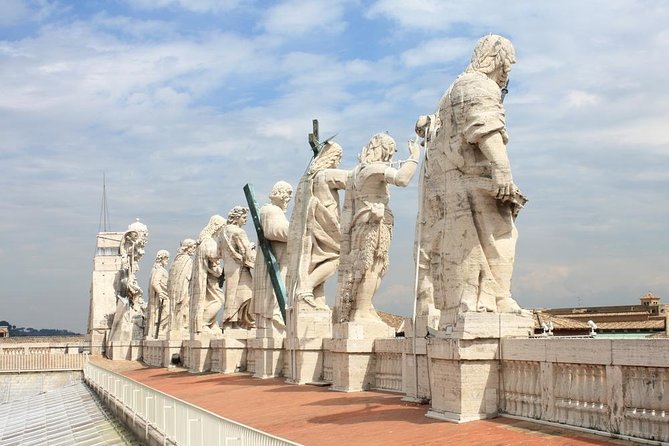
- Priority access that actually saves time once you reach St. Peter’s Square
- Dome elevator start, then a steady climb for big panorama payoffs
- Papal crypt visit with tombs that span nearly 2,000 years of church history
- Icon hits, not random wandering, including Bernini’s baldachin and St. Peter’s bronze statue
- Small group size (max 20) for a more controlled visit in a crowded place
- Headsets for comfort, especially helpful in the basilica’s echo-filled rooms
Skip-the-line is the real ticket here, not just a perk
St. Peter’s is famous for long waits. Priority access matters because it changes the whole rhythm of your visit: you spend your energy looking, not shuffling forward in a line.
On this tour, you meet your guide near St. Peter’s Square and then head in with reserved entry. That means you’re not stuck figuring out which entrance to use or when security and lines will finally move. For me, that’s the best kind of “tour value”—less time managing logistics, more time seeing what you came for.
Also, this is a small group setup (up to 20), which makes a big difference in the basilica. You still feel crowds, but you’re not pushed along like cattle with a giant herd.
You can also read our reviews of more tours and experiences in Rome.



Meeting near Piazza della Città Leonina: what to expect before you walk in
You start at Piazza della Città Leonina (near St. Peter’s area) and the tour ends at St. Peter’s Basilica. There’s no hotel pickup, so you’ll want to get yourself to the meeting point on time via public transport.
One reason I like this start: you get going early enough to beat some of the worst crush. The basilica is busiest later in the day, and you can feel it as the lines build for entry and for the dome elevator.
As you head toward St. Peter’s Basilica, you’ll pass the Swiss Guard in their colorful attire. It’s quick, but it’s a great “okay, we’re really here” moment—like the Vatican’s version of the opening scene.
Stop in St. Peter’s Square: a first look with the crowds managed
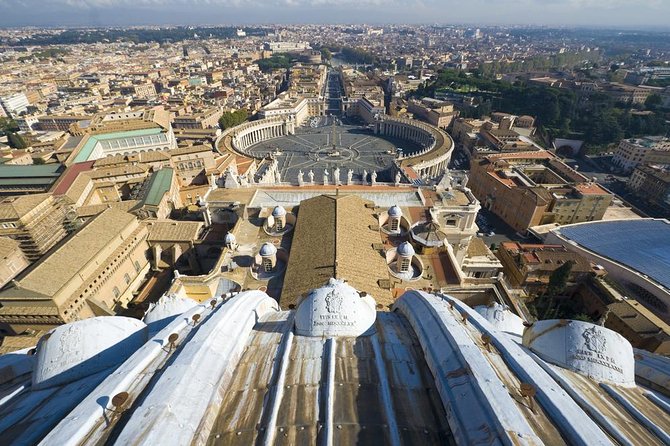
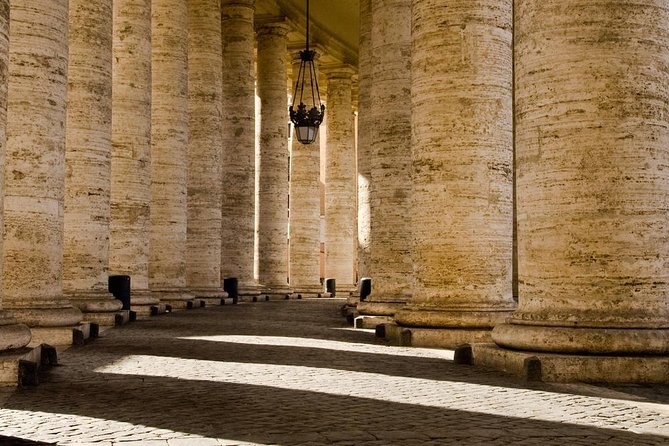
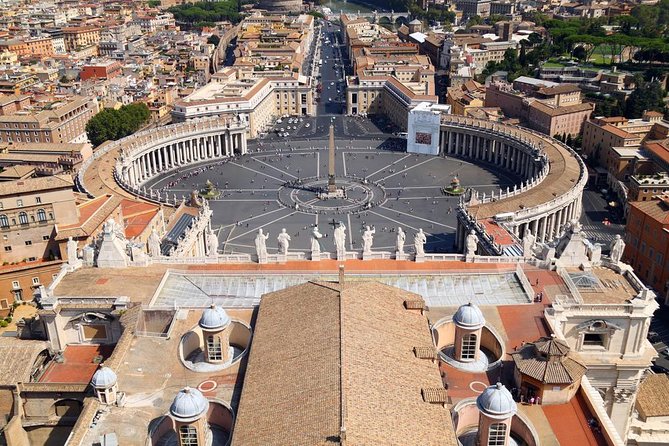
The short time in St. Peter’s Square is not there for photos alone. It’s there so you get your bearings before you enter the basilica.
You’ll spend about 15 minutes here with your guide, moving past the bulk of the crowd. That matters because the square looks simple until you try to navigate it during peak hours. Your guide helps you get through the busy moments without wasting time.
If you’re the type who likes structure, this stop scratches that itch. You arrive, you orient, then you step into the church with momentum.
Inside St. Peter’s Basilica: Bernini, St. Peter’s keys, and the art you’ll actually remember
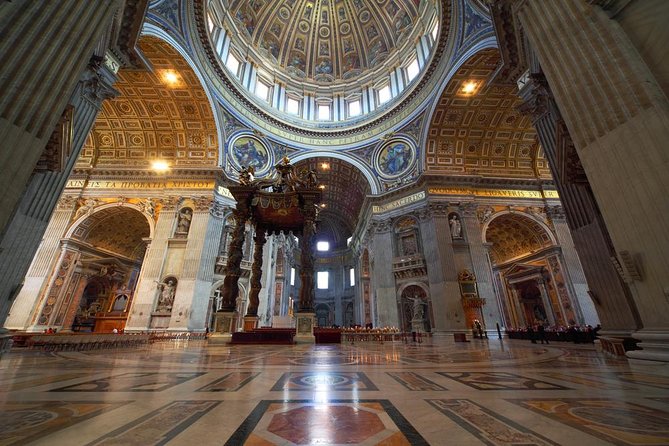
Once inside, you get the basilica’s main hits with context. You’re not just looking at famous objects—you’re hearing why they matter and how they fit into the church’s story over centuries.
Expect to see:
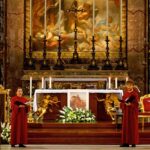
- Bernini’s baldachin, the dramatic centerpiece above the altar area
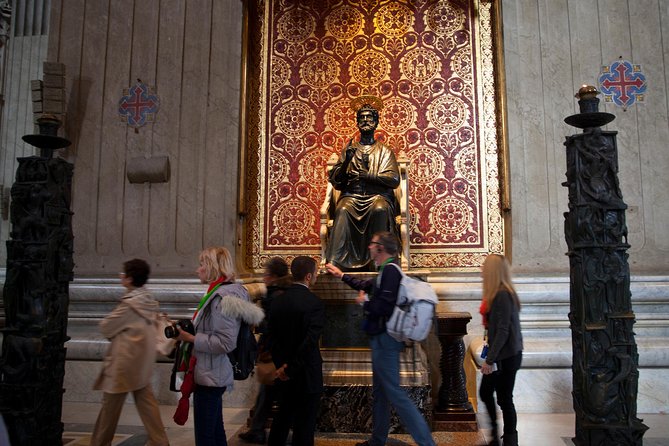
- The bronze statue of St. Peter holding the keys
- Time spent around major devotional art, including La Pietà (Michelangelo’s early masterpiece)
There’s also a moment that’s very much part of the living ritual here: you’ll rub the foot of the sacred statue for luck. It’s one of those small actions that feels silly until you’re doing it, and then it suddenly feels… oddly meaningful.
A note on La Pietà and Holy Doors: access and routes can vary day to day depending on what the Vatican is doing. In past experiences tied to similar timing, some people found that what they could see depended on Holy Door pathways, and Holy Door entry wasn’t always part of the included access. If La Pietà is your must-see, build a little flexibility into your expectations for the day.
How the guide changes the basilica
The biggest difference between a self-guided visit and a guided one is what you notice. With a good guide, you understand why Bernini’s work looks the way it does, why the church’s layout feels like it’s pushing you toward certain focal points, and what to look for without getting lost.
I’ve seen guides named Maria Grazie, Ambra, Ambre, Sev, Antonella, Fed, and Julia praised for leading groups smoothly and answering questions with real clarity. Whoever you get, the headsets plus a tight route usually help you stay oriented in a place that can otherwise feel like one big room.






The dome plan: elevator to the first terrace, then steady stairs to the top
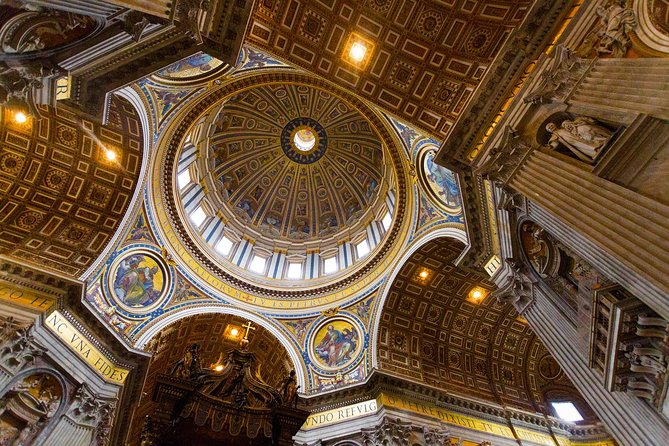
Here’s the part you need to mentally schedule: the dome climb is not a stroll. You’ll start with an elevator to the dome’s first terrace, which saves some energy and makes the climb more doable.
Then it’s stairs. After the elevator stop, you’ll still climb 320 steps to reach the very top. Expect narrow sections and steep stretches at certain points. The good news is the effort is rewarded with one of the best city panoramas in Rome.
From the top, you’ll see Rome laid out from St. Peter’s Square toward the Tiber River and beyond. This is the view that helps everything else snap into place: you understand distances, you spot the shape of the river, and the Vatican area stops looking like a set of buildings and starts looking like a strategic, historic center.
What to bring for the climb
Plan like you’re doing an active workout. Wear grippy shoes. Go slow where it narrows. If you’re traveling with kids (some families do), keep hydration in mind even if you’re excited.
And if you’re sensitive to tight spaces, take that seriously before committing. The dome route can feel constrained even when everything is working properly.
Papal crypt time: tombs, stories, and the reality of Vatican access
Before you leave, you’ll visit the papal crypt. This is one of the best reasons to choose dome + crypt together. Most casual visits focus on the basilica’s surface. The crypt gives you the deeper, older layer.
You’ll see significant tombs and hear stories about the men whose bodies were laid to rest in the crypts—figures connected to the papacy and other important people in the church’s long timeline. The crypt area includes more than 100 tombs, and it can feel like a living archive of the last centuries.
When the crypt isn’t perfectly available
Because this is a working religious site, timing can change. Some days, services can pause access, and there have been instances where the crypts were closed to the public during scheduled events. That doesn’t mean the tour is poorly run; it means the Vatican schedule has priority.
Your best move: keep your day flexible. If you’re there during a Jubilee or around major services, expect that your exact viewing sequence might shift.
What you’ll miss if you skip a guided plan
This tour is designed to reduce the “I saw the building but didn’t get it” feeling.
Without a guide, you can certainly see plenty of icons, but you’re more likely to miss:
- The basilica’s key architectural moments and how they connect to the art you’re staring at
- The crypt details that help you understand what you’re looking at down below
- The dome timing that makes the climb worth it instead of just exhausting
With the guide and headsets, you can keep moving and still take in meaning. That’s what turns a famous monument into a memorable experience.
Price and value: why $89.53 can make sense in Rome
At $89.53 per person for about two hours, you’re paying for more than a basic entry ticket.
What you’re getting value for:
- Expert English-speaking guide
- Skip-the-line access to St. Peter’s Basilica
- Pre-reserved tickets for dome access with elevator start
- Headsets, which make the information usable in a huge, echoing space
- A guided crypt visit, not just “go wander down there if it’s open”
Rome is full of “cheap ticket, expensive time” experiences. This one flips that. Even if your day is packed, paying for reserved access usually buys you back something more precious than money: time and stress reduction.
If you’re short on days, or you hate lining up, the value is easier to justify.
Who this tour is perfect for (and who should think twice)
This works best for you if:
- You want a structured route through the basilica instead of wandering for hours
- You care about seeing the dome and the crypt, not just the main floor
- You prefer a small group (max 20) and clear guidance
- You’re comfortable climbing stairs and meeting Vatican entry rules
It may be less ideal if:
- You’re not comfortable with stair climbs after the elevator stop
- You need fully guaranteed, uninterrupted access to every area regardless of services (that’s not how Vatican sites work)
- You’re very strict about only seeing certain areas that depend on Holy Door access routes
Practical tips that make your visit smoother
A few things I’d do before showing up:
- Dress for the Vatican: cover shoulders and knees. This matters for entry.
- Bring ID: all guests must have ID on the day of the tour.
- Wear shoes you trust on stairs. The dome climb includes tight, steep bits.
- If it’s a hot day, bring water. The basilica and climb can add up quickly.
- Expect the day to be shaped by religious events. If there’s a service, parts of the schedule can shift.
Also, consider timing. Several start times are offered, and earlier slots tend to help you avoid some of the worst congestion at entry and for the dome elevator.
Should you book this St. Peter’s dome and crypt priority tour?
I’d book it if your goal is to get the most meaningful version of St. Peter’s in the least frustrating way. The dome + crypt pairing is the sweet spot, because it goes past the postcard layer and into the Vatican’s real depth.
Also, if you’re the type who wants context while you walk, the guide + headsets combo helps a lot. You don’t just see the sights—you learn where to look and why.
The main reason to hesitate is the stair climb and the fact that Vatican access can shift during services. If you’re okay with those realities, this is a strong use of time in Rome. If you’re not, you might prefer a more flexible plan that doesn’t center the dome climb as a must-do.
FAQ
How long does the St. Peter’s Basilica Priority Access Tour take?
It runs for about 2 hours (approx.).
What’s included with the priority access?
You get a skip-the-line experience for St. Peter’s Basilica, a pre-reserved ticket for dome access with elevator access, and an included admission ticket for St. Peter’s Basilica.
How many stairs are there for the dome?
After the elevator stops at the first terrace, there are still 320 steps to reach the very top.
What should I wear to enter the basilica?
You must cover your shoulders and knees.
Do I need to bring ID?
Yes. All guests (including children) must bring ID on the day of the tour.
Can I cancel for free?
Yes. You can cancel up to 24 hours in advance for a full refund.