REVIEW · ROME
Sistine Chapel, Vatican Museums & St Peter’s Small Group Tour
Book on Viator →Operated by Through Eternity Tours · Bookable on Viator
Sistine Chapel in 3 hours? Yes, it’s possible. This small-group Vatican tour is built for efficiency, with skip-the-line entry and a guide who translates the art into stories. I love the intimate group size, and I love that you don’t just look—you understand. One thing to consider: you’ll still be moving through big crowds, and the pace can feel tight at peak times.
This is also one of those rare deals where the ticket matters. You get guided time across the Vatican Museums, the Raphael Rooms, and the Sistine Chapel, then you finish with St. Peter’s Square highlights and a guided entrance toward the Basilica.
Bring practical expectations with you. It’s a walking-and-stairs tour, and with stops like the Sistine Chapel (short visit) you’ll want comfortable shoes and a “let’s go” mindset—especially during busy religious periods.
In This Review
- Key highlights you’ll feel right away
- Why a small-group Vatican tour works better than you think
- Price and value: what $110.34 buys you (and why it’s not just a ticket)
- Vatican Museums: the 5-mile maze, plus Rodin’s Thinker
- Cortile della Pigna: the bronze pinecone with an ancient backstory
- Arnaldo Pomodoro’s Sfera con Sfera: modern art in Vatican shoes
- Raphael Rooms (Stanze di Raffaello): Julius II’s apartment becomes a classroom
- Sistine Chapel: what 30 minutes really means
- St. Peter’s Square orientation: Obelisk, fountains, and that first view
- St. Peter’s Basilica entrance: escorted access and crowd reality
- What you’ll likely remember most (based on real guide strengths)
- How to prepare: shoes, water, and the headset rule
- Who this tour is best for (and who should choose differently)
- Should you book this Vatican Small-Group Tour?
- FAQ
- How long is the Sistine Chapel, Vatican Museums & St Peter’s small group tour?
- What’s included in the tour ticket for this experience?
- How big is the group, and do we get headsets?
- Is this tour offered in English?
- Do I need to bring a ticket or will it be mobile?
- Can I assume I’ll definitely be able to enter St. Peter’s Basilica?
- Is free cancellation available?
Key highlights you’ll feel right away
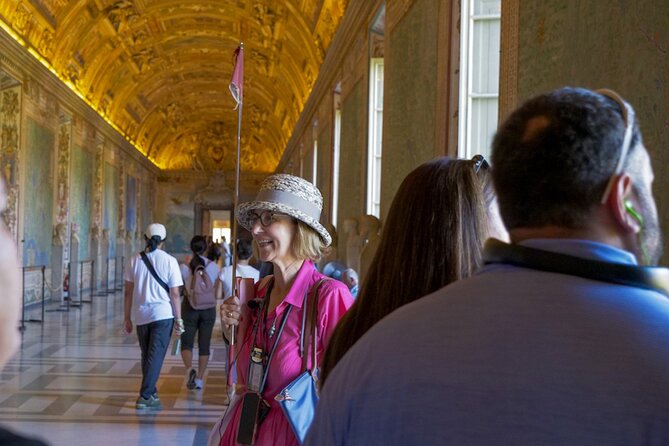
- Small group (max 12) with headsets for 6+ so you can hear your guide in crowded rooms
- Skip-the-line tickets for the Vatican Museums and Sistine Chapel, saving you hours of queue time
- Cortile della Pigna + Pomodoro’s Sfera con Sfera adds variety beyond the usual must-sees
- Stanze di Raffaello + Sistine Chapel in one run gives you the art “story arc” without extra planning
- St. Peter’s Square orientation includes the Obelisk and Maderno/Bernini fountains, so the Basilica feels easier on arrival
Why a small-group Vatican tour works better than you think
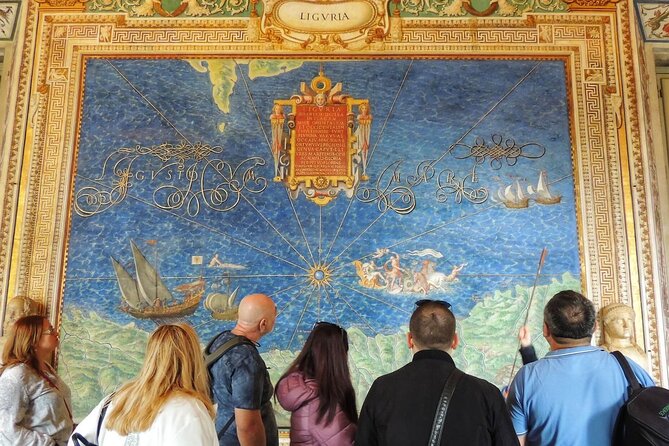
Rome’s big-ticket sights can feel like you’re in a slow-moving river of people. Here, the max group size of 12 helps you stay oriented. You’ll spend more time noticing details and less time guessing where to stand next.
The guide format also matters. With headsets included for groups of 6 or more, you can hear the commentary without playing loud guessing games over other languages. I also like that this tour keeps the experience structured, so you don’t have to map the Vatican while you’re already tired.
You can also read our reviews of more museum experiences in Rome



Price and value: what $110.34 buys you (and why it’s not just a ticket)
This tour costs $110.34 per person and runs about 3 hours. That’s not cheap, but you’re paying for three things that usually add up fast: skip-the-line access, guided interpretation, and a controlled flow through St. Peter’s entry area.
What’s included is practical: Vatican Museums + Sistine Chapel skip-the-line tickets, an expert English-speaking guide, headsets when needed, and all fees and taxes. If you’ve ever done the Vatican solo, you know the real cost isn’t only money—it’s time lost to lines and confusion.
A small warning on value: because the schedule is tight, this isn’t the tour for people who want to linger in every room. If you like “fast but focused,” you’ll likely feel like you got your money’s worth.
Vatican Museums: the 5-mile maze, plus Rodin’s Thinker
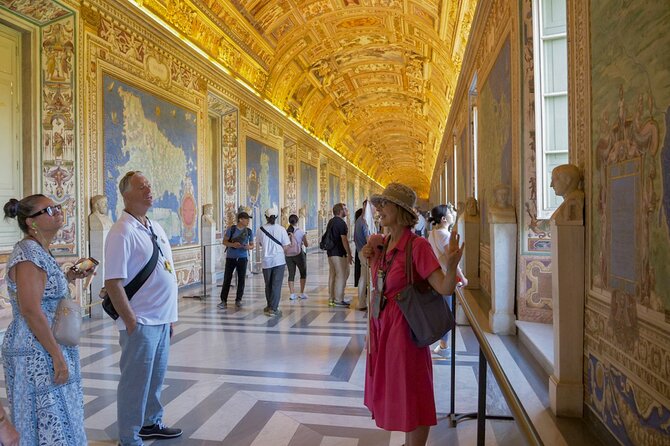
The Vatican Museums can be overwhelming fast. This portion is designed around that reality: you enter with a guide and keep moving through key spaces in the right order.
Expect around 2 hours and 10 minutes in the museums. You’ll pass highlights you’d likely miss on your own, including Rodin’s Thinker, and you’ll get context for what you’re seeing along the way. The Vatican Museums cover human history and achievements across about 2,000 years, but your guide will help you connect the dots instead of treating it like a random gallery marathon.
What I like here is the corridor logic. Yes, there are a lot of rooms, but with a guide you’re not just walking—you’re building a mental map. That makes later stops, especially the Sistine Chapel, feel more meaningful.
The drawback: even with skip-the-line, the museum complex can still feel crowded. If you’re sensitive to tight spaces, plan to slow your breathing and accept that shoulder-to-shoulder moments are part of the deal.
Cortile della Pigna: the bronze pinecone with an ancient backstory
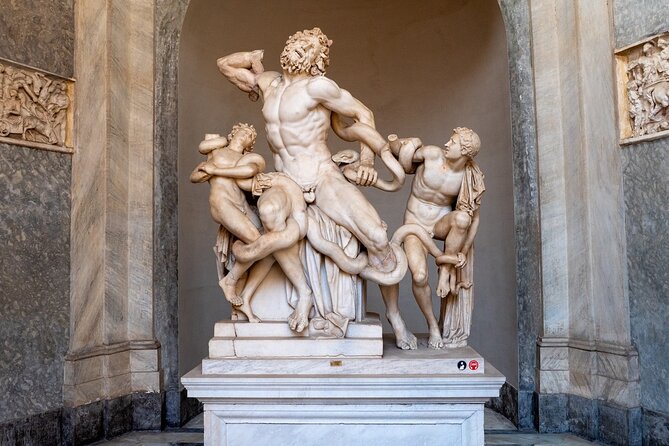
Your quick courtyard stop is one of those “how did I not notice this before?” moments. In the Cortile della Pigna, you’ll see the Vatican bronze pinecone—also known as the Pinion.
Here’s what makes it interesting: it wasn’t just made for decoration in the Vatican. It was found in the Middle Ages at the Baths of Agrippa, and it comes from an ancient origin that stretches back to antiquity. For a short stop, it adds real historical depth and a nice break from wall-to-wall frescoes.
This courtyard also gives you a breather. Ten minutes doesn’t sound like much, but it can reset you for what comes next—especially if you’re starting to feel the museum fatigue.
Arnaldo Pomodoro’s Sfera con Sfera: modern art in Vatican shoes
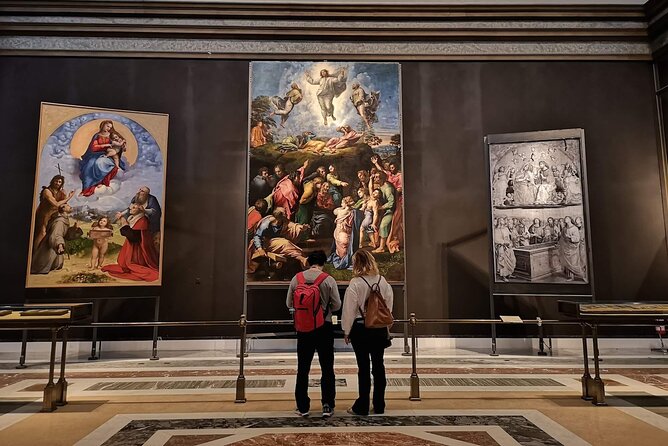
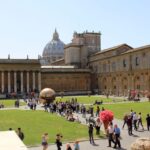
Between the classic masterpieces, you’ll also see a contemporary work by Arnaldo Pomodoro: a large metal sphere with a cracked surface (also known as Sfera con Sfera). The idea is visual and physical at the same time—an outer shell with an intricate interior.
This stop is a clever palate cleanser. The Vatican often gets framed as only ancient and Renaissance, but this sculpture reminds you that the Vatican world isn’t stuck in one era. It also helps you reset your eyes before stepping into Raphael’s rooms and the Sistine Chapel.




Raphael Rooms (Stanze di Raffaello): Julius II’s apartment becomes a classroom
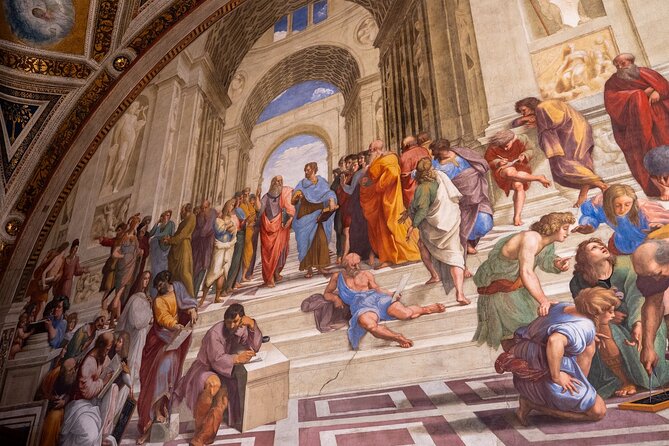
The tour includes the Stanze di Raffaello—four rooms that were part of the apartment chosen by Julius II della Rovere as his residence. After that, his successors used the space too. You’ll move through these rooms with your guide and get the story behind the artwork, painted and developed by Raphael and his school between 1508 and 1524.
This is a key stop for understanding how the Vatican “message” was shaped over time. The Raphael Rooms sit in the same larger conversation as the Sistine Chapel, but they feel different—more narrative, more room-to-room storytelling. Even if the time is brief (the schedule lists about 10 minutes), the guidance helps you focus on what matters.
A consideration: the tour notes that on some days, timing and crowd flow may limit this stop. If you’re booking during heavy crowds, keep your expectations realistic. The tour aims to hit it, but Vatican crowd management can change routes fast.
Sistine Chapel: what 30 minutes really means
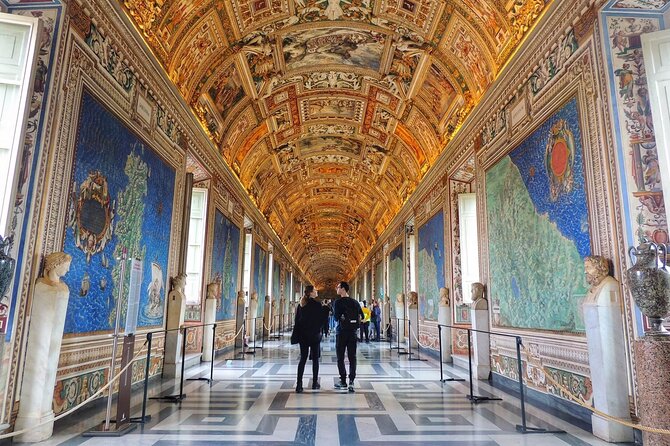
The Sistine Chapel is why people come, of course. You’ll see Michelangelo’s ceiling and wall frescoes, including the Last Judgment. The ceiling alone covers about 10,000 square feet, which is hard to wrap your head around until you’re inside.
Thirty minutes sounds short. It is short. But with a guide, you don’t waste time trying to figure out where to look first. You’ll learn what to notice—composition, scale, and the meaning behind key scenes—so your brain has something to hold onto while you’re staring upward.
The practical truth: the chapel gets crowded, and you’ll be moving with the flow. If you prefer quiet, slow looking, pick your moments. Let your guide point out the big anchors first, then spend your remaining time on the details that catch your eye.
St. Peter’s Square orientation: Obelisk, fountains, and that first view
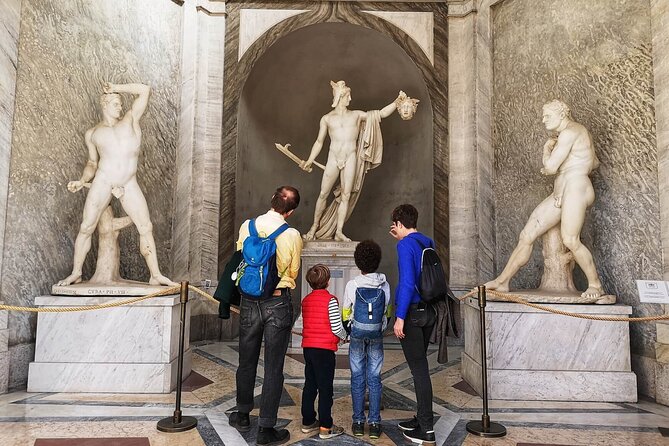
After the museums, you get a change of atmosphere. In St. Peter’s Square, the goal is orientation and impact.
You’ll enjoy the outstanding view of the Basilica from the square. You’ll also see the Vatican Obelisk, the only ancient Egyptian obelisk in Rome that remained standing since Roman times. That’s one of those factoids that becomes meaningful once you’re looking at it in context—suddenly the square feels like it has layers of time built into it.
Then there are the fountains: the Maderno fountain (1612–1614) on the north side, and the Bernini fountain (1667–1677) on the south. The guide’s commentary here helps you see these aren’t random decorations. They frame the approach and guide the visual flow toward the Basilica.
This part is not the time for deep exploration. It’s the moment to understand the layout so you can enjoy the Basilica area with less confusion.
St. Peter’s Basilica entrance: escorted access and crowd reality
This tour includes an escorted entrance to St. Peter’s Basilica. That matters because Basilica entry is not always straightforward. Even when you don’t wait in a long line, you still benefit from being guided to the right route.
One thing I’ve liked about this style of tour is how it prepares you for what you’ll see once you’re inside. Guides often explain key points so you don’t just get a quick glance—you get a mental checklist. In previous tours, guides such as Thomas Robinson and Brandon were praised for helping groups handle big crowds efficiently, and that kind of navigation is exactly what you want here.
There is also a real-world scheduling note to keep in mind: access to the Basilica can’t be guaranteed for reservations made less than 72 hours in advance due to ticketing restrictions. Also, unscheduled closings and late openings can happen for religious ceremonies, and refunds aren’t provided for last-minute closures. If you’re set on a specific day, book early when you can.
What you’ll likely remember most (based on real guide strengths)
The best experiences in the Vatican are rarely about the architecture alone. They’re about understanding what you’re looking at while you’re under time pressure.
In past tours, guides like Maria, Leticia, Francesco, Lora, Siriki, Simon, Erica, and Gracelyn were repeatedly praised for mixing storytelling with clear direction. You’ll likely feel that same effect when you’re trying to follow the route through crowds and still make sense of what’s in front of you.
Also, expect your guide to manage the pace. Some people love the energy and some want more breathing room. The tour is built to prioritize major sights—especially the Sistine Chapel and Basilica approach—so not every detour is guaranteed when the Vatican gets crowded.
How to prepare: shoes, water, and the headset rule
A bottle of water and comfortable walking shoes are strongly recommended because this tour includes steps and staircases. That’s not a minor detail in the Vatican; it’s the difference between enjoying the day and counting down minutes.
You’ll get headsets for groups of 6 or more. At the end of the tour, you’re required to return the headset to your guide. If you don’t, there’s a fine of €100 for lost property, so keep track of it like it’s your passport.
One more heads-up: the Vatican notes that Jubilee-related periods may mean some monuments are under restoration. Watch for any messages you receive before you go, since access or timing can shift.
Who this tour is best for (and who should choose differently)
This tour is ideal if you:
- Want skip-the-line time for Vatican Museums and the Sistine Chapel
- Like structured highlights with a guide explaining what you’re seeing
- Prefer a small group (max 12) over the chaos of huge crowds
It’s less ideal if you want:
- Slow, unhurried museum wandering
- Long photo breaks in every room
- A guarantee of every single stop regardless of crowd flow (the Raphael Rooms can be adjusted on very busy days)
Also, if it’s your first trip to Rome and you’re trying to “do the classics” without turning it into a planning project, this format makes a lot of sense.
Should you book this Vatican Small-Group Tour?
I’d book it if your priority is getting the most iconic Vatican sights handled with minimal stress. The combination of skip-the-line entry, headsets, and guided interpretation is exactly what you want when time is short and the Vatican is packed.
If you’re the type who enjoys quiet discovery and doesn’t mind lines, you might prefer a lighter, self-paced day. But if you’d rather trade a little spontaneity for clear direction and smart time use, this tour fits well.
One practical decision rule: book early. That reduces the risk of Basilica access limitations, and it usually helps the whole schedule feel smoother.
FAQ
How long is the Sistine Chapel, Vatican Museums & St Peter’s small group tour?
It’s approximately 3 hours.
What’s included in the tour ticket for this experience?
You get admission tickets for the Vatican Museums and Sistine Chapel with skip-the-line entry, plus an escorted entrance to St. Peter’s Basilica. All fees and taxes are included.
How big is the group, and do we get headsets?
The maximum group size is 12 travelers. Headsets are provided for groups of 6 or more.
Is this tour offered in English?
Yes, it’s offered in English.
Do I need to bring a ticket or will it be mobile?
A mobile ticket is provided.
Can I assume I’ll definitely be able to enter St. Peter’s Basilica?
For reservations made less than 72 hours in advance, access to the Basilica cannot be guaranteed due to ticketing restrictions. The Basilica can also have unscheduled closings or late openings for religious ceremonies.
Is free cancellation available?
Yes. You can cancel up to 24 hours in advance for a full refund. If you cancel less than 24 hours before the start time, the amount paid is not refunded.