REVIEW · ROME
Rome: Trevi Fountain and Underground Guided Tour
Book on GetYourGuide →Operated by Touriks · Bookable on GetYourGuide
That fountain has a second life underground. This guided tour adds the missing layer—Roman waterworks, ruins, and a guide who helps you connect the myth on the surface to the engineering below. I especially like the 9-meter descent and the way the tour keeps you moving while still explaining what you’re looking at.
Two things I really like: you get a fast walk with a clear story, and you also see the archaeology under the streets of Rome (including an imperial Domus) instead of just a photo-stop. One thing to think about first: you do not automatically enter the restricted fountain basin area; the guide steers you to a great viewing spot at piazza level, with a small extra €2 fee if you want basin access.
In This Review
- Key Takeaways Before You Go
- Trevi Fountain, But With the City’s Hidden Plumbing
- Finding Your Guide at Santi Vincenzo e Anastasio (and Why Crowds Matter)
- Surface Trevi Fountain: Myth, Meaning, and a Real Viewing Plan
- Going 9 Meters Underground: Vicus Caprarius, Aqueduct Bones, and Water You Can Still Follow
- The Imperial Domus and Stratification: Why You’re Seeing More Than Stone
- How the Tour Stays Engaging in Just 40 Minutes
- Price and Value: Is $41 Worth It for the Underground Access?
- Who Should Book This Tour (and Who Might Want Something Else)
- Practical Tips That Make the Underground Feel Easier
- Should You Book This Trevi Fountain Underground Tour?
- FAQ
- How long is the Trevi Fountain and underground guided tour?
- Where do I meet the guide?
- Is access to the restricted Trevi Fountain basin included?
- What’s included in the price?
- What languages are available?
- Is the tour wheelchair accessible?
Key Takeaways Before You Go
- 9 meters underground to a newly uncovered archaeological space with real Roman water infrastructure
- A fully functioning 2000-year aqueduct that still supplies the fountain above
- Surface time is focused: you’ll cover the mythology and major details quickly, not slowly
- You’ll see Vicus Caprarius ruins and the remains of an imperial Domus
- Headsets are provided, so you can hear your guide even in the crowd
- Not ideal for wheelchair users due to the underground route
Trevi Fountain, But With the City’s Hidden Plumbing
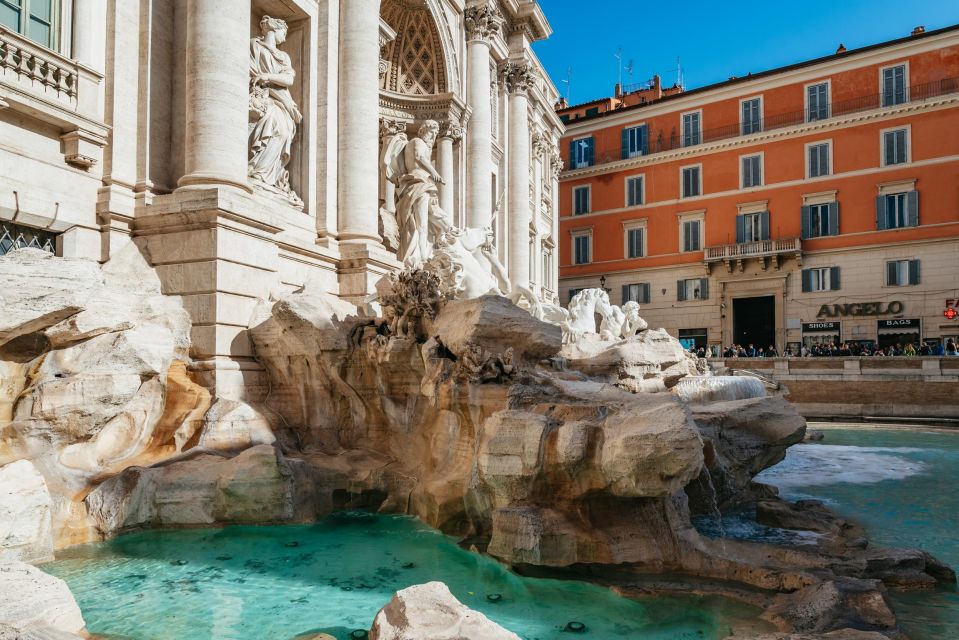
Trevi Fountain looks like pure drama from the street—mythological figures, big stone energy, and that famous throw-a-coin moment. The problem is that the story people usually tell you stops right at the facade.
This tour gives you the missing chapter. You start at the Trevi Fountain area with a guide who explains how the fountain connects to Rome’s water system and why it matters. Then you go nine meters below ground to see the archaeological site and the water network that supports what you see above.
For me, the best part is the contrast. You walk from a swirl of baroque sculpture into the blunt reality of Roman engineering—stone channels, stratification layers, and the sense that Rome kept building over itself. It’s the kind of experience that makes the city feel less like a set of monuments and more like a living timeline.
You can also read our reviews of more guided tours in Rome



Finding Your Guide at Santi Vincenzo e Anastasio (and Why Crowds Matter)

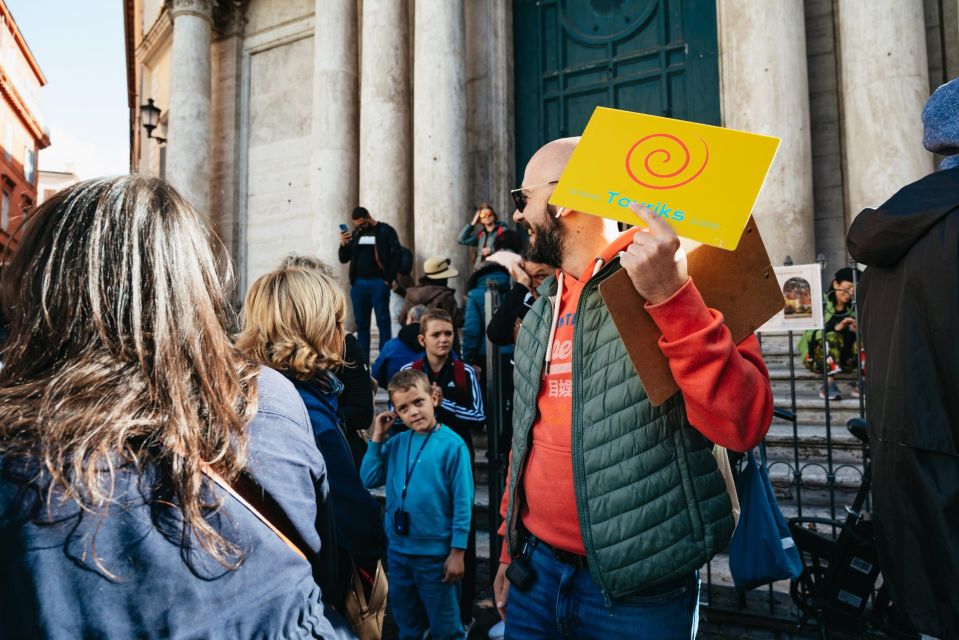
Your meeting point is the entrance to Santi Vincenzo e Anastasio a Fontana di Trevi Church, on the left corner of the Piazza di Trevi. Look for a yellow label with TOURIKS written on it.
This is one of those tours where the crowd can swallow you. The church entrance is a solid landmark, but the square is busy, especially in peak hours. I’d plan to arrive a bit early, then take a full minute just to scan for the correct label. Once you’re unsure, don’t wander—circle back to the church and start again.
If you end up running late, the tour operator can help you relocate (based on the kind of customer support people describe). Still, your smoothest start comes from arriving early and staying put until you see your guide.
Surface Trevi Fountain: Myth, Meaning, and a Real Viewing Plan

The tour keeps the surface segment focused: about 20 minutes with your guide around Trevi Fountain (and Vicus Caprarius). You’ll spend that time learning the stories behind the fountain’s characters and dramatic scenes, so your photos come with context instead of just a pretty angle.
There’s also an important practical detail. Access to the restricted basin area costs an extra €2 fee. The tour description makes it clear that most people won’t be going into the restricted zone; the guide will lead you to an excellent viewing point from the public piazza level.
So think of this as a guided “see the fountain well” experience, not a guaranteed “stand inside the basin” experience. If that basin access is your top priority, you’ll want to be ready for the extra fee and the way crowds can change what’s possible in practice.
On the plus side, you’re not wasting time getting stuck in the bottleneck. You get the explanations, then you get out of the densest crowd flow—before you lose your bearings.
Going 9 Meters Underground: Vicus Caprarius, Aqueduct Bones, and Water You Can Still Follow
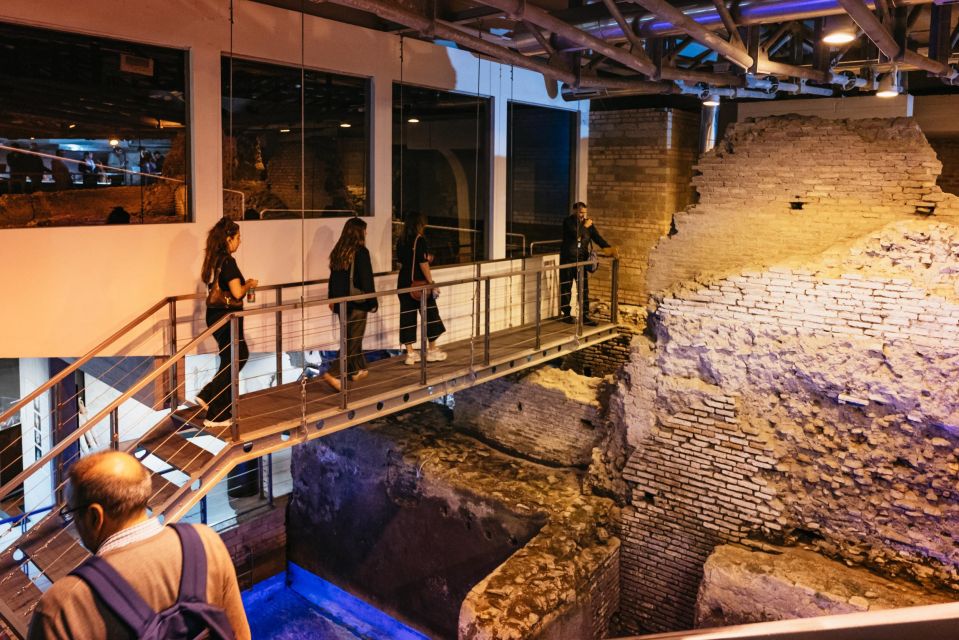
The star of the tour is the descent. You’ll head 9 meters below ground to explore a newly uncovered archaeological area and see the water system tied to Trevi Fountain.
The tour specifically highlights a fully functioning 2000-year-old aqueduct that still supplies water to the fountain above. That one detail changes how the whole city reads in your head. Rome didn’t just build monuments. It built systems—then kept them working long enough for later generations to keep using them.
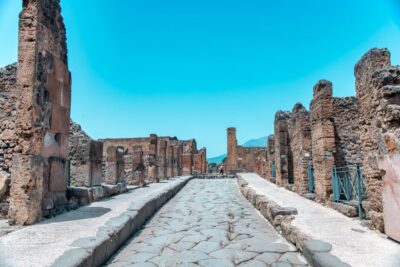
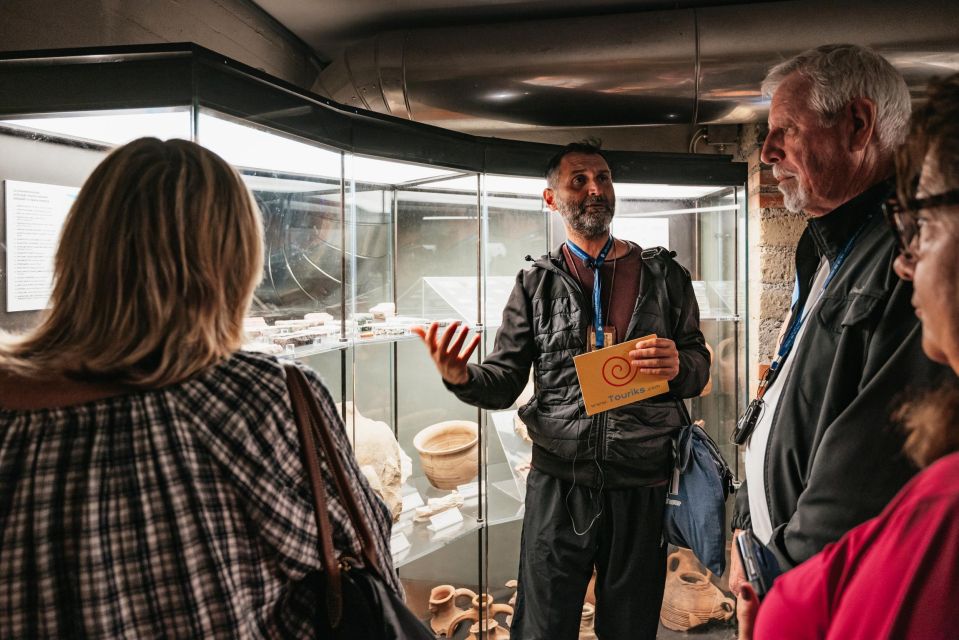
Below ground, you’ll also see the remains of Vicus Caprarius and an imperial Domus. You’re not just looking at a single relic; you’re seeing layers of how Roman life shaped the area. One moment you’re following the logic of water. The next, you’re watching how elite domestic spaces and street-level life connected to the infrastructure underneath.
And yes, the underground portion gives you a break from sun and heat. On bright days, it can feel like stepping into a cooler, quieter Rome—one where your attention actually stays on what you’re looking at.
A small note that can save you disappointment: you’re not touring secret passages running directly under the fountain like a movie set. This is archaeological space under the streets tied to the water system. The experience still feels special, but it’s rooted in ruins and infrastructure, not hidden theatrics.
The Imperial Domus and Stratification: Why You’re Seeing More Than Stone

Rome’s underground can be a little abstract if you don’t have someone to connect the dots. That’s why this part of the tour works so well: your guide points out what you’re seeing in terms of time layers and how buildings and infrastructure overlap.
The tour description notes millenary stratification—the idea that the city built, rebuilt, and layered life on top of life. When you see ruins in context like this, the city becomes a timeline you can walk through.
You’ll likely notice that the architectural remnants aren’t staged for you. They’re there because they were part of everyday reality—then they were buried by the next wave of construction. That’s one reason the tour tends to impress people who feel they’ve already “seen Rome” from the surface.
It also helps that the guide keeps the story going. Underground can be slow if nobody explains what matters. Here, the pace stays steady and you move through the key points so you don’t just end up staring.





How the Tour Stays Engaging in Just 40 Minutes

Duration is short—about 40 minutes total, with roughly 20 minutes above and 20 minutes focused on the underground. For some people, that feels brief. For others, it’s the sweet spot.
The tour is described as fast-paced and thorough, which is a real plus at Trevi. If you come here alone, you can easily spend time circling for a good angle, then lose patience when the crowd crushes your plans. A guided route keeps you from burning your time on logistics and guessing.
Headsets are included, which matters in a noisy square. They help you hear your guide without shouting over other tour groups. (And since the instructions also suggest bringing headphones, I’d still bring a small pair you’re comfortable with—mainly for your own comfort and fit.)
You may also hear guides use names like Anestis, Mario, Francesca, or Vito in their storytelling style—people often mention guides being patient, funny, and ready for questions. That kind of tone matters here. Rome underground is crowded and uneven, and it helps to feel like your guide can handle the moment if something changes.
Price and Value: Is $41 Worth It for the Underground Access?
At $41 per person, it’s not a bargain. It’s also not just you paying for someone to talk while you take photos.
You’re paying for a few practical things that add up:
- a live guide telling the story (not only letting you wander),
- entrance fees into the underground excavations,
- and headsets so the explanation is actually heard.
The extra €2 is for restricted basin area access. Since the guide directs you to a great public viewing point, many people won’t feel the need to add that fee—especially if you’re more interested in the aqueduct and ruins than the basin itself.
Is it overpriced? Some visitors clearly feel it’s a lot for how short it is. The best way to decide is to ask yourself what you want out of your Trevi visit:
- If you mainly want pretty views and a quick look, you might be satisfied without a guided underground stop.
- If you want the explanation and you care about the engineering and layered archaeology, this price starts to make more sense.
Think of it as paying to save yourself from the guesswork. In Rome’s high-traffic spots, that guesswork costs time. This tour trades time for clarity.
Who Should Book This Tour (and Who Might Want Something Else)

This is a strong fit if you:
- love Roman engineering and aqueduct stories,
- want more than “pose and move on” at Trevi,
- enjoy archaeology that connects to real-world systems,
- and you appreciate a guide who keeps the pace moving.
It’s less ideal if you:
- need wheelchair access (it’s not suitable for wheelchair users),
- want a long, slow linger at the fountain itself,
- or you’re hoping for basin-level access as a given (the €2 fee is separate).
If you’re traveling with kids, this can work well since multiple guide styles are described as breaking info into manageable chunks and keeping kids engaged. The tour’s short time also helps with attention spans.
If you’re traveling in winter, shoulder season, or during hot months, the underground break is a genuine comfort factor.
Practical Tips That Make the Underground Feel Easier

A few small things can improve your experience a lot.
- Arrive early and meet at the church entrance. Trevi’s crowd can be chaotic, and the yellow TOURIKS label is your anchor.
- Bring water and wear comfortable shoes. You’ll be underground and walking, so don’t plan this right after a long day in stiff footwear.
- Bring your own headphones if the instructions say to. Even with provided headsets, personal comfort matters.
- Plan for weather. The tour is subject to weather conditions, and if it’s canceled you’ll have the option of an alternative date or a full refund.
- Expect steps/uneven ground. Nothing in the data suggests an easy route, and it’s not suitable for wheelchair users, so assume the underground path requires good footing.
Should You Book This Trevi Fountain Underground Tour?
Book it if your ideal Trevi visit includes two goals: seeing the fountain with context and then going underground to understand the water system underneath. The combination of surface mythology plus the working aqueduct and archaeological layers is the real value here.
Skip it (or look for a different format) if you mainly want extended time at the fountain basin or you’re hoping for a slow, long exploration. Also skip if accessibility is a concern—this one isn’t designed for wheelchair access.
If you’re on the fence, I’d treat this as a “time-smart Rome” choice. For $41, you’re buying guided clarity plus paid underground entry, not just a viewpoint.
FAQ
How long is the Trevi Fountain and underground guided tour?
The tour lasts about 40 minutes.
Where do I meet the guide?
Meet in front of the entrance to the Santi Vincenzo e Anastasio a Fontana di Trevi Church, on the left corner of the Piazza di Trevi. Look for a yellow label that says TOURIKS.
Is access to the restricted Trevi Fountain basin included?
No. Access to the restricted basin area costs an extra €2 fee, and the guide will lead you to an excellent viewing point at the public piazza level.
What’s included in the price?
Your price includes a guide, entrance fees into the underground excavations, and headsets so you can hear the guide.
What languages are available?
The live tour guide is available in English, French, Spanish, Portuguese, German, and Italian.
Is the tour wheelchair accessible?
No, the tour is not suitable for wheelchair users.