REVIEW · VATICAN CITY
Rome in a day private Tour with Vatican Museums and taxi transfer
Book on Viator →Operated by Rome in tours · Bookable on Viator
Rome in one day sounds ambitious. This version works because it bundles the Vatican and Rome’s ancient core into a single, guided flow, not a random checklist. I especially like the way an art historian or archaeologist frames what you’re seeing, and the fact that the itinerary keeps you moving with clear timing. My one caution: at this price point, you’ll want to be ready for a full day with no lunch built in and a strict worship/museum dress code.
If you’re picky about details, this is the day-trip style that usually feels worth it. I like that headsets are included for parties of 6 or more, so you can hear the guide without leaning in. The possible drawback is simple: with only a few stops at each monument, you won’t have a long, slow moment at every single place—so go in knowing what you really want most.
In This Review
- Key highlights worth planning around
- A 6-to-7-hour Vatican-to-Colosseum route that keeps your day sane
- Vatican Museums: where the guide turns rooms into stories
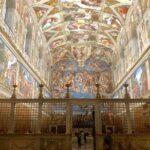
- Sistine Chapel: fast, focused, and with the right context
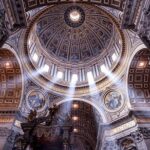
- St. Peter’s Basilica in 30 minutes: the highlights hit hard
- Piazza Navona: fountains, a stadium layer, and a pop-culture stop
- Pantheon: the dome, the oculus effect, and the tombs
- Piazza Di Pietra and Trevi Fountain: two quick stops, one practical mindset
- Piazza Venezia: modern Rome’s center and a war-era viewpoint
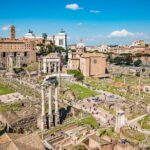
- Roman Forum through multiple emperors: a timeline you can walk
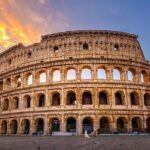
- Entering the Colosseum: ground level and first tier
- Taxi transfer to save your legs for the big ruins
- Price and value: what $779.83 is actually paying for
- Who should book this Vatican + Roman Forum + Colosseum day
- Should you book it? A quick decision checklist
- FAQ
- How long is the Rome in a day private tour?
- What’s included in the tour ticket prices?
- Do you get help hearing the guide?
- Is there a taxi included for getting to the Colosseum?
- What dress code do I need for this tour?
- Where does the tour start and end?
Key highlights worth planning around
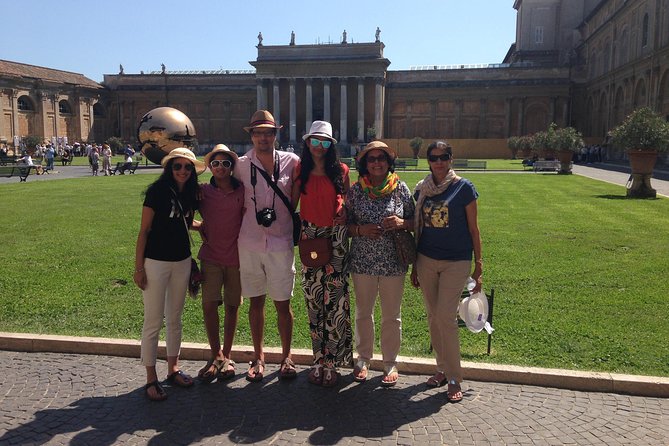
- Vatican Museums in 1 hour 45 minutes, with a guide who can point out what matters instead of just naming rooms
- Sistine Chapel in about 30 minutes, including the frescoes and what to look for in the Pope’s private chapel area
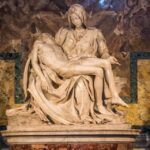
- St. Peter’s Basilica as a focused visit in 30 minutes, including Bernini’s canopy and Michelangelo’s Pietà
- Taxi transfer to the Colosseum so you’re not doing the hardest part of the day on foot
- Admission tickets included for Vatican Museums, Sistine Chapel, Pantheon, Roman Forum, and the Colosseum reservation/entry fee
- Headsets for parties of 6+, which makes crowded spots much easier to manage
A 6-to-7-hour Vatican-to-Colosseum route that keeps your day sane
This is a private tour, built to cover major sights without the usual city chaos. Expect about 6 to 7 hours total, with fixed time blocks that keep the day from turning into guesswork. You start at the Vatican Museums area and end at Piazza del Colosseo inside the amphitheater.
The pacing is the real value here. Rome’s top attractions can eat up time fast with lines, confusion, and dead ends. This itinerary is structured so you can see a lot while still getting guided context, not just photos and quick stops.
You can also read our reviews of more private tours in Vatican City
Vatican Museums: where the guide turns rooms into stories

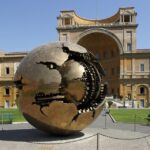
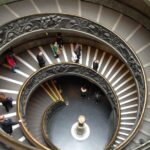
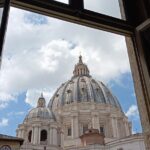
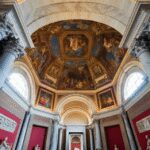
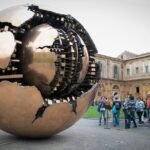
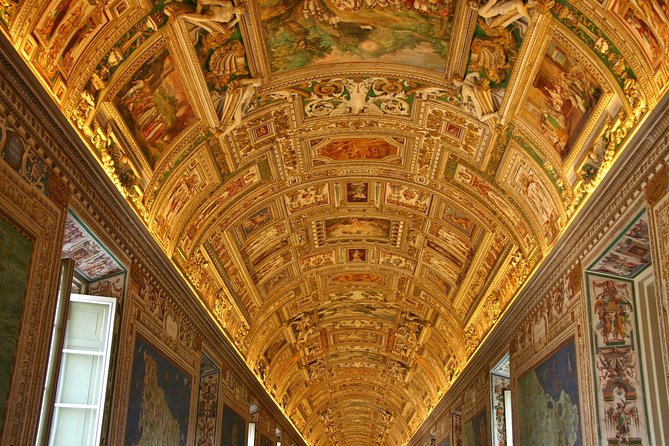
Your first big block is Vatican Museums (about 1 hour 45 minutes), and it’s not just a random walk. You’ll spend time on highlights like the terrace with an overwhelming view over St. Peter’s Basilica and the Vatican gardens, plus signature spaces such as the Court of the Pine Cone.
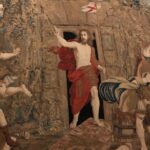
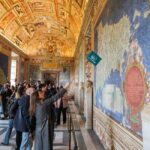
From there, the itinerary goes through several gallery types that are easy to enjoy once someone explains what you’re looking at. You’ll see the Gallery of the Candelabras, the Gallery of Tapestries, and the Gallery of the Geographical Maps—a smart mix if you like art, materials, and how Renaissance thinkers tried to visualize the world.
You also get Raphael’s Rooms, one of the best parts of the Vatican Museums if you want high-impact art in a concentrated time window. The key practical benefit: your guide isn’t just reciting facts. With an art historian or archaeologist leading, you’ll get interpretation that makes each room feel connected instead of separate.
Dress code matters here. You’ll be walking into museums and places of worship, so knees and shoulders must be covered. Plan what you’ll wear before you arrive, not after.
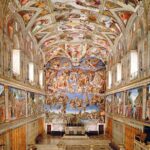
Sistine Chapel: fast, focused, and with the right context
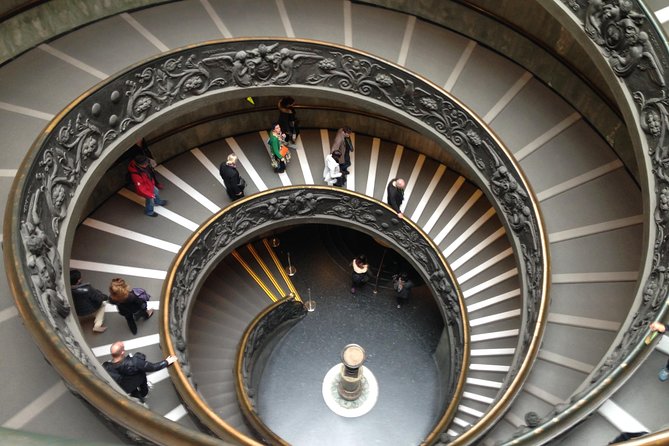
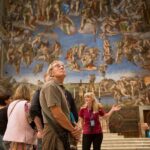
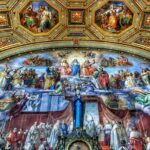
Next up is the Sistine Chapel (around 30 minutes). You’re there for the obvious reason: Michelangelo’s frescoes. But this stop also includes details that make it easier to understand what you’re seeing beyond the art.
The itinerary specifically calls out the Pope’s private chapel area and the location of the conclave. That’s a useful angle because it connects the chapel’s artwork to the setting of serious church decision-making. If you like symbolism or want to understand the building’s purpose, this adds real meaning to the short time.
This is also where people often feel rushed, so treat the 30 minutes as your guided overview window. Look once, let the guide point out the big visual cues, then take a second look if you still want it.
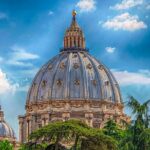
St. Peter’s Basilica in 30 minutes: the highlights hit hard
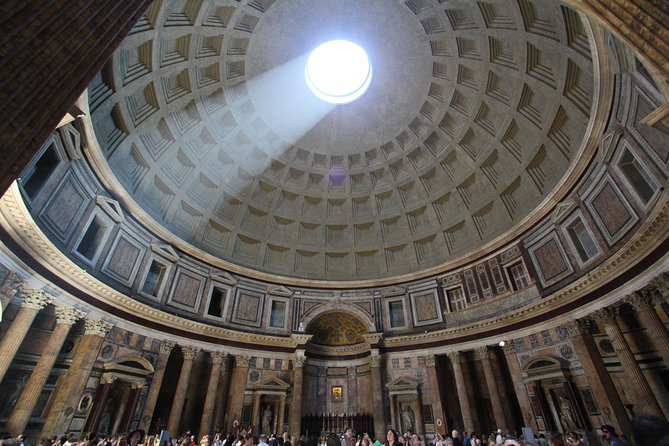
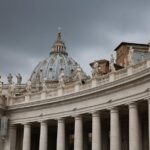
You’ll spend about 30 minutes at St. Peter’s Basilica. The practical upside is that you can still have a moment of awe without the whole day swallowing itself.
The itinerary focuses on major anchors:
- Bernini’s canopy
- Relics of Saint Peter
- Michelangelo’s Pietà
- St. John Paul II’s tomb
Also, you’ll be inside the biggest Catholic church in the world. That scale can feel abstract at first, so it helps that the visit is organized around key works and focal points, not wandering.
One useful note: if the basilica has rare closure due to liturgical ceremonies, the tour adjusts by extending your time in the Museums. That flexibility is good to know when you’re planning a tight day.
Piazza Navona: fountains, a stadium layer, and a pop-culture stop
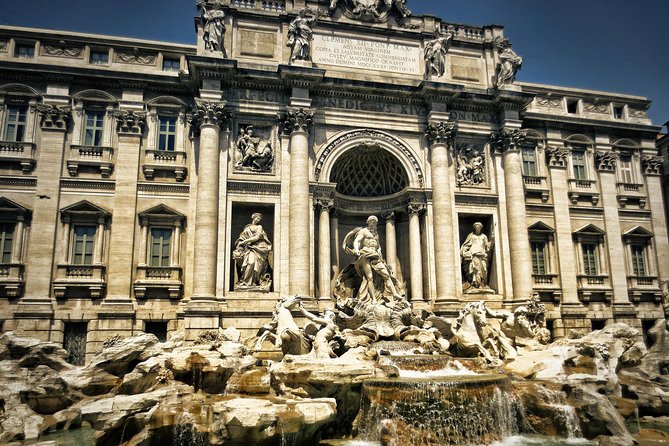
After the Vatican, you roll into central Rome with Piazza Navona (about 20 minutes, free admission). The headline is the Fountain of the Four Rivers by Bernini, which is one of those artworks you’ll recognize immediately in photos.
You’ll also see other Navona fountains like the Fountain of the Moro and the Fountain of Neptune, plus Church of Sant’Agnese. The interesting twist is that this area sits on earlier layers: the itinerary notes it was built over a preexistent stadium erected by Emperor Domitian. That’s a neat example of how Rome stacks time on top of itself.
There’s even a nod to movie history: the Angels and Demons location is part of the stop. If you care about how modern stories use real streets and plazas, that extra context can make the walk more fun.
You can also read our reviews of more museum experiences in Vatican City
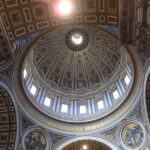

Pantheon: the dome, the oculus effect, and the tombs
Next is the Pantheon (about 20 minutes, admission included), and this is one of the best places to use a short, guided window wisely. The itinerary emphasizes its most visit-worthy features right away: the biggest unreinforced concrete dome in the world and the fact that it’s one of the best-preserved pagan monuments in Rome.
The visit also covers the interior story beats you’d likely miss on your own. You’ll see the Tomb of Raphael and tombs of the Kings of Italy. Then you get pointed attention to the oculum and the resulting bull’s-eye light effect.
Even if you’re not a buildings person, the oculus is the kind of detail that turns the space from impressive to memorable. With only 20 minutes, you’ll want to watch where the light falls while the guide explains what creates that effect.
Piazza Di Pietra and Trevi Fountain: two quick stops, one practical mindset
You’ll pass Piazza Di Pietra for about 3 minutes, centered on the Temple of the Deified Hadrian. It’s brief, but that’s realistic—think of it as a visual palate cleanser before the bigger crowds magnet.
Then you reach Trevi Fountain (about 10 minutes, free admission). You’ll have time to see the famous late Baroque fountain and do the tradition of throwing coins.
For Trevi, the best way to enjoy the short stop is to decide what you want. If you’re there for the classic photo angle and the coin moment, you’ll fit it easily. If you want long lingering time, this schedule won’t be your friend.
Piazza Venezia: modern Rome’s center and a war-era viewpoint
You’ll spend around 10 minutes at Piazza Venezia (free admission), and the itinerary gives you some strong orientation value here. It’s described as the geographic center of modern Rome, at the intersection of the five major road axes.
You’ll also see the Vittoriano, the Altar of the Forefathers, and the Monument to the Unknown Soldier in WWI. The historical layers continue at Palazzo Venezia, including the fact that Mussolini used it as headquarters during WWII and that there’s a balcony from which he declared Italy’s entrance into the war.
The stop also includes nearby details that many people miss unless a guide points them out: the Michelangelo’s house and Palazzo Bonaparte, where Napoleon’s mother lived and died.
This is a good place to stop and let your brain reset. After Vatican art and Rome’s ancient ruins, Piazza Venezia adds the 19th and 20th-century context that shaped the city you see today.
Roman Forum through multiple emperors: a timeline you can walk
You’ll cover several forum areas as you move into the heart of ancient Rome: Forum of Nerva, Forum of Augustus, Forum of Julius Caesar, and the Forum and Column of Trajan. This is the kind of route that feels much more logical with an archaeologist or art historian doing the linking for you.
Then your main ancient centerpiece is Roman Forum (about 25 minutes, admission included). The tour frames it as the beating heart of political, social, and religious life in Roman times. It’s one of the biggest archaeological areas in Europe, and you’ll feel the scale even with a short visit.
The itinerary lists specific anchor points, which is exactly what helps during a quick tour:
- the place of the cremation of Julius Caesar
- the podium where Mark Antony made his funeral speech
- the Sacra Via
- temples including Antonino and Faustina, Julius Caesar, and Concordia
- the Arch of Septimius Severus
- Tabularium, the ancient state archive
- the Curia Iulia and other key civic structures
A guide matters most here. Roman Forum can become a pile of stones if you don’t know what each section represents. With the interpretation, you can follow a story: governance, religion, commemorations, and power—right as you walk through the remnants.
Entering the Colosseum: ground level and first tier
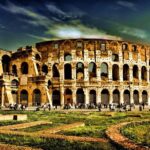
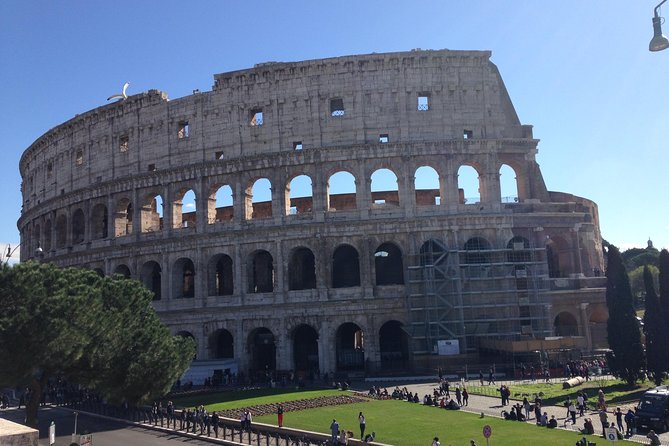
Your day ends at the Colosseum with about 45 minutes inside. It’s a UNESCO site and, in this itinerary, you get time for both the ground level and the first tier.
This is the best way to handle the Colosseum in limited time. Seeing only one level often makes the whole structure feel flat. With the ground level included, you get a real sense of size and space, then the first tier helps you reconnect it to the spectator view.
The tour also includes the Colosseum reservation fee and entrance ticket. That’s not just paperwork value—it’s usually the difference between a smooth entry and a stressful one.
Taxi transfer to save your legs for the big ruins
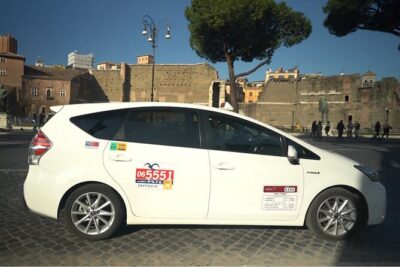
One practical win: the experience includes one taxi ride from the city center area to the Colosseum. That matters if you’ve already walked through the Vatican zones and central Rome. You shouldn’t spend your best energy sprinting across major streets at the end of a long day.
You end close to major transit too. The meeting info notes you’ll be less than a few minutes from the Colosseum metro stop (Line B) and about two stops from Termini. That’s handy if you want an easy ride back after the tour ends inside the amphitheater area.
Price and value: what $779.83 is actually paying for
Yes, $779.83 per person is a big number. But here’s how to judge whether it makes sense for you.
Admission for major stops is included: Vatican Museums, Sistine Chapel, Pantheon, Roman Forum, and the Colosseum entrance/reservation. The data also lists a baseline value for the Colosseum tickets and reservation fees (€18 entry plus €2 reservation fee), which helps you see that you’re not paying the guide price to cover only museum entry.
The bigger value is what doesn’t show up as a line item:
- a local guide plus a professional art historian or archaeologist
- headsets for parties of 6+ so you can hear clearly
- skip the friction approach with a tight, preplanned route
- a private tour so your time isn’t shared with strangers
- a taxi transfer that protects your schedule near the end of the day
If you’re traveling as a family or a small group and you hate wasting hours figuring out logistics, this price starts to look more reasonable. If you’re traveling solo on a budget and you’re fine reading guidebooks on your phone for longer blocks, you’ll likely decide it’s too expensive.
And lunch is not included, so you’ll need to plan food elsewhere or grab something before or after the tour window.
Who should book this Vatican + Roman Forum + Colosseum day
This tour is a strong fit if:
- you’re a first-time Rome visitor who wants major sights in one day
- you care about context, not just sight-seeing photos
- you prefer a private experience rather than merging into a large group
- you’re okay with a dress code and a schedule that moves fast
It’s less ideal if:
- you want long independent time to wander slowly through museums or churches
- you hate the idea of short stops where you’ll have to choose what to see first
Based on the overall guide reputation, a standout point is how smoothly the day can run. One named guide you might encounter, Illia, has been credited with excellent knowledge and shortcuts, which is exactly what you want in Rome.
Should you book it? A quick decision checklist
Book this tour if your priority is a structured, high-impact day: Vatican Museums plus Sistine Chapel plus St. Peter’s, then a straight line into Rome’s ancient core and the Colosseum, with a taxi transfer to reduce fatigue.
Consider passing if you want a slower pace, lunch included, or you’d rather spend time at fewer sites and go deeper on your own.
If you do book, pack for the dress code, wear comfortable shoes, and go in with a shortlist of what you care about most—because the schedule is designed to hit the big moments, not linger everywhere.
FAQ
How long is the Rome in a day private tour?
The duration is approximately 6 to 7 hours.
What’s included in the tour ticket prices?
Admission tickets are included for Vatican Museums, the Sistine Chapel, the Pantheon, the Roman Forum, and the Colosseum (including the reservation fee). Lunch is not included.
Do you get help hearing the guide?
Headsets are included for parties of 6 people or more.
Is there a taxi included for getting to the Colosseum?
Yes. The experience includes 1 taxi ride to reach the Colosseum area.
What dress code do I need for this tour?
A dress code is required for places of worship and selected museums. No shorts or sleeveless tops. Knees and shoulders must be covered for both men and women.
Where does the tour start and end?
It starts at Vatican Museums in Vatican City and ends at Piazza del Colosseo, with the itinerary ending inside the amphitheater area at the Colosseum.