REVIEW · ROME
Rome Catacomb & Appian Way Small-Group Tour by Golf Cart
Book on Viator →Operated by WHEEL TOURS · Bookable on Viator
Golf carts turn Rome into a slideshow. I love how this tour mixes catacombs with major Roman sights without tiring you out, and I also like the Appian Way stops where you get time for photos and explanations. The one thing to plan for is the pace: several stops are brief, and the catacombs visit involves stairs once you leave the cart.
The meeting point is easy to reach (Via Urbana 40, near public transit), and you stay with an English-speaking guide on a small ride group—max 14 people—using headsets so you don’t miss a story. Expect a fun drive through hectic streets, plus short stretches on foot where you’ll get just enough time to look closely.
In This Review
- Key points at a glance
- Why Rome by golf cart feels easier (and smarter)
- Price and what you get for your $107.75
- Meeting at Via Urbana 40 and how the timing works
- Via Appia Antica: the Appian Way stop that sets the tone
- Chiesa del Domine Quo Vadis: a small stop with a big story thread
- Catacombe San Sebastiano: the main event underground
- Basilica San Sebastiano Fuori Le Mura: relics and a major art marker
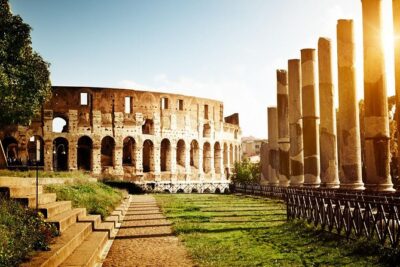
- Circus of Maxentius, Bocca della Verità, Circo Massimo: the picture-perfect triad
- Circus of Maxentius
- Bocca della Verità
- Circo Massimo
- Piazza Venezia and the end back at Via Urbana 40
- What the guides tend to bring (and why it matters)
- Value check: who this tour fits best
- What to bring: small steps, big comfort wins
- Should you book the Rome Catacombs & Appian Way small-group tour?
- FAQ
- How long is the Rome Catacomb & Appian Way Small-Group Tour by Golf Cart?
- Where does the tour start and end?
- Is hotel pickup or drop-off included?
- What’s included in the tour price?
- Do you get tickets for the catacombs included?
- How long are the stops on the Appian Way and at Bocca della Verità?
- Will the catacombs visit be guided?
- Can the catacombs destination change?
- Is the tour offered in English, and what are the child rules?
- Is there free cancellation?
Key points at a glance
- Golf carts through Rome traffic: less walking, more time seeing
- Catacombe San Sebastiano included: entrance ticket and a guided underground visit
- Appian Way photo time: brief but high-impact sightseeing
- Classic photo stops outside the center: Circus of Maxentius, Bocca della Verità, Circo Massimo
- Headsets + bottled water included: a small comfort that makes the tour work better
Why Rome by golf cart feels easier (and smarter)
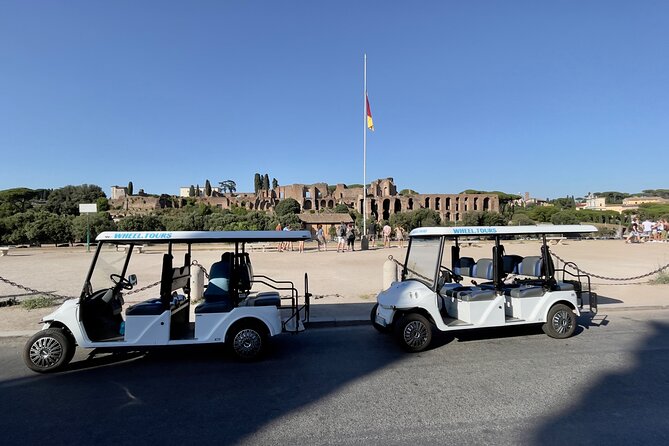
Rome traffic can be a sport. This tour uses golf carts, which means you spend less energy stuck in the moment and more time actually looking at what’s around you. The carts also help you cover ground in a short 3-hour window without turning the day into a full walking tour.
You’re not just chauffeured, either. The guide calls out what you’re seeing as you go, then you get short stops to take photos and absorb the setting. That matters on a route like this, because the best parts are spread out—from the older walls of Rome out toward ancient roads and burial grounds.
One practical note: while you’re mostly seated, the catacombs portion is real. Even with carts doing the heavy lifting, you’ll still face stairs during the underground visit. If you’re sensitive to steps, that’s worth factoring into your comfort level.
You can also read our reviews of more tours and experiences in Rome.



Price and what you get for your $107.75
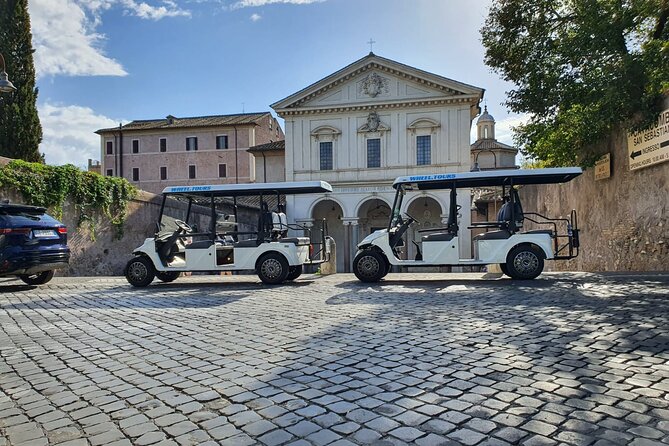
At $107.75 per person for about 3 hours, this isn’t a bargain-style tour. It’s closer to a convenience-and-access choice: you’re paying to reduce walking, bundle multiple stops, and include the catacombs entrance ticket.
Here’s what you actually get included:
- Bottled water
- Headsets (so you can hear the guide)
- Catacombs entrance ticket fee
The tour is also capped at 14 travelers, which usually helps the guide manage the group and keep explanations moving. And because the itinerary mixes major and lesser-visited sites, you can squeeze in far more than you’d likely do on your own in the same half-day.
What you should not expect: hotel pickup or drop-off. You’ll start and end at the meeting point (Via Urbana 40). If you’re staying nearby or you can reach Monti quickly, that’s fine. If you’re far out, build in transit time.
Meeting at Via Urbana 40 and how the timing works
You meet at Via Urbana 40, 00184 Roma RM, and the tour ends back at the same place. The duration is listed as roughly 3 hours, with each stop measured in small chunks.
That style shapes the whole experience. You’ll get:
- quick “pull over and look” moments,
- short photo windows,
- and one longer, meaningful segment underground.
Headsets and bottled water sound small, but they matter when the tour is compressed. I like having headsets because Rome noise and movement can make it easy to miss details—especially when the guide is pointing out architectural clues or explaining the context of early Christian sites.
Via Appia Antica: the Appian Way stop that sets the tone
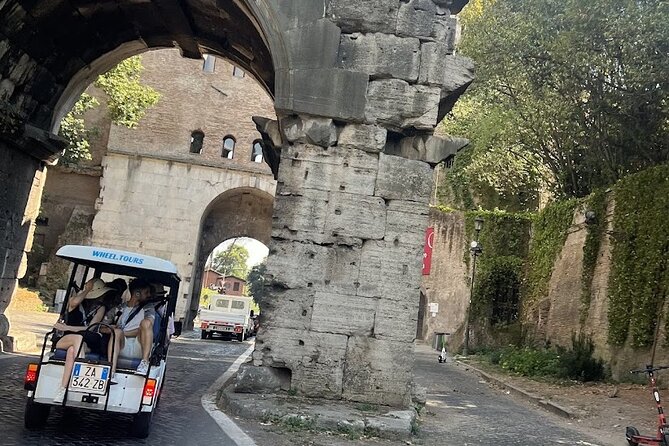
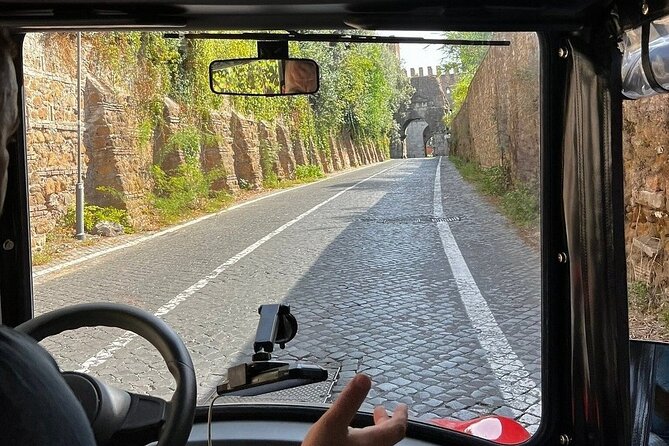
The route makes a classic move early on: a stop on the Appian Way (Via Appia Antica). You’ll be there for about 5–10 minutes, with the guide sharing context while you take photos.
Even with only a short window, the Appian Way is the kind of place where 10 minutes can feel like more. It’s not just a scenic road; it’s one of those spaces that helps you picture how people moved, lived, and buried their dead across the ancient Roman world. The quick stop is also a good “mental transition” point. You start seeing the city in terms of roads, movement, and time depth rather than just monuments.
Practical tip: keep your camera ready when you arrive. The stop is short enough that you’ll want to frame your shots fast, then let the guide finish the explanation.
Chiesa del Domine Quo Vadis: a small stop with a big story thread
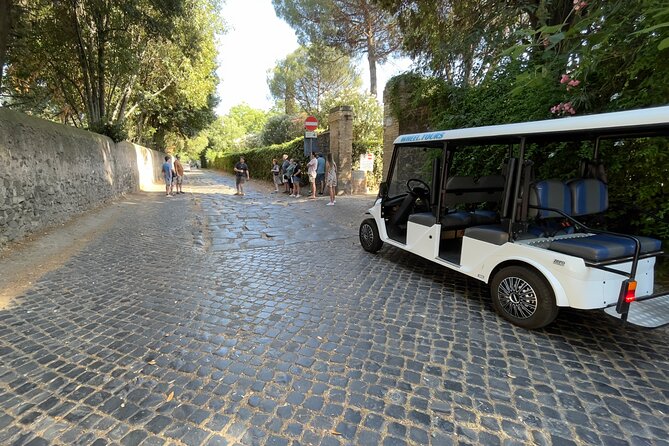
Next comes Chiesa del Domine Quo Vadis, where you’ll get about 5 minutes for photos and the guide’s description.
This stop works best as a connective moment. It’s placed after the Appian Way so the tour can keep building the same theme: early Christian presence and belief taking shape in locations tied to ancient Roman routes. Even if you don’t spend much time on the ground here, you’re usually leaving with a clearer idea of why the stop matters.
If you like your tours with short chapters (rather than long museum-style time), this church stop fits the rhythm well.






Catacombe San Sebastiano: the main event underground
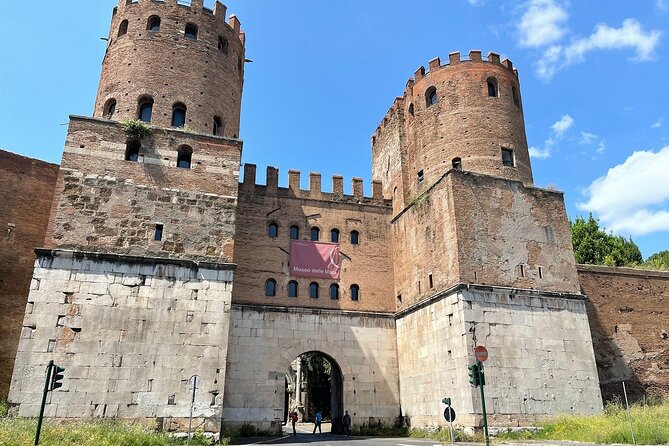
The center of gravity here is Catacombe San Sebastiano, with around 45 minutes allocated. Entrance is included, and the visit is guided by a Vatican guide or priest who leads you through the catacombs.
That guidance is key. Catacombs aren’t like a typical room you wander through. You’re moving through layered underground spaces where symbolism, burial practice, and early Christian markings can be easy to miss without interpretation. Having a dedicated guide inside is the difference between seeing corridors and understanding what you’re looking at.
You should also know that the tour allows flexibility. Depending on special events or closure days, you might visit other catacombs such as Santa Domitilla or Saint Callixtus. That’s a plus if you value access and a smooth plan more than one fixed destination.
Comfort note from experience: plan for steps. One of the most practical comments from people who do this route is that getting to and inside the catacombs includes steep stairs. Dress for comfort, and if you’re unsure about mobility, it’s smart to consider your comfort level with stair-heavy access.
Basilica San Sebastiano Fuori Le Mura: relics and a major art marker
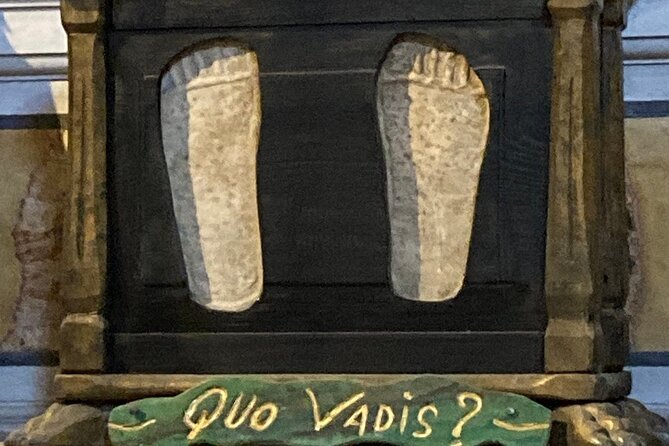
After the underground visit, you go to Basilica San Sebastiano Fuori Le Mura for about 10 minutes. You enter the basilica and see ancient relics tied to Saint Sebastian, plus Bernini’s last master piece.
This stop is short, but it helps connect the catacombs to what came later. In Roman Christianity, the story doesn’t end underground. It flows into places of worship, where relic veneration and art helped shape public memory.
If you’re the type who likes seeing how different eras connect, this is one of the best “time-bridge” moments on the itinerary.
Circus of Maxentius, Bocca della Verità, Circo Massimo: the picture-perfect triad
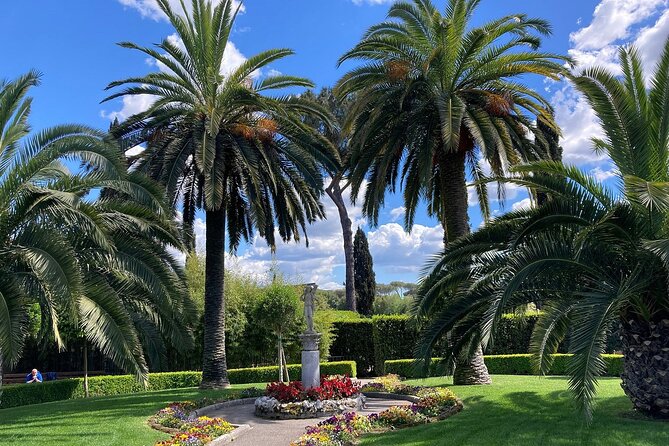
Then the tour swings back toward visible landmarks, with stops designed around quick looks and photos:
Circus of Maxentius
You’ll stop for about 5–10 minutes for photos and the guide’s description. This is the kind of site that feels different when you approach it with context. You’re not just seeing ruins; you’re getting help reading what this space was for in daily Roman life.
Bocca della Verità
Next is Bocca della Verità, also around 5–10 minutes. You can usually skip the inside part if there’s a line, since the plan notes you won’t go inside when lines form.
This matters because the location is famous, and famous things can bring queues. The tour is designed to keep moving rather than letting one stop eat your whole schedule.
Circo Massimo
Finally, Circo Massimo gets about 10 minutes for photos and guide commentary. It’s another Roman landmark where a short stop can work well because the “big picture” is easy to see quickly—especially when the guide ties it back to earlier themes of Roman public life.
Piazza Venezia and the end back at Via Urbana 40
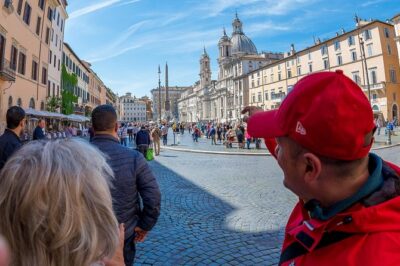
The last major listed time on the ground is Piazza Venezia, with about 10–15 minutes for photos and descriptions. It’s a good wrap-up location because it feels central enough to help you orient yourself back in Rome after spending time outside the core monuments.
Then you return to Via Urbana 40 to finish where you started.
I like this kind of ending because you’re not left scattered across the city at the end of a short tour. You know where your day ends, which makes it easier to plan dinner or your next stop.
What the guides tend to bring (and why it matters)
The best thing about this kind of tour is the bridge between places. You’re not spending long at one museum. You’re collecting meaning across many sites.
That’s where the guide style becomes the difference-maker. People talk about guides such as Federico with a mix of humor and story-driven explanations that make early Christian and ancient Roman changes feel logical, not random. Other guides like Arvin are described as calm on the road and quick to answer questions, which helps when you’re navigating short stops and want clarity right away. Aurelio and Meryl also come up for entertaining delivery and clear context.
You don’t need a guide who memorizes facts only. You need someone who helps you connect:
- the Appian Way to burial practice,
- the catacombs to later church sites,
- and the landmarks to Roman public life.
That’s exactly the kind of tour rhythm this route is built for.
Value check: who this tour fits best
This tour tends to be a strong fit if you:
- have limited time in Rome and want major sights plus catacombs,
- prefer fewer walking hours,
- like guided storytelling more than self-guided wandering,
- and want the convenience of headsets for better listening.
It’s less ideal if you:
- want long, slow time in one place (the catacombs are the longest stop, but most others are brief),
- hate stairs (the catacombs can involve steep steps),
- or are expecting hotel pickup.
If you’re trying to build a half-day plan, this works especially well because it brings you to the edge of what feels like historic Rome while still getting you back to a practical central meeting point.
What to bring: small steps, big comfort wins
You won’t need special gear, but comfort choices can change the whole experience.
I recommend:
- Warm layers, especially if you’re touring in cooler months. One recurring practical issue is that it can get chilly as the day goes on, especially after dark.
- Comfortable shoes that handle stairs and uneven underground footing.
- A camera plan: since many stops are short, think about what you want first—wide shots for context, then close details when the guide points them out.
The carts do the heavy lifting, but you’ll still be moving and stepping more than you might at a pure city-sightseeing ride.
Should you book the Rome Catacombs & Appian Way small-group tour?
I’d book this tour if you want a smart mix of transport convenience and guided interpretation. It’s one of those options that lets you see the Appian Way and then go underground to Catacombe San Sebastiano without turning your afternoon into an endurance test. The included catacombs ticket, headsets, and the small-group size help make the price feel more grounded than it might at first glance.
I would hesitate if stairs are a big concern for you, or if you want very long time in each stop. The schedule is built for a tight sequence: drive, stop, photos, explanation, repeat.
If you’re ready for a compact, story-driven half day that takes you beyond the main postcard areas, this is a solid choice.
FAQ
How long is the Rome Catacomb & Appian Way Small-Group Tour by Golf Cart?
The tour duration is listed as approximately 3 hours.
Where does the tour start and end?
You start at Via Urbana 40, 00184 Rome, and the tour ends back at the same meeting point.
Is hotel pickup or drop-off included?
No. Pick-up and drop-off in your hotel are not included.
What’s included in the tour price?
The tour includes bottled water, headsets, and the Catacombs entrance ticket fee.
Do you get tickets for the catacombs included?
Yes. The Catacombe San Sebastiano entrance ticket fee is included.
How long are the stops on the Appian Way and at Bocca della Verità?
The Appian Way stop is about 5–10 minutes, and Bocca della Verità is about 5–10 minutes (with the note that you may not go inside if there is a line).
Will the catacombs visit be guided?
Yes. The catacombs are visited with a guide (Vatican guide or priest leading the catacombs tour).
Can the catacombs destination change?
Yes. Depending on special events or closure day, the tour may visit other catacombs such as Santa Domitilla or Saint Callixtus.
Is the tour offered in English, and what are the child rules?
The tour is offered in English. For children ages 0–12 and under 150 cm in height, a proper seat/baby chair is mandatory by law for participation.
Is there free cancellation?
Yes. You can cancel up to 24 hours in advance for a full refund. After that, the amount paid is not refunded.