REVIEW · ROME
Rome: Appian Way, Aqueducts, and Catacombs Tour
Book on GetYourGuide →Operated by Walks of Italy · Bookable on GetYourGuide
Pyramids to tunnels: Rome without the crowds. I love the Appian Way walk on real Roman paving stones, and I especially like the closing-time catacombs access that keeps things quiet and unhurried. You also get private, air-conditioned transport between stops, which matters when Rome gets hot and you’d rather spend your energy on history than transit.
One possible drawback: the catacombs are tight and underground. If you have claustrophobia, or you need mobility help or strollers, this tour isn’t a fit—and you’ll also be dressed-code mindful (shoulders and knees covered).
In This Review
- Key things to know before you go
- Meeting at Piramide: where the tour starts and why that location helps
- Walking the Appian Way: ancient paving stones, real road vibes
- Cecilia Metella’s mausoleum: a circular tomb with serious family power
- Parco degli Acquedotti: standing under Roman aqueduct remains
- Catacombs at closing time: San Sebastiano or Domitilla without the crowd pressure
- Private air-conditioned transport: why it changes the whole day
- What to wear, and what rules you must follow before entering
- Who this tour is best for (and who should skip it)
- Price and value: is $64 worth it?
- Getting the most out of the day: small tips that help
- Should you book the Rome Appian Way, Aqueducts, and Catacombs tour?
- FAQ
- How long is the Rome Appian Way, Aqueducts, and Catacombs tour?
- Where does the tour meet?
- What catacombs will I visit?
- Is transportation included?
- Is there a guided tour inside the catacombs?
- Are cameras allowed in the catacombs?
- What should I wear?
- Is this tour suitable for wheelchair users or mobility impairments?
- Is there walking involved?
Key things to know before you go
- A quiet catacomb visit at the end of the day means a calmer, more personal feel underground
- Appian Way walking on ancient stones gives you a real sense of scale and time in the same step
- Aqueducts in Parco degli Acquedotti let you stand under huge Roman engineering remains in a park setting
- Private air-conditioned transport keeps the day comfortable and efficient, especially in summer
- Dress rules and no photo rule inside affect what you can bring and wear
- Bumpy roads and moderate walking are part of the experience, so wear sturdy shoes
Meeting at Piramide: where the tour starts and why that location helps
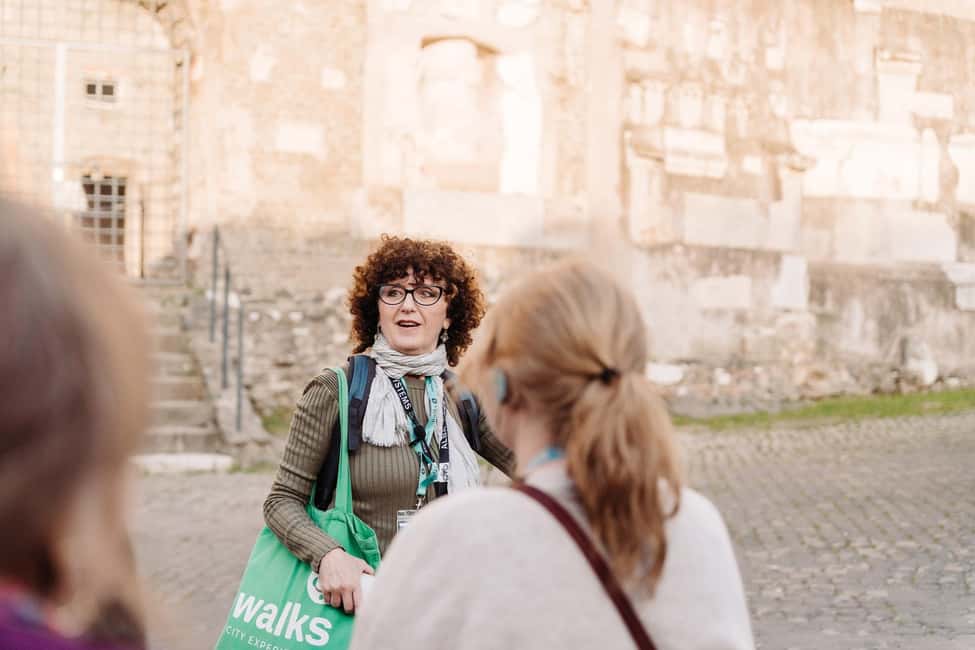
This tour meets at the Piramide metro station, right across from Piazzale Ostiense. Plan to arrive about 15 minutes early and look for your guide holding a green Walks sign. There’s no hotel pickup, so you’ll want to start your day already positioned for an easy hop out of central Rome.
What I like about this meeting point is timing. Starting from Piramide keeps you moving toward the Appian Way and Aqueduct park without the “U-shaped detour” that sometimes happens when you try to self-organize across Rome.
Also, a practical note: some people use taxi apps and end up a bit off. If you’re using a taxi, make sure you’re landing at the METRO station – Piramide area, not somewhere similar but slightly farther away.
You can also read our reviews of more tours and experiences in Rome.



Walking the Appian Way: ancient paving stones, real road vibes
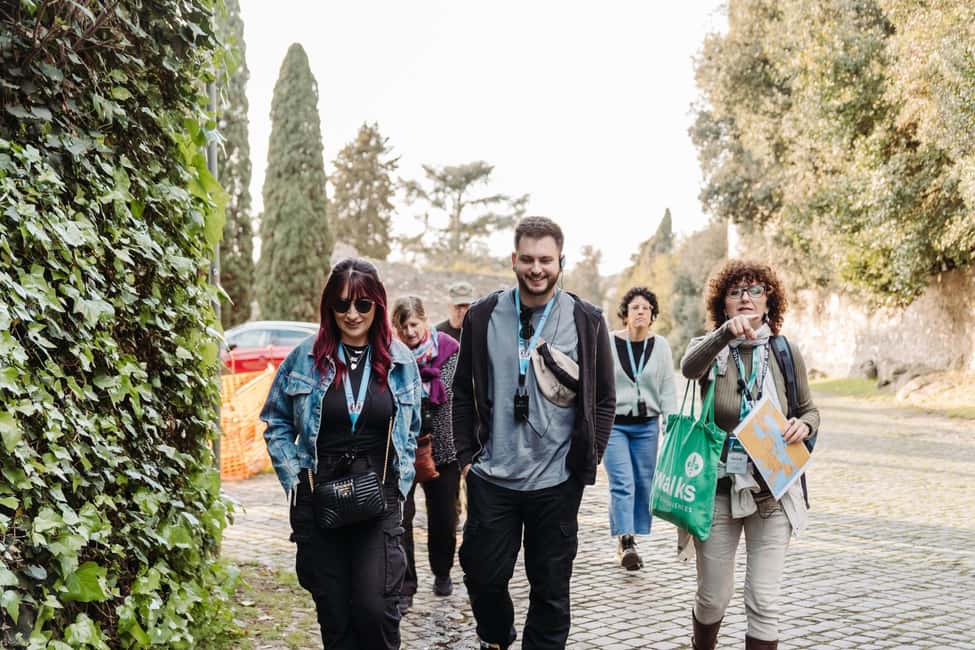
You’ll begin with a walk along the Appian Way, one of the oldest Roman roads. You’re not just peeking at ruins from a viewpoint—you’re moving along the route that once carried legions, merchants, and travelers. That “walking it” detail is the whole point. The old stones underfoot help your brain switch from Rome-as-a-postcard to Rome-as-a-place that actually worked.
Expect:
- Photo time and a guided orientation as you get your bearings
- A solid, steady walk pace (not a marathon)
- Some sections that feel bumpy—one thing I’d plan for based on what people report is rougher ground
One surprise worth knowing: this isn’t a sealed-off museum street. It’s still an active road in places, so you’ll feel the “living landscape” of the edge of the city. That can be a plus if you like authenticity; just don’t assume it’s smooth like a promenade.
Cecilia Metella’s mausoleum: a circular tomb with serious family power
Next up is the Mausoleo di Cecilia Metella. This circular monument dates to the 1st century BCE, and it’s big enough that you notice it even before you read a single sign. It’s the kind of structure that communicates status without trying too hard.
What you’ll take away here is not just that it’s old. It’s the way the monument survives and what that says about Roman identity and legacy. Cecilia Metella’s mausoleum represents the kind of wealthy family visibility that went into Rome’s built environment—an era when burial sites weren’t hidden away. They were statements.
Photo opportunities come fast, but don’t rush the explanation. The best moment is when your guide frames it as more than a pretty round tomb: it becomes a clue to how Rome organized power, memory, and space.
Parco degli Acquedotti: standing under Roman aqueduct remains
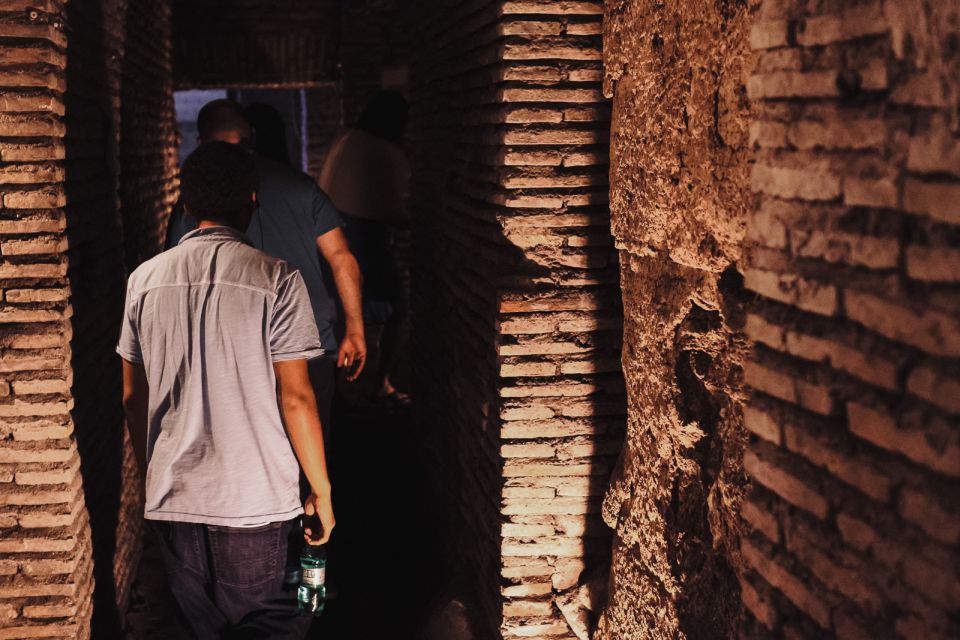
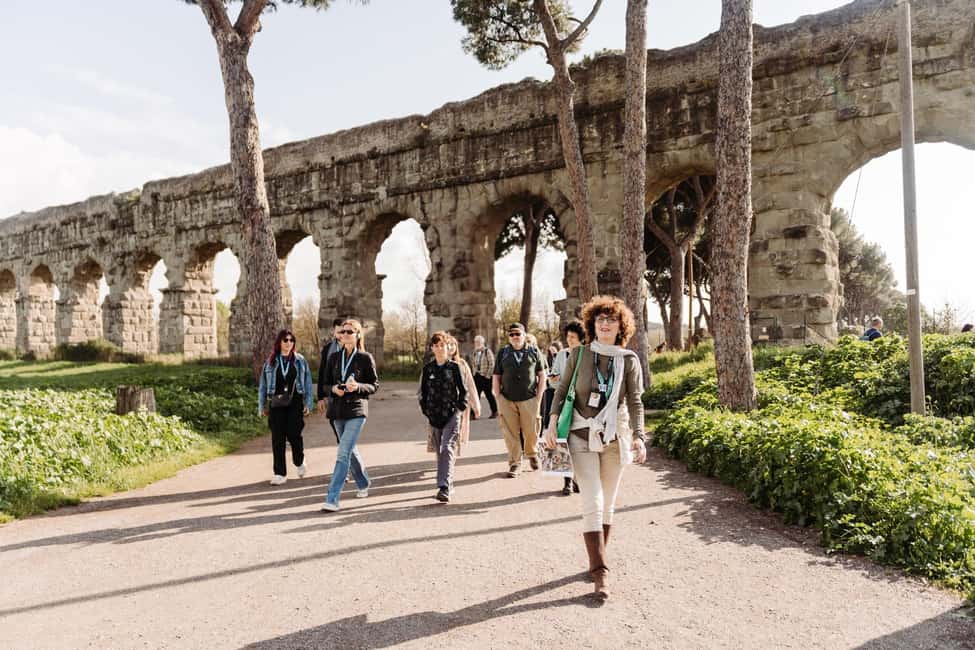
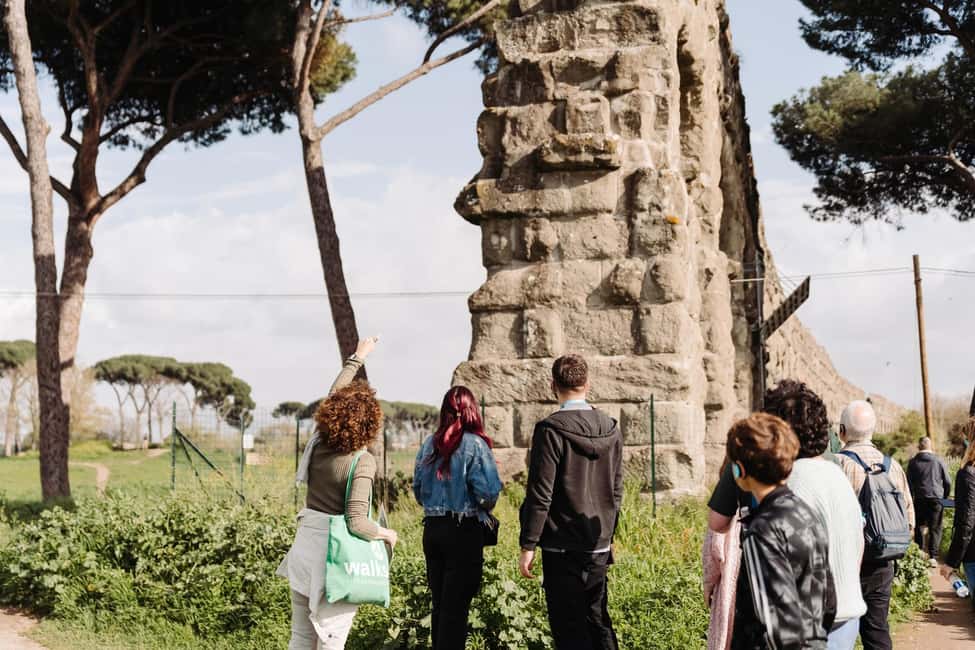
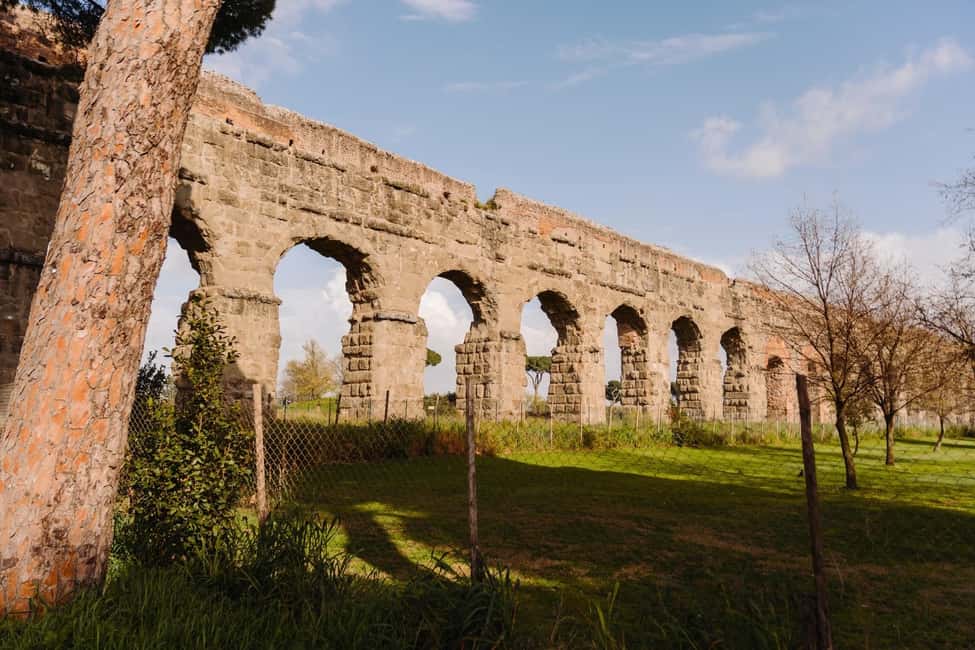
After the tomb, you head into Parco degli Acquedotti for the aqueduct part of the day. This is where the tour really earns its keep. Those towering aqueduct remains are dramatic in person—less like a distant skyline detail and more like massive stone architecture you’re standing under.
You spend a generous block of time here, with guided stops and sightseeing pauses. The value isn’t only the photos. It’s understanding how the aqueduct system supported daily life in ancient Rome. When you connect the engineering to the idea of fresh water traveling long distances, the scale makes sense.
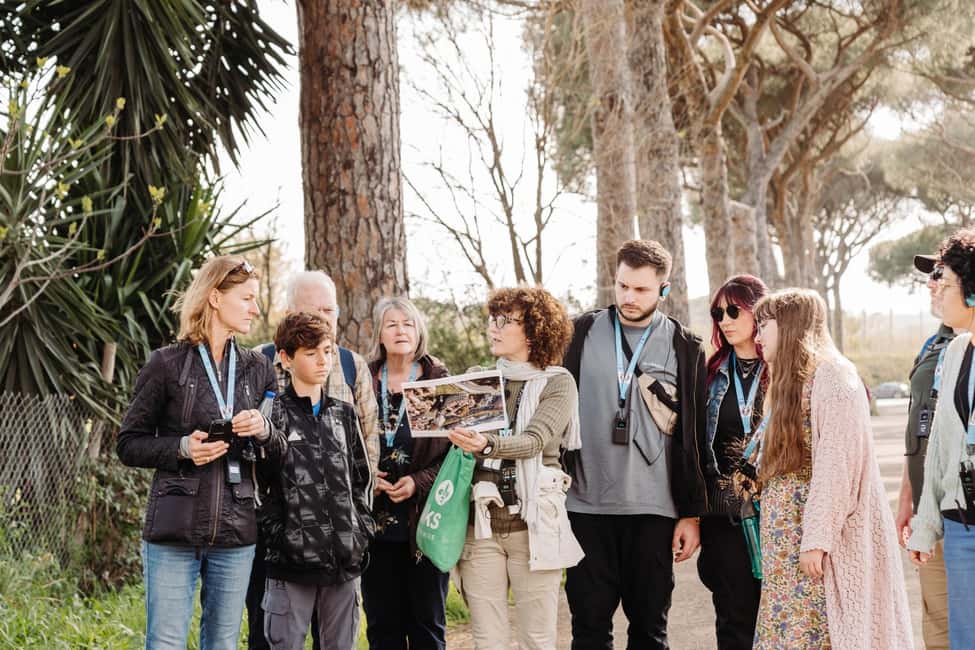
And yes, this is outdoors. If you’re traveling in warmer months, I’d treat this segment as your cue to bring patience with the heat. On past departures, guides like Antonella and Sylvie have been praised for keeping pace comfortable—staying in shade where possible and adjusting the rhythm so it doesn’t feel like you’re trudging through a furnace.
Catacombs at closing time: San Sebastiano or Domitilla without the crowd pressure
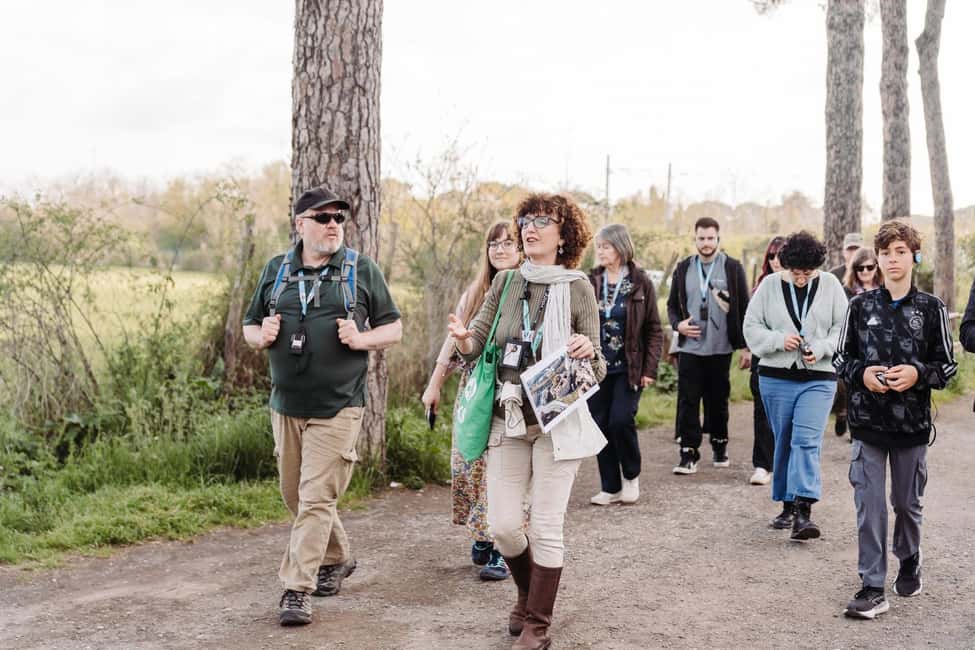
This is the part people remember: the catacombs visit at closing time, meaning you’re typically among the last visitors. That timing changes the whole vibe. Underground, you don’t want to feel rushed, and you don’t want photo-taking chaos taking over your brain. Closing-time access helps you experience the space more quietly.
Which catacombs you’ll visit depends on the day:
- Catacombs of Saint Sebastian (San Sebastiano)
- or Catacombs of Domitilla
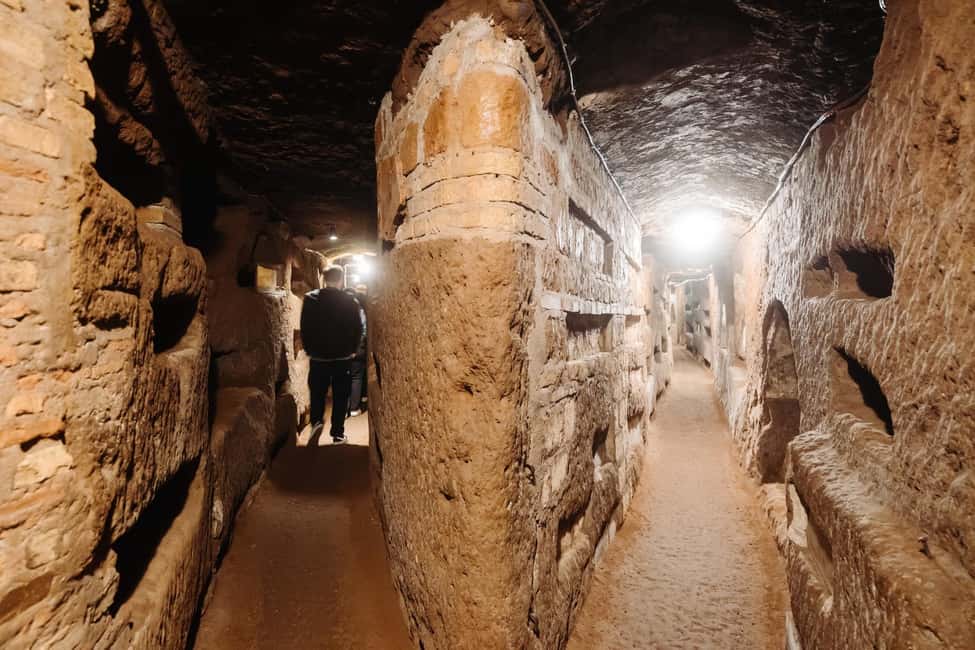
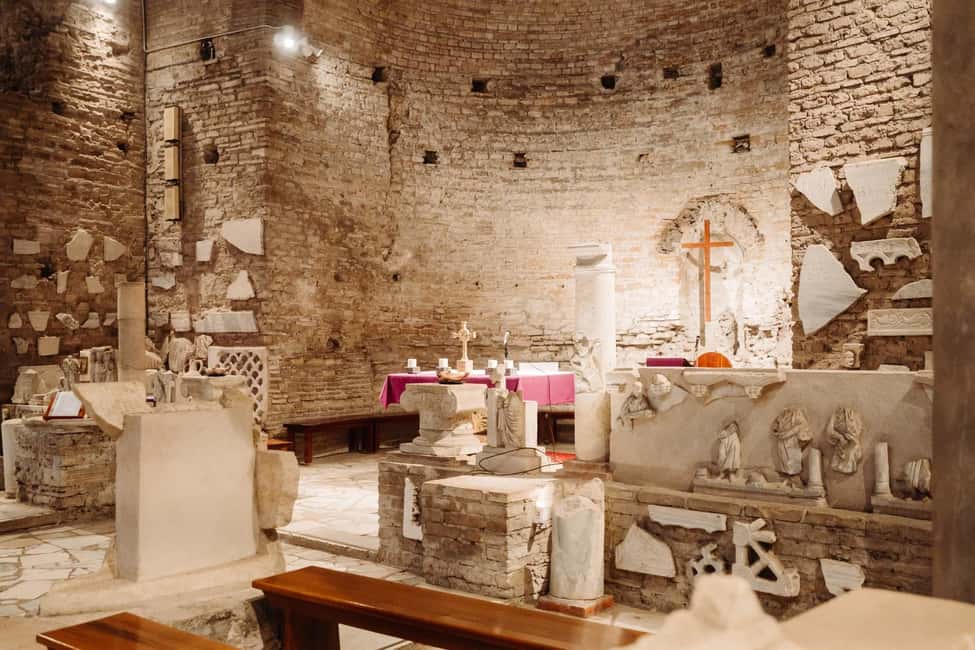
Inside, you’ll follow guided underground tunnels lined with early Christian burial areas and frescoes. The overall experience can feel eerie in a good way—people often describe it as creepy but in a meaningful historical way.
A few practical realities to set expectations:
- The catacombs are tight and enclosed, so if you’re claustrophobic, I’d skip this tour
- Photography is not allowed inside, so plan to rely on your guide’s storytelling and your own mental snapshots
- Some visitors are surprised that it’s not like the sensational bone displays you might imagine from other famous catacomb stories. You’re here for burial history and early Christian art/space, not gore tourism.
Also, it’s not just you going solo underground. The guide experience matters. Many people mention guides by name—Federico, Paris, Aurelio, Chiara B, and Annalise show up in praised accounts for bringing the underground scenes to life with energy and clear explanations.






Private air-conditioned transport: why it changes the whole day
A big value point here is the transport. You’re not bouncing around in an overcrowded bus with ten people trying to squeeze in luggage and shade strategies. You’re in private, air-conditioned transport, moving you between the Appian Way, the mausoleum, the aqueduct park, and the catacombs.
Why I think this matters:
- The tour is about 195 minutes, but travel time between these sites is part of the story. Comfort makes you stay present.
- Rome outside the center can get brutally warm, especially in summer months.
- You can focus on the walk and the sites instead of managing logistics.
Some notes from people’s experiences: the driver has had to negotiate route issues when needed, but the trip kept moving smoothly. That’s a real-world benefit of having the vehicle handled for you.
What to wear, and what rules you must follow before entering
This tour has a dress code tied to the sacred nature of the catacombs, plus basic comfort rules. Bring:
- Long pants
- A long-sleeved shirt
And for entry into the underground religious sites, you’ll need to cover shoulders and knees. If your outfit isn’t naturally covered, you can bring extra fabric (like a scarf) to put on before entering.
Avoid:
- Shorts
- Short skirts
- Sleeveless shirts
- Baby strollers (not suitable)
- Any expectation of taking photos inside (no photography allowed inside)
Since this is walking-focused, sturdy footwear is also a practical must. Even when the walking feels moderate, you’ll be on old surfaces and uneven ground.
Who this tour is best for (and who should skip it)
This tour is a strong fit if you want Rome that’s:
- Off the classic crowd route
- Focused on large-scale ancient infrastructure (aqueducts + road)
- Finished with a catacomb visit in a quieter time window
- Done with a guide so you understand what you’re seeing, not just what it looks like
It’s also good for people who want something different after several days in central Rome. One theme in praised experiences is that it feels like a fresh change of pace: countryside air, fewer crushes, and a clear sequence of stops that makes sense.
Skip it if:
- You have mobility impairments, use a wheelchair, or need a stroller
- You have claustrophobia (catacombs are tight)
- You need the ability to take photos inside underground spaces
Price and value: is $64 worth it?
At $64 per person for about 3 hours and 15 minutes, the value is mostly in what’s bundled.
You’re paying for:
- Private air-conditioned transport between multiple sites
- Guided experience that connects Appian Way, Cecilia Metella, aqueduct engineering, and early Christian burial spaces
- Entry to the catacombs (San Sebastiano or Domitilla)
If you tried to DIY this day, you’d quickly feel the friction: getting to the right meeting point, coordinating transport to the Appian Way and aqueduct park, and timing the catacombs. The tour bundles those moving pieces into one plan, so you don’t waste your limited Rome hours “figuring it out.”
Is it the cheapest way to see Rome? Probably not. But it’s a strong deal for the combination of sites, comfort, and timed catacombs access.
Getting the most out of the day: small tips that help
A few practical moves will make your experience smoother:
- Start your day meeting point-ready. Arrive 15 minutes early at Piramide so you don’t stress.
- Plan your outfit for the catacombs rules. Even if the rest of the day is casual, you need shoulders and knees covered.
- If you’re sensitive to heat, treat the aqueduct park as your pace-control moment and take breaks when the guide suggests shade.
- Since there’s no photography inside, decide ahead of time what you care about most in the catacombs—fresco details, burial layout, or the story your guide tells. That focus makes it more memorable.
Should you book the Rome Appian Way, Aqueducts, and Catacombs tour?
I’d book it if you want a Rome day that feels bigger than the usual highlights—ancient road, major aqueduct remains, and a catacomb visit at a calmer hour. The guided structure is especially helpful here because these places are easier to understand when someone connects the dots.
I wouldn’t book it if you’re uncomfortable underground, need wheelchair access, or need strollers. And if photography inside is a must-have, you should know that the catacombs won’t allow it on this tour.
If your goal is authentic Roman scale with fewer crowds and real comfort between sites, this is one of the smarter ways to spend a few hours beyond the city center.
FAQ
How long is the Rome Appian Way, Aqueducts, and Catacombs tour?
The tour duration is about 195 minutes.
Where does the tour meet?
It meets in front of the Piramide metro station, across from Piazzale Ostiense. Arrive about 15 minutes early and look for a green Walks sign.
What catacombs will I visit?
You’ll visit either the Catacombs of San Sebastiano or the Catacombs of Domitilla, depending on the day.
Is transportation included?
Yes. Private, air-conditioned transport is included between the stops. Hotel pickup and drop-off are not included.
Is there a guided tour inside the catacombs?
Yes. You’ll have an expert catacombs tour guide, and entry to the selected catacombs is included.
Are cameras allowed in the catacombs?
No. Photography inside the catacombs is not allowed.
What should I wear?
Bring long pants and a long-sleeved shirt. You also must cover your shoulders and knees for the catacombs.
Is this tour suitable for wheelchair users or mobility impairments?
No. It isn’t suitable for guests with mobility impairments or wheelchair users, and it doesn’t accommodate strollers.
Is there walking involved?
Yes. It’s a walking tour with moderate walking pace, including time on the Appian Way and at the other sites.