REVIEW · TREVI FOUNTAIN
Rome at Twilight Tour Among the Piazzas and Fountains
Book on GetYourGuide →Operated by Through Eternity Tours · Bookable on GetYourGuide
Rome changes after sunset. I love how this route connects Piazza Navona to the Pantheon in one smooth evening, and I love how the guide turns Trevi Fountain into something you understand, not just photograph. The main drawback is the steady walking on uneven ground and steps.
This is a live, English-language small group tour (max 10 people) that runs about 2.5 hours, ending at Piazza di Spagna. If your group is 6 or more, you get headsets, which is a nice touch when you’re standing in crowds and trying to hear the story.
One thing to watch for: on Sunday evening tours, the Pantheon is closed, so you won’t go inside. You still get the exterior sights and an explanation from Piazza della Rotonda, but plan your expectations accordingly.
In This Review
- Key highlights worth planning for
- A 2.5-hour twilight route that actually makes sense
- Piazza Navona at dusk: Rome’s drawing room
- The Pantheon: Imperial Rome in concrete, light, and stories
- Temple of Hadrian: a quick stop that adds context
- Trevi Fountain at twilight: Baroque drama with Ancient Rome logic
- Spanish Steps and the Barcaccia boat story
- Value, pace, and who should book this
- Should you book this Rome at Twilight tour?
- FAQ
- How long is the Rome at Twilight Tour Among the Piazzas and Fountains?
- Where do I meet the guide?
- Do you use headsets?
- Will I enter the Pantheon?
- What’s included in the price?
- What should I bring?
- Is this tour suitable for wheelchair users?
Key highlights worth planning for
- A tight 2.5-hour loop of the big-name piazzas and fountains, paced for the evening
- Pantheon storytelling tied to Imperial Rome, including famous tombs you might miss on your own
- Trevi Fountain architecture lessons, including why it feels like a triumphal arch
- Spanish Steps + Barcaccia history, with the Trinita’ dei Monti connection and the boat fountain backstory
- Small group experience with headsets for groups of 6+
A 2.5-hour twilight route that actually makes sense
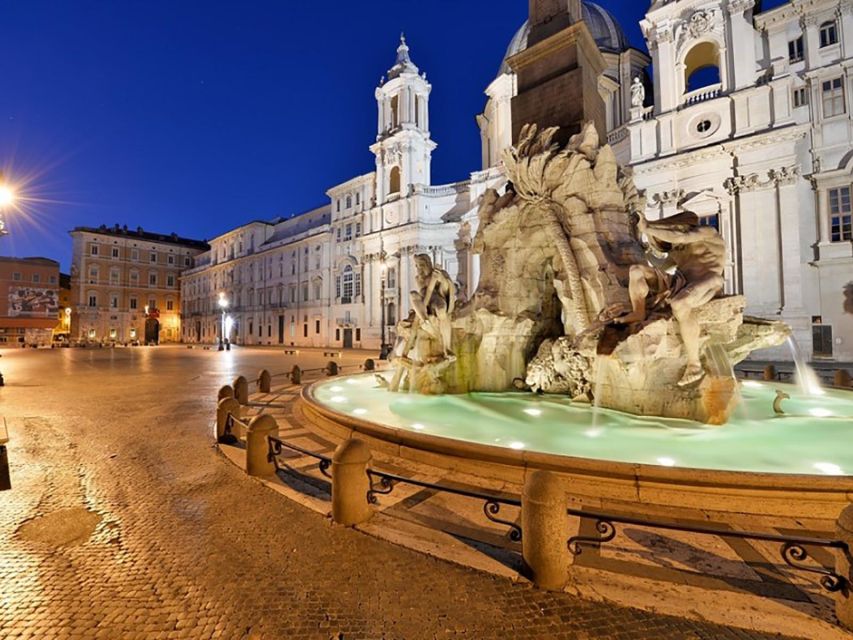
Rome at night is special because the streets slow down and the monuments look less like postcards and more like stage sets. This tour is built for that exact moment: you’ll move from piazza to piazza, with short guided stops and short walks between them, so you’re not spending the whole time in transit.
I like the structure because it keeps your brain engaged. Each place comes with a specific angle: the city’s public “living rooms” at Piazza Navona, the power and precision of the Pantheon, the Baroque drama of Trevi, and the social story behind the Spanish Steps. By the time you reach Piazza di Spagna, you’re not just seeing landmarks. You’re understanding why they’re positioned where they are, and what they’re trying to impress you with.
The pace is walk-and-listen, not sit-and-watch. You do have some steps and uneven walkways, and the tour is not designed for wheelchair users. If you’re okay with a solid stroll and you wear comfortable shoes, this is a great way to get oriented fast and still have time for a casual dinner afterward on your own.
Price-wise, at about $100.82 per person for 2.5 hours with a live guide and a small group size, it’s not a budget bargain. The value comes from the guide-led time at multiple high-demand sights in a single outing, plus headsets when the group is larger. You’re paying for interpretation and efficient sequencing, not for transportation.
Also keep an eye out for possible changes: due to the Jubilee, some monuments may be under restoration. If the operator sends updates, read them—your route timing can shift when scaffolding is involved.
Piazza Navona at dusk: Rome’s drawing room
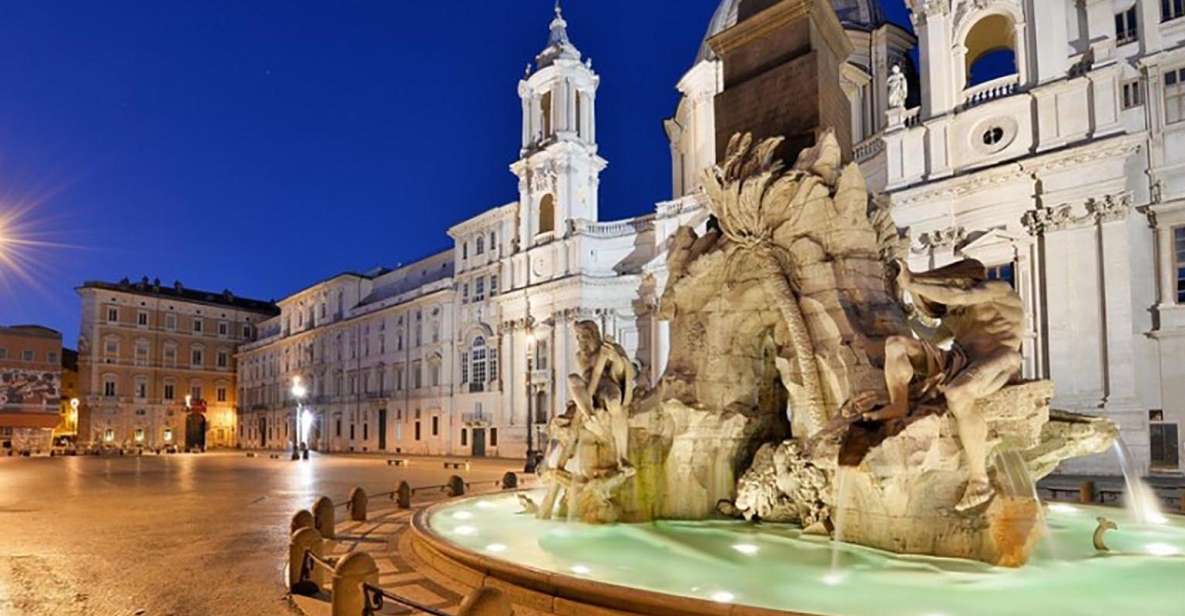
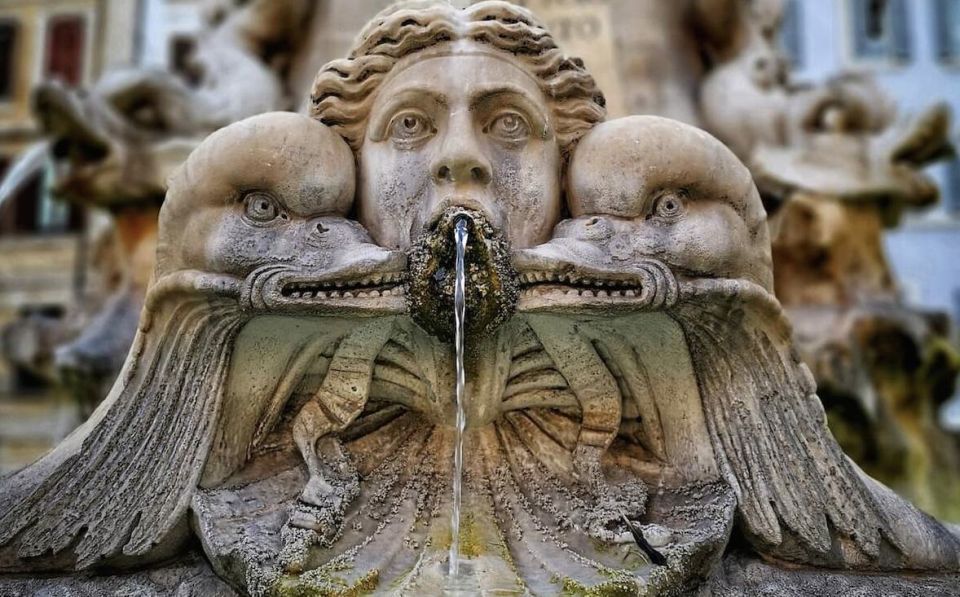
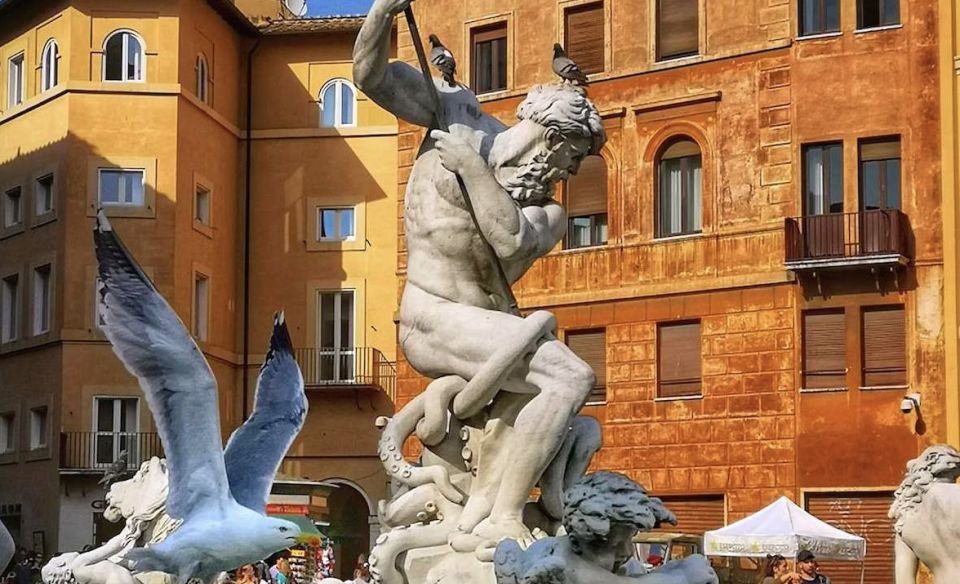
Piazza Navona is the place where Rome feels theatrical even before the fountains start talking. You meet your guide at Piazza Navona 52, in front of the toy store Al Sogno, with a Through Eternity Tours sign or flag. From there, you start with a guided look at the piazza.
What I like about the first stop is that it sets the rules of the game. The tour explains why Piazza Navona’s shape has been part of the city for nearly 2,000 years. That matters because once you grasp the “why” of a historic piazza, you stop treating it like a random open space and start seeing it as an urban machine—built for people to gather, watch, and be seen.
You’ll also get the sense of why people call this area a kind of drawing room. It’s not just pretty geometry. It’s where Rome shows off its social life—at least, that’s how it feels at twilight. The tour theme here is about water and architecture as performance, which sets up what you’ll later see at Trevi.
Practical tip: this is a good moment to take a breather and drink water if you need it. You’ll be walking more after this, and Piazza Navona can be crowded depending on the evening.
Drawback to consider: because this is one of the most photographed piazzas in Rome, you can expect people around you. Headsets help (when provided), but you still may want patience while you wait for clear sight lines.
The Pantheon: Imperial Rome in concrete, light, and stories
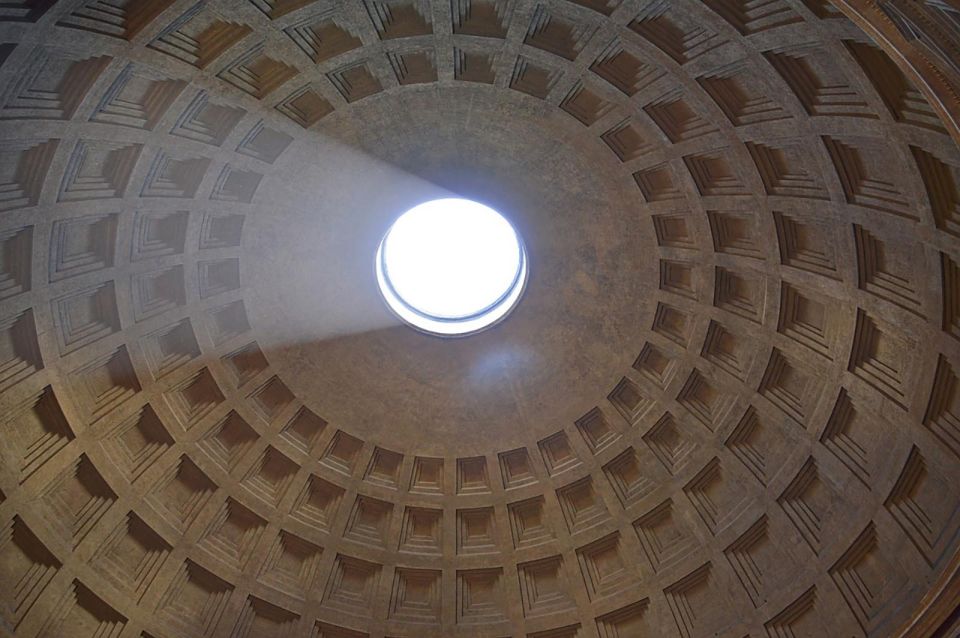
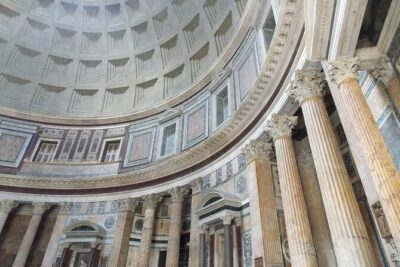
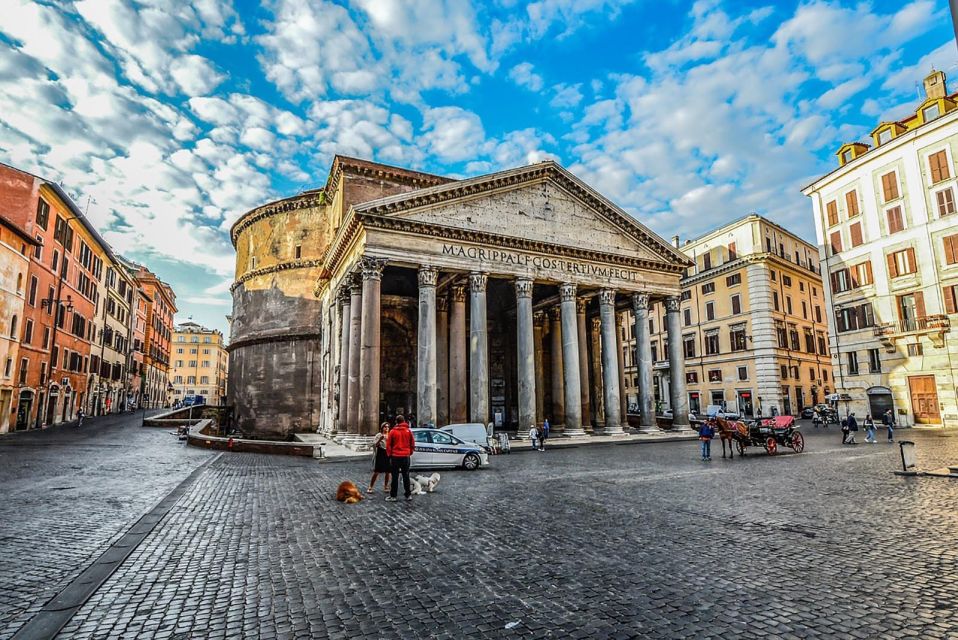
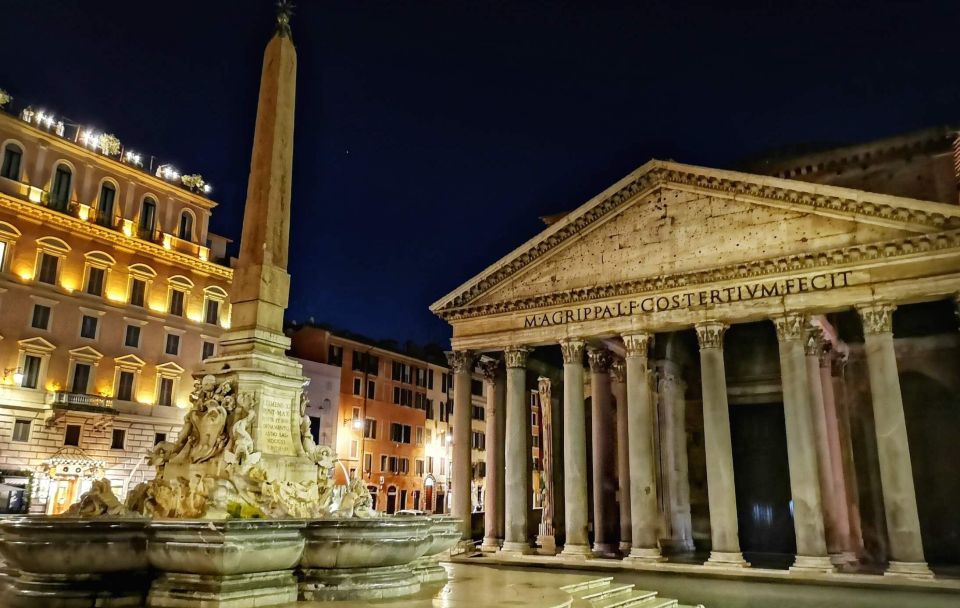
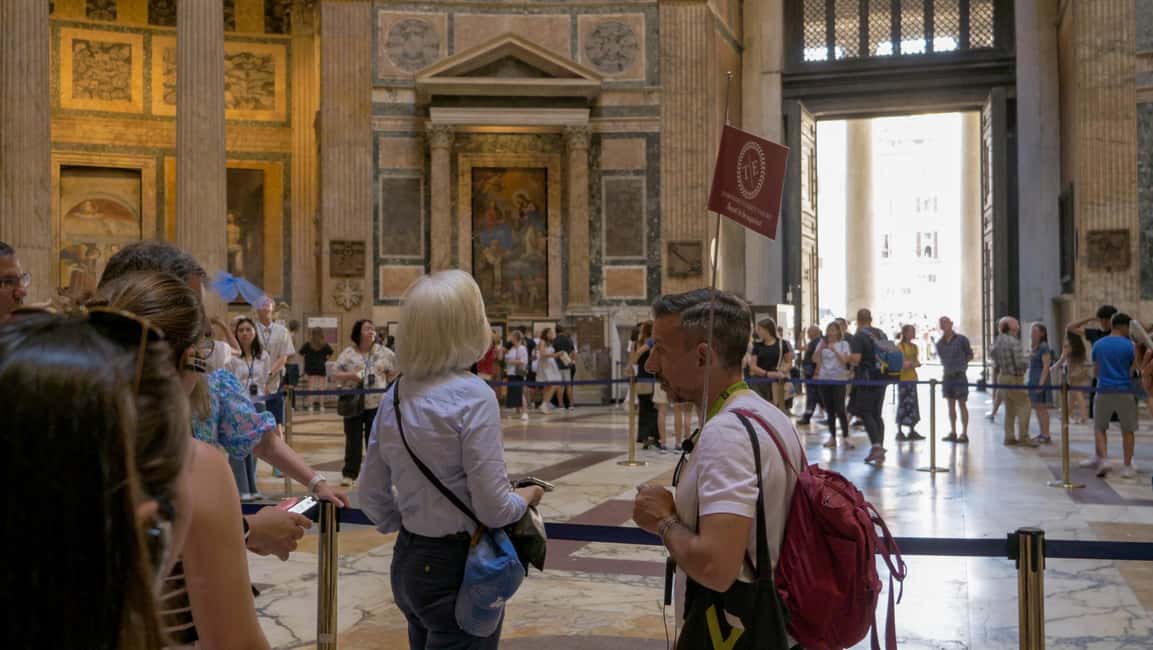
Next comes the Pantheon area, with a guided portion that runs about 30 minutes. Even without stepping inside on certain days, the Pantheon is one of those monuments that makes you pause, because it feels engineered rather than just decorated.
The tour framing is the key. You get the Pantheon explained as an artwork of extreme power and poetry—an idea the tour connects to the way design and construction came together so perfectly that Michelangelo considered it the work of angels. That line gets repeated in lots of tours, but here it’s tied to what you’re seeing: the scale, the confidence, and the sense that this building was built to last.
This stop also includes details you might not pick up on your own. Inside the Pantheon (when the tour enters), it houses the tombs of Raphael, who died prematurely in 1520, and it also includes the tomb of Vittorio Emanuele (who died in 1878). Those are the kinds of facts that shift a visit from wow-to-done to wow-to-understood.
Important note for planning: on Sunday evening tours, you do not enter the Pantheon because the site is closed. You’ll still visit Piazza della Rotonda and admire the great edifice from the outside while getting an exterior explanation. If the Pantheon is unexpectedly closed on your tour day, you’ll still pass through Piazza della Rotonda and get the same kind of exterior-oriented explanation.
If you’re set on interior time, check the day you’re booking. If you’re flexible, the tour still works well because the exterior alone is dramatic in low light.
Temple of Hadrian: a quick stop that adds context
Between the Pantheon and Trevi, the itinerary includes Temple of Hadrian with a guided segment of about 25 minutes. This part of the walk matters because it shifts you from one “icon” to the broader idea of Imperial Rome’s architecture and influence across the city.
I like this stop because it’s less about a single photo moment and more about making connections. If you’ve only seen Rome as a list of monuments, Temple of Hadrian helps you feel how the city’s older layers sit under the later Baroque and Renaissance scenes. It’s the kind of in-between stop that makes the rest of the evening click.
You’ll also have short on-foot stretches between stops, which keeps energy up. Just remember: the tour is not flat. Even a short walk in Rome can include steps or uneven pavement, so keep your pace comfortable.
Trevi Fountain at twilight: Baroque drama with Ancient Rome logic
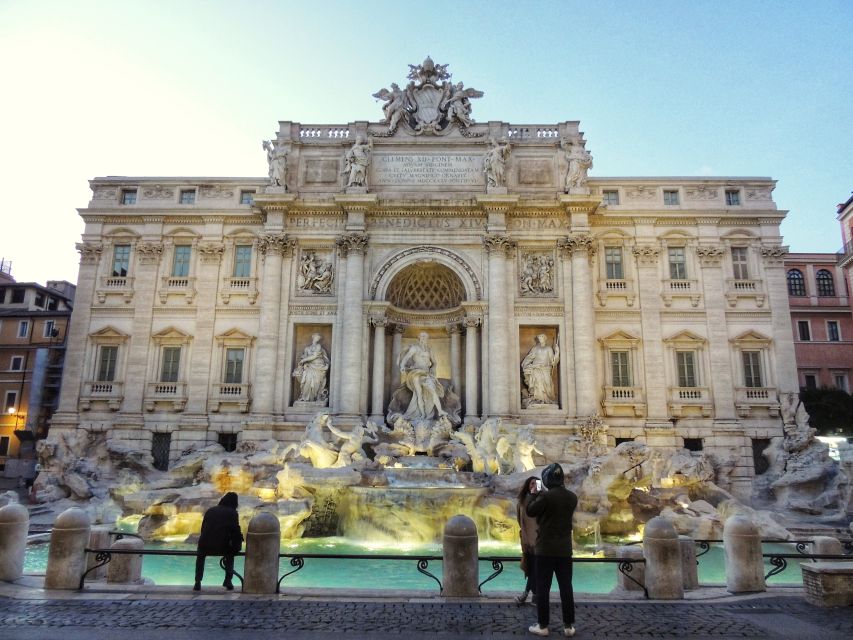
Then you get Trevi Fountain, with a guided portion of about 25 minutes. Trevi at night is the kind of sight that makes you forget you were just walking. The water sound and the motion draw you in fast, but the tour does something useful: it gives you a way to interpret what you’re seeing.
The Trevi Fountain description here focuses on how theatrical it feels and why that’s intentional. It’s explained as a piece of theatrical architecture that recalls Ancient Rome. The main structure is likened to a triumphal arch, and the tour connects it to classical examples such as the Arch of Constantine.
That’s a helpful lens. If you understand Trevi as a Roman-style statement using Baroque tools—scale, perspective, and drama—it stops being just a crowd-and-photo stop. You begin to notice how the composition pulls your eyes, how the water becomes part of the monument’s message, and why this fountain has always been central to Rome’s public imagination.
Practical tip: plan on taking your time at Trevi. Even with a guide, the crowd can slow your viewing angle. If you’re traveling in a group, try to keep your phone away for the first few minutes and listen to the explanation. You’ll get more out of the place, even before you start photographing.
One consideration: Trevi Fountain is famous, which means it can be packed. Headsets help you hear the guide, but don’t expect every person in the group to get the exact same sightline at the same time.
Spanish Steps and the Barcaccia boat story
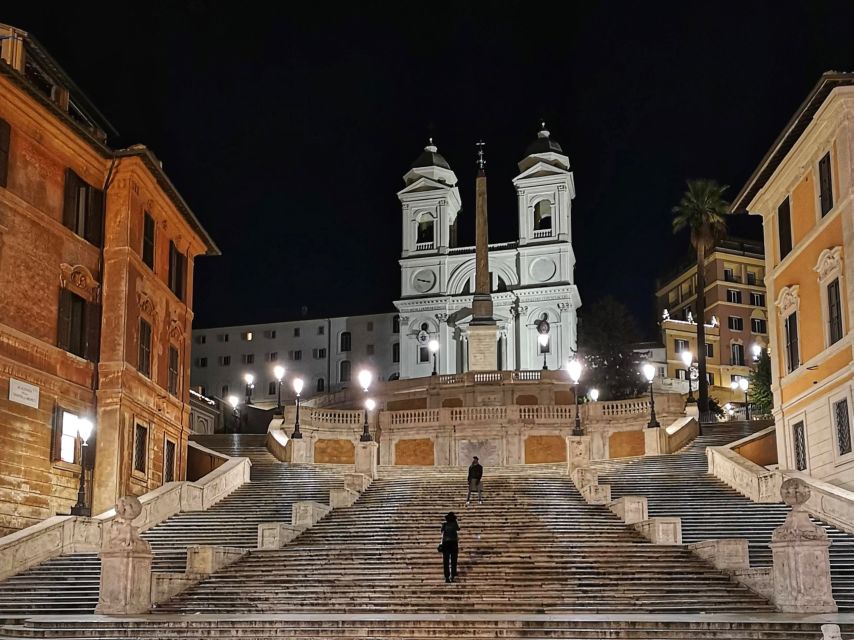
Your tour finishes at Piazza di Spagna, with the Spanish Steps as the last big guided highlight (about 25 minutes). You’ll cover what sits above the steps—your tour focuses on the history of the church of the Trinita’ dei Monti that towers over the area—and then it goes into the fountain story that connects two levels of the city.
Here’s the neat part: the tour explains why the young Gianlorenzo Bernini and his father (both sculptors) used an unusual subject for the fountain of the Barcaccia, a boat. That’s the kind of detail that makes Rome feel less like a museum and more like a chain of choices by real artists.
You also get the social significance of the stairway. The explanation centers on how the Spanish Steps helped unite two areas that had been separated by a cliff face for centuries. In other words, this isn’t only about beauty. It’s about movement, access, and how architecture can reshape city life.
You end at Piazza di Spagna 23, which is convenient because it drops you near more dining options and easy strolling routes afterward. It’s a smart end point: you finish somewhere central and already atmospheric, instead of trudging back through the city on tired legs.
Value, pace, and who should book this
So, is it worth it? For about $100.82 per person and roughly 2.5 hours, I see good value if you want a high-impact evening with a guide-led explanation. You’re covering several major landmarks—Piazza Navona, the Pantheon area, Trevi Fountain, and the Spanish Steps—plus an extra stop at Temple of Hadrian. That’s hard to match with self-guided planning if you care about interpretation.
This tour is especially a strong fit if:
- You’re on a first trip and want fast orientation through central Rome
- You like history explained with clear cause-and-effect (why buildings look the way they do)
- You prefer a small group of up to 10 people, with headsets when needed
- You want a structured evening without booking multiple separate tours
It might be less ideal if:
- You need step-free access, since it’s not suitable for wheelchair users
- You expect a sit-down experience. This is a walking tour, and Rome’s pavement is not built for perfect comfort
One more practical note: bring water and comfortable shoes. The tour is designed around uneven walkways and steps, so your comfort will make or break the experience. If you have mobility concerns, inform the provider so they can try to accommodate you as best they can.
If you’re a student, a valid student ID is required for the student discount. If you don’t have one on the day, you may be charged the full ticket price on-site.
Finally, consider timing. Twilight is the point, but the big sites can still be busy. If you’re the type who wants quiet, you may want to treat this as a “learn and understand” tour more than a “find empty streets” tour.
Should you book this Rome at Twilight tour?
I’d book it if you want an evening that connects Rome’s big icons into one coherent story. The route makes sense, the guide adds interpretation at every stop, and the small group size keeps it from feeling like you’re being herded through history.
I would not book it if you can’t handle walking with steps and uneven ground, or if you specifically need interior access to the Pantheon on a Sunday. The Sunday closure is real, and the tour changes accordingly.
If you’re ready for an active, guide-led sunset walk through Rome’s most famous piazzas and fountains, this one is a solid pick.
FAQ
How long is the Rome at Twilight Tour Among the Piazzas and Fountains?
The tour lasts about 2.5 hours.
Where do I meet the guide?
Meet your guide in Piazza Navona, in front of the toy store Al Sogno. The guide will have a Through Eternity Tours sign or flag.
Do you use headsets?
Headsets are included for groups of 6 or more.
Will I enter the Pantheon?
On Sunday evening tours, the tour does not enter the Pantheon because it is closed. If the Pantheon is closed unexpectedly, you will still pass through Piazza della Rotonda and get an explanation from the exterior.
What’s included in the price?
A live English-speaking tour guide is included, along with headsets when applicable.
What should I bring?
Bring comfortable shoes and water.
Is this tour suitable for wheelchair users?
No. The tour is not suitable for wheelchair users, since it involves walking with steps and uneven walkways.