REVIEW · TIVOLI
Tivoli: Entrance Ticket to Villa Adriana & App Audioguide
Book on GetYourGuide →Operated by GetYourGuide Tours & Tickets GmbH · Bookable on GetYourGuide
Hadrian’s villa feels engineered, not just historic. This self-paced ticket lets you roam Villa Adriana in Tivoli, a UNESCO site packed with ruined buildings, water features, and Roman architectural experiments. I especially love how the grounds stretch out like a walkable puzzle, with the Maritime Theatre and its strange “pool-palace” design instantly calling your attention.
My second favorite part is the mosaics and bath-area remains, where the leftover art and floor fragments show serious skill. The main thing to think about is that this is not a guided tour, so you’ll rely on the included digital audioguide to connect the dots as you walk.
In This Review
- Key highlights worth your attention
- Villa Adriana at a Glance: Hadrian’s Summer Retreat Beyond Rome
- What This Ticket Includes (and Why It’s Worth $19)
- Before You Go: Voucher Exchange, Security, and Bag Rules
- Your Self-Guided Route: A Park of Ruins That Rewards Foot Power
- Maritime Theatre: The Roman Pool-Palace Moment
- Canopo and the Serapeum Grotto: Water, Statues, and Made-For-Drama Design
- Roman Baths and Mosaics: The Details That Make Ruins Feel Human
- Antinous Statues and the Meaning Behind Sculpture
- How to Use the Digital Audioguide Without Feeling Rushed
- Time Plan: Plan for at Least Two Hours (and More If You Love Mosaics)
- Sending a Pemcard: Turn Your Visit Into a Real Postcard
- Logistics That Affect Your Day Trip from Rome
- Should You Book This Villa Adriana Ticket + Audioguide?
Key highlights worth your attention

- Hadrian’s summer retreat, laid out as a whole system you can explore on foot across about a 1-square-kilometer site.
- Maritime Theatre with a barrel-vaulted, round portico and a pool plus artificial island inside.
- Canopo and the Serapeum grotto give you major “water + symbolism” moments in the same complex.
- Roman bath mosaics help you see what life and leisure looked like under the Empire.
- Architecture you can feel in your feet, including straight walls and curved domes that still read as deliberate, not accidental.
- Digital audioguide turns this from random ruins into a coherent Roman estate story.
Villa Adriana at a Glance: Hadrian’s Summer Retreat Beyond Rome
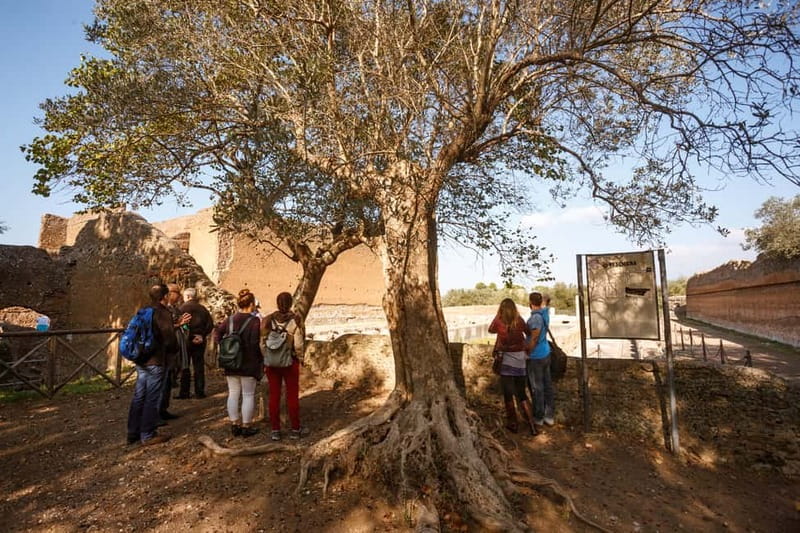
Villa Adriana is in Lazio, east of Rome in Tivoli, and it reads like a Roman emperor’s big “what if” project. Emperor Hadrian built it as a country villa because he disliked Palatine Hill in Rome, and the result is an enormous complex that now functions like a park of ruins.
This place covers more than 30 building sites, yet not everything has been excavated. That matters, because the site doesn’t feel fully explained. You’re walking on top of what’s known and what’s still waiting underground, which makes the whole visit feel more like discovery than a checklist.
You can also read our reviews of more tours and experiences in Tivoli.

What This Ticket Includes (and Why It’s Worth $19)
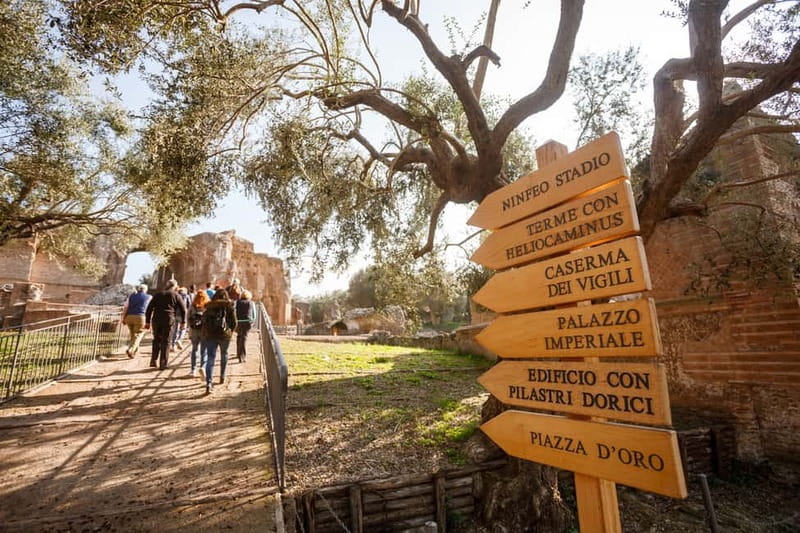
You’re paying about $19 per person for two practical items: entry to Villa Adriana and a digital audioguide. No guided tour is included, so you don’t have to match your pace to a group.
That can be a big value win. If you like stopping to look closely at details—walls, floor patterns, water layouts—this format lets you slow down. And if you’d rather keep moving, you can still get the story without standing in one spot.
Before You Go: Voucher Exchange, Security, and Bag Rules

Your start is simple: exchange your voucher at the Villa Adriana ticket office. The ticket validity is 1 day, and you should check availability for starting times, since entry is tied to those windows.
Plan on passing a security check before you enter. Also, you can’t bring rucksacks, suitcases, or large bags into the attraction. If you’re coming from Rome by day trip, pack light and keep your bag small enough to avoid stress at the entrance.
Your Self-Guided Route: A Park of Ruins That Rewards Foot Power
There’s no fixed guided itinerary here, so your “route” is really about how you move through the estate. Villa Adriana is spread out, so the best strategy is to think in zones: start with the big headline structures, then circle back for mosaics and details.
I’d treat it like a long walk broken into chapters. The Maritime Theatre and Canopo are the kind of sights you build your visit around. After that, you can let the bath areas, grotto-like spaces, and statuary moments fill in the rest.
And yes, the ruins can feel spread out. That’s normal. This is a complex built to cover leisure, water, architecture, and symbolism across a large grounds plan.
Maritime Theatre: The Roman Pool-Palace Moment
The Maritime Theatre is one of the first places you’ll want to aim for because it’s so visually specific. It’s a round portico with a barrel vault supported by pillars, and the design feels made for controlled views rather than casual hanging out.
What you should look for:
- The portico structure: round, roofed, and intentionally architectural.
- The pool inside the portico, plus an artificial island within the water.
- The sense of layered use: the structure references leisure spaces and specialized functions.
One reason this spot lands hard is that it shows Roman engineering thinking in a way that still looks modern. The setting isn’t just a “viewpoint.” It’s a designed environment where water and structure work together.
Canopo and the Serapeum Grotto: Water, Statues, and Made-For-Drama Design
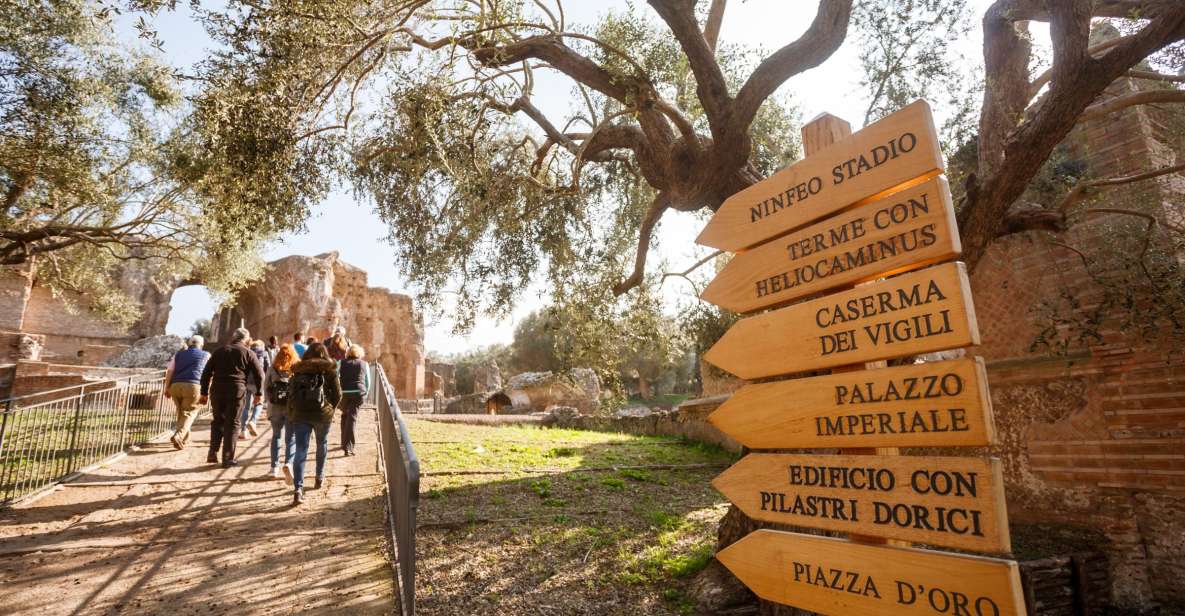
After the Maritime Theatre, shift your attention to the estate’s water-and-symbol spaces.
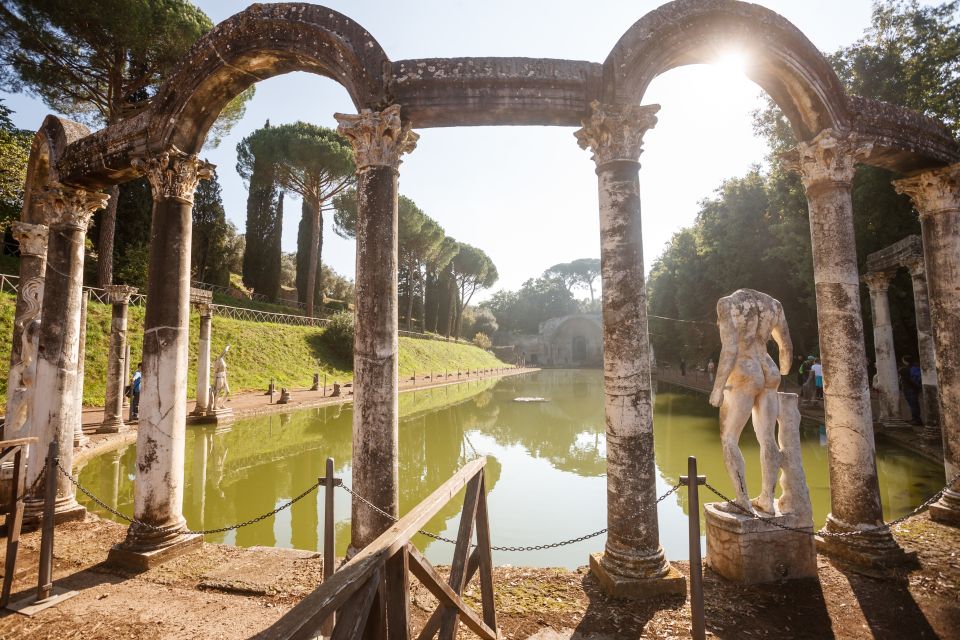
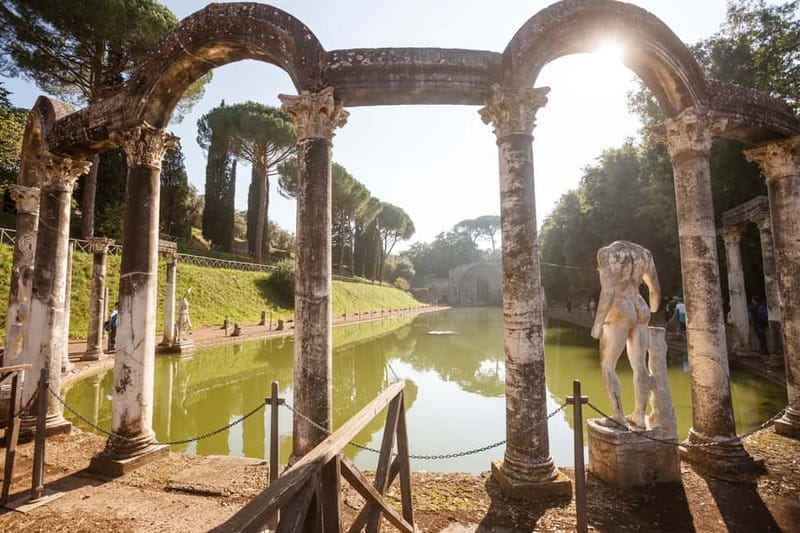
Canopo is described as a huge rectangular pool encircled by sculptures. It’s the kind of layout where you can imagine how people moved around it and how views would align as you walked. This is a great place to slow down and trace how the water shaped the visual experience.
Then there’s the Serapeum, where an artificial grotto is part of the visit. Grotto spaces in Roman villas weren’t just random cool spots. They usually create a different mood—dimmer, sheltered, and theatrical—so you’re not only sightseeing; you’re shifting atmosphere as you move across the property.
Roman Baths and Mosaics: The Details That Make Ruins Feel Human
In the bath areas, you’ll find mosaics that give you something more tactile than walls and foundations. Even when the scale is broken, mosaic fragments can make the whole setting feel lived-in.
This is also where the engineering reputation of the villa becomes tangible. One review highlighted mosaics in the hospital area as brilliant, and another pointed out the advanced construction and how straight walls look perfectly straight. You don’t need to be an architecture expert to appreciate what that suggests: the builders weren’t guessing.
What I’d do:
- Spend time on floor and wall pattern remnants rather than rushing across them.
- Look for mosaic scenes and the way they connect to the bathing and leisure zones.
If you love small craft details, this is where Villa Adriana becomes more than famous ruins. It starts to feel like a functioning place that just happens to be broken.
Antinous Statues and the Meaning Behind Sculpture
Villa Adriana includes marble statues connected to the time when the villa was built, including statues of Antinous, Hadrian’s deified lover. This is a reminder that these estates weren’t only about comfort.
They were political and personal, too. Sculpture in a space like this helped shape how people understood the emperor and his circle. When you’re walking through the grounds, it helps to remember that the villa’s monuments served as messages, not just decoration.
So when you spot statuary remains, don’t treat it as background. Try to connect it to the broader theme: Hadrian turning his country retreat into a stage for power, belief, and identity.
How to Use the Digital Audioguide Without Feeling Rushed
The audioguide is included with your entry, and it’s the key to turning the estate into a story you can follow. Since this ticket does not include a guided tour, you’ll get the most out of it by using the guide at each major monument rather than saving it for later.
My practical approach:
- Use the audioguide right when you reach a highlighted structure.
- If you start feeling “information overload,” switch to listening only for the current stop and then move on.
- Pause your walking when the guide is talking about layout and function, since the physical design helps you understand the explanation.
You’ll get plenty from the big sights, but the audioguide also matters for the “in-between” ruins. That’s where you start to see why the villa felt so advanced and why the grounds were built to support many types of space at once.
Time Plan: Plan for at Least Two Hours (and More If You Love Mosaics)
A good baseline is at least 2 hours. That’s long enough to hit major landmarks like the Maritime Theatre, Canopo, and the Serapeum grotto, and still find time for bath-area mosaics and sculpture moments.
If you want more breathing room, add more time. Villa Adriana can reward return visits to the same zone because perspective changes as you walk. Also, since much of the area hasn’t been excavated, you may find yourself staring at empty sections and imagining what might be underneath.
Sending a Pemcard: Turn Your Visit Into a Real Postcard
There’s a fun extra option here: Pemcard, a digital photo you can send as a real postcard to anywhere in the world. If you like sending one thoughtful souvenir, this is better than a random screenshot.
The instructions are tied to a download and send process on the Pemcards site: https://www.coopculture.it/it/prodotti/invia-una-cartolina-per-condividere-la-bellezza/
It’s worth doing soon after your visit moments, so you’re choosing a photo while your best memories are fresh.
Logistics That Affect Your Day Trip from Rome
This ticket is all about the site itself. Transportation is not included, and there’s no guided tour, so you’ll want to plan how you get to Tivoli and back.
The good news is that the complex is far enough away to feel like true countryside time, yet close enough to Rome to work well as a day plan. The bad news is that you’ll do the timing. If you’re relying on public transit or a car, build in extra buffer time for the start at the ticket office and for the security check.
When the activity ends, it returns you back to the meeting point at the Villa Adriana site.
Should You Book This Villa Adriana Ticket + Audioguide?
Book it if you want a high-value way to experience one of the most unusual Roman estates without paying for a full guided group tour. The included audioguide makes the ruins make sense, and you get the freedom to spend your time where you care most: the Maritime Theatre, the water-focused Canopo and Serapeum spaces, and the bath mosaics.
Pass or adjust your plan if you need a live guide to interpret everything step-by-step. With this ticket, you’re self-guided. It still works well, but your satisfaction depends on how much you like learning on the move.
If you love Roman architecture details, engineering precision, and mosaic remnants, this is an easy yes—especially if you’re planning for 2+ hours and you pack smart for the security rules.