REVIEW · CASTEL GANDOLFO
Castel Gandolfo: Vatican Observatory experience
Book on GetYourGuide →Operated by TOURISTATION · Bookable on GetYourGuide
A Pope’s summer retreat, with real working telescopes. It’s one hour in Lazio that mixes Papal Palace views with rare access to the Vatican Observatory’s domes, including two instruments still doing science.
I love the way the visit gives you the big-picture setting fast: the terrace overlooks Lake Albano, and then you get the history of why this place became the Vatican’s astronomy hub. Up the spiral staircase and into the observatory area, it also feels like you’re stepping onto a working site, not a theme park.
One heads-up: for $17 and a strict 1-hour time slot, this is not a long, guided deep dive with an audioguide, so if you’re expecting a lengthy show or hands-on astronomy lesson, you may find it a bit short.
In This Review
- Key points before you go
- Arriving at the Papal Palace: what the setting really does
- The Lake Albano terrace views: the payoff is instant
- Climbing the spiral staircase to the third floor
- The Vatican Observatory connection: Jesuits, light pollution, and 1935
- Major dome vs minor dome: two instruments, two styles of observing
- The major dome (8.5 meters) and the Visual Telescope
- The minor dome (8 meters) and the Double Astrograph
- What it means for your visit
- How long it really takes (and how to pace yourself)
- Price and value: $17 for an hour with rare access
- Who should book this Vatican Observatory visit?
- Small details that make it smoother
- Should you book Castel Gandolfo’s Vatican Observatory experience?
- FAQ
- Where does this visit start?
- How long is the experience?
- How much does it cost?
- What’s included in the ticket?
- Is there a guided tour or audioguide?
- Can children visit?
- Is it wheelchair-friendly?
- What should I bring?
Key points before you go
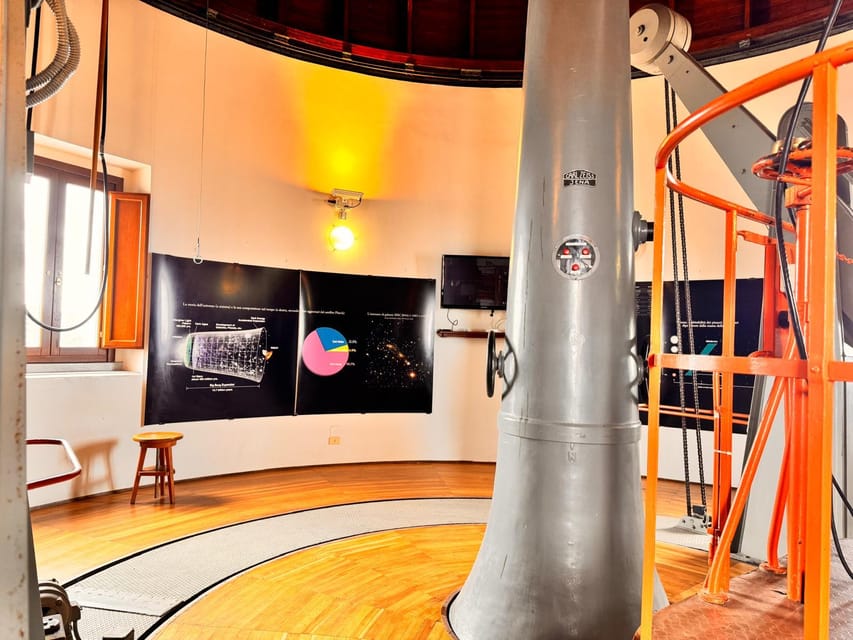
- Two functioning observatory domes with major and minor instruments you can actually access
- Lake Albano panorama from the Papal Palace terrace, timed nicely for quick sightseeing
- Spiral staircase to the third floor, on the highest terrace point
- Jesuit-run Vatican Observatory story, refounded in 1935 after changes in light pollution
- Clear setup for non-experts, with explanations paced for regular visitors
Arriving at the Papal Palace: what the setting really does
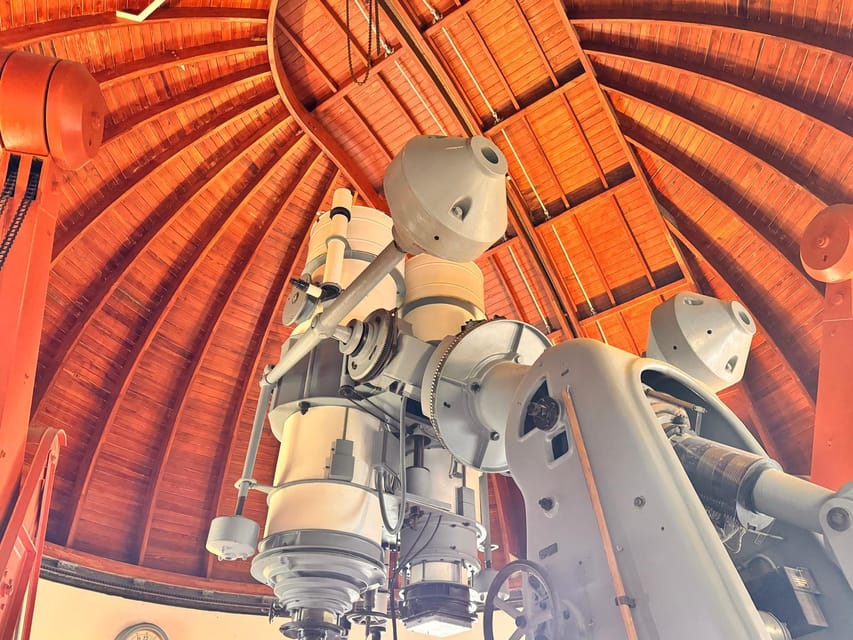
This tour starts where the atmosphere is already half the experience: the main entrance of the Papal Palace of Castel Gandolfo. Castel Gandolfo is about 24 kilometers from Rome, so think of it as a simple day trip that feels like a separate world.
You’ll show your reservation voucher to staff about 20 minutes before your scheduled time. That early buffer matters because the palace is a real historic site—timing helps everything stay smooth, especially once you start moving toward the staircase and dome areas.
One practical plus: you skip the ticket line. In a place like this, that can be the difference between a calm start and arriving right when a group is already forming.
If you’re the type who likes to understand where you are before you look up at anything, this stop sets you up well. The palace isn’t just a pretty postcard. It’s tied to the Vatican’s scientific work in a way most people never hear about. That contrast—prayerful residence, then serious astronomy—keeps the whole visit interesting even if you’re not an astronomy person.
You can also read our reviews of more tours and experiences in Castel Gandolfo.
The Lake Albano terrace views: the payoff is instant
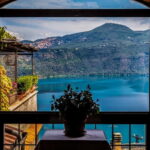
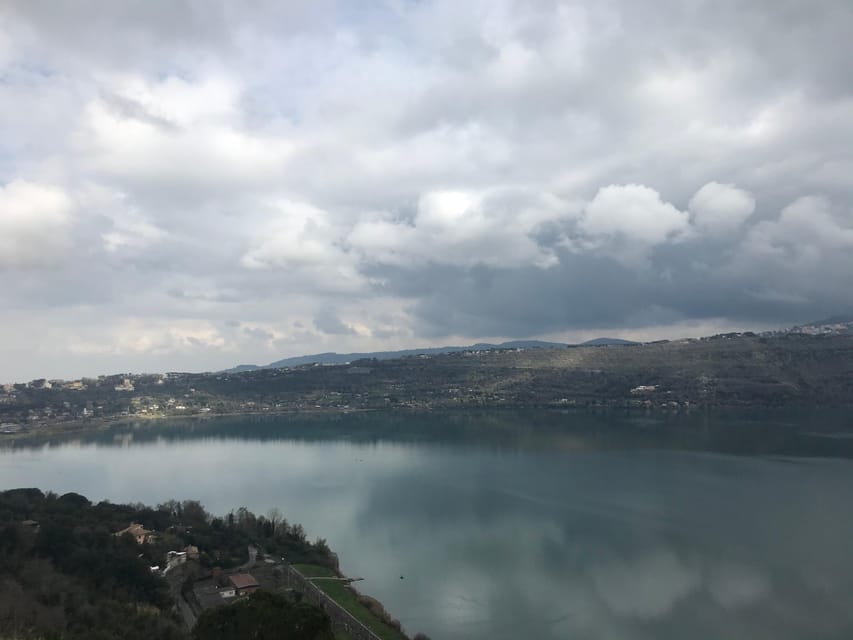
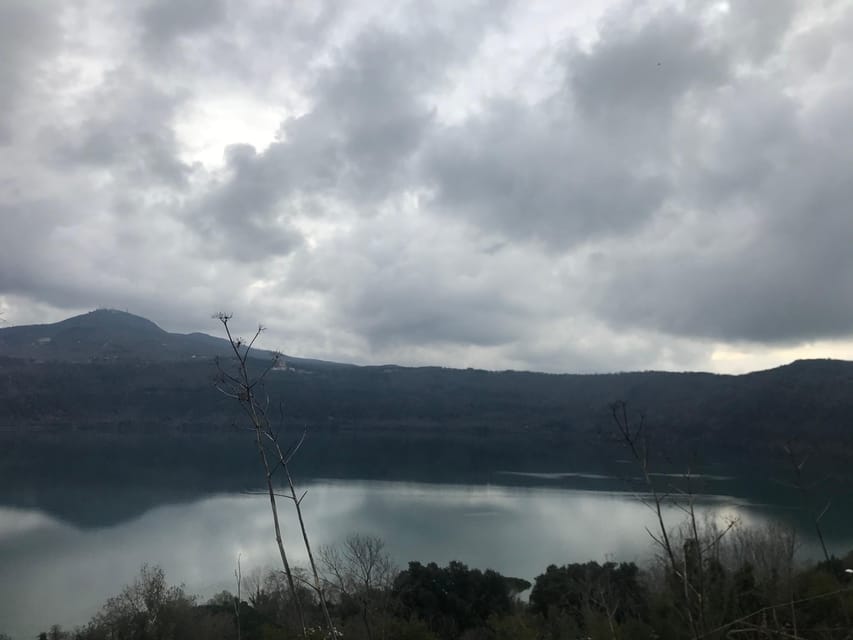
Once you’re moving through the palace area, the big reward comes quickly: the panoramic terrace view of Lake Albano. You get that classic Castel Gandolfo look—broad water, gentle slopes, and the sense of space that makes the whole region feel special.
Even if the astronomy part isn’t your thing, the terrace alone earns the trip. The view is the kind you can’t replicate from a city street, and it gives you a reason to slow down for a few photos. Bring your camera—this is one of those moments where you’ll want proof that you actually went.
What I like here is that the terrace isn’t treated as an afterthought. It’s integrated into the route by being tied to access to the upper floors. You’re not just wandering. The walk and climb are part of reaching the best viewpoints.
Also, dress for comfort and a bit of cool. The tour guidance specifically suggests warm clothing. Even on a mild day, terrace air can feel different from what you felt in Rome.
Climbing the spiral staircase to the third floor
The highlight that people remember isn’t only the telescopes. It’s the spiral staircase climb up to the third floor. The route takes you to the highest point of the panoramic terrace, so the walking isn’t random—it’s how the experience “earns” the view.
This staircase detail matters for planning. Wear comfortable shoes. The tour isn’t designed for flip-flops or anything slick. And if stairs make you nervous, take the safety notes seriously: this activity isn’t suitable for people with vertigo.
If you’re traveling as a couple, this portion is surprisingly good for conversation. You can step aside for a second, talk while you catch your breath, then hit the terrace with a clearer mind. It’s also a natural moment to check your camera settings so you’re not fiddling during the view.
The Vatican Observatory connection: Jesuits, light pollution, and 1935
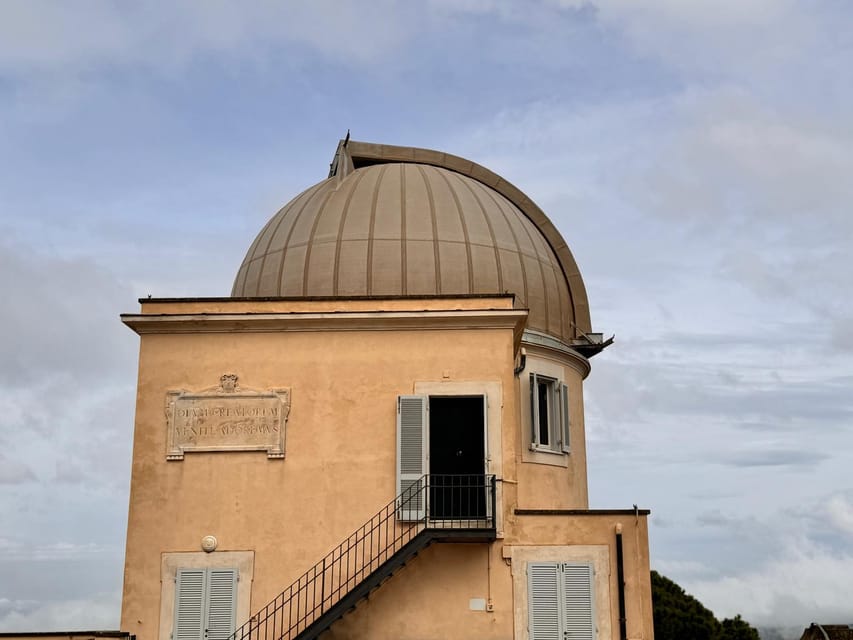
Here’s where the experience turns from scenic to meaningful. The Vatican Observatory at Castel Gandolfo is tied to a specific chapter of 20th-century science. The observatory moved here when light pollution from the city became a problem.
Pope Pius XI inaugurated the new headquarters on September 29, 1935. The move was necessary because the observatory needed darker conditions for observations, and the transfer from an earlier location in the Vatican area became unavoidable. Once refounded, the observatory was entrusted to the Jesuits.
You’ll also learn that the new setup came with serious equipment: the observatory was equipped with three new telescopes and an astrophysical laboratory for spectrochemical analysis. That’s a key detail because it explains why this isn’t just a historic building with a telescope inside. It’s a site that has been set up to do real work.
One research focus mentioned for those years is variable stars. Even if you don’t know much astronomy, variable stars are a good “on-ramp” topic because they connect observations to measurable changes over time. It’s the kind of science you can appreciate without needing to interpret complicated charts.
Major dome vs minor dome: two instruments, two styles of observing
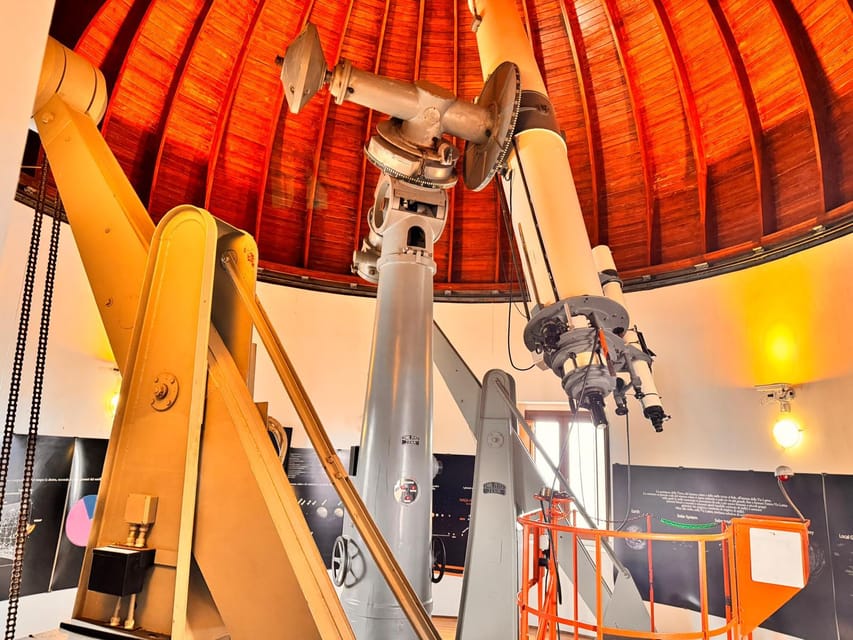
The most distinctive part of the visit is access to the observatory’s two astronomical domes—something you don’t often get as a visitor. These domes are described as opening to visitors for the first time in almost ninety years since their construction, which tells you the experience isn’t meant to be casual or repetitive.
The major dome (8.5 meters) and the Visual Telescope
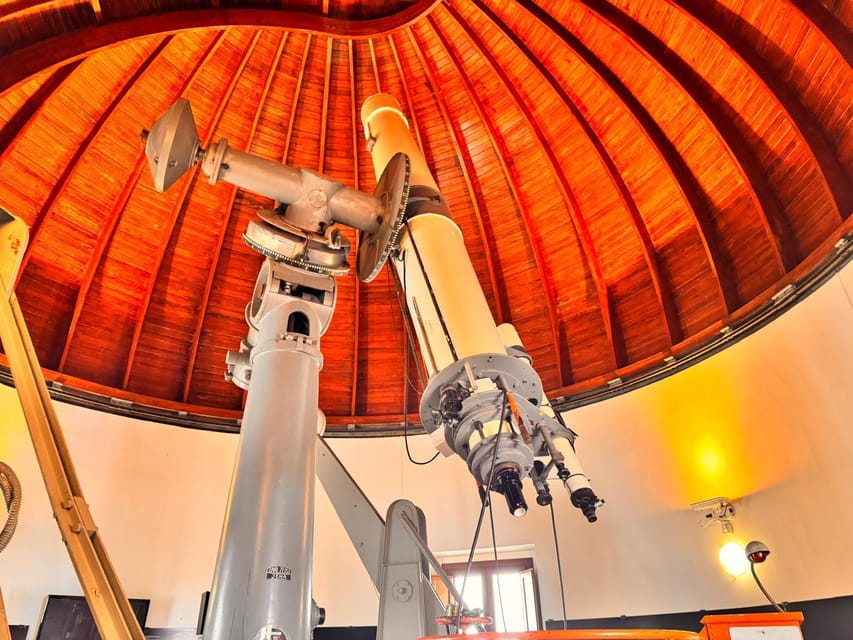
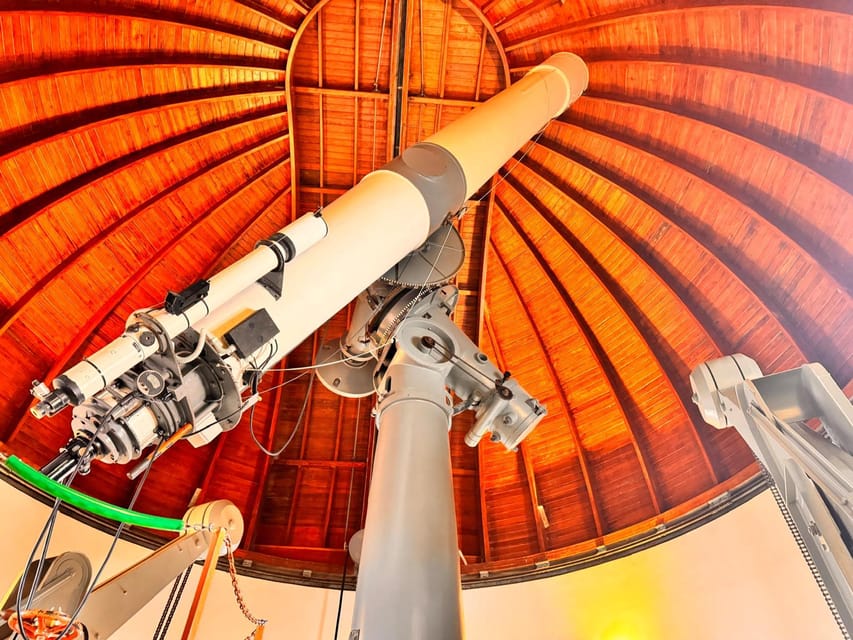
The major dome has an 8.5-meter diameter and houses a Visual Telescope. The idea is straightforward: observe stars and planets visually. For you, that means the emphasis is on what people can look for directly—brightness, positions, and the appearance of objects through the telescope setup.
Even without a formal observing session, just being inside the dome gives you a feel for how the Vatican approached practical astronomy. You’re seeing the kind of infrastructure that supports careful, deliberate looking.
The minor dome (8 meters) and the Double Astrograph
Next is the minor dome, an 8-meter diameter structure with the Double Astrograph. This instrument is used for photographic surveys of the sky and for mapping the positions of stars.
That’s a different type of observing than “look through the telescope and spot objects.” It’s about documentation: capturing images and using them to understand what’s where. For non-experts, it’s a great contrast because you realize astronomy has multiple workflows—visual study and photographic mapping both matter.
What it means for your visit
You get both domes, so you see the Vatican Observatory’s two-pronged approach: direct visual observation and photographic surveying. That variety is a big part of why the visit holds together as more than just a quick sightseeing stop.
How long it really takes (and how to pace yourself)
The duration is listed as 1 hour. In practice, that’s enough time to do the route, see the terrace view, climb to the third floor, and access the domes without feeling rushed for a “photo sprint,” but it’s not enough for lingering like a museum day.
This matters most if you like to read every interpretive panel slowly. You’ll need to choose a couple of moments to focus on and keep the rest moving. If you tend to get stuck reading everything, consider arriving with a plan: decide in advance whether your priority is the lake view, the domes, or the Jesuit history.
One more time-saver: bring your camera and have it ready. The terrace and dome interiors are both photo opportunities, and scrambling with buttons while people wait behind you gets stressful. Keeping your gear ready makes the visit smoother for everyone.
Price and value: $17 for an hour with rare access
At $17 per person, this is not a budget “walk-in” experience. The value depends on what you want out of Castel Gandolfo.
If you care about astronomy, history, or the idea of getting inside the domes themselves, $17 starts to make sense fast. You’re not just touring buildings; you’re accessing specific observatory spaces tied to real instruments and a major 1935 institutional move. The spiral staircase to the third-floor terrace plus Lake Albano views also add tangible sightseeing value for a day trip.
If your main goal is gardens, long palace wandering, or a full guided tour, you might feel like the hour slips by quickly. The format doesn’t include a guided tour or an audioguide, so you’ll rely on the on-site host/greeter’s approach and any provided interpretive material. For some people, that’s fine. For others, it can make the experience feel more expensive than it is.
My practical advice: treat this like a focused add-on with standout access. Think of it as the one-ticket experience that gives you something different from the typical “palace views” trip.
Who should book this Vatican Observatory visit?
This works best for you if you:
- Like history tied to science and institutions, not just architecture
- Want a short, efficient day trip from Rome (24 km away)
- Enjoy seeing instruments and understanding how observation happens
It’s less ideal if you:
- Need step-free access (wheelchair users aren’t suitable)
- Get anxious about stairs (vertigo isn’t compatible)
- Want a long guided astronomy program or a night-sky experience (the provided info doesn’t promise that)
Kids: it’s not permitted for children under 7 years old for safety reasons, so plan accordingly if you’re traveling with younger kids.
Small details that make it smoother
A few things can upgrade your experience from good to easy:
- Comfortable shoes are non-negotiable because the route includes stair climbing.
- Warm clothing helps, especially on the terrace and during any cooler interior transitions.
- Camera is worth the space in your bag; the terrace view is a major “use it now” moment.
- Arrive early enough to settle in. The voucher check happens 20 minutes before your time slot.
Also, expect a guided-by-structure approach rather than a long lecture. The info says there’s a host/greeter available in multiple languages (English, French, Spanish, Italian, German), which suggests a friendly, practical orientation—but not a full audio tour setup.
Should you book Castel Gandolfo’s Vatican Observatory experience?
Yes, if you want the rare part: access to both working observatory domes plus the terrace views, all within a tight one-hour format. It’s a strong choice when you’re in Rome and want something that feels specific—Papal Palace setting on one side, Vatican astronomy on the other.
Maybe skip (or pair it with other palace time) if you’re shopping primarily for a long guided tour or you need step-free access. And if you’re the type who expects more explanation than what an on-site host can provide, plan to read up a bit beforehand so you’re not trying to learn the basics while also racing the clock.
If you’re flexible and your priorities include instruments, history, and panoramic views, this is the kind of ticket that feels smarter than it sounds—because it gives you access most visitors never get.
FAQ
Where does this visit start?
It meets at Castel Gandolfo, at the main entrance of the Papal Palace. On the day of your visit, you show your reservation voucher to the reception staff about 20 minutes before your scheduled time.
How long is the experience?
The duration is 1 hour.
How much does it cost?
The price is $17 per person.
What’s included in the ticket?
You get access to the major and minor astronomical domes, the third floor of the Papal Palace, and the panoramic view of Lake Albano.
Is there a guided tour or audioguide?
A guided tour and an audioguide are not included. The host or greeter speaks multiple languages and can help with orientation.
Can children visit?
No, this activity is not permitted for children under 7 years old for safety reasons.
Is it wheelchair-friendly?
No, it is not suitable for wheelchair users.
What should I bring?
Bring comfortable shoes, warm clothing, and a camera.